Tag Archives: Bible Highlights

Digging for Spiritual Gems: Luke 17-18 – (Week August 6-12)

Luke 17-18
Digging for Spiritual Gems: (8 min.)

Lu 17:7-10—What is the point of Jesus’ illustration? (“good-for-nothing” study note on Lu 17:10, nwtsty)
good-for-nothing: Lit., “useless; worthless.” The point of Jesus’ illustration is not that the slaves, his disciples, are to consider themselves useless or worthless. According to the context, “good-for-nothing” conveys the idea that the slaves would view themselves modestly, not as deserving special credit or praise. Some scholars consider the term as it is used here to be hyperbole meaning “we are merely slaves deserving no special attention.”

Lu 18:8—What kind of faith is Jesus referring to in this verse? (“this faith” study note on Lu 18:8, nwtsty)
this faith: Or “this kind of faith.” Lit., “the faith.” The use of the Greek definite article before the word “faith” indicates that Jesus was referring, not to faith in a general sense, but to a particular kind of faith, like that of the widow in Jesus’ illustration. (Lu 18:1-8) This would include having faith in the power of prayer as well as faith that God will cause justice to be done to his chosen ones. Jesus apparently left the question about faith unanswered so that his disciples would think about the quality of their own faith. The illustration about prayer and faith was particularly appropriate because Jesus had just been describing the tests his disciples would face.—Lu 17:22-37.

What has this week’s Bible reading taught you about Jehovah?

*** wp17 No. 2 p. 6 How Will You Respond to God’s Greatest Gift? ***
AN EXTRAORDINARY gift should compel us to express gratitude. Jesus highlighted that lesson after he healed ten men of a debilitating disease that had no cure at the time. One of the ten men “turned back, glorifying God with a loud voice.” Jesus said: “All ten were cleansed, were they not? Where, then, are the other nine?” (Luke 17:12-17) The lesson? How quickly we can forget the kind deeds others do for us!

*** w17 November pp. 14-15 pars. 6-7 Imitate Jehovah’s Justice and Mercy ***
6 The Pharisees, in contrast, were reluctant to extend mercy. For example, according to tradition, they were unwilling to forgive the same offense more than three times. Jesus highlighted their attitude toward offenders by relating an illustration of a Pharisee who prayed: “O God, I thank you that I am not like everyone else—extortioners, unrighteous, adulterers—or even like this tax collector”—a tax collector who was humbly praying for God’s mercy. Why were the Pharisees so unwilling to show mercy? The Bible says that they “considered others as nothing.”—Luke 18:9-14.
7 Imitate Jehovah, not the Pharisees. Show compassion. (Read Colossians 3:13.) One way to do so is to make it easy for others to seek your forgiveness. (Luke 17:3, 4) Ask yourself: ‘Is my forgiveness within reach of people who have wronged me, even repeatedly? Am I eager to restore peace with someone who has offended me or who has hurt me?’

*** w16 May p. 16 par. 13 How Do You Make Personal Decisions? ***
13 Consider an example that shows how knowledge of Jehovah’s thinking can help us to make wise decisions. As Kingdom publishers, we may desire to enter the full-time ministry as regular pioneers. In order to make this possible, we begin taking steps to simplify our life. At the same time, we may find ourselves worrying about whether we could be genuinely happy with less in a material way. Of course, there is no Bible command that we pioneer; we could continue serving Jehovah as faithful publishers. However, Jesus assures us that those who make sacrifices for the Kingdom will receive abundant blessings. (Read Luke 18:29, 30.) Moreover, the Scriptures show that it pleases Jehovah when we make “voluntary offerings of praise” to him and cheerfully do what we can to advance true worship. (Ps. 119:108; 2 Cor. 9:7) From these Scriptural points, along with prayers for guidance, can we not perceive Jehovah’s thinking? Reflecting on these thoughts may help us come to a decision that will be practical for us and will have our heavenly Father’s blessing.

*** w14 7/1 p. 16 Bible Questions Answered ***
Why should we pray?
Jehovah God wants us to feel free to speak regularly to him about our concerns. (Luke 18:1-7) He listens because he is interested in us. Since our heavenly Father kindly invites us to pray, why would we not accept his invitation?—Read Philippians 4:6.
Prayer is not simply a way to ask for help. Rather, prayer helps us to draw close to God. (Psalm 8:3, 4) When we regularly express our feelings to God, we develop a closer friendship with him.—Read James 4:8.

*** w13 6/15 p. 20 par. 15 Appreciate Jehovah’s Loyalty and Forgiveness ***
15 We can imitate Jehovah’s forgiveness by choosing to be forgiving toward one another whenever there is a basis for doing so. (Read Luke 17:3, 4.) Recall that when Jehovah forgives, he forgets our sins in the sense that he does not thereafter hold them against us. When we forgive others, we too can forget by putting the matter behind us and not bringing it up again in the future.

*** w12 6/1 pp. 27-28 “Impossible!”—What Does It Mean? ***
In view of the many astounding developments taking place, Professor John Brobeck observed: “A scientist is no longer able to say honestly something is impossible. He can only say it is improbable. But he may be able to say something is impossible to explain in terms of our present knowledge.” If something appears impossible to us, the professor went on to say, “one thing that needs to be added is a source of energy unknown to us in our biological and physiological sciences. In our Scriptures this source of energy is identified as the power of God.”
All Things Are Possible With God
Long before this observation was made by Professor Brobeck, Jesus of Nazareth, who has been described as the greatest man who ever lived, said: “The things impossible with men are possible with God.” (Luke 18:27) God’s holy spirit is the most powerful force in the universe. It cannot be measured in any technological way. Holy spirit can enable us to do things that are impossible in our own strength.

What other spiritual gems have you discovered in this week’s Bible reading?

*** w16 January p. 24 par. 9 “We Want to Go With You” ***
9 How should you treat someone who partakes of the Memorial emblems? Jesus told his disciples: “All of you are brothers.” He went on to say: “Whoever exalts himself will be humbled, and whoever humbles himself will be exalted.” (Matt. 23:8-12) Therefore, it would be wrong to exalt individuals, even if they are anointed brothers of Christ. Speaking about Christian elders, the Bible encourages us to imitate the faith of those who take the lead, but it never commands us to elevate any human as our leader. (Heb. 13:7) True, the Scriptures speak of some as being “considered worthy of double honor.” However, such ones are worthy of honor, not because they are anointed, but because they “preside in a fine way” and “work hard in speaking and teaching.” (1 Tim. 5:17) Therefore, it would be embarrassing for those with a heavenly calling if others were to give them undue praise or attention. Worse still, if they received special treatment, anointed Christians might find it difficult to remain humble. (Rom. 12:3) None of us would want to cause one of Christ’s brothers to stumble!—Luke 17:2.

*** w15 2/15 p. 23 par. 19 Preparing the Nations for “the Teaching of Jehovah” ***
19 Four centuries earlier, the Greek philosopher Plato had one of his literary characters say: “It would be a hard task to discover the maker and father of this universe of ours, and even if we did find him, it would be impossible to speak of him to everyone.” However, Jesus said: “The things impossible with men are possible with God.” (Luke 18:27) The Creator of the universe wants people to find him and get to know him. Furthermore, Jesus told his followers: “Make disciples of people of all the nations.” (Matt. 28:19) With Jehovah God’s help, fulfilling that commission is possible. The following article will show how that work is being done in our day.

*** w15 7/1 pp. 6-7 Anxiety About Family ***
Yes, prayer does more than simply make us feel better for having expressed our anxiety. Jehovah, the “Hearer of prayer,” also acts on behalf of all who seek him in faith. (Psalm 65:2) That is why Jesus taught his followers “always to pray and not to give up.” (Luke 18:1) We must keep asking God for his direction and help, confident that he will reward our faith. We need never doubt his desire or ability to act. To “pray constantly” in this way shows we have genuine faith.—1 Thessalonians 5:17.

*** w15 8/15 p. 15 par. 7 Keep in Expectation! ***
7 But how bad do you expect conditions to become before “the great tribulation”? (Rev. 7:14) For example, do you expect that there will be a war in every country, no food on anyone’s table, and illness in every household? Under those conditions, even skeptics would likely feel compelled to admit that Bible prophecy was undergoing fulfillment. However, Jesus said that most people would take “no note” of his presence, carrying on with life’s normal activities until it is too late. (Read Matthew 24:37-39.) Thus, the Scriptures indicate that world conditions during the last days would not become so extreme that people would be forced to believe that the end is near.—Luke 17:20; 2 Pet. 3:3, 4.

*** w15 9/15 pp. 15-16 par. 10 “Stand Firm in the Faith” ***
10 Do I struggle to forgive personal offenses? When others offend or hurt us, we could focus on how we feel and then be tempted to tell them off or to cut them off by not speaking to them. On the other hand, if we forgive, we show our faith in Jehovah. How so? Those who sin against us owe us a debt, just as our sins put us in debt to God. (Luke 11:4) When we forgive others, we have to trust that gaining God’s favor by doing so is worth more than making them pay back their debt. Jesus’ disciples recognized that forgiving others requires faith. When he told them to forgive even those who had sinned against them repeatedly, they begged: “Give us more faith.”—Luke 17:1-5.

*** w12 3/15 p. 25 pars. 1-2 Do Not Look at “the Things Behind” ***
“REMEMBER the wife of Lot.” (Luke 17:32) That warning given by Jesus Christ nearly 2,000 years ago is now more important than ever. But what did Jesus mean by this solemn warning? His Jewish audience needed no further explanation. They knew what had happened to Lot’s wife. While fleeing Sodom with her family, she had disobediently looked back and was turned into a pillar of salt.—Read Genesis 19:17, 26.
2 But why did Lot’s wife look back? Was she curious about what was happening? Did she turn back because of disbelief or lack of faith? Or, rather, was hers a longing gaze for all the things that she had left behind in Sodom? (Luke 17:31) Whatever the reason for her looking back, she paid for her disobedient act with her life. Just think of it! She died the same day as those perverted inhabitants of Sodom and Gomorrah. No wonder Jesus said: “Remember the wife of Lot”!

*** w12 4/15 p. 16 par. 13 Maintain a Complete Heart Toward Jehovah ***
13 The lesson is obvious. It is commendable if we share regularly in such wholesome and satisfying activities as attending congregation meetings and participating in field service. But serving Jehovah with a complete heart involves more. (2 Chron. 25:1, 2, 27) If deep down in his heart a Christian continues to love “the things behind”—that is, certain aspects of the world’s way of life—he is in danger of losing his good standing with God. (Luke 17:32) Only if we truly “abhor what is wicked [and] cling to what is good” will we be “well fitted for the kingdom of God.” (Rom. 12:9; Luke 9:62) All of us, therefore, need to make sure that nothing in Satan’s world, no matter how useful or pleasant it may seem to be, holds us back from being wholehearted in caring for Kingdom interests.—2 Cor. 11:14; read Philippians 3:13, 14.

*** w12 5/15 p. 28 “Watch Out for the Leaven of the Pharisees” ***
This self-righteousness figures in one of Jesus’ parables. He said: “The Pharisee stood and began to pray these things to himself, ‘O God, I thank you I am not as the rest of men, extortioners, unrighteous, adulterers, or even as this tax collector. I fast twice a week, I give the tenth of all things I acquire.’ But the tax collector standing at a distance was not willing even to raise his eyes heavenward, but kept beating his breast, saying, ‘O God, be gracious to me a sinner.’”—Luke 18:11-13.
Jesus praised the tax collector’s humble attitude, saying: “I tell you, This man went down to his home proved more righteous than [the Pharisee]; because everyone that exalts himself will be humiliated, but he that humbles himself will be exalted.” (Luke 18:14) Although tax collectors had a reputation for dishonesty, Jesus sought to help those among them who listened to him. At least two tax collectors—Matthew and Zacchaeus—became his followers.
What if we were to think that we are better than others because of our God-given abilities or privileges or because of the failures and weaknesses of others? We should quickly dismiss such thoughts, for the Scriptures say: “Love is patient; love is kind and envies no one. Love is never boastful, nor conceited, nor rude; never selfish, not quick to take offence. Love keeps no score of wrongs; does not gloat over other men’s sins, but delights in the truth.”—1 Cor. 13:4-6, The New English Bible.

*** w11 3/15 p. 9 par. 10 Receive God’s Spirit, Not the World’s ***
10 What is my attitude toward material possessions? (Read Luke 18:24-30.) The spirit of the world promotes “the desire of the eyes” by encouraging greed and materialism. (1 John 2:16) It has nurtured in many a determination to be rich. (1 Tim. 6:9, 10) That spirit would have us believe that a stockpile of material things will provide lasting security. (Prov. 18:11) However, if we allow a love for money to supplant our love for God, Satan will have gained a victory. We should ask ourselves, ‘Has my life become focused on a quest for material comforts and pleasures?’

*** w11 9/15 p. 21 pars. 4-5 “Run . . . That You May Attain It” ***
4 Paul’s counsel was to “put off every weight.” That includes everything that might prevent us from giving our full attention and best effort to the race we are running. What might such weights be? Looking at Noah—one of those examples cited by Paul—we recall what Jesus said: “Just as it occurred in the days of Noah, so it will be also in the days of the Son of man.” (Luke 17:26) Jesus was not speaking primarily about the unprecedented destruction that is to come; he was referring to the people’s way of life. (Read Matthew 24:37-39.) The majority of the people in Noah’s day did not show interest in God, let alone endeavor to please him. What had distracted them? Nothing extraordinary. Eating, drinking, and marrying—things that are normal aspects of life. The real problem was that “they took no note,” as Jesus said.
5 Like Noah and his family, we have much to do every day. We need to make a living and to take care of ourselves and our family. That can occupy a large portion of our time, energy, and resources. Especially in economically challenging times, it is easy to become anxious about life’s necessities. As dedicated Christians, we also have important theocratic responsibilities. We share in the ministry, prepare for and attend Christian meetings, and keep spiritually strong by personal study and family worship. Despite all that Noah had to do in serving God, “he did just so.” (Gen. 6:22) Surely, keeping the weight we have to carry to a minimum, as well as avoiding taking on any unnecessary burden, is vital if we are to run the Christian race to the finish.

Digging for Spiritual Gems: Luke 14-16 (Week July 30 – August 05, 2018)

Lu 14:26—What does the word “hate” mean in this context? (“hate” study note on Lu 14:26, nwtsty)
hate: In the Bible, the term “hate” has several shades of meaning. It may denote a feeling of hostility that is motivated by malice, prompting someone to harm others. Or it may refer to an intense feeling of dislike for or strong aversion to someone or something, thus causing a person to avoid having anything to do with that person or thing. Or the term may simply mean to love to a lesser degree. For example, when Jacob is said to have “hated” Leah and loved Rachel, the meaning is that he loved Leah less than he loved Rachel (Ge 29:31, ftn.; De 21:15, ftn.), and the term is used in this sense in other ancient Jewish literature. Therefore, Jesus did not mean that his followers were to feel hostility or loathing toward their families and toward themselves, as this would contradict the rest of the Scriptures. (Compare Mr 12:29-31; Eph 5:28, 29, 33.) In this context, the term “hate” could be rendered “love to a lesser degree.”

Lu 16:10-13—What was Jesus’ point regarding “unrighteous riches”? (w17.07 8-9 ¶7-8)
7 Read Luke 16:10-13. The steward in Jesus’ illustration made friends for personal benefit. However, Jesus urged his followers to make friends in heaven for unselfish purposes. The verses that follow the illustration connect the use of “unrighteous riches” with faithfulness to God. Jesus’ point was that we can ‘prove ourselves faithful’ with, or control, those riches once we obtain them. How so?
8 An obvious way to prove ourselves faithful with our material things is by contributing financially to the worldwide  preaching work that Jesus foretold would take place. (Matt. 24:14) A young girl in India kept a small money box and gradually added coins, even giving up toys to do so. When the box was full, she handed the money over to be used for the preaching work. A brother in India who has a coconut farm contributed a large number of coconuts to the Malayalam remote translation office, reasoning that since the office needs to buy coconuts, his supplying them directly will help his contribution to go further than it would if he gave cash. That is practical wisdom. Likewise, brothers in Greece regularly contribute olive oil, cheese, and other foods for the Bethel family.

What has this week’s Bible reading taught you about Jehovah?

*** wp18 No. 1 pp. 14-15 The Bible and Your Future ***
We find the greatest happiness when we give without expecting anything in return. One author noted: “It is virtually impossible to give yourself away without getting back more than you give—provided you give away with no thought of any reward.” Yet, when we give of ourselves—especially to those who have no way of returning the favor—we do receive a reward. We become part of a bigger picture. Indeed, we are working hand in hand with the Creator himself, who views such acts of kindness as a loan made to him. (Proverbs 19:17) He greatly values what we do for the lowly, and he promises to repay us with nothing less than eternal life in a paradise earth—truly a thrilling hope for the future!—Psalm 37:29; Luke 14:12-14.

*** w17 April p. 29 par. 4 May Your Volunteer Spirit Bring Praise to Jehovah! ***
4 Jehovah considers acts of loyal love expressed toward his servants as being rendered to him personally. “The one showing favor to the lowly is lending to Jehovah, and He will repay him for what he does,” says Proverbs 19:17. Is this scripture implying that Jehovah takes note of every act of kindness performed in behalf of lowly ones? Can we conclude that the Creator of the universe considers himself to be indebted to mere humans who perform deeds of mercy and that he views such giving as loans that he repays with favor and blessings? Yes, and this was verified by God’s own Son.—Read Luke 14:13, 14.

*** w17 October pp. 9-10 par. 12 “Love . . . in Deed and Truth” ***
12 Be hospitable. Jehovah commands us to be generous toward our brothers and sisters. (Read 1 John 3:17.) Yet, we must do so with a pure motive, avoiding any trace of selfishness. We can ask ourselves: ‘Do I offer hospitality primarily to close friends, prominent ones, or those who might be able to return a favor somehow? Or do I instead look for ways to be generous toward brothers and sisters whom I do not know well or who have nothing with which to repay me?’ (Luke 14:12-14) Or suppose a fellow Christian falls into need because of poor planning or fails to thank us for our hospitality. In such situations, we should apply the counsel: “Be hospitable to one another without grumbling.” (1 Pet. 4:9) If you follow this advice, you will gain the reward of happiness that comes from giving with the right motive.—Acts 20:35.

*** w15 4/15 p. 30 Why Disfellowshipping Is a Loving Provision ***
Disfellowshipping may bring the wrongdoer to his senses. Jesus once spoke of a young man who left his father’s home and squandered his inheritance on a life of debauchery. The prodigal son learned the hard way that life outside his father’s home was empty and heartless. The son finally came to his senses, repented, and took the initiative to return to his family. (Luke 15:11-24) Jesus’ description of the loving father who rejoiced at his son’s change of heart helps us understand Jehovah’s feelings. “I take no pleasure in the death of the wicked, but rather that someone wicked changes his way and keeps living,” he assures us.—Ezek. 33:11.

*** w13 6/15 p. 31 Elders—Will You Refresh “the Tired Soul”? ***
Similarly, would the illustration about the lost drachma coin touch a sister who has drifted away from the congregation or has slowed down? (Luke 15:8-10) The missing coin may have been part of a precious necklace made up of many silver coins. By your discussing that illustration, she could be helped to see that she is a valuable part of the Christian congregation. After discussing that, you might highlight how much Jehovah cares for her as one of his little sheep.

*** w13 7/1 p. 6 Can You Trust Religion Regarding Morals? ***
The Bible shows that God has feelings and that our conduct matters greatly to him. When the Israelites of old rebelled against God, “they would make him feel hurt.” (Psalm 78:40) However, there is great “joy in heaven” when a person sincerely changes his wrong behavior. (Luke 15:7) When a person comes to appreciate our heavenly Father’s beautiful qualities, his love for God will grow, motivating him to love what God loves and hate what God hates.—Amos 5:15.

*** w13 9/15 p. 25 par. 12 Make Personal Decisions Wisely ***
12 As mentioned earlier, each day we must make numerous decisions, big and small. According to one study, over 40 percent of our actions are not based on deliberate forethought but are the result of ingrained habits. For example, every morning you probably have to decide what clothes to wear. You might view this as a small thing, and you make your choice without much deliberation, especially if you are in a hurry. But it is important to think about whether what you put on befits your role as a servant of Jehovah. (2 Cor. 6:3, 4) When you shop for clothes, you may think about styles and trends but what about modesty and cost? Making the right choices in these matters will contribute to training our perceptive powers, which can help us to make right decisions in weightier matters.—Luke 16:10; 1 Cor. 10:31.

*** w13 11/15 p. 13 par. 16 How Can We Maintain “a Waiting Attitude”? ***
16 Help those who have become inactive. Jesus said that there is joy in heaven when just one lost sheep is found. (Matt. 18:14; Luke 15:3-7) Obviously, Jehovah cares deeply about all those who have expressed love for his name, even if they are not actively serving him at present. When we help such ones return to the congregation, we contribute to making Jehovah and the angels rejoice.

*** w12 10/15 p. 31 par. 15 Let Your Yes Mean Yes ***
15 Proving true to our dedication vow means that we must also be faithful in other important matters. For example: Are you married? Then continue to honor the precious vow you made to love and cherish your marriage mate. Have you signed a business contract or filled out an application form for theocratic privileges? Then be true to your commitments and to what you have promised. Have you accepted an invitation to a meal by someone of humble means? Then do not cancel it if a seemingly better invitation is made by someone else. Or have you promised someone you met in the house-to-house ministry that you would call again to give that person further spiritual help? Then by all means let your Yes mean Yes, and Jehovah will bless your ministry.—Read Luke 16:10.

*** w10 4/1 p. 7 What Jesus Taught About God ***
Merciful and willing to forgive Jesus knew that imperfect humans need Jehovah’s abundant mercy. In his parable of the prodigal son, Jesus compared Jehovah to a compassionate, forgiving father who opens his arms to receive back a repentant son. (Luke 15:11-32) Jesus’ words thus assure us that Jehovah looks for any change of heart on the part of a sinful human that would provide a basis for Him to show mercy. Jehovah is eager to forgive a repentant sinner. “I tell you,” explained Jesus, “that thus there will be more joy in heaven over one sinner that repents than over ninety-nine righteous ones who have no need of repentance.” (Luke 15:7) Who would not feel drawn to such a merciful God?

What other spiritual gems have you discovered in this week’s Bible reading?

*** w18 August p. 22 pars. 16-17 Generous Givers Are Happy People ***
16 Truly generous people do not give in order to get something in return. Jesus had this in mind when he taught: “When you spread a feast, invite the poor, the crippled, the lame, the blind; and you will be happy, because they have nothing with which to repay you.” (Luke 14:13, 14) “The generous person will be blessed,” said one inspired writer. Another said: “Happy is anyone who shows consideration to the lowly one.” (Prov. 22:9; Ps. 41:1) Indeed, we should give because we derive pleasure from helping others.
17 When Paul quoted Jesus’ words “there is more happiness in giving than there is in receiving,” Paul was referring not only to sharing material things but also to giving encouragement, guidance, and assistance to those in need of these. (Acts 20:31-35) By word and example, the apostle taught us to give of ourselves—our time, our energy, our attention, our love.

*** wp17 No. 5 p. 8 How Angels Can Help You ***
The book of Revelation indicates that angels would be diligently helping people earth wide to learn about Jehovah God and his purpose for mankind. The apostle John wrote: “I saw another angel flying in midheaven, and he had everlasting good news to declare to those who dwell on the earth, to every nation and tribe and tongue and people. He was saying in a loud voice: ‘Fear God and give him glory, because the hour of judgment by him has arrived, so worship the One who made the heaven and the earth and the sea and the springs of water.’” (Revelation 14:6, 7) Many modern-day experiences give evidence that angels are supporting the worldwide Kingdom-preaching work. Indeed, when even one sinner repents and turns to Jehovah, “joy arises among the angels of God.”—Luke 15:10.

*** w17 January p. 11 par. 16 “Trust in Jehovah and Do What Is Good” ***
16 What about faithful parents whose children have gone astray? Elderly Samuel could not force his adult sons to remain loyal to the righteous standards he taught them. (1 Sam. 8:1-3) He had to leave the matter in Jehovah’s hands. Even so, Samuel could maintain his own integrity and please his heavenly Father, Jehovah. (Prov. 27:11) Today, a number of Christian parents find themselves in a similar situation. They trust that like the father in the parable of the prodigal son, Jehovah is ever on the lookout to welcome back sinners who repent. (Luke 15:20) At the same time, such parents work hard to remain loyal to Jehovah, hoping that their example will move their children to return to the fold.

*** w17 January p. 18 par. 5 Why Modesty Still Matters ***
5 Presumptuous acts are more serious than innocent mistakes. First, when we act immodestly, we fail to honor Jehovah as our rightful Sovereign. Second, if we act beyond the scope of our authority, we are likely to get into conflict with others. (Prov. 13:10) And third, when it becomes clear that we have acted presumptuously, we may be embarrassed or even humiliated. (Luke 14:8, 9) Presumptuous acts do not turn out well. As the Scriptures show, modesty is always the right course.

*** w16 January pp. 9-10 par. 12 Be Determined to “Let Your Brotherly Love Continue”! ***
12 Do we extend hospitality to others by inviting them to our home for a meal or for some association and encouragement? We would not need to make elaborate or expensive arrangements to be considered hospitable; nor would we want to invite only those who might repay us in some way. (Luke 10:42; 14:12-14) Our goal should be to encourage, not to impress! Even though we may not know our circuit overseer and his wife very well, do we eagerly show them hospitality? (3 John 5-8) With our busy schedules as well as the stresses of daily living, how important it is that we “do not forget hospitality”!

*** w16 January p. 15 par. 14 Be Compelled by God’s “Indescribable Free Gift” ***
14 The Memorial season provides an opportunity to imitate Jesus by taking time to consider the brothers and sisters in your own congregation. As you do so, you will no doubt see some who could benefit from your love. Perhaps there are elderly brothers and sisters who need help. Could you visit these dear ones? Could you bring them a meal, help them with a household chore, offer them a ride to the meeting, or invite them to share with you in the ministry? (Read Luke 14:12-14.) We must let God’s love move us to reach out and express our love for our brothers.

*** w16 March pp. 3-4 par. 2 Young Ones—Are You Ready to Get Baptized? ***
2 God’s Word indicates that the steps of dedication and baptism are the start of a life during which Christians will experience blessings from Jehovah but also opposition from Satan. (Prov. 10:22; 1 Pet. 5:8) Therefore, Christian parents take time to teach their children what is involved in being a disciple of Christ. In the case of young ones who have no Christian parents, the elders in the congregation will lovingly help them to count the cost of discipleship. (Read Luke 14:27-30.) Just as it takes planning to complete a building project successfully, so it requires preparation to serve Jehovah faithfully “to the end.” (Matt. 24:13) But what can young ones themselves do to become determined to serve Jehovah for the rest of their life? Let us see.

*** w16 March pp. 23-24 Can You Help in Your Congregation? ***
We do not have any of the 12 apostles of Jesus with us on earth today, but many servants of Jehovah manifest a missionary spirit. To the invitation to expand their preaching work, they respond: “Here I am! Send me!” (Isa. 6:8) Some, such as thousands of graduates of Gilead School, have moved to faraway lands. Others have moved to a different area of their native country. Many have learned a new language in order to be part of congregations and groups looking after the needs of those speaking that language. These brothers and sisters who move to where there is a particular need or who learn a new language may not have had the most favorable circumstances and may not have had an easy time. They needed a spirit of self-sacrifice to manifest their love for Jehovah and for their neighbor. Having calculated the cost, they gave of themselves to help. (Luke 14:28-30) Brothers and sisters taking such steps are filling a real need.

*** w10 4/15 p. 26 pars. 9-10 Are You Fully Following the Christ? ***
9 While eating a meal in the home of a ruler of the Pharisees, Jesus gave an illustration about a grand evening meal. In that illustration, he described the opportunity extended to different ones to come in line for the Kingdom of the heavens. He also illustrated what it means to “beg off.” (Read Luke 14:16-21.) The invited guests in Jesus’ illustration gave excuses for not attending the feast. One said that he needed to go and examine a field he had just bought. Another said that he bought some cattle and wanted to examine them. Still another said: ‘I cannot come. I just got married.’ These were poor excuses. One who buys a field or livestock normally examines them beforehand, so there is no great urgency to examine them afterward. And why should a recent marriage prevent one from accepting such an important invitation? No wonder the host in the illustration was incensed!
10 All of God’s people can learn a lesson from Jesus’ parable. What is it? We should never allow personal matters, such as those mentioned in Jesus’ illustration, to become so important to us that they push aside our service to God. If a Christian does not keep personal affairs in their proper place, his zeal in the ministry will gradually diminish. (Read Luke 8:14.) To prevent that from happening, we live by Jesus’ admonition: “Keep on, then, seeking first the kingdom and his righteousness.” (Matt. 6:33) How encouraging it is to observe that God’s servants—young and old alike—are applying that vital counsel! In fact, many have taken steps to simplify their lifestyle so that they can give more time to the ministry. They learn firsthand that zealously seeking first the Kingdom brings true happiness and great satisfaction.

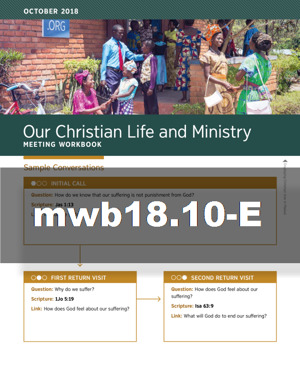
LIFE AND MINISTRY MEETING WORKBOOK | October 2018

Digging for Spiritual Gems: Luke 6-7 – (Week July 2-6, 2018)

Digging for Spiritual Gems: (8 min.)

Luke 6-7

Lu 6:12, 13—In what way did Jesus set a good example for Christians facing major decisions? (w07 8/1 6 ¶1)
Jesus often spent extended periods of time in prayer. (John 17:1-26) For instance, before he chose the 12 men who would become his apostles, Jesus “went out into the mountain to pray, and he continued the whole night in prayer to God.” (Luke 6:12) Although not necessarily spending the whole night in prayer, those who are spiritually-minded follow Jesus’ example. Before making major decisions in life, they take ample time to pray to God, seeking the direction of the holy spirit in making choices that will deepen their spirituality.

Lu 7:35—How can Jesus’ words help us if we are the victims of slander? (“its children” study note on Lu 7:35, nwtsty)
its children: Or “its results.” Here wisdom is personified and depicted as having children. In the parallel account at Mt 11:19, wisdom is depicted as having “works.” Wisdom’s children, or works—that is, the evidence produced by John the Baptist and Jesus—prove that the accusations against them are false. Jesus is, in effect, saying: ‘Look at the righteous works and conduct, and you will know that the charge is false.’

What has this week’s Bible reading taught you about Jehovah?

*** wp18 No. 3 p. 13 God Will Soon End All Suffering ***
Death: That Jehovah has the power to undo death is clearly shown by the three resurrections Jesus is recorded to have performed. One of those whom he brought back to life had been dead for four days.—Mark 5:35-42; Luke 7:11-16; John 11:3-44.

*** w18 January p. 30 par. 12 See the Difference in People ***
12 Jesus showed great love for others. He went from city to city, telling people the good news about the Kingdom of God. He cured the blind, the lame, the lepers, and the deaf. He raised the dead. (Luke 7:22) Jesus even gave his own life in behalf of mankind, though many hated him. Jesus’ love perfectly reflected the love his Father shows. Throughout the earth, Jehovah’s Witnesses express godly love toward others.

*** w18 July p. 27 Cultivate Compassion for “All Sorts of People” ***
For thousands of years, Jehovah has endured the reproach that has been brought on his name. Yet, he remains “kind toward the unthankful and wicked.” (Luke 6:35) His kindness is demonstrated by his patience. Jehovah desires that “all sorts of people” be saved. (1 Tim. 2:3, 4) Although God hates wickedness, he views humans as precious and does not want any to lose their lives.—2 Pet. 3:9.

*** w18 August pp. 10-11 par. 11 Do Not Judge by the Outward Appearance ***
11 We need to see our brothers as Jehovah sees them. A person is not precious to Jehovah because he is wealthy or because he is poor. Our relationship with Jehovah will never be determined by how many material possessions we have or by what we lack. While it is true that Jesus said that “it will be difficult for a rich man to enter the Kingdom of the heavens,” he did not say that it would be impossible. (Matt. 19:23) On the other hand, Jesus also said: “Happy are you who are poor, for yours is the Kingdom of God.” (Luke 6:20) Yet, this did not mean that all poor people were specially blessed and responded to the teaching of Jesus. Many poor people did not respond. The point is, We simply cannot judge a person’s relationship with Jehovah by his material possessions.

*** w18 August pp. 21-22 par. 15 Generous Givers Are Happy People ***
15 Jesus wants us to find happiness by being generous. Many people react favorably to generosity. “Practice giving, and people will give to you,” he urged. “They will pour into your laps a fine measure, pressed down, shaken together, and overflowing. For with the measure that you are measuring out, they will measure out to you in return.” (Luke 6:38) Of course, not all respond positively to our generous giving, but when they do, their gratitude can start a chain reaction. So practice giving whether people seem to appreciate it or not. You never know how much good you can do with just one act of generosity.

*** w16 June p. 4 Jehovah “Cares for You” ***
How much time is Jehovah willing to spend listening to your prayers? An example from the Bible gives us the answer. Before Jesus selected his apostles, “he spent the whole night in prayer to God.” (Luke 6:12) In that prayer, Jesus likely reviewed many of his disciples by name, considered their qualities and weaknesses, and asked his Father for help in choosing them. By the time the sun shone on a new day, Jesus knew that he had selected those best qualified to serve as his apostles. As the “Hearer of prayer,” Jehovah is pleased to listen to all sincere prayers. (Ps. 65:2) Even if a person spends hours praying over a matter of deep concern, Jehovah does not keep track of the time.

*** w15 4/15 p. 22 par. 13 How Real Is Your Relationship With Jehovah? ***
13 Consider this: From his prehuman existence, Jesus observed firsthand Jehovah’s response to the prayers of His human servants. Then, during his earthly ministry, Jesus used prayer as his means of communicating his feelings to his Father in heaven. Would he have done so—even spending an entire night in prayer—had he thought that Jehovah was not really listening? (Luke 6:12; 22:40-46) Would he have taught his disciples to pray had he thought that prayer was nothing more than a psychological crutch? Clearly, Jesus knew that prayer is real communication with Jehovah. On one occasion, Jesus said: “Father, I thank you that you have heard me. True, I knew that you always hear me.” We too can have confidence that Jehovah is the “Hearer of prayer.”—John 11:41, 42; Ps. 65:2.

*** w15 5/15 p. 25 pars. 5-6 Imitate the One Who Promises Everlasting Life ***
5 We can imitate God’s love by the way we treat our neighbor. To illustrate: Suppose a Christian youth, whom we will call Alan, is thinking about an elderly brother whose poor eyesight makes it hard for him to read. He also finds it difficult to walk from house to house in the ministry. Alan remembers Jesus’ words: “Just as you want men to do to you, do the same way to them.” (Luke 6:31) So Alan asks himself, ‘What do I want men to do to me?’ His frank answer is, ‘I want them to play ball with me!’ But the aging brother will not be able to play ball, will he? Jesus’ statement implies that we must ask ourselves, ‘What would I want my neighbor to do to me if I were in his circumstances?’
6 Alan is not elderly, but he has the ability to conceive of experiences he has not had. He observes the elderly brother and listens to him with concern. Gradually, Alan understands what it is like to be an older person who finds it hard to read the Bible or walk from house to house. When Alan feels the aging brother’s distress, he sees what help is needed, and he wants to be helpful. We can do the same. To imitate God’s love, we must put ourselves in our brother’s shoes, so to speak.—1 Cor. 12:26.

*** w15 6/15 pp. 4-5 par. 6 Christ—The Power of God ***
6 It is of interest that when the Devil tempted Jesus to turn stones into loaves of bread, Christ refused to use his miraculous power to satisfy his personal desires. (Matt. 4:2-4) But he did use his power to respond to and satisfy the needs of others. How can we imitate Jesus’ unselfish concern for others? He encouraged God’s servants to “practice giving.” (Luke 6:38) Can we show the noble quality of generosity by inviting others to our home to share a meal and a spiritual feast? Can we be generous with our time after a meeting, aiding someone in need, such as by listening to a brother practice his talk? What help might we be able to offer to those needing assistance in the ministry? We show that we have learned from Jesus by generously providing material and spiritual things to others as we are able.

*** w15 8/1 p. 8 Hope for the Dead—How Can You Be Sure? ***
Jehovah will empower his Son to bring unbounded joy to those who have mourned the loss of loved ones. And how does Jesus feel about the resurrection? Before raising Lazarus to life, Jesus observed the anguish of Lazarus’ sisters and friends, and he “gave way to tears” himself. (John 11:35) On another occasion, Jesus encountered the widow of Nain, who had lost her only son in death. Jesus “was moved with pity for her, and he said to her: ‘Stop weeping.’” Immediately he raised her son. (Luke 7:13) So Jesus feels deeply about grief and death. How delighted he will be when he will turn sorrow into elation all over the world!

*** w15 12/1 p. 9 Hypocrisy! Will It Ever End? ***
On the other hand, God and His Son, Jesus, greatly value humans who are honest and sincere. For example, early in Jesus’ ministry, a man named Nathanael approached him. Upon seeing him, Jesus exclaimed: “See, truly an Israelite in whom there is no deceit.” (John 1:47) Nathanael, also known as Bartholomew, became one of Jesus’ 12 apostles.—Luke 6:13-16.

What other spiritual gems have you discovered in this week’s Bible reading?

*** w18 January p. 26 par. 16 What Kind of Love Brings True Happiness? ***
16 Jesus displayed a perfectly balanced view of pleasures. He attended “a marriage feast” and “a big reception feast.” (John 2:1-10; Luke 5:29) At the wedding, he miraculously changed water into wine, adding to the supply, which had run short. And on another occasion, he rejected the self-righteous views of those who criticized him for eating and drinking.—Luke 7:33-36.

*** wp17 No. 2 p. 14 Enjoy the Benefits of Giving ***
Jesus urged his followers: “Practice giving, and people will give to you. They will pour into your laps a fine measure, pressed down, shaken together, and overflowing. For with the measure that you are measuring out, they will measure out to you in return.” (Luke 6:38) When you give, people are more likely to respond to your generosity with gratitude and become generous themselves. Giving thus fosters cooperation and friendship.

*** w17 July p. 32 par. 2 Questions From Readers ***
Christians consider life to be far more valuable than material things. “Life does not result from the things [a man] possesses.” (Luke 12:15) Thus, if a mild tongue fails to stop an armed robber, wise Christians heed the principle embodied in Jesus’ words: “Do not resist the one who is wicked.” It may even require that we give up our inner and outer garments, so to speak. (Matt. 5:39, 40; Luke 6:29) The best strategy, of course, is prevention. If we shun “the showy display of [our] means of life” and are known by our neighbors as peace-loving Witnesses of Jehovah, we may avoid being targeted by violent criminals.—1 John 2:16; Prov. 18:10.

*** w17 September p. 12 par. 16 Imitate Jehovah’s Compassion ***
16 Mental-health experts say that practicing compassion can improve your health, well-being, and relationships. When you relieve the suffering of others, you will feel happier, more optimistic, less lonely, and less inclined to think negative thoughts. Yes, your showing compassion will benefit you. (Eph. 4:31, 32) Christians who lovingly seek to help others are rewarded with a good conscience, knowing that they are acting in harmony with godly principles. Having such a disposition makes for a more caring parent, a better spouse, and a better friend. Those who are quick to show compassion are, in turn, more likely to receive help and support when they need it.—Read Matthew 5:7; Luke 6:38.

*** w17 October pp. 10-11 par. 15 “Love . . . in Deed and Truth” ***
15 Forgive freely. We forgive by pardoning someone who has offended us and by letting go of our resentment toward him. By “putting up with one another in love, earnestly endeavoring to maintain the oneness of the spirit in the uniting bond of peace,” we can freely forgive those who may not be aware that they offended us. (Eph. 4:2, 3) For our forgiveness to be genuine, we must control our thinking so that we do “not keep account of the injury.” (1 Cor. 13:4, 5) If we were to harbor resentment or hold a grudge, we would risk permanently damaging our relationship not only with our brother or sister but also with Jehovah. (Matt. 6:14, 15) We can also demonstrate our sincere forgiveness by praying for those who sin against us.—Luke 6:27, 28.

*** w17 December p. 4 par. 3 “I Know He Will Rise” ***
3 It is unlikely that Martha, living near Jerusalem, observed Jesus resurrect the son of a widow near Nain in Galilee. Yet, she had probably heard about it. And it is similar with Jesus’ bringing Jairus’ daughter back to life. Those at the girl’s house “knew she had died.” Still, Jesus took her lifeless hand and said: “Child, get up!” And she did, immediately. (Luke 7:11-17; 8:41, 42, 49-55) Both Martha and her sister, Mary, were aware that Jesus could cure the sick. For that reason, they felt that had Jesus been present, Lazarus would not have died. Now that Jesus’ dear friend was dead, though, what did the future hold? Note that Martha spoke of Lazarus’ coming back to life in the future, “on the last day.” Why could she be certain of that? And why can you be sure that there will be a future resurrection that may include your loved ones?

*** w16 June p. 26 par. 10 Do Not Let the Faults of Others Stumble You ***
10 The Bible provides us with accounts of servants of God who remained loyal to Jehovah and his people despite the serious faults of others around them. For example, after spending a night in prayer to his Father, Jesus selected the 12 apostles. Judas Iscariot was one of those. When Judas later betrayed him, Christ did not let that defection mar his own relationship with his Father, Jehovah; nor did Jesus allow Peter’s denial to do that. (Luke 6:12-16; 22:2-6, 31, 32) Jesus knew that those actions were not the fault of Jehovah or his people in general. Jesus continued his wonderful work despite the disappointment that some of his followers caused him. Jehovah rewarded him by resurrecting him from the dead, thus opening the way for Jesus to become King of the heavenly Kingdom.—Matt. 28:7, 18-20.

*** w16 September p. 29 par. 6 Parents, Help Your Children Build Faith ***
6 As a teacher, Jesus reached hearts because he loved Jehovah, God’s Word, and people. (Luke 24:32; John 7:46) Similar love will help parents reach the hearts of their children. (Read Deuteronomy 6:5-8; Luke 6:45.) So parents, be good students of the Bible and of our study aids. Take an interest in creation and in articles in our publications that discuss this topic. (Matt. 6:26, 28) Your doing so will broaden your knowledge, deepen your appreciation for Jehovah, and better equip you to teach your young ones.—Luke 6:40.

*** w16 November p. 8 par. 16 “Keep On Encouraging One Another Each Day” ***
16 Seize opportunities to encourage others. If we see something that merits commendation, why hold back? Consider what happened when Paul and Barnabas were at Antioch in Pisidia. The presiding officers of the synagogue there told them: “Men, brothers, if you have any word of encouragement for the people, tell it.” Paul responded by giving a fine talk. (Acts 13:13-16, 42-44) If we can offer a word of encouragement, why not speak up? We will very likely find that if we make it a habit to be encouraging, people will encourage us in return.—Luke 6:38.

*** w15 1/15 p. 21 par. 14 Build a Strong and Happy Marriage ***
14 No doubt you like to be treated with dignity and respect. You appreciate it when your thoughts are acknowledged and your feelings are taken into account. But have you ever heard someone say, “I will give him a taste of his own medicine”? While such a reaction might at times be understandable, the Bible tells us: “Do not say: ‘I will do to him just as he has done to me.’” (Prov. 24:29) In fact, Jesus recommended a more positive way of handling difficult situations. This rule of conduct is so well-known that it is often called the Golden Rule: “Just as you want men to do to you, do the same way to them.” (Luke 6:31) Jesus meant that we should treat people the way we would like to be treated and not repay unkindness with unkindness. In marriage, it means that we need to put into the relationship what we hope to get out of it.

*** w15 2/15 p. 7 par. 8 Imitate Jesus’ Humility and Tenderness ***
8 How can we imitate Jesus in demonstrating humility? Our attitude. Humility restrains us from overstepping our authority. If we recognize that we are not authorized to sit in judgment, we will not be quick to criticize others for their faults or question their motives. (Luke 6:37; Jas. 4:12) Humility helps us to avoid being “overly righteous,” looking down on those who may not have the abilities or privileges that we have. (Eccl. 7:16) Humble elders do not view themselves as superior to fellow believers. Rather, such shepherds “consider others superior” and conduct themselves as lesser ones.—Phil. 2:3; Luke 9:48.

*** w15 2/15 p. 16 Maintain Your Zeal for the Ministry ***
We should not assume that a new publisher will acquire teaching skills simply by participating in the ministry. He or she needs personal instruction from a kind and loving trainer. Such training would include showing the less experienced publisher how to (1) prepare and practice a presentation, (2) engage a householder or a passerby in conversation, (3) offer literature, (4) follow up interest, and (5) start a Bible study. Very likely, good results will be obtained if the trainee observes and imitates the methods used in the ministry by the one who is helping him. (Luke 6:40) The new publisher will undoubtedly appreciate having someone with him who can listen and help out if the need arises. The less experienced publisher will also benefit from receiving commendation and helpful suggestions.—Eccl. 4:9, 10.

*** w15 10/15 p. 24 par. 7 Keep Meditating on Spiritual Things ***
7 While reading may be done with little effort, meditation requires concentration. That is why the imperfect human brain is inclined to switch to easier, less demanding tasks. Thus, the best time to meditate is when you are rested and in a stress-free environment with few distractions. The psalmist found that a good time to meditate was while he was awake in bed during the night. (Ps. 63:6) Jesus, who had perfect mental powers, knew the advantage of being in quiet places to meditate and pray.—Luke 6:12.

*** w15 11/15 p. 12 par. 16 Train Your Teenager to Serve Jehovah ***
16 You cannot read hearts, but with God’s help you can exercise insight. Will you use that ability to look for the good in your teenager? No one wants to be labeled a “troublemaker.” In thought or word, never label your son or daughter a “rebellious teenager” or a “problem child.” Even if your teen is struggling, let him know that you see his potential and heartfelt desire to do what is right. Note any signs of growth and progress, and commend him. Help him to develop his good qualities by giving him increased responsibility when possible. Jesus did that with his disciples. About a year and a half after meeting Nathanael (also called Bartholomew), Jesus selected him as an apostle, and Nathanael proved to be a zealous Christian. (Luke 6:13, 14; Acts 1:13, 14) Your commendation and encouragement will help your child to feel that he is, not someone who always fails to measure up, but a capable Christian whom Jehovah can use.

Digging for Spiritual Gems: Luke 4-4-5 (Week June 25 – July 01, 2018)

Luke 4-5
Digging for Spiritual Gems: (8 min.)
https://meekspaceng.blogspot.com.ng

Lu 4:17—What shows that Jesus was thoroughly familiar with God’s Word? (“the scroll of the prophet Isaiah” study note on Lu 4:17, nwtsty)
the scroll of the prophet Isaiah: The Dead Sea Scroll of Isaiah is composed of 17 parchment strips attached one to another, making up a roll measuring 7.3 m (24 ft) in length with 54 columns. The scroll used in the synagogue in Nazareth may have been of similar length. Without the help of chapter and verse numbers, which did not exist in the first century, Jesus would have had to locate the passage he wanted to read. But the fact that he found the place where the prophetic words were written demonstrates his thorough familiarity with God’s Word.

Lu 4:25—How long did the drought last in the days of Elijah? (“for three years and six months” study note on Lu 4:25, nwtsty)
for three years and six months: According to 1Ki 18:1, Elijah announced the end of the drought “in the third year.” Some have therefore claimed that Jesus contradicts the account in 1 Kings. However, the Hebrew Scripture account does not suggest that the drought lasted less than three years. The phrase “in the third year” evidently applies to the period that began when Elijah first announced the drought to Ahab. (1Ki 17:1) That announcement likely took place when the dry season—which typically lasts for up to six months but which may have lasted longer than usual—was already in progress. Further, the drought did not end immediately when Elijah again appeared before Ahab, “in the third year,” but only after the subsequent fire test on Mount Carmel. (1Ki 18:18-45) Hence, Jesus’ words recorded here, as well as the similar words of Christ’s half brother, recorded at Jas 5:17, harmonize well with the chronology suggested at 1Ki 18:1.

What has this week’s Bible reading taught you about Jehovah?

*** w18 January p. 26 pars. 16-17 What Kind of Love Brings True Happiness? ***
16 Jesus displayed a perfectly balanced view of pleasures. He attended “a marriage feast” and “a big reception feast.” (John 2:1-10; Luke 5:29) At the wedding, he miraculously changed water into wine, adding to the supply, which had run short. And on another occasion, he rejected the self-righteous views of those who criticized him for eating and drinking.—Luke 7:33-36.
17 Yet, Jesus did not immerse himself in a life of pleasure. He put Jehovah first and expended himself tirelessly in behalf of others. So that many might live, he willingly endured a painful death on a stake. Addressing those who would follow in his footsteps, Jesus said: “Happy are you when people reproach you and persecute you and lyingly say every sort of wicked thing against you for my sake. Rejoice and be overjoyed, since your reward is great in the heavens, for in that way they persecuted the prophets prior to you.”—Matt. 5:11, 12.

*** w18 February p. 21 par. 12 What Does It Mean to Be a Spiritual Person? ***
12 Yet, of all the people who have lived, who is the most outstanding example of a spiritual person? It is Jesus, of course. Throughout his life and ministry, he showed that he wanted to imitate his Father, Jehovah. He thought, felt, and acted like Jehovah and lived in harmony with God’s will and standards. (John 8:29; 14:9; 15:10) Note, for example, how Jehovah’s feelings of compassion are described by the prophet Isaiah, and compare that description with what the Gospel writer Mark reports about Jesus’ feelings. (Read Isaiah 63:9; Mark 6:34.) Are we like Jesus, ever ready to show compassionate concern when we meet people who need help? In addition, Jesus devoted himself to the work of preaching and teaching the good news. (Luke 4:43) All such feelings and actions are marks of a spiritual person.

*** w18 March pp. 26-27 par. 16 Discipline—Evidence of God’s Love ***
16 Jesus always listened obediently to his Father, even when doing so was very difficult. (Matt. 26:39) And he gave his Father the credit for his teachings and wisdom. (John 5:19, 30) Jesus’ humility and obedience drew people of honest heart to him and helped to make him a compassionate and gracious teacher. (Read Luke 4:22.) His kind words heartened those who were figuratively like a bruised reed or the wick of an oil lamp about to go out. (Matt. 12:20) Even when his patience was tested, Jesus was kind and loving. This was evident when he corrected his apostles for showing a selfish, ambitious spirit.—Mark 9:33-37; Luke 22:24-27.

*** w18 April pp. 11-12 par. 13 Serve Jehovah, the God of Freedom ***
13 What has Jehovah commanded us to do today? As disciples of Jesus, we are well-acquainted with our God-given commission. (Read Luke 4:18, 19.) Today, the vast majority of people are still blinded by the god of this system of things and are in bondage—religious, economic, and social. (2 Cor. 4:4) It is our privilege to follow Jesus’ example of helping people to come to know and worship Jehovah, the God of freedom. (Matt. 28:19, 20) That is not an easy work, and there are many challenges. In some lands, people are becoming more indifferent, some even hostile. The question that each of us should consider is, ‘Can I use my freedom to give greater support to the Kingdom work?’

*** w18 June p. 10 par. 11 May We All Be One as Jehovah and Jesus Are One ***
11 To fulfill their commission, Jesus’ disciples needed to conquer the pride and prejudice they had. Before ascending to heaven, he assigned them to bear witness to “all Judea and Samaria, and to the most distant part of the earth.” (Acts 1:8) Jesus had earlier prepared them for such an extensive assignment by drawing their attention to good qualities in foreigners. He praised a foreign army officer for his outstanding faith. (Matt. 8:5-10) In his hometown of Nazareth, Jesus spoke of how Jehovah had favored foreigners, such as the Phoenician widow from Zarephath and the Syrian leper Naaman. (Luke 4:25-27) And Jesus not only preached to a Samaritan woman but he spent two days in a Samaritan town because of the people’s interest in his message.—John 4:21-24, 40.

*** wp17 No. 2 p. 12 Escape From Slavery—Then and Now ***
“With Jehovah our God there is no injustice,” says the Bible, and it assures us that he has not changed. (2 Chronicles 19:7; Malachi 3:6) God sent Jesus to “proclaim liberty to the captives . . . , to send the crushed ones away free.” (Luke 4:18) Did this mean freedom for every literal slave? Apparently not. Jesus was sent to liberate people from bondage to sin and death. He later declared: “The truth will set you free.” (John 8:32) Even today, the truth that Jesus taught liberates people in many ways.—See the box “Escape From a Different Kind of Slavery.”

*** w17 July p. 13 par. 7 “Weep With Those Who Weep” ***
7 Jehovah’s tender empathy was perfectly expressed in the words and actions of his compassionate Son, Jesus, when he was on earth. (John 5:19) Jesus was sent to provide comfort for “the brokenhearted” and “all who mourn.” (Isa. 61:1, 2; Luke 4:17-21) Hence, he was characterized by deep compassion—a sympathetic awareness of people’s suffering and a heartfelt desire to alleviate their suffering.—Heb. 2:17.

*** w15 6/15 p. 9 pars. 4-5 He Loved People ***
4 Jesus was well into his public ministry, and his most recent area of activity was Galilee. In one of the cities there, Jesus encountered a pitiful sight. (Mark 1:39, 40) Right in front of him was a man with a frightful disease, leprosy. Testifying to the advanced stage of the man’s illness, physician Luke describes him as being “full of leprosy.” (Luke 5:12) “When he caught sight of Jesus, [the leper] fell facedown and begged him: ‘Lord, if you just want to, you can make me clean.’” The man had no doubt that Jesus possessed the power to heal him, but what he needed to know was, did Jesus have the desire to do so? How would Jesus respond to this heartfelt request? What was Jesus thinking as he beheld this man who was probably disfigured? Would Jesus be like the Pharisees, who had developed a heartless view of people suffering from this disease? What would you have done?
5 Apparently, this leprous man had neglected to call out “Unclean, unclean!” as the Mosaic Law stipulated. Jesus did not bring that up. Rather, he concentrated on the man himself and his needs. (Lev. 13:43-46) We do not know exactly what thoughts were going through Jesus’ mind, but we do know what was in his heart. Moved with compassion, Jesus did the incredible. He stretched out his hand, touched the leper, and with a voice reflecting both strength and tenderness, Jesus said: “I want to! Be made clean.” Then “the leprosy vanished from him.” (Luke 5:13) Indeed, Jehovah’s power was there—not only for Christ to perform such a miracle but also for Jesus to demonstrate how much he loved people.—Luke 5:17.

*** w15 6/15 p. 28 par. 13 Live in Harmony With the Model Prayer—Part II ***
13 Jehovah is holy and therefore never tempts anyone to do evil. Rather, it is the Devil who is “the Tempter.” (Matt. 4:3) The Devil can create tempting situations. Yet, it is up to each individual whether he will allow himself to be brought into temptation or not. (Read James 1:13-15.) For his part, Jesus immediately rejected each temptation by the use of a relevant quotation from God’s Word. Thus, Jesus upheld God’s rightful sovereignty. But Satan did not give up. He waited “until another convenient time.” (Luke 4:13) Jesus continued to resist all of Satan’s efforts to break his integrity. Christ upheld the righteousness of Jehovah’s sovereignty and proved that a perfect human can be faithful despite the most extreme test. However, Satan attempts to ensnare Jesus’ followers, including you.

*** w15 12/15 p. 5 par. 7 Jehovah, the God of Communication ***
7 When God’s firstborn came to earth, he likely spoke and taught in what the Bible calls Hebrew. (John 19:20; 20:16; Acts 26:14) First-century Hebrew was evidently influenced by Aramaic, so Jesus may have used some Aramaic expressions. However, he also knew the ancient Hebrew of Moses and the prophets, which was read each week in the synagogues. (Luke 4:17-19; 24:44, 45; Acts 15:21) In addition, Greek and Latin were spoken in Israel. The Scriptures are silent about whether Jesus also spoke those languages.

*** w15 12/15 p. 21 par. 15 Use the Power of Your Tongue for Good ***
15 How we say something can be as important as what we say. When Jesus spoke in the synagogue of his hometown of Nazareth, the people were “amazed at the gracious words coming out of his mouth.” (Luke 4:22) Gracious speech appeals to the heart and in no way weakens the power of our tongue. In fact, graciousness can make our speech more persuasive. (Prov. 25:15) We can imitate Jesus’ gracious speech by being kind, courteous, and considerate of others’ feelings. Seeing the effort a crowd made to hear him speak, Jesus was moved with pity and “started to teach them many things.” (Mark 6:34) Even when he was being insulted, Jesus did not resort to harsh speech.—1 Pet. 2:23.

What other spiritual gems have you discovered in this week’s Bible reading?

*** w18 May p. 23 par. 6 Know Your Enemy ***
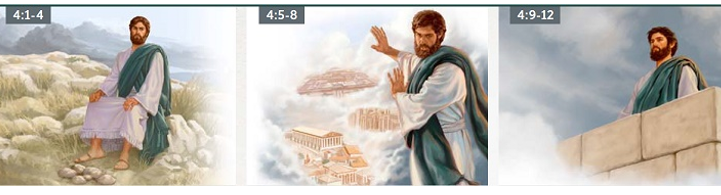
6 By means of his spirit organization, Satan exerts authority over all human governments. That fact was made plain when Satan showed Jesus “all the kingdoms of the inhabited earth” and said: “I will give you all this authority and their glory, because it has been handed over to me, and I give it to whomever I wish.” (Luke 4:5, 6) Despite Satan’s evil influence, many governments do a measure of good for their citizens. And individual rulers may have noble intentions. But no human government or individual ruler is capable of bringing about the changes mankind needs most.—Ps. 146:3, 4; Rev. 12:12.

*** w18 May p. 31 par. 17 Young Ones—Stand Firm Against the Devil ***
17 How could Satan induce us to remove our helmet? Consider the way he dealt with Jesus. Satan surely knew that Jesus had the hope of eventually ruling mankind. But Jesus would have to wait until Jehovah’s appointed time. And before then, he would have to suffer and die. So Satan offered Jesus the chance to fulfill his hope sooner. Satan suggested that if Jesus would do one act of worship, he could have it all and have it right then. (Luke 4:5-7) Similarly, Satan knows that Jehovah offers us material benefits in the new system. But we have to wait, and we might have to suffer hardships in the meantime. So Satan offers us tempting opportunities to enjoy such a life now. He wants us to seek material benefits first—to have it all and have it now. Satan urges us to seek the Kingdom second.—Matt. 6:31-33.

*** wp17 No. 6 p. 8 What Did Jesus Really Look Like? ***
For the better part of 30 years, Jesus was a carpenter, working without the benefit of modern power tools. (Mark 6:3) He, therefore, must have had a sturdy build. Early in his ministry, he single-handedly “drove all those with the sheep and cattle out of the temple, and he poured out the coins of the money changers and overturned their tables.” (John 2:14-17) It takes a strong and powerful man to perform that feat. Jesus used the body that God had prepared for him to fulfill his God-given commission: “I must also declare the good news of the Kingdom of God to other cities, because for this I was sent.” (Luke 4:43) It took extraordinary stamina to travel throughout Palestine on foot and declare this message.

*** w17 January pp. 27-28 par. 3 “These Things Entrust to Faithful Men” ***
3 Many of us love the work we do and would like to continue doing it indefinitely. Sadly, though, from the days of Adam, each generation grows old and is replaced by another. (Eccl. 1:4) In recent times, this transition has presented unique challenges for true Christians. The work of Jehovah’s people has grown in scope and complexity. As we tackle new projects, new ways of doing things are adopted—often ways that involve the use of rapidly changing technology. Some older ones may find it hard to keep pace with these advances. (Luke 5:39) Even when that is not the case, younger ones may have greater strength and energy than older ones have. (Prov. 20:29) Thus, it is both loving and practical for older ones to prepare younger ones to take on greater responsibility.—Read Psalm 71:18.

*** w17 February p. 10 par. 8 The Ransom—A “Perfect Present” From the Father ***
8 While on earth, Jesus helped his disciples to see the importance of God’s Kingdom. Immediately after his baptism, Jesus proclaimed “the good news of the Kingdom of God” far and wide. (Luke 4:43) In his last words to his disciples before he returned to heaven, Jesus instructed them to be witnesses of him “to the most distant part of the earth.” (Acts 1:6-8) By means of the Kingdom-preaching work, people throughout the earth would have an opportunity to learn about the ransom and become subjects of God’s Kingdom. Today, we show our support for the Kingdom by assisting Christ’s brothers on earth in carrying out the commission to preach the good news of the Kingdom worldwide.—Matt. 24:14; 25:40.

*** w17 July p. 23 par. 5 “May He . . . Give Success to All Your Plans” ***
5 Jesus grew up to be a happy adult. What made him happy? He knew that, among other things, God wanted him “to declare good news to the poor . . . and a recovery of sight to the blind.” (Luke 4:18) Doing what God asked him to do made Jesus happy. Psalm 40:8 expresses his feelings: “To do your will, O my God, is my delight.” Jesus enjoyed teaching people about his heavenly Father. (Read Luke 10:21.) Once, after teaching a woman about true worship, Jesus said to his disciples: “My food is to do the will of him who sent me and to finish his work.” (John 4:31-34) Showing love for God and for others made Jesus happy. It can make you happy too.

*** wp16 No. 4 p. 4 The Bible Survived Decay ***
HOW THE BIBLE SURVIVED: Jewish law compelled every king to “write for himself in a book a copy of this Law,” the first five books of the Bible. (Deuteronomy 17:18) Moreover, professional copyists produced so many manuscripts that by the first century C.E., the Scriptures could be found in synagogues throughout Israel and even in distant Macedonia! (Luke 4:16, 17; Acts 17:11) How did some very old manuscripts survive until today?
“Jews were known to put scrolls containing Scripture in pitchers or jars in order to preserve them,” says New Testament scholar Philip W. Comfort. Christians evidently continued that tradition. Consequently, some early Bible manuscripts have been discovered in clay jars, as well as in dark closets and caves and in exceptionally dry regions.
THE RESULT: Thousands of portions of Bible manuscripts—some over 2,000 years old—survive to this day. No other ancient text has so many manuscripts from so long ago.

*** w16 March p. 23 Can You Help in Your Congregation? ***
Martin Goodman, professor at Oxford University, observes that the “sense of mission set Christians apart from other religious groups, including Jews, in the early Roman empire.” Jesus had traveled from place to place to carry out his ministry. Following his example, true Christians would have understood that spreading “the good news of the Kingdom of God” would involve finding people who desired to know Bible truth. (Luke 4:43) This is one of the reasons why the first-century Christian congregation had “apostles,” a term that literally refers to those sent forth, envoys. (Mark 3:14) Jesus commanded his followers: “Go, therefore, and make disciples of people of all the nations.”—Matt. 28:18-20.

*** w16 May p. 9 par. 4 “Go, . . . and Make Disciples of People of All the Nations” ***
4 Was Jesus referring only to the individual efforts of his followers, or was he alluding to an organized campaign to preach the good news? Since one individual would not be able to go to “all the nations,” this work would require the organized efforts of many. Jesus indicated as much when he invited his disciples to become “fishers of men.” (Read Matthew 4:18-22.) The type of fishing he referred to here was not that of a lone fisherman using a line and a lure, sitting idly while waiting for the fish to bite. Rather, it involved the use of fishing nets—a labor-intensive activity that at times required the coordinated efforts of many.—Luke 5:1-11.

*** w16 August p. 27 pars. 8-9 Do You See the Need to Train Others? ***
8 Converse with people. Jesus often spoke to individuals about the Kingdom. For instance, he carried on a lively and fruitful conversation with a woman at Jacob’s well near the city of Sychar. (John 4:5-30) He also spoke with Matthew Levi, a tax collector. The Gospels record very little of that conversation, but Matthew accepted Jesus’ invitation to be his follower. Matthew and others heard Jesus speak at some length during a feast held in Matthew’s home.—Matt. 9:9; Luke 5:27-39.
9 On another occasion, Jesus spoke in a friendly way to Nathanael, who had a negative view of people from Nazareth. However, Nathanael was moved to change his thinking. He decided to learn more about what Jesus, a man from Nazareth, was teaching. (John 1:46-51) So we have good reason to train new publishers to converse with people in a friendly, relaxed manner. Those whom we help in this way will likely be delighted to see how honesthearted people respond favorably to personal interest and kind words.

*** w16 August pp. 27-28 pars. 10-11 Do You See the Need to Train Others? ***
10 Cultivate interest. Jesus had limited time to carry out his ministry. Nevertheless, he took time to cultivate the interest people showed in the good news. For instance, Jesus taught a crowd, using a boat as a platform. On that occasion, he miraculously gave Peter a huge catch of fish and told him: “From now on you will be catching men alive.” What result did Jesus’ words and actions produce? Peter and his associates “brought the boats back to land and abandoned everything and followed [Jesus].”—Luke 5:1-11.
11 Nicodemus, a member of the Sanhedrin, became interested in Jesus’ teaching. He wanted to learn more but was afraid of what others would say if he spoke with Jesus in public. Jesus was flexible and generous with his time; he met with Nicodemus at night—away from the crowds. (John 3:1, 2) What lesson can we learn from these accounts? God’s Son set aside time to build up the faith of individuals. Should we not be diligent in making return visits and conducting Bible studies with interested ones?

*** w15 2/15 p. 13 par. 11 Imitate Jesus’ Courage and Discernment ***
11 Jesus showed discernment in all he said and did. In his speech. He used good judgment when he preached the good news, choosing “gracious words” that amazed his listeners. (Luke 4:22; Matt. 7:28) He often let God’s Word speak for him—reading, quoting, or referring to just the right scriptures to make his point. (Matt. 4:4, 7, 10; 12:1-5; Luke 4:16-21) Jesus also explained the Scriptures, doing so in ways that moved the hearts of his listeners. After his resurrection, when speaking to two disciples on their way to Emmaus, he “interpreted to them things pertaining to himself in all the Scriptures.” The disciples later said: “Were not our hearts burning within us . . . as he was fully opening up the Scriptures to us?”—Luke 24:27, 32.

*** w15 10/15 p. 21 par. 10 Serve Jehovah Without Distraction ***
10 Many things happened during Jesus’ ministry that could have distracted him, but he never succumbed to them. Early in his ministry, after he had taught the crowds and performed miracles in Capernaum, people begged him not to leave their city. But how did Jesus react to this flattering request? He said: “I must also declare the good news of the Kingdom of God to other cities, because for this I was sent.” (Luke 4:42-44) True to his word, Jesus walked the length and breadth of Palestine, preaching and teaching. Though perfect, he had normal human needs and sometimes felt very tired because of expending himself in God’s service.—Luke 8:23; John 4:6.

Digging for Spiritual Gems: Luke 2-3 (Week June 18-24, 2018)

Digging for Spiritual Gems: (8 min.)
Luke 2-3

Lu 2:14—What is the meaning of this verse? (“and on earth peace among men of goodwill,” “men of goodwill” study notes on Lu 2:14, nwtsty)

and on earth peace among men of goodwill: Some manuscripts have readings that could be rendered “and on earth peace, goodwill toward men,” and this wording is reflected in some Bible translations. But the reading employed by the New World Translation has much stronger manuscript support. This angelic announcement did not refer to an expression of God’s goodwill toward all humans regardless of their attitudes and actions. Rather, it refers to those who will receive his goodwill because they display genuine faith in him and become followers of his Son.—See study note on men of goodwill in this verse.
men of goodwill: The “goodwill” referred to in this angelic statement is evidently that displayed by God, not by humans. The Greek word eu·do·kiʹa can also be rendered “favor; good pleasure; approval.” The related verb eu·do·keʹo is used at Mt 3:17; Mr 1:11; and Lu 3:22 (see study notes on Mt 3:17; Mr 1:11), where God addresses his Son right after his baptism. It conveys the basic meaning, “to approve; to be well-pleased with; to regard favorably; to take delight in.” In line with this usage, the expression “men of goodwill” (an·throʹpois eu·do·kiʹas) refers to people who have God’s approval and goodwill, and it could also be rendered “people whom he approves; people with whom he is well-pleased.” So this angelic statement was referring to God’s goodwill, not toward men in general, but toward those who would please him by their genuine faith in him and by becoming followers of his Son. Although the Greek word eu·do·kiʹa in some contexts can refer to the goodwill of humans (Ro 10:1; Php 1:15), it is frequently used with regard to God’s goodwill, or good pleasure, or to the way approved by him (Mt 11:26; Lu 10:21; Eph 1:5, 9; Php 2:13; 2Th 1:11). In the Septuagint at Ps 51:18 [50:20, LXX], the word is used about the “goodwill” of God.

Lu 3:23—Who was Joseph’s father? (wp16.3 9 ¶1-3)

Joseph, the carpenter of Nazareth, was the adoptive father of Jesus. But who was Joseph’s father? Jesus’ genealogy in Matthew’s Gospel names a certain Jacob, whereas Luke’s says that Joseph was “son of Heli.” Why the seeming discrepancy?—Luke 3:23; Matthew 1:16.

Matthew’s account reads: “Jacob became father to Joseph,” employing a Greek term indicating clearly that Jacob was Joseph’s natural father. So Matthew was tracing Joseph’s natural genealogy, the kingly line of David, through which the legal right to the throne passed to Joseph’s adoptive son, Jesus.
On the other hand, Luke’s account says: “Joseph, son of Heli.” That expression, “son of,” can be understood as “son-in-law of.” A similar case is found at Luke 3:27, where Shealtiel, whose real father was Jeconiah, is listed as “son of Neri.” (1 Chronicles 3:17; Matthew 1:12) Shealtiel was likely married to an unnamed daughter of Neri, thus becoming his son-in-law. Joseph was in the same sense “son” of Heli, as he married Heli’s daughter Mary. So Luke traces Jesus’ natural lineage “according to the flesh,” through his biological mother, Mary. (Romans 1:3) The Bible thus gives us two distinct and useful genealogies for Jesus.

What has this week’s Bible reading taught you about Jehovah?

*** w18 June p. 10 par. 9 May We All Be One as Jehovah and Jesus Are One ***
9 After making it clear that we should view one another as brothers and sisters, Jesus stressed the need for humility. (Read Matthew 23:11, 12.) As noted, undue pride among his apostles led to some disunity. And pride of race could also have been a problem. Did the Jews have reason to be proud because they were descendants of Abraham? Many Jews had that deep-seated conviction. But John the Baptist told them: “God is able to raise up children for Abraham from these stones.”—Luke 3:8.

*** w18 July p. 10 par. 12 Whose Recognition Do You Seek? ***
12 When Mary eventually gave birth to Jesus, Jehovah did not honor any of the prominent officials or rulers in Jerusalem and Bethlehem by letting them know what had happened. Angels appeared to lowly shepherds who were caring for sheep in the fields outside Bethlehem. (Luke 2:8-14) These shepherds then visited the newborn baby. (Luke 2:15-17) How pleasantly surprised Mary and Joseph must have been to see Jesus honored in such a manner! Consider the contrast between Jehovah’s way of doing things and that of the Devil. When Satan sent astrologers to visit Jesus and his parents, all of Jerusalem became agitated at the news of Jesus’ birth. (Matt. 2:3) This very public announcement of Jesus’ birth ultimately resulted in the death of many innocent children.—Matt. 2:16.

*** w17 June pp. 6-7 par. 12 Jehovah Provides Comfort in All Our Trials ***
12 Even if we feel a deep void in our life—whether from childlessness or from the death of a loved one—we can still gain comfort. In Jesus’ day, the prophetess Anna lost her husband after only seven years of marriage. The Bible account makes no mention of any children. What was Anna still doing at 84 years of age? Luke 2:37 states: “She was never missing from the temple, rendering sacred service night and day with fasting and supplications.” Yes, Anna found comfort as well as joy in worshipping Jehovah.

*** w16 March p. 17 pars. 16-17 You Can Share in Strengthening Our Christian Unity—How? ***
16 Picture the Israelites in Bible times praising Jehovah during a festival at his temple in Jerusalem. They would have prepared for the journey, cared for one another’s needs en route, and then been united in worship at the temple. All of this called for cooperation. (Luke 2:41-44) As we continue our journey toward the new world, we too need to be harmoniously joined together and cooperating. This takes regular, conscientious effort. Do you need to give this matter more attention?
17 Think of what blessings await us! We have already left behind the disunity and confusion marking the present system of things. We now see being fulfilled what both Isaiah and Micah foretold—God’s people are unitedly going up to “the mountain of Jehovah.” (Isa. 2:2-4; read Micah 4:2-4.) Indeed, how elevated our form of worship is in “the final part of the days.” But how great will be our happiness and joy when we live at the time when all mankind will be harmoniously joined together and cooperating!

*** w15 2/15 p. 11 par. 4 Imitate Jesus’ Courage and Discernment ***
4 Even as a 12-year-old boy, Jesus courageously stood up for what was right. Note what happened when young Jesus was “in the temple, sitting in the midst of the teachers.” (Read Luke 2:41-47.) Those teachers were well-versed not only in the Mosaic Law but also in the man-made traditions that undermined it. But Jesus was not intimidated into keeping quiet; he was “asking them questions.” Surely he was not asking the typical questions of a curious boy. We can imagine Jesus asking thought-provoking questions that made those learned teachers sit up and take notice. And if the teachers tried to trip Jesus up by asking him controversial questions, they failed. Why, everyone listening—including the teachers—were in “amazement at his understanding and his answers”—answers that no doubt upheld the truth of God’s Word!

*** w15 7/15 p. 12 Serving Jehovah in “the Calamitous Days” ***
We strengthen our faith by praying, examining God’s Word, and attending Christian meetings. The aged prophet Daniel regularly prayed three times a day and kept studying God’s Word. (Dan. 6:10; 9:2) The elderly widow Anna “was never missing from the temple.” (Luke 2:36, 37) When you attend meetings whenever possible and participate as much as you can, you refresh not only yourself but all in attendance. And Jehovah always delights in your prayers, even if you are limited in what you can do.—Prov. 15:8.

What other spiritual gems have you discovered in this week’s Bible reading?

*** w18 February p. 21 par. 11 What Does It Mean to Be a Spiritual Person? ***
As time passed, Mary carefully noted what took place in Jesus’ life and paid attention to the words of wisdom he spoke. Furthermore, she “kept all these sayings in her heart.” (Luke 2:51) She was clearly interested in God’s purpose in connection with the Messiah. Does not Mary’s example help us to think of how we can put God’s will first in our life?

*** w18 June p. 4 par. 4 “My Kingdom Is No Part of This World” ***
4 Apart from those extremists, ordinary Jews were keenly awaiting the arrival of a political Messiah. That is, they expected that when the Messiah appeared, he would bring glory to their nation and freedom from the yoke of Rome. (Luke 2:38; 3:15) Many believed that the Messiah would establish a kingdom on earth in Israel. When that occurred, millions of Jews scattered abroad would return to their homeland. Recall that John the Baptist once asked Jesus: “Are you the Coming One, or are we to expect a different one?” (Matt. 11:2, 3) John may have wanted to know whether someone else would fulfill all the hopes of the Jews. The two disciples who met the resurrected Jesus on the road to Emmaus also had unfulfilled hopes about the Messiah. (Read Luke 24:21.) Soon thereafter, Jesus’ apostles asked him: “Lord, are you restoring the kingdom to Israel at this time?”—Acts 1:6.

*** w17 March p. 10 pars. 9-10 Give Honor to Whom It Is Due ***
9 Fittingly, Jehovah’s Witnesses willingly render honor to public servants, even as it may be expected and as may be customary in the land. We cooperate with them as they perform their duties. Of course, our honor and support have reasonable, Scriptural limits. We cannot go to the point of disobeying God or violating our Christian neutrality.—Read 1 Peter 2:13-17.
10 Jehovah’s servants in the past set the pattern in their relationship with governments and officials. When the Roman Empire called on people to participate in a census, Joseph and Mary complied. They traveled to Bethlehem despite the fact that Mary was soon to give birth to her first child. (Luke 2:1-5) Later, when Paul was accused of wrongdoing, he respectfully defended himself and showed proper honor to King Herod Agrippa and to Festus, governor of the Roman province of Judea.—Acts 25:1-12; 26:1-3.

*** w17 July p. 23 par. 4 “May He . . . Give Success to All Your Plans” ***
4 Jesus Christ set the perfect example for you young ones. As a child, he no doubt played and had fun. God’s Word says that there is “a time to laugh . . . and a time to dance.” (Eccl. 3:4) Jesus also drew close to Jehovah by studying the Scriptures. When he was 12 years old, the teachers at the temple were amazed at “his understanding and his answers” regarding spiritual matters.—Luke 2:42, 46, 47.

*** wp16 No. 2 pp. 3-4 Did It Really Happen? ***
Unlike fanciful legends, the Gospel writings reflect painstaking accuracy and attention to detail. For example, they abound with names of real places, many of which can be visited today. They tell about real people, whose existence has been corroborated by secular historians.—Luke 3:1, 2, 23.
Jesus himself is mentioned by secular writers of the first and second centuries. His manner of death, as described in the Gospels, agrees with Roman executional methods of the time. Moreover, events are related in a factual and candid manner—even portraying some of Jesus’ disciples unfavorably. (Matthew 26:56; Luke 22:24-26; John 18:10, 11) All these factors strongly indicate that the Gospel writers were honest and accurate in what they wrote about Jesus.

*** w16 February p. 17 par. 16 Imitate Jehovah’s Close Friends ***
16 How Mary listened. The Bible advises us to “be quick to listen, slow to speak.” (Jas. 1:19) Was Mary a good listener? Evidently so. Twice Luke’s Gospel shows us that Mary paid careful attention to words that had deep spiritual meaning, and later she made time to meditate on what she had heard. At the time of Jesus’ birth, humble shepherds revealed an angelic message to Mary. Some 12 years later, though still a boy, Jesus said something of great spiritual significance. In both cases, Mary listened, remembered, and thought carefully about what she had heard.—Read Luke 2:16-19, 49, 51.

*** w15 9/15 pp. 4-5 pars. 8-9 Are You Reaching the Stature That Belongs to Christ? ***
8 Jesus Christ had an excellent grasp of God’s Word. Even when he was just 12 years old, he was able to discuss Scriptural matters with teachers in the temple. “All those listening to him were in constant amazement at his understanding and his answers.” (Luke 2:46, 47) Later, during his earthly ministry, Jesus silenced his opponents with appropriate references to God’s Word.—Matt. 22:41-46.
9 In line with the model Jesus provided, a Christian who wants to grow spiritually will not be satisfied with a superficial knowledge of the Bible. He will regularly dig deeply into its contents, realizing that “solid food belongs to mature people.” (Heb. 5:14) Clearly, a mature Christian wants to have “accurate knowledge of the Son of God.” (Eph. 4:13) Do you schedule daily Bible reading? Do you follow a routine of personal study, making every effort to set aside time each week for family worship? As you consider God’s Word, be alert to Scriptural principles that will help you to see more clearly how Jehovah thinks and feels. Then try to apply Bible principles, relying on them when you make decisions, thus drawing ever closer to Jehovah.

Parents, Give Your Children the Best Chance to Succeed

Parents, Give Your Children the Best Chance to Succeed

https://meekspaceng.blogspot.com.ng

God-fearing parents long to see their children become faithful servants of Jehovah. Parents can help them to do so by impressing Bible teachings on the hearts of their children from infancy. (De 6:7; Pr 22:6) Does this require self-sacrifice? Most certainly! But the rewards are worth the effort.—3Jo 4.
Parents can learn much from Joseph and Mary. They “were accustomed to go from year to year to Jerusalem for the festival of the Passover,” even though this required effort and expense. (Lu 2:41) Apparently, they gave priority to their family’s spiritual needs. Similarly, parents today can point their children in the right direction by taking every opportunity to teach them by word and example.—Ps 127:3-5.

WATCH THE VIDEO THEY TOOK EVERY OPPORTUNITY, AND THEN ANSWER THE FOLLOWING QUESTIONS:

How did Jon and Sharon Schiller keep Kingdom interests first while raising a family?

Now we know the Schiller family better. Is it possible to find the right balance, among the many spiritual activities that we have to do? And if circumstances permit, could parents achieve spiritual goals, or even full-time service? Let them be the ones to answer.

Sometimes people ask me: What is your secret? How did you raise six children? We got married on September 16, 1972, in a short time, both theocratic assignments and the children arrived together. I was appointed shortly after the provisions of the elders came into effect. The children were part of all this. And probably without realizing it, I was a supervising substitute with five children, I do not think they realized what it was.

In 1989, while we were pioneers, we had some opportunities to work at Bethel, for one or sometimes two weeks. At that time, work was under way at Patterson. Perhaps we realized that we had settled down a little. Once we went to Bethel and said, “If you need a doctor from Patterson, maybe we could try to make ourselves available. No time to say it, and they called us to ask: How long it would take to sell the house, and come here! So we went to Bethel with six children. We sold the house, though to get it right away, we lost some money. And so, we started a new life. We learned very early, never to discard any service opportunity, certainly not because we had children.

Why must parents tailor their discipline to the needs of each child?

When we arrived at Bethel, her oldest daughter was 17 years old. Having children, help me and my husband, and remain humble. As soon as you think you understand how to do it, you realize that everyone should be educated in a different way. We just thought, now we know how to handle them, there was a new one, and it started all over again.
One of the challenges, was to continue to perform, the basic activities, you arrived at home tired. It would have been easy, skip the family studio, some Monday. It was the simple but fundamental things that enabled us not to lose our balance.
I often think of Jesus’ example, at the end of the mountain talk, when I speak of the house that was swept away. Jesus did not say it was the fault of the storm, but of the foundations. We knew that everywhere, faith, both boys and adults, is put to the test. So we did our best to have solid foundations, those that do not yield.

How can parents prepare their children to withstand tests of faith?

Prepare yourself, as long as I am under your responsibility, teach him how to deal with others, and how to face the challenges of life. We said to ourselves, some parents expect their children to go to university. We asked him, simply to be a pioneer for a year.

Any kind of education, school training, skills useful in the world of work. The Bible, on the other hand, teaches you how to live. It contains principles that guide you throughout your life.

All have continued to pioneers, have done various jobs to maintain themselves. They did the cleaning, the carpenters, repaired roofs, and today none of them, to a complicated lifestyle, which limits them in service.
I always wanted eternal life for my children, and I knew I had to give them back to Jehovah. We must realize that our children do not belong to us, but to Him we must accept it. Now we do not tell them anymore, what they have to do. We are very pleased, when in spite of the distances, their commitments, take time, to talk with us, we are very grateful. I know you do not remember this, but one evening, before going to sleep, I asked you: What would you want in return for everything you gave to Jehovah? Remember, what did you answer? Three words, my children.

In Deuteronomy we read: I have placed before you, life and death, and you must choose. As parents we do our best, sometimes we do well, sometimes a little less, but in the end, each of them has had to make a personal choice. So, in fact, there is no secret, we are proud of the choices made by our children, and what they have become, because it was their choice. This is what we have learned, do not give up, no opportunity.

The experiences of brothers and sisters, like that of the Schiller spouses, are very beautiful, offering their gifts to Jehovah. Brother Schiller said that carrying out basic activities was the thing that allowed the whole family to stay focused on spiritual things. So, when there was a chance, the brother could do more. For example, as a pioneer, as a substitute for supervising, and has used his experience in the medical field, to be employed as a volunteer in Patterson. Proverbs 10:22 says: And the blessing of Jehovah, which makes rich, and to this He does not add, any difficulty. For his brother Schiller, and his family, it was just like that.

What tools provided by Jehovah’s organization have you used to help your children grow spiritually?

*** w18 June p. 20 par. 17 Let God’s Laws and Principles Train Your Conscience ***
Make good use of study aids provided through the Christian congregation, such as the Watch Tower Publications Index, the Research Guide for Jehovah’s Witnesses, the Watchtower Library, the Watchtower ONLINE LIBRARY, and the JW Library app. These tools are designed to help us get the most out of our personal and family study.

Digging for Spiritual Gems: Luke 1 (Week June 11-17, 2018)

Luke 1
Digging for Spiritual Gems: (8 min.)

Lu 1:69—What is the meaning of “a horn of salvation”? (“a horn of salvation” study note on Lu 1:69, nwtsty)
a horn of salvation: Or “a powerful savior.” In the Bible, animal horns often represent strength, conquest, and victory. (1Sa 2:1; Ps 75:4, 5, 10; 148:14; ftns.) Also, rulers and ruling dynasties, both the righteous and the wicked, are symbolized by horns, and their achieving of conquests was likened to pushing with horns. (De 33:17; Da 7:24; 8:2-10, 20-24) In this context, the expression “a horn of salvation” refers to the Messiah as the one having power to save, a mighty savior.—See Glossary, “Horn.”

Lu 1:76—In what sense would John the Baptist “go ahead of Jehovah”? (“you will go ahead of Jehovah” study note on Lu 1:76, nwtsty)
Jehovah: The prophetic words of Zechariah in the second part of this verse reflect the wording of Isa 40:3 and Mal 3:1, where the divine name, represented by four Hebrew consonants (transliterated YHWH), occurs in the original Hebrew text. In view of the Hebrew Scripture background, the divine name has been used in the main text, although existing Greek manuscripts use Kyʹri·os (Lord). (See study notes on Lu 1:6, 16, 17; 3:4 and App. C.) Additionally, it is noteworthy that in this verse, as in many other occurrences of Kyʹri·os in Luke chapter 1, the Greek definite article was not included before Kyʹri·os where it would be expected according to standard grammatical usage, making Kyʹri·os tantamount to a proper name. Also, a number of Bible translations use such renderings as Jehovah, Yahveh, Yahweh, יהוה (YHWH, or the Tetragrammaton), LORD, and ADONAI in the main text or in footnotes and marginal notes to indicate that this is a reference to Jehovah God. A number of reference works support this view.—See App. C.
you will go ahead of Jehovah: John the Baptist would “go ahead of Jehovah” in the sense that he would be the forerunner of Jesus, who would represent his Father and come in his Father’s name.—Joh 5:43; 8:29; see the study note on Jehovah in this verse.

What has this week’s Bible reading taught you about Jehovah?

*** w18 July pp. 9-10 par. 11 Whose Recognition Do You Seek? ***
11 When it came time for God’s Son to be born as a human, Jehovah selected a humble virgin girl, Mary, to be the mother of this special child. Mary lived in the insignificant city of Nazareth, far from Jerusalem and its magnificent temple. (Read Luke 1:26-33.) Why was Mary chosen for this privilege? She was told by the angel Gabriel that she had “found favor with God.” Mary revealed her deep spirituality when she later spoke to her relative Elizabeth. (Luke 1:46-55) Yes, Jehovah had been observing Mary, and he granted her this unexpected privilege because of her faithfulness.

*** w16 February pp. 16-17 pars. 14-15 Imitate Jehovah’s Close Friends ***
14 It is easy to think only of Mary’s wonderful privilege and fail to consider some of the practical concerns that might have seemed daunting. God’s angel Gabriel told her that she would become pregnant miraculously—without having relations with a man. Gabriel did not offer to go to Mary’s family and neighbors to explain the cause of her pregnancy. What would they think? Mary must have been concerned about her fiancé, Joseph. How could she convince him that, although she was pregnant, she had remained faithful to him? Moreover, what a responsibility it would be to raise, care for, and train the only-begotten Son of the Most High! We cannot know all the concerns that may have raced through Mary’s mind when Gabriel spoke to her. However, we do know that she answered: “Look! Jehovah’s slave girl! May it happen to me according to your declaration.”—Luke 1:26-38.
15 Is Mary’s faith not remarkable? A slave girl was at her master’s disposal. Mary thus entrusted her care and choices to her Master, Jehovah. She wanted to serve him in whatever way he saw fit. Where did her faith come from? Faith is not inborn. It is the product of a person’s effort and God’s blessing. (Gal. 5:22; Eph. 2:8) Is there evidence that Mary put forth effort to strengthen her faith? There is. Consider how she listened and how she spoke.

*** w15 2/15 pp. 7-8 par. 11 Imitate Jesus’ Humility and Tenderness ***
11 What is tenderness? The word “tender” is defined as “marked by, responding to, or expressing the softer emotions.” Tenderness is a facet of love and is akin to such “softer emotions” as compassion and mercy. The Scriptures refer to “tender compassion,” “tender mercies,” and “tender affection.” (Luke 1:78; 2 Cor. 1:3; Phil. 1:8) Regarding the Scriptural call for compassion, one Bible reference work says: “That call is more than an appeal for us to feel with and for the needy. It is a call to care enough to become involved and to help by taking some action that will set others’ lives on a fresh, new course.” Tenderness is a motivating force. A tender person is moved to make a difference in the lives of others.

*** w13 5/15 p. 3 par. 2 Fulfill Your Role as an Evangelizer ***
2 Angels too are evangelizers. They themselves tell good news, and they assist others in spreading good news. (Luke 1:19; 2:10; Acts 8:26, 27, 35; Rev. 14:6) What about the archangel Michael? While on earth as Jesus, he set the standard for human evangelizers. Why, Jesus built his life around spreading the good news!—Luke 4:16-21.

*** w12 6/1 pp. 28-29 “Impossible!”—What Does It Mean? ***
These experiences demonstrate that God’s Word is indeed powerful and that his holy spirit can accomplish “impossible” things in our lives. But you may say, “That takes faith!” Yes, that is true. In fact, the Bible says that “without faith it is impossible to please [God] well.” (Hebrews 11:6) But think of it this way: A good friend, perhaps a bank manager or someone in authority, tells you: “You must not worry. If you are ever in need of anything, just come to me.” No doubt you would be comforted by such a promise. But, sadly, humans often fail us. Perhaps your friend comes into circumstances that make it impossible for him to fulfill his well-intentioned promise. Should your friend die, then all his good will and ability to help would come to an abrupt end. On the other hand, none of the things that can happen to humans can have any effect on God. The Bible assures us: “Nothing is impossible to God.”—Luke 1:37, The Jerusalem Bible.

*** w12 7/1 p. 20 “Whenever You Pray, Say, ‘Father’” ***
Our heavenly Father is sensitive to our suffering. He is a God of “tender compassion.” (Luke 1:78) Jesus reflected his Father’s compassion for imperfect humans. (Mark 1:40-42; 6:30-34) True Christians also endeavor to imitate their heavenly Father’s compassion. They heed the Bible’s admonition to “become kind to one another, tenderly compassionate.”—Ephesians 4:32.

What other spiritual gems have you discovered in this week’s Bible reading?

*** w18 February p. 21 par. 11 What Does It Mean to Be a Spiritual Person? ***
11 Now consider another example, that of Mary. Why did Jehovah choose Mary to become Jesus’ mother? No doubt because she was a spiritually-minded person. How do we know that? She showed clear evidence of spirituality in her beautiful expressions of praise when she visited the home of her relatives Zechariah and Elizabeth. (Read Luke 1:46-55.) Mary’s statements show that she had a deep love for God’s Word and was thoroughly familiar with the Hebrew Scriptures. (Gen. 30:13; 1 Sam. 2:1-10; Mal. 3:12) Note, too, that she and Joseph, although newly married, refrained from sexual relations until Jesus was born. What does that indicate? It shows that both of them were more concerned with Jehovah’s will than with satisfying their personal desires. (Matt. 1:25) As time passed, Mary carefully noted what took place in Jesus’ life and paid attention to the words of wisdom he spoke. Furthermore, she “kept all these sayings in her heart.” (Luke 2:51) She was clearly interested in God’s purpose in connection with the Messiah. Does not Mary’s example help us to think of how we can put God’s will first in our life?

*** w18 June p. 30 The Power of a Greeting ***
When it came time for the Son of God to have his life transferred to the womb of Mary, Jehovah sent an angel to speak to her. “Greetings, you highly favored one,” the angel began, “Jehovah is with you.” Mary was “deeply disturbed,” uncertain why an angel was speaking to her. Seeing this, the angel said: “Do not be afraid, Mary, for you have found favor with God.” He explained that it was God’s purpose for her to give birth to the Messiah. Rather than remain disturbed, Mary obediently replied: “Look! Jehovah’s slave girl! May it happen to me according to your declaration.”—Luke 1:26-38.
It was a privilege for the angel to act as Jehovah’s messenger; yet, he did not consider it beneath him to address an imperfect human. He started off with a greeting. Can we learn from that example? We should be ready to greet others and encourage them. With just a few words, we can help others and give them confidence that they are really a part of Jehovah’s people.

*** w15 2/1 p. 16 Bible Questions Answered ***
What will God’s Kingdom achieve?
Jehovah God has chosen an ideal world Ruler—his Son, Jesus. (Luke 1:31-33) As a man on earth, Jesus was interested in helping people. As King, he will unite people of all nations and relieve people of all suffering.—Read Psalm 72:8, 12-14.
Will everyone accept Jesus as Ruler? No. But Jehovah is patient. (2 Peter 3:9) He is giving people the opportunity to accept Jesus as Ruler. Soon, Jesus will rid the earth of bad people and will establish peace and security worldwide.—Read Micah 4:3, 4.

*** w12 11/1 p. 16 Will God Provide a World Government? ***
2. Who could be trusted with a world government?
The idea of a world ruler is unpopular because no man or woman could do the job well. No human could gain the acceptance of everyone. Also, who is above being corrupted by power? The thought of a single tyrant ruling all mankind is terrifying.—Read Proverbs 29:2; Jeremiah 10:23.
Jehovah God has chosen his Son, Jesus, to rule mankind forever. (Luke 1:32, 33) Jesus has experience in living on earth. While here, he cured the sick, taught the meek, and spent time with children. (Mark 1:40-42; 6:34; 10:13-16) So Jesus is the ideal Ruler.—Read John 1:14.

*** w11 1/15 p. 14 pars. 7-8 Respect Marriage as a Gift From God ***
7 Elizabeth showed commendable loyalty in yet another way. When her son, John, was born, Zechariah could not speak because he had been struck with speechlessness for questioning God’s angel. Yet, Zechariah must have communicated to his wife in some way that Jehovah’s angel had told him to name the boy “John.” The neighbors and relatives wanted to name the boy after his father. But Elizabeth loyally upheld her husband’s direction to her. She said: “No, indeed! but he shall be called John.”—Luke 1:59-63.
8 Like Zechariah and Elizabeth, married couples today face disappointments and other challenges. A marriage without loyalty will not flourish. Flirtation, pornography, adultery, and other threats to a wholesome marriage can irreparably destroy marital trust. And when trust within a marriage breaks down, love begins to wither. In some ways, loyalty is like a protective fence around the family home that keeps out unwelcome visitors and threats, providing a measure of security for those inside the home. Thus, when a husband and wife are loyal to each other, they can reside together safely and open their heart to each other, letting their love grow. Yes, loyalty is vital.

Digging for Spiritual Gems: Mark 15-16 (Week June 4-10, 2018)

Mark 15-16
Digging for Spiritual Gems: (8 min.)


Mr 15:25—What may account for the seeming discrepancy as to when Jesus was nailed to the stake? (“the third hour” study note on Mr 15:25, nwtsty)
the third hour: That is, about 9:00 a.m. Some point to a seeming discrepancy between this account and Joh 19:14-16, which says “it was about the sixth hour” when Pilate handed Jesus over to be executed. Although the Scriptures do not fully explain the difference, here are some factors to consider: The Gospel accounts generally harmonize with regard to the timing of events during Jesus’ last day on earth. All four accounts indicate that the priests and the elders met after dawn and then had Jesus taken to Roman Governor Pontius Pilate. (Mt 27:1, 2; Mr 15:1; Lu 22:66–23:1; Joh 18:28) Matthew, Mark, and Luke all report that when Jesus was already on the stake, darkness fell over the land from “the sixth hour . . . until the ninth hour.” (Mt 27:45, 46; Mr 15:33, 34; Lu 23:44) A factor that may have a bearing on the timing of Jesus’ execution is this: Scourging, or whipping, was considered by some to be a part of the execution process. Sometimes the scourging was so terrible that the victim died. In Jesus’ case, it was sufficiently severe to make it necessary for another man to carry the torture stake after Jesus started out carrying it alone. (Lu 23:26; Joh 19:17) If the scourging was viewed as the start of the execution procedure, some time would have elapsed before Jesus was actually nailed to the torture stake. Supporting this, Mt 27:26 and Mr 15:15 mention the scourging (whipping) and execution on the stake together. Therefore, different individuals might give different times for the execution, depending on their perspective regarding the time when the process began. This may explain why Pilate was astonished to learn that Jesus died so soon after he was nailed to the stake. (Mr 15:44) Additionally, Bible writers frequently reflect the practice of dividing the day into four segments of three hours each, as was done with the night. Dividing the day in that way explains why there often are references to the third, sixth, and ninth hours, counting from sunrise at about 6:00 a.m. (Mt 20:1-5; Joh 4:6; Ac 2:15; 3:1; 10:3, 9, 30) Also, people in general did not have precise timepieces, so the time of day was frequently qualified with the term “about,” as we find at Joh 19:14. (Mt 27:46; Lu 23:44; Joh 4:6; Ac 10:3, 9) In summary: Mark may have included both the scourging and the nailing to the stake, while John referred only to the nailing to the stake. Both writers may have rounded off the time of day to the nearest three-hour period, and John used “about” when referring to his stated time. These factors may account for the difference in times mentioned in the accounts. Finally, the fact that John, writing decades later, included a time that appears to vary from that given by Mark shows that John did not simply copy Mark’s account.
Mr 16:8—Why does the New World Translation not include the long or the short conclusion in the main text of the Gospel of Mark? (“for they were in fear” study note on Mr 16:8, nwtsty)
For they were in fear: According to the earliest available manuscripts of the last part of Mark, the Gospel ends with the words found in verse 8. Some assert that such an ending is too abrupt to have been the original conclusion to the book. However, in view of Mark’s generally terse writing style, that assertion is not necessarily valid. Also, fourth-century scholars Jerome and Eusebius indicate that the authentic record closes with the words “for they were in fear.”
There are a number of Greek manuscripts and translations into other languages that add either a long or a short conclusion after verse 8. The long conclusion (consisting of 12 extra verses) is found in Codex Alexandrinus, Codex Ephraemi Syri rescriptus, and Codex Bezae Cantabrigiensis, all from the fifth century C.E. It also appears in the Latin Vulgate, the Curetonian Syriac, and the Syriac Peshitta. However, it does not appear in two earlier fourth-century Greek manuscripts, Codex Sinaiticus and Codex Vaticanus, or in Codex Sinaiticus Syriacus of the fourth or fifth century, or in the earliest Sahidic Coptic manuscript of Mark of the fifth century. Similarly, the oldest manuscripts of Mark in Armenian and Georgian end at verse 8.
Certain later Greek manuscripts and translations into other languages contain the short conclusion (consisting of just a couple of sentences). The Codex Regius of the eighth century C.E. has both conclusions, giving the shorter conclusion first. It prefaces each conclusion with a note saying that these passages are current in some quarters, though it evidently recognizes neither of them as authoritative.
SHORT CONCLUSION
The short conclusion after Mr 16:8 is not part of the inspired Scriptures. It reads as follows:
But all the things that had been commanded they related briefly to those around Peter. Further, after these things, Jesus himself sent out through them from the east to the west the holy and incorruptible proclamation of everlasting salvation.
LONG CONCLUSION
The long conclusion after Mr 16:8 is not part of the inspired Scriptures. It reads as follows:
9 After he rose early on the first day of the week he appeared first to Mary Magʹda·lene, from whom he had expelled seven demons. 10 She went and reported to those who had been with him, as they were mourning and weeping. 11 But they, when they heard he had come to life and had been viewed by her, did not believe. 12 Moreover, after these things he appeared in another form to two of them walking along, as they were going into the country; 13 and they came back and reported to the rest. Neither did they believe these. 14 But later he appeared to the eleven themselves as they were reclining at the table, and he reproached their lack of faith and hardheartedness, because they did not believe those who had beheld him now raised up from the dead. 15 And he said to them: “Go into all the world and preach the good news to all creation. 16 He that believes and is baptized will be saved, but he that does not believe will be condemned. 17 Furthermore, these signs will accompany those believing: By the use of my name they will expel demons, they will speak with tongues, 18 and with their hands they will pick up serpents, and if they drink anything deadly it will not hurt them at all. They will lay their hands upon sick persons, and these will become well.”
19 So, then, the Lord Jesus, after having spoken to them, was taken up to heaven and sat down at the right hand of God. 20 They, accordingly, went out and preached everywhere, while the Lord worked with them and backed up the message through the accompanying signs.

What has this week’s Bible reading taught you about Jehovah?

*** w09 7/15 pp. 21-22 par. 10 Imitate Jesus—Preach With Boldness ***
10 Confronted by a band of soldiers in the garden of Gethsemane, Jesus courageously identified himself to them. (John 18:3-8) Later he was led before the Sanhedrin and questioned by the high priest. Even though he knew that the high priest was looking for a pretext to kill him, Jesus fearlessly affirmed that He was both Christ and the Son of God. He added that they would see him “sitting at the right hand of power and coming with the clouds of heaven.” (Mark 14:53, 57-65) Shortly thereafter, Jesus stood bound before Pilate, who could have freed him. But Jesus remained silent in response to the accusations against him. (Mark 15:1-5) All of this took much courage.
*** w07 2/15 p. 20 par. 12 Wives—Deeply Respect Your Husbands ***
12 Submission in the face of ridicule and abuse may be viewed as evidence of weakness. Yet, that is not how Jesus viewed it. “When he was being reviled,” Peter wrote, “he did not go reviling in return. When he was suffering, he did not go threatening.” (1 Peter 2:23) Some who watched Jesus suffer became believers, at least to some degree, including a robber on a stake next to him and the army officer viewing the execution. (Matthew 27:38-44, 54; Mark 15:39; Luke 23:39-43) Similarly, Peter indicated that some unbelieving husbands—even those who are abusive—will become Christians after observing the submissive conduct of their wives. We have seen evidence of this happening today.
*** w07 6/1 p. 4 The Source of Evil Exposed! ***
IN THE first century, many of the Jews were awaiting the arrival of the promised Messiah. (John 6:14) When Jesus came on the scene, he brought comfort and enlightenment. He healed the sick, fed the hungry, tamed the elements, even raised the dead. (Matthew 8:26; 14:14-21; 15:30, 31; Mark 5:38-43) He also spoke the sayings of Jehovah and held out the promise of everlasting life. (John 3:34) By what he said and did, Jesus fully demonstrated that he was the Messiah, the one to liberate mankind from sin and all its evil consequences.
Logically, the Jewish religious leaders should have been the first to welcome Jesus, listen to him, and joyfully accept his direction. Yet, they did not. Instead, they hated him, persecuted him, and conspired to kill him!—Mark 14:1; 15:1-3, 10-15.
*** w03 10/1 p. 9 par. 2 Persecuted for Righteousness’ Sake ***
2 Jesus knew full well that Pilate had the authority to release him or to put him to death. (John 19:10) But that did not hold him back from speaking boldly to Pilate about the Kingdom. Though Jesus’ life was in danger, he seized the opportunity to bear witness to the highest governmental authority of the region. Despite that witness, Jesus was condemned and executed, dying an agonizing martyr’s death on a torture stake.—Matthew 27:24-26; Mark 15:15; Luke 23:24, 25; John 19:13-16.

What other spiritual gems have you discovered in this week’s Bible reading?

*** w17 October p. 19 Joseph of Arimathea Takes a Stand ***
It seems that Joseph was present when Jesus died. Indeed, he knew of Jesus’ death before Pilate did. Thus, when Joseph asked for the body, the governor “wondered whether [Jesus] could already be dead.” (Mark 15:44) If Joseph had witnessed Jesus’ agony on the torture stake, did that awful scene move him to examine his conscience and finally decide that he ought to take a stand for truth? It is possible. At the very least, Joseph was now stirred to action. He would be a secret disciple no more.
This story raises a question that all of us would do well to ponder: Is there anything at all—be it position, career, possessions, family affections, or even our very freedom—to which we give more importance than our relationship with Jehovah?
*** w15 8/15 p. 30 What We Can Learn From Joanna ***
Apparently, Joanna was present at Jesus’ execution, along with other women “who used to accompany him and minister to him when he was in Galilee, and many other women who had come up together with him to Jerusalem.” (Mark 15:41) When Jesus’ body was removed from the stake for burial, “the women who had come with him from Galilee followed along and took a look at the tomb and saw how his body was laid, and they went back to prepare spices and perfumed oils.” These women—whom Luke identifies as “Mary Magdalene, Joanna, and Mary the mother of James”—returned after the sabbath and saw angels who told them of Jesus’ resurrection.—Luke 23:55–24:10.
It is possible that Joanna was among the disciples, including Jesus’ mother and brothers, who gathered together in Jerusalem at Pentecost 33 C.E. (Acts 1:12-14) Because of her court connections, Joanna may have been the source of what some consider to be Luke’s inside information about Herod Antipas, especially since Luke is the only Gospel writer who mentions her by name.—Luke 8:3; 9:7-9; 23:8-12; 24:10.
The story of Joanna provides us with some thought-provoking lessons. She served Jesus the best way she could. She must have been happy if her funds helped him, the Twelve, and other disciples to travel and preach together. Joanna ministered to Jesus and was loyal to him through trials. Christian women would do well to imitate her godly spirit.
*** w14 1/1 p. 14 Hope for the Dead—The Resurrection ***
The apostles firmly believed in the resurrection of the dead. Why? For at least two reasons. First, their hope was primarily based on this fact: Jesus himself had been raised from the dead. The apostles—and “more than 500 brothers at one time”—saw the resurrected Jesus. (1 Corinthians 15:6) Additionally, Jesus’ resurrection was widely attested to and accepted, as the four Gospels show.—Matthew 27:62–28:20; Mark 16:1-8; Luke 24:1-53; John 20:1–21:25.
*** w05 5/15 p. 28 pars. 11-12 ‘Keep Yourself Restrained Under Evil’ ***
11 Jesus was not blind to the hypocrisy of those who were trying to entrap him. He did not allow opposers to lead him into fruitless debates. When appropriate, however, he did give brief, powerful replies by stating a principle, using an illustration, or quoting a scripture. (Matthew 12:38-42; 15:1-9; 16:1-4) At other times, Jesus simply did not answer when it was evident that no good would be accomplished by doing so.—Mark 15:2-5; Luke 22:67-70.
12 Occasionally, Jesus was shouted at by people under the control of unclean spirits. When that happened, he exercised restraint and even used his God-given power to bring relief. (Mark 1:23-28; 5:2-8, 15) If some people become angry and shout at us when we are engaging in the ministry, we similarly need to exercise restraint, and we should endeavor to handle such a situation in a kind and tactful manner.—Colossians 4:6.

Digging for Spiritual Gems: Mark 13-14 – Week May 28-June 03, 2018

Digging for Spiritual Gems: (8 min.)

Mark 13-14

                                      https://meekspaceng.blogspot.com.ng/

Mr 14:51, 52​—Who likely was the young man who got away naked? (w08 2/15 30 ¶6)
14:51, 52​—Who was the young man who “got away naked”? Mark alone refers to this incident, so we can reasonably conclude that he was speaking of himself.

Mr 14:60-62​—What may have been the reason why Jesus chose to answer the high priest’s question? (jy 287 ¶4)
Caiaphas knows that the Jews are sensitive about anyone claiming to be the Son of God. Earlier, when Jesus had called God his Father, the Jews wanted to kill him because they claimed that he was “making himself equal to God.” (John 5:17, 18; 10:31-39) Aware of such sentiments, Caiaphas now craftily demands of Jesus: “I put you under oath by the living God to tell us whether you are the Christ, the Son of God!” (Matthew 26:63) Of course, Jesus has acknowledged being the Son of God. (John 3:18; 5:25; 11:4) If he does not do so now, that could be construed as denying that he is God’s Son and the Christ. So Jesus says: “I am; and you will see the Son of man sitting at the right hand of power and coming with the clouds of heaven.”​—Mark 14:62.

What has this week’s Bible reading taught you about Jehovah?

*** w17 August p. 4 par. 5 Are You Willing to Wait Patiently? ***
5 Why must we be willing to accept the need to wait for Jehovah to act? James compares our situation to that of a farmer. Even though a farmer works hard to plant his crop, he has no control over the weather or the growth of the plants. He cannot speed up the time. He accepts that he needs to wait patiently for “the precious fruit of the earth.” In a similar manner, there are many factors that are beyond our control as we wait for the fulfillment of Jehovah’s promises. (Mark 13:32, 33; Acts 1:7) Like the farmer, we need to wait patiently.

*** w16 January pp. 8-9 par. 7 Be Determined to “Let Your Brotherly Love Continue”! ***
7 The simple answer is that Jehovah requires us to show brotherly love to one another. We cannot claim to love God and at the same time refuse to love our brothers. (1 John 4:7, 20, 21) Additionally, we need one another. This is especially true in times of trouble. Paul knew that some of the Hebrew Christians to whom he was writing would soon need to leave their homes and material possessions. Jesus had described how difficult that time would be. (Mark 13:14-18; Luke 21:21-23) So more than ever before, those Christians needed to strengthen their affection for one another.—Rom. 12:9.

*** w16 March p. 21 pars. 16-18 Jehovah Guides His People in the Way of Life ***
16 We are living in what the Bible calls “the last days,” and straight ahead is a tribulation like nothing that has occurred before. (2 Tim. 3:1; Mark 13:19) Furthermore, Satan and his demons have been cast out of heaven and are confined to the vicinity of the earth, resulting in intense woe for earth’s inhabitants. (Rev. 12:9, 12) We have also been commissioned to carry out a historic and unprecedented preaching campaign that is reaching peoples and language groups as never before!
17 We need to employ the preaching tools provided by God’s organization. Do you desire to do that? Are you alert to the guidance given at our meetings on how we can use these tools and how to do so most effectively? Do you view these directions as guidance from God?
18 Indeed, to keep receiving God’s blessing, we need to pay attention to all the directions provided through the Christian congregation. Having an obedient spirit now will help us to follow directions during the “great tribulation,” which will eliminate Satan’s entire evil system. (Matt. 24:21) Thereafter, we will need new directions for new world living on an earth totally free of any satanic influence.

*** w16 June p. 25 par. 8 Do Not Let the Faults of Others Stumble You ***
8 Another Bible example is that of the apostle Peter. Jesus had selected him as one of the apostles; still, Peter at times said or did things that he later regretted. For example, at a critical moment, the apostles abandoned Jesus. Peter had earlier stated that even if the others did that, he would not. (Mark 14:27-31, 50) Nevertheless, when Jesus was being taken into custody, all the apostles—including Peter—abandoned him. Peter repeatedly denied even knowing Jesus. (Mark 14:53, 54, 66-72) However, Peter showed remorse, and Jehovah continued to use him. Had you been a disciple then, would Peter’s actions have affected your loyalty to Jehovah?

*** w16 July p. 30 par. 17 Spread the Good News of Undeserved Kindness ***
17 More than ever, our mission as the end nears is to preach the good news of the Kingdom! (Mark 13:10) Undeniably, the good news highlights Jehovah’s undeserved kindness. We should keep this in mind when we share in our witnessing work. Our objective when we preach is to honor Jehovah. We can do this by showing people that all the promises of new world blessings are expressions of Jehovah’s wonderful kindness.

*** w15 5/1 p. 4 “The End”—What Does It Mean? ***
2. THE END IS NOT A RANDOM, UNSCHEDULED EVENT.
The Bible reveals that the end is scheduled—God has set a specific time for it. We read: “Concerning that day or the hour nobody knows, neither the angels in heaven nor the Son, but the Father. Keep looking, keep awake, for you do not know when the appointed time is.” (Mark 13:32, 33) Clearly, God (“the Father”) has scheduled the exact “appointed time” when he will initiate the end.

*** w15 7/15 p. 16 par. 8 “Your Deliverance Is Getting Near”! ***
8 Although we do not fully understand all that will happen during that time of test, we can expect that it will involve some measure of sacrifice. In the first century, Christians had to leave behind their possessions and endure hardships in order to survive. (Mark 13:15-18) To remain faithful, will we be willing to experience material loss? Will we be ready to do whatever is required of us to prove our loyalty to Jehovah? Just think! At that time, we will be the only ones following the example of the ancient prophet Daniel by continuing to worship our God no matter what.—Dan. 6:10, 11.

What other spiritual gems have you discovered in this week’s Bible reading?

*** w18 April p. 27 par. 10 Young People, Are You Focused on Spiritual Goals? ***
10 A young person who focuses his life on the desire to please Jehovah gives special attention to the ministry. Jesus Christ stressed that “the good news has to be preached first.” (Mark 13:10) Because the preaching work is so urgent, it should be high on our list of priorities. Could you set the goal of sharing in the ministry more often? Could you pioneer? But what if you find little joy in preaching? And how can you be more effective at giving a witness? Two basic steps will help: Prepare well, and do not give up sharing what you know with others. It might surprise you how much joy you will then find when preaching.

*** w16 May p. 11 par. 12 “Go, . . . and Make Disciples of People of All the Nations” ***
12 What has been the record of Jehovah’s Witnesses? They are the only ones who preach that Jesus has been ruling as King since 1914. As Jesus instructed, they place a high priority on the preaching work. (Mark 13:10) The book Pillars of Faith—American Congregations and Their Partners states: “For Jehovah’s Witnesses, the missionary focus overwhelms all other concerns.” Referring to statements made by a Witness, the author continues: “When they encounter hunger, loneliness, and ill health, they try to help, . . . but they never forget that their primary task is delivering a spiritual message about the coming end of the world and the necessity for salvation.” Jehovah’s Witnesses continue to deliver that message, using methods that Jesus and his disciples used.

*** w16 July p. 14 par. 3 Why Must We “Keep on the Watch”? ***
3 As Jehovah’s Witnesses, we take seriously Jesus’ warning. We know that we are living deep in “the time of the end” and that there cannot be much time left before the “great tribulation” begins! (Dan. 12:4; Matt. 24:21) We see distressing wars, increasing immorality and lawlessness, religious confusion, food shortages, pestilences, and earthquakes taking place around the world. We know that a phenomenal Kingdom-preaching work is being accomplished by Jehovah’s people everywhere. (Matt. 24:7, 11, 12, 14; Luke 21:11) We eagerly anticipate what the Lord’s coming will mean for us and for the accomplishment of God’s purpose.—Mark 13:26, 27.

*** w16 September p. 26 par. 10 Young Ones, Strengthen Your Faith ***
10 Another faith-strengthening aspect to consider is the courage and honesty of the men who wrote the Bible. Many ancient writers flattered their leaders and glorified their kingdoms. Jehovah’s prophets, however, always spoke the truth. They were willing to point out the shortcomings of their own people, even their kings. (2 Chron. 16:9, 10; 24:18-22) And they made plain their own failings and those of other servants of God. (2 Sam. 12:1-14; Mark 14:50) “Honesty like that is rare,” said a young brother in Britain. “This adds to our confidence that the Bible truly is from Jehovah.”

*** w15 2/15 pp. 11-12 par. 6 Imitate Jesus’ Courage and Discernment ***
6 It is faith-strengthening to trace Jesus’ courageous steps in the face of suffering. Consider the courage he showed on the final day of his earthly life. He knew the chain of events that would be set in motion by his betrayer. Yet, at the Passover meal, Jesus told Judas: “What you are doing, do it more quickly.” (John 13:21-27) In the garden of Gethsemane, Jesus fearlessly identified himself to the soldiers who came to arrest him. Although his own life was in danger, he spoke up to protect his disciples. (John 18:1-8) When questioned before the Sanhedrin, he boldly affirmed that he was both the Christ and the Son of God, even though he knew that the high priest was looking for an excuse to have him killed. (Mark 14:60-65) Jesus steadfastly kept his integrity down to death on an execution stake. About to take his last agonizing breath, he called out in triumph: “It has been accomplished!”—John 19:28-30.

*** w15 8/15 p. 16 par. 10 Keep in Expectation! ***
10 Many of us have been keeping awake spiritually for decades. However, let us not allow the passing of time to weaken our resolve to keep in expectation. We need to be ready for Jesus’ arrival as Executioner to end this system of things. Remember that Jesus exhorted his followers: “Keep looking, keep awake, for you do not know when the appointed time is. It is like a man traveling abroad who left his house and gave the authority to his slaves, to each one his work, and commanded the doorkeeper to keep on the watch. Keep on the watch, therefore, for you do not know when the master of the house is coming, whether late in the day or at midnight or at dawn or early in the morning, in order that when he comes suddenly, he does not find you sleeping. But what I say to you, I say to all: Keep on the watch.”—Mark 13:33-37.

*** w15 11/15 p. 5 par. 7 Train Your Child to Serve Jehovah ***
7 Imagine how Jesus’ disciples must have felt when they heard, or later learned about, one of his final prayers as a human: “Abba, Father, all things are possible for you; remove this cup from me. Yet, not what I want, but what you want.” (Mark 14:36) From Jesus’ pleading words, his followers undoubtedly learned that since the perfect Son of God humbly prayed for divine help, they should do the same.

*** w15 12/15 p. 6 par. 11 Jehovah, the God of Communication ***
11 Has God’s communication with humans been hindered by the use of different languages and minor variations in translation? No. For example, we may be aware of only a few of the original-language words that Jesus used. (Matt. 27:46; Mark 5:41; 7:34; 14:36) However, Jehovah made sure that Jesus’ message was transmitted in Greek and, in time, in other languages. Later, Bible manuscripts were copied again and again by Jews and Christians, preserving the holy writings. These were translated into many more languages. John Chrysostom of the fourth/fifth century C.E. said that by his day, Jesus’ teachings had been translated into the languages of the Syrians, Egyptians, Indians, Persians, Ethiopians, and innumerable other peoples.