Tag Archives: Bible Highlights

Digging for Spiritual Gems – Mark 11-12: Week May w10-27, 2018

Mark 11-12

Mr 11:17​—Why did Jesus call the temple “a house of prayer for all the nations”? (“a house of prayer for all the nations” study note on Mr 11:17, nwtsty)
a house of prayer for all the nations: Of the three Gospel writers who quote Isa 56:7, only Mark includes the phrase “for all the nations [peoples].” (Mt 21:13; Lu 19:46) The temple in Jerusalem was meant to be a place where both Israelites and God-fearing foreigners could worship and pray to Jehovah. (1Ki 8:​41-​43) Jesus rightly condemned the Jews who used the temple for commerce, making it a cave of robbers. Their actions discouraged people of all nations from approaching Jehovah in his house of prayer, depriving them of the opportunity to come to know him.
Mr 11:27, 28​—To what “things” are Jesus’ opposers referring? (jy 244 ¶7)
Shortly, Jesus and his disciples enter Jerusalem. As is his custom, Jesus goes to the temple and begins teaching. The chief priests and elders of the people, likely having in mind what Jesus did the day before to the money changers, challenge him: “By what authority do you do these things? Or who gave you this authority to do these things?”​—Mark 11:28.
What has this week’s Bible reading taught you about Jehovah?

*** w18 May p. 18 par. 5 Why We “Keep Bearing Much Fruit” ***  5 Read John 15:9, 10. Our heartfelt love for Jehovah and for Jesus is an important reason why we preach the Kingdom message. (Mark 12:30; John 14:15) Jesus told his disciples not only to be in his love but to “remain in [his] love.” Why? Because living as a true disciple of Christ year after year calls for endurance. Jesus stressed the need for endurance by using forms of the word “remain” over and over in the brief passage recorded at John 15:4-10.
*** w17 December p. 22 par. 17 Parents—Help Your Children Become “Wise for Salvation” ***  17 Of course, a youth who is baptized has made a solemn dedication to Jehovah. That dedication is a promise to love God and to put his will above everything else. (Read Mark 12:30.) Jehovah does not take that promise lightly, and it should not be taken lightly by anyone who has made it. (Eccl. 5:4, 5) At an appropriate time and in a kind manner, remind your child of those facts. Before doing that, however, make good use of material that Jehovah’s organization has provided for parents. Your doing so may lay the groundwork for stressing both the seriousness and the blessings of being dedicated to Jehovah and of being a baptized Christian.
*** w16 May p. 4 pars. 6-7 Settle Differences in a Spirit of Love ***  6 Our efforts to serve God—through prayers, meeting attendance, field service, and other aspects of our worship—are in vain if we refuse to make peace with others. (Mark 11:25) We cannot be friends of God unless we are willing to forgive the shortcomings of others.—Read Luke 11:4; Ephesians 4:32.
7 Every Christian needs to think carefully and honestly about being forgiving and having peaceful relations with others. Do you forgive fellow believers freely? Are you happy to fellowship with them? Jehovah expects his servants to be forgiving. If your conscience tells you that you have improvements to make in this regard, prayerfully seek Jehovah’s help in order to make them! Our heavenly Father will hear such humble prayers and answer them.—1 John 5:14, 15.
*** w16 June p. 20 par. 9 “Jehovah Our God Is One Jehovah” ***  9 Because Jehovah is unchanging and constant regarding his will and purpose, it is clear that his fundamental requirements for true worshippers remain the same today. For our worship to be acceptable to him, we too must give him exclusive devotion and love him with our complete heart, mind, and strength. In fact, that is exactly what Jesus Christ told an inquirer. (Read Mark 12:28-31.) Let us, therefore, see how we can show by our actions that we truly understand that “Jehovah our God is one Jehovah.”
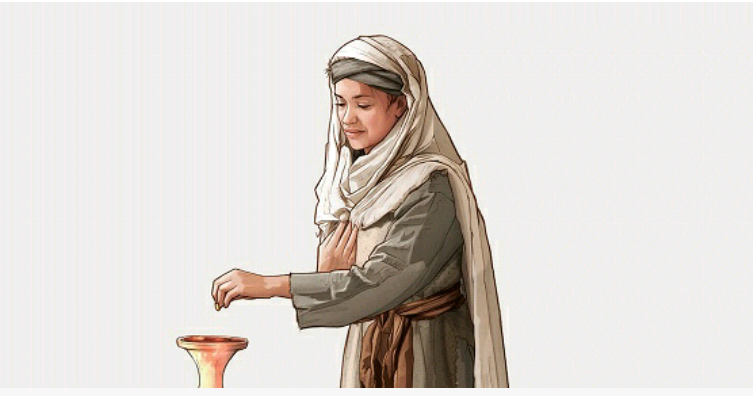
*** w16 December p. 28 par. 16 Jehovah Rewards Those Who Earnestly Seek Him ***  16 At times, we may feel that we are accomplishing little, or we might wonder whether Jehovah is pleased with our efforts. We may even doubt that we qualify to receive any kind of reward. Let us never forget, though, that “God is greater than our hearts and knows all things.” (Read 1 John 3:19, 20.) He rewards every expression of sacred service that springs from a heart motivated by faith and love, no matter how insignificant it might seem to the giver of the sacrifice.—Mark 12:41-44.
*** w15 2/15 p. 28 par. 17 Jehovah Guides Our Global Teaching Work ***  17 Clearly, we have strong evidence of God’s blessing. Of course, Jehovah does not rely on our help to accomplish his purposes. Yet, our loving heavenly Father allows us to be his “fellow workers,” thus enabling us to show our love for him and for our neighbor. (1 Cor. 3:9; Mark 12:28-31) May we take advantage of our opportunities to proclaim the Kingdom message, the most important work on earth. By all means, let us show how thankful we are that Jehovah has guided and blessed our global teaching work!
*** w15 9/15 pp. 23-24 pars. 3-4 How Can We Show That We Love Jehovah? ***  3 Love is Jehovah’s dominant attribute, so we can understand why Jesus told one inquirer that the first commandment from God is: “You must love Jehovah your God with your whole heart and with your whole soul and with your whole mind and with your whole strength.” (Mark 12:30) From Jesus’ words, we learn that love for God involves, first of all, our heart. Being halfhearted is displeasing to Jehovah. However, we note that love for God also involves our whole soul, mind, and strength. This means that genuine love for God is much more than just an emotional feeling of the heart. In addition to being heartfelt, our love for God must involve all our spiritual and physical faculties. According to the prophet Micah, that is what Jehovah wants from us.—Read Micah 6:8.
4 How can we show that we truly love our heavenly Father? We should love him unreservedly. As Jesus indicated, all our physical, emotional, and spiritual faculties need to be involved. In the preceding article, we considered four ways in which Jehovah has demonstrated his great love for his children. Let us now consider how we can demonstrate and deepen our love for Jehovah in ways that are acceptable and agreeable to him.
*** w13 6/15 p. 16 par. 19 Appreciate Jehovah’s Generosity and Reasonableness ***  19 Congregation elders strive to imitate Jehovah’s reasonableness by taking into account the circumstances of their fellow believers. Recall that Jehovah valued even the sacrifices offered by poorer Israelites. Likewise, some brothers and sisters are very limited in what they can do in the ministry, perhaps because of health problems or advanced age. What if these dear ones feel disheartened because of their limitations? The elders can kindly reassure them that Jehovah loves them for giving their best.—Mark 12:41-44.
What other spiritual gems have you discovered in this week’s Bible reading?

*** w18 January p. 23 par. 4 What Kind of Love Brings True Happiness? ***  4 “Men will be lovers of themselves,” wrote the inspired apostle. Is it wrong for us to love ourselves? No, it is normal, even necessary, to have a healthy love of self. Jehovah designed us that way. Jesus said: “You must love your neighbor as yourself.” (Mark 12:31) If we do not love ourselves, we cannot love our neighbor. We also read in the Scriptures: “Husbands should love their wives as their own bodies. A man who loves his wife loves himself, for no man ever hated his own body, but he feeds and cherishes it.” (Eph. 5:28, 29) So a proper love of self is desirable.
*** wp17 No. 6 p. 9 What Did Jesus Really Look Like? ***  Religious leaders of Jesus’ day contrived ways to draw attention to themselves and underscore their authority. (Numbers 15:38-40; Matthew 23:5-7) Unlike them, Jesus instructed his apostles not to “lord it over” others. (Luke 22:25, 26) In fact, Jesus warned: “Beware of the scribes who want to walk around in robes and want greetings in the marketplaces.”—Mark 12:38.
*** w17 December p. 8 par. 2 “I Have Hope Toward God” ***  2 We have good reasons to include the resurrection as a key teaching even if we personally hope to survive the great tribulation and live on earth forever. The apostle Paul showed why the resurrection is central to our faith: “If, indeed, there is no resurrection of the dead, then Christ has not been raised up.” Had Christ not been resurrected, he would not be our ruling King, and our teaching about Christ’s rule would be in vain. (Read 1 Corinthians 15:12-19.) However, we know that Jesus was resurrected. In holding that conviction, we differ from the Jewish Sadducees, who strongly denied that the dead are raised. Even in the face of mockery, we hold firm to our belief in the resurrection.—Mark 12:18; Acts 4:2, 3; 17:32; 23:6-8.
*** w15 4/15 p. 10 par. 3 How Elders Train Others to Become Qualified ***  3 To determine to what extent a learner’s thoughts and actions are influenced by Kingdom truth, you might ask him, ‘How has your dedication to Jehovah changed the way you use your life?’ That question can lead to a meaningful conversation about what makes our sacred service whole-souled. (Read Mark 12:29, 30.) Perhaps at the end of such a conversation, you might say a prayer, asking Jehovah to give the learner the holy spirit he needs to complete his training. How upbuilding it will be for the brother to hear your heartfelt prayer in his behalf!
*** w15 9/15 p. 17 par. 20 “Stand Firm in the Faith” ***  20 Help others strengthen their faith. By both word and deed, Jesus built up the faith of his disciples. (Mark 11:20-24) We should follow his example because helping others build up their faith also strengthens our own. (Prov. 11:25) In your preaching and teaching, highlight the proof that God exists, that he cares about us, and that the Bible is his inspired Word. Help your brothers and sisters bolster their faith as well. If any show signs of doubt, perhaps by starting to grumble against appointed brothers, do not quickly shun them. Instead, tactfully come to their aid, helping them take steps to restore their faith. (Jude 22, 23) If you are in school and the theory of evolution is discussed, boldly defend your faith in creation—you might be surprised at the effect your words have on others.
*** w15 10/1 p. 15 Forgive Freely ***  When we harbor anger and resentment—and withhold forgiveness—we hurt ourselves. Such negative emotions can rob us of happiness, restrict our life, and make us miserable. They can also pose a serious health risk. A report in the Journal of the American College of Cardiology, by Dr. Yoichi Chida and Professor of Psychology Andrew Steptoe, concluded: “The current findings suggest a harmful association between anger and hostility and CHD [coronary heart disease].”
On the positive side, consider the benefits of forgiveness. When we freely forgive others, we preserve unity and peace, thereby safeguarding relationships. More important, we prove ourselves imitators of God, who freely forgives repentant sinners and who expects us to do the same.—Mark 11:25; Ephesians 4:32; 5:1.
*** w13 7/1 p. 5 Can You Trust Religion Regarding War? ***  Jesus said that one of the greatest commandments of God is to “love your neighbor as yourself.” (Mark 12:31) Did Jesus place a limit on loving our neighbor based on where that neighbor lives or on what nationality he is? No. He told his disciples: “By this all will know that you are my disciples, if you have love among yourselves.” (John 13:34, 35) Their love for one another would be so extraordinary that it would be an identifying mark. They would rather give their life for one another than to take life from others.
The early Christians lived in harmony with Jesus’ words. The Encyclopedia of Religion notes: “The early church fathers, including Tertullian and Origen, affirmed that Christians were constrained from taking human life, a principle that prevented them from participating in the Roman army.”
*** w12 5/1 pp. 5-6 How Did Jesus View Politics? ***  Mark recorded Jesus’ response: “‘Why do you put me to the test? Bring me a denarius to look at.’ They brought one. And he said to them: ‘Whose image and inscription is this?’ They said to him: ‘Caesar’s.’ Jesus then said: ‘Pay back Caesar’s things to Caesar, but God’s things to God.’” (Mark 12:13-17) Commenting on the reason for Jesus’ response, the book Church and State—The Story of Two Kingdoms concludes: “He refused to act the part of a political messiah and carefully established both the boundary of Caesar and that of God.”
Problems such as poverty, corruption, and injustice did not leave Christ unmoved. In fact, the Bible shows that he was deeply touched by the pitiful state of the people around him. (Mark 6:33, 34) Still, Jesus did not start a campaign to rid the world of injustices, although some tried hard to get him embroiled in the controversial issues of the day.
Clearly, as these examples show, Jesus refused to get involved in political affairs. But what about Christians today? What should they do?
*** w12 6/1 p. 28 “Impossible!”—What Does It Mean? ***  The Bible tells us that a person who has faith in the Almighty and prays for His holy spirit while doing everything possible to please Him can receive help to overcome seemingly insurmountable obstacles. Note Jesus’ reassuring words: “Truly I say to you that whoever tells this mountain, ‘Be lifted up and thrown into the sea,’ and does not doubt in his heart but has faith that what he says is going to occur, he will have it so.” (Mark 11:23) There is no situation that is impossible to bear or cope with if we allow the power of God’s Word and his spirit to influence our life.
*** w12 8/1 p. 15 Does It Really Matter to God Whether I Use Tobacco? ***  God expects us to love him and to love our neighbor. Jesus Christ stated that his followers should obey the two greatest commandments. They must love God with their whole heart, soul, mind, and strength and love their neighbor as themselves. (Mark 12:28-31) Since life is a gift from God, a person who uses tobacco shows a gross lack of respect for that gift and thus a lack of love for God. (Acts 17:26-28) That person’s habit can cause serious harm to others, so he belies any claim he makes to love his neighbor.


What God Has Yoked Together . . .

What God Has Yoked Together . . .

What God Has Yoked Together . . .

The Mosaic Law required a man who was considering divorce to prepare a legal certificate. This served to deter the hasty breakup of marriages. However, in Jesus’ day, religious leaders made divorce easy to obtain. Men could divorce their wives on every sort of grounds. (“certificate of dismissal” study note on Mr 10:4, nwtsty; “divorces his wife,” “commits adultery against her” study notes on Mr 10:11, nwtsty) Jesus called attention to the fact that marriage was authorized and established by Jehovah. (Mr 10:2-12) A husband and wife were to become “one flesh” in a permanent union. The only Scriptural basis for divorce, according to Matthew’s parallel account, is “sexual immorality.”​—Mt 19:9.
Today, many people view marriage, not as Jesus did, but as the Pharisees did. When problems arise, those in the world are quick to divorce. Christian couples, on the other hand, take their marriage vows seriously and strive to overcome difficulties by applying Bible principles. After watching the video Love and Respect Unites Families, answer the following questions:
How can you apply Proverbs 15:1 in your marriage, and why is this important?

*** w08 3/15 p. 22 par. 9 “Who Is Wise and Understanding Among You?” ***
9 Nevertheless, it may take real effort to improve in this area. Because of our background, some of us may not be inclined to be mild. Moreover, people around us may encourage an opposite viewpoint, saying that a person has to “fight fire with fire.” However, is this really wise? If a small fire broke out in your house, would you douse it with oil or with cool water? Pouring oil on the fire would make matters worse, whereas dousing it with cool water would likely bring the desired result. Likewise, the Bible counsels us: “An answer, when mild, turns away rage, but a word causing pain makes anger to come up.” (Prov. 15:1, 18) The next time irritations arise, either inside or outside the congregation, can we see how we can show true wisdom by reacting in a mild way?—2 Tim. 2:24.
*** ba p. 26 A Practical Book for Modern Living ***
  “An answer, when mild, turns away rage, but a word causing pain makes anger to come up.” (Proverbs 15:1) It takes self-control to respond with mildness, but such a course often smooths out problems and promotes peaceful relations.
*** w87 7/1 p. 6 Managing Anger—Yours and Others’ ***
In dealing with a situation that causes us to feel angry, it helps to know how to talk about our anger without attacking the other person. There is a marked distinction between verbal aggression (“You idiot!” or, “I’ll punch you on the nose!”) and reporting one’s anger (“I am very upset” or, “I feel hurt”). Verbal aggression usually fails because it provokes the other person to retaliate, whereas reporting how you feel is less of an attack, and the other person may be moved to make amends. As the Bible says: “An answer, when mild, turns away rage, but a word causing pain makes anger to come up. An enraged man stirs up contention, but one that is slow to anger quiets down quarreling.”—Proverbs 15:1, 18.
How can you avoid problems by applying Proverbs 19:11?

*** cl chap. 18 p. 187 par. 22 Wisdom in “the Word of God” ***
22 God’s Word offers this wise counsel: “The insight of a man certainly slows down his anger, and it is beauty on his part to pass over transgression.” (Proverbs 19:11) Insight is the ability to see beneath the surface, to look beyond the obvious. Insight nurtures understanding, for it can help us to discern why another person spoke or acted in a certain way. Endeavoring to grasp his genuine motives, feelings, and circumstances may help us to dispel negative thoughts and feelings toward him.
*** g 7/08 p. 9 How to Build a Successful Marriage ***
An ancient proverb wisely observes: “It is beauty . . . to pass over transgression.” (Proverbs 19:11) Annette, mentioned previously, agrees, adding: “A good marriage is impossible without forgiveness.” She explains why: “Otherwise resentment and mistrust grow, and that is poison for a marriage. Through forgiveness, the bonds of your marriage are strengthened and you grow closer together.”
If you have hurt your spouse’s feelings, do not simply conclude that he or she will just get over it. Making peace often requires that you do one of the more difficult things marriage mates need to do: Admit that you have made a mistake. Nevertheless, find a way humbly to say something like this: “I’m sorry, Dear. I made a mistake.” A humble apology will win you respect, help build a trusting relationship, and enhance your own peace of mind.
If your marriage is at the breaking point, instead of thinking, ‘Should I get a divorce?’ what questions should you consider?

*** g 11/08 pp. 8-9 Six Keys to Personal Success ***
Principled love also “rejoices with the truth”—spiritual truth found in the Bible. (1 Corinthians 13:6; John 17:17) To illustrate: A couple who have marital problems decide to read together Jesus’ words found at Mark 10:9: “What God yoked together [in marriage] let no man put apart.” Now they have to examine their hearts. Do they truly ‘rejoice with Bible truth’? Will they view and treat marriage as sacred, as God does? Are they willing to make the effort to resolve their problems in the spirit of love? If so, they can make their marriage a success, and they will be able to rejoice in the results.
How can you be a better husband or wife by applying Matthew 7:12?

*** w15 1/15 pp. 21-22 pars. 14-17 Build a Strong and Happy Marriage ***
14 No doubt you like to be treated with dignity and respect. You appreciate it when your thoughts are acknowledged and your feelings are taken into account. But have you ever heard someone say, “I will give him a taste of his own medicine”? While such a reaction might at times be understandable, the Bible tells us: “Do not say: ‘I will do to him just as he has done to me.’” (Prov. 24:29) In fact, Jesus recommended a more positive way of handling difficult situations. This rule of conduct is so well-known that it is often called the Golden Rule: “Just as you want men to do to you, do the same way to them.” (Luke 6:31) Jesus meant that we should treat people the way we would like to be treated and not repay unkindness with unkindness. In marriage, it means that we need to put into the relationship what we hope to get out of it.
15 Married people strengthen their relationship when they are sensitive to their mate’s feelings. “We have tried to put the Golden Rule into practice,” says a husband in South Africa. “True, there are times when we’re upset, but we have worked hard to treat each other the way we would like to be treated—with respect and dignity.”
16 Do not expose your mate’s weaknesses or harp on his idiosyncrasies—not even jokingly. Remember that marriage is not a competition to find out who is stronger, who can shout louder, or who can think of the most cutting remark. True, we all have flaws, and sometimes we upset others. But there is never a justifiable reason for either a husband or a wife to use sarcastic and demeaning speech, or worse, to shove or hit each other.—Read Proverbs 17:27; 31:26.
17 Even though in some cultures men who bully or hit their wives are viewed as manly, the Bible states: “The one slow to anger is better than a mighty man, and the one controlling his temper than one conquering a city.” (Prov. 16:32) It takes great moral strength to imitate the greatest man who ever lived, Jesus Christ, and to control one’s spirit. A man who verbally or physically abuses his wife is anything but manly, and he will lose his relationship with Jehovah. The psalmist David, who himself was a strong and courageous man, said: “Be agitated, but do not sin. Have your say in your heart, upon your bed, and keep silent.”—Ps. 4:4.

Prepare Your Children to Follow Christ

              Prepare Your Children to Follow Christ

Nothing brings Christian parents more joy than seeing their child “disown himself and pick up his torture stake and keep following” Jesus. (Mr 8:34; 3Jo 4) What can parents do to prepare their children to follow Jesus, dedicate their life to Jehovah, and get baptized? What are some indications that children are ready for the important step of baptism?
Read “A Message to Christian Parents” on pages 165-166 of Organized to Do Jehovah’s Will, and then consider the following questions:
·     What is a disciple?
Jesus told his followers: “Make disciples of people of all nations, baptizing them”(Matt. 28:19).  According to these words, the fundamental requirement for being baptized is that of being disciples. The disciple not only understands and accepts the teachings of Christ, but follows them carefully.  And even those who are relativelý young can do it.
·     What should parents teach their children?
Set a good example for your children, and inculcate Jehovah’s teachings in them. (Deut. 6:6-9) This includes using the information in the books What Does the Bible Really Teach? and “Keep Yourselves in God’s Love” to teach them basic Bible truths and prepare them to reason on Bible principles. Help your children to be able to explain their beliefs in their own words. (1 Pet. 3:15) The knowledge and encouragement they receive from you and from personal study, congregation meetings, and good associates will help them progress to baptism and beyond. Keep spiritual goals before them.
·     In keeping with their age, how should children apply the following scriptures in order to qualify for baptism?
Proverbs 20:11 says: “Even a child is known by his actions, whether his behavior is pure and right.” What are some actions that would indicate that a child, either a boy or a girl, has become a disciple of Jesus Christ and is ready to get baptized?
·     Col 3:20
A child who is progressing toward baptism should obey his godly parents. (Col. 3:20) Regarding Jesus when he was 12 years old, the Bible says: “He continued subject to [his parents].” (Luke 2:51) Of course, you cannot expect your child to be perfect. But one who desires to get baptized will strive to follow Jesus’ example and be known for his subjection to his parents.
·     Lu 2:46
He will also demonstrate an interest in learning Bible truths. (Luke 2:46)
·     Ps 122:1
Does your child want to attend meetings and participate? (Ps. 122:1)
·     Mt 4:4
Does he have an appetite for regular Bible reading and personal study? —Matt. 4:4.
·     Mt 6:33
A child progressing toward baptism endeavors to put Kingdom interests first. (Matt. 6:33) He is mindful of his responsibility as an unbaptized publisher and demonstrates initiative to go in the field service and talk at the doors. He shares in various aspects of the ministry and is not ashamed to let his teachers and schoolmates know that he is one of Jehovah’s Witnesses. He takes his assignments for the Life and Ministry Meeting seriously.
·     1Co 15:33
He also strive to remain morally clean by avoiding bad associations. (Prov. 13:20; 1 Cor. 15:33) This will be reflected in his preferences regarding music, movies, television programs, video games, and the use of the Internet.
Many have responded to the diligent efforts of their parents, made the truth their own, and qualified for baptism in their youth. May Jehovah bless you as you help your children reach this important milestone in their relationship with Jehovah.

Digging for Spiritual Gems – Mark 9-10: Week May 14-20, 2018

Digging for Spiritual Gems: (8 min.)

Mr 10:6-9​—What principle about marriage did Jesus highlight? (w08 2/15 30 ¶8)
10:6-9. God’s purpose is that marriage mates stick together. Therefore, rather than hastily seeking a divorce, husbands and wives should strive to apply Bible principles to overcome any difficulties that may arise in marriage.​—Matt. 19:4-6.
Mr 10:17, 18​—Why did Jesus correct a certain man for calling him “Good Teacher”? (“Good Teacher,” “Nobody is good except one, God” study notes on Mr 10:17, 18, nwtsty)
Good Teacher: The man was evidently using the words “Good Teacher” as a flattering and formalistic title, since such honor was usually demanded by the religious leaders. While Jesus had no objection to being properly identified as “Teacher” and “Lord” (Joh 13:13), he directed all honor to his Father.
Nobody is good except one, God: Jesus here recognizes Jehovah as the ultimate standard of what is good, the One who has the sovereign right to determine what is good and what is bad. By rebelliously eating from the tree of the knowledge of good and bad, Adam and Eve sought to assume that right. Unlike them, Jesus humbly leaves the setting of standards to his Father. God has expressed and defined what is good by means of what he has commanded in his Word.​—Mr 10:19.
What has this week’s Bible reading taught you about Jehovah?

*** w17 October p. 13 pars. 5-6 The Truth Brings, “Not Peace, But a Sword” ***  5 Jesus included the pain of family opposition as part of the suffering that his followers must be willing to endure. (Matt. 10:38) In order to prove worthy of the Christ, his disciples have had to endure ridicule or even alienation from their families. Yet, they have gained far more than they have lost.—Read Mark 10:29, 30.

6 Even when our relatives oppose our efforts to worship Jehovah, we continue to love them, but we must remember that our love for God and Christ comes first. (Matt. 10:37) We must also realize that Satan will try to use our affection for our family to break our integrity. Let us consider some situations involving family opposition and see how we can successfully face the challenges that these bring.
*** w16 April p. 20 par. 10 Why Should We Meet Together for Worship? ***  10 When we attend a meeting, we contribute to the unity of our brotherhood. (Ps. 133:1) Some of our fellow worshippers have been rejected by their parents and siblings. Yet, Jesus promised that he would give them a spiritual family to love them and care for them. (Mark 10:29, 30) When you attend meetings regularly, you may very well prove to be a father, mother, brother, or sister to one of these dear ones! Does that not motivate us to do our utmost to be at all the meetings?
*** w16 June pp. 8-9 par. 10 Appreciating Jehovah as Our Potter ***  
10 Like a highly skilled potter, Jehovah knows the type and quality of “the clay” that is before him, and he molds it accordingly. (Read Psalm 103:10-14.) Indeed, he deals with us as individuals, taking into account our particular weaknesses, limitations, and level of spiritual growth. His attitude toward imperfect servants was demonstrated by his Son. Consider how Jesus dealt with his apostles’ shortcomings, especially their inclination to argue among themselves over position. If you had witnessed the apostles’ heated disputes, would you have viewed these men as meek and malleable? Yet, Jesus did not adopt a negative view. He knew that his faithful apostles could be molded by kind, patient counsel and by their observing his example of humility. (Mark 9:33-37; 10:37, 41-45; Luke 22:24-27) After Jesus was resurrected and the holy spirit was poured out, the apostles focused, not on position or prominence, but on the work he had given them to do.—Acts 5:42.
*** w16 August p. 17 pars. 17-18 Making Christian Marriage a Success ***  17 Because we are living deep in “the last days,” we are experiencing “critical times hard to deal with.” (2 Tim. 3:1-5) Yet, keeping spiritually strong will do much to offset this world’s negative influences. “The time left is reduced,” wrote Paul. “From now on, let those who have wives be as though they had none, . . . and those making use of the world as those not using it to the full.” (1 Cor. 7:29-31) Paul was not telling married couples to neglect their marital duties. In view of the reduced time, however, they needed to give priority to spiritual matters.—Matt. 6:33.
18 Although we are living in very trying times and marital relationships are failing all around us, it is possible for us to make marriage happy and successful. Indeed, married Christians who stick with Jehovah’s people, apply Scriptural counsel, and accept the guidance of Jehovah’s holy spirit can preserve “what God has yoked together.”—Mark 10:9.
*** w16 December p. 28 par. 17 Jehovah Rewards Those Who Earnestly Seek Him.  
17 Even in these dark last days of Satan’s wicked system of things, Jehovah is blessing his people. He makes sure that true worshippers flourish in their spiritual estate, which is unprecedented in its spiritual abundance. (Isa. 54:13) As Jesus promised, Jehovah rewards us now by letting us be part of a loving family of spiritual brothers and sisters, a family that is international in scope. (Mark 10:29, 30) Furthermore, those who earnestly seek God are rewarded with the incomparable blessings of peace of mind, contentment, and happiness.—Phil. 4:4-7.
*** w15 1/15 p. 32 pars. 17-18 Is Unfailing Love Possible? ***  17 Christian couples generally enter the marital relationship with much love and affection for each other. Since the marriage arrangement instituted by Jehovah is a lasting one, it is vital that couples endeavor to keep the flame of their love ablaze and maintain an atmosphere in which love can grow.—Mark 10:6-9.
18 When looking for a marriage mate, you want to find someone you can truly love and then make that love strong and inextinguishable, as shown in the Song of Solomon. Whether you are seeking a marriage mate or have already entered wedlock, may you experience true love—“the flame of Jah.”—Song of Sol. 8:6.
*** w15 11/15 p. 5 pars. 5-6 Train Your Child to Serve Jehovah ***  5 “All those for whom I have affection,” said Jesus, “I reprove and discipline.” (Rev. 3:19) Although Jesus’ disciples repeatedly argued about who was the greatest among them, Jesus did not give up on them. He also did not ignore it when they failed to respond to his counsel. Lovingly and mildly, Jesus reproved them at a suitable time and place.—Mark 9:33-37.
6 Show your love for your children by disciplining them. It is sometimes enough to explain why a certain course is right or wrong. At other times, a child may fail to apply what you say. (Prov. 22:15) When that happens, imitate Jesus. At a fitting time and place, discipline your child lovingly and mildly through patient guidance, training, and correction. “My parents were consistent in giving discipline,” says Elaine, a sister in South Africa. “If they warned me about the consequences of misbehaving, they would always follow through. But they never disciplined me in anger or without explaining why I was being disciplined. As a result, I felt secure. I knew my boundaries, and I understood what was required of me.”
What other spiritual gems have you discovered in this week’s Bible reading?
*** w18 June p. 8 par. 2 May We All Be One as Jehovah and Jesus Are One ***  2 Jesus’ emphasis on unity is understandable. He had noticed a lack of unity or harmony among the apostles, such as during his final meal with them. As had happened before, a dispute arose over “which one of them was considered to be the greatest.” (Luke 22:24-27; Mark 9:33, 34) Another time, James and John requested that Jesus give them prominent places alongside him in his Kingdom.—Mark 10:35-40.
*** w17 April p. 7 par. 14 “What You Vow, Pay” ***  14 The second most important vow that a person can make is the marriage vow. Why so? Because marriage is sacred. Before God and eyewitnesses, the bride and groom exchange their marriage vows. They usually promise that they will love, cherish, and respect each other and that they will do so “for as long as [they] both shall live together on earth according to God’s marital arrangement.” Others may not have said these exact words, but they still made a vow before God. They are then pronounced husband and wife, and their marriage is meant to be a lifelong bond. (Gen. 2:24; 1 Cor. 7:39) “Therefore,” to use Jesus’ words, “what God has yoked together, let no man put apart”—neither the husband nor the wife nor anyone else. Thus, couples entering marriage must have the view that divorce is not an option.—Mark 10:9.
*** w17 May pp. 8-9 pars. 3-4 Helping the Children of “Foreign Residents” ***  3 Parents, your example is essential to start your children on the path to endless life. When your children see you “seeking first the Kingdom,” they learn to depend on Jehovah for their daily needs. (Matt. 6:33, 34) So live modestly. Sacrifice material things for spiritual benefits—not the other way around. Strive to stay out of debt. Seek “treasure in heaven”—Jehovah’s approval—and not riches or “the glory of men.”—Read Mark 10:21, 22; John 12:43.
4 Never get so busy that you do not have time for your children. Let them know that you are proud of them when they decide to put Jehovah first instead of seeking prestige or riches—for themselves or for you. Avoid the unchristian view that children should provide their parents with a life of ease. Remember, “children are not expected to save up for their parents, but the parents for their children.”—2 Cor. 12:14.
*** w17 December pp. 21-22 par. 15 Parents—Help Your Children Become “Wise for Salvation” 
15 A child who expresses interest in getting baptized should be helped to reason on yet another matter—how he or she feels about the responsibilities that come with being a Christian. What are the benefits? What are the costs? How do the benefits greatly outweigh the costs? (Mark 10:29, 30) Those are issues that one is likely to face after baptism. Therefore, it is crucial to think these matters through before taking that serious step. When children are helped to consider deeply the blessings of obedience and the consequences of disobedience, they are more likely to develop a personal conviction. Which one? That Bible standards are always in their best interests.—Deut. 30:19, 20.
*** w15 10/15 pp. 9-10 par. 2 “Give Us More Faith” ***  2 The apostle Peter drew special attention to the importance of faith when he spoke of its “tested quality” that “may be found a cause for praise and glory and honor at the revelation of Jesus Christ.” (Read 1 Peter 1:7.) Since the great tribulation is fast approaching, do we not want to make sure that we have the type of faith that puts us among those whose faith will be praised by our glorious King when he is revealed? Most certainly, we want to be “the sort who have faith for the preserving of our lives.” (Heb. 10:39) With this goal in mind, we may plead like the man who said: “Help me out where I need faith!” (Mark 9:24) Or we may be moved to say, as did Jesus’ apostles: “Give us more faith.”—Luke 17:5.
*** w15 12/1 p. 12 Was Peter the First Pope? ***  At Matthew 16:17, 18, we find Jesus’ words to Peter: “I say to you, you are Peter [whose name means “A Piece of Rock”], and upon this rock I will build my church.” Was Jesus saying that his “church,” or congregation, would be built upon Peter, a man? Was Peter to be the head of all other followers of Jesus? How did the other apostles present at that conversation understand Jesus’ words? The Gospels reveal that later, on a number of occasions, they argued about who was the greatest among them. (Matthew 20:20-27; Mark 9:33-35; Luke 22:24-26) If Jesus had already given Peter primacy, or superiority, could there have been any question as to who was the greatest among the apostles?
*** w15 12/15 pp. 21-22 par. 16 Use the Power of Your Tongue for Good ***  16 Speaking with mildness and tact can be a challenge when our listener is someone whom we know very well. We might feel at liberty to be very frank. That can be true whether we speak with a family member or a close friend in the congregation. Did Jesus feel that his close relationship with his disciples granted him liberty to speak harshly to them? Not at all! When his closest followers continued to argue over who was greater, Jesus corrected them with kind words and an illustration of a young child. (Mark 9:33-37) Elders can imitate Jesus’ example by giving counsel “in a spirit of mildness.”—Gal. 6:1.

Digging for Spiritual Gems – Mark 7-8: Week May 7-13, 2018

Digging for Spiritual Gems: (8 min.)

Mark 7-8

Mr 7:5-8​—Why was handwashing an issue for the Pharisees? (w16.08 30 ¶1-4)
This was just one of many issues in which Jesus’ enemies found fault with him and his disciples. The Mosaic Law included a number of commands on ceremonial purity regarding such matters as bodily discharges, leprosy, and dealing with human and animal corpses. It also gave instructions on how impurities could be removed. This could be done by sacrifice, washing, or sprinkling.—Lev., chaps. 11-15; Num., chap. 19.
The Jewish rabbis expounded on every detail of these laws. One source says that each cause for impurity would be subjected “to questioning concerning the circumstances in which it may be contracted, how and to what extent it may be transmitted to others, the utensils and objects capable and incapable of becoming unclean, and finally, the means and rituals required for purification.”
Jesus’ opponents asked him: “Why do your disciples not observe the tradition of the men of former times, but they eat their meal with defiled hands?” (Mark 7:5) Those religious enemies were not referring to the taking of sanitary measures. As a ritual, the rabbis required that water be poured over their hands prior to eating. The above-quoted source adds: “It is also debated which vessels are to be used for the pouring, which kind of water is suitable, who should pour, and how much of the hands should be covered with water.”
Jesus’ reaction to all these man-made laws was simple. He told the first-century Jewish religious leaders: “Isaiah aptly prophesied about you hypocrites, as it is written, ‘This people honor me with their lips, but their hearts are far removed from me [Jehovah]. It is in vain that they keep worshipping me, for they teach commands of men as doctrines.’ You let go of the commandment of God and cling to the tradition of men.”—Mark 7:6-8.
Mr 7:32-35​—How is Jesus’ consideration for this deaf man an example for us? (w00 2/15 17-18 ¶9-11)
9 The man was deaf and hardly able to talk. Jesus may have sensed this man’s particular nervousness or embarrassment. Jesus then did something a bit unusual. He took the man aside, away from the crowd, to a private place. Then Jesus used some signs to convey to the man what he was about to do. He “put his fingers into the man’s ears and, after spitting, he touched his tongue.” (Mark 7:33) Next, Jesus looked up to heaven and uttered a prayerful sigh. These demonstrative actions would say to the man, ‘What I am about to do for you is due to power from God.’ Finally, Jesus said: “Be opened.” (Mark 7:34) At that, the man’s hearing was restored, and he was able to speak normally.
10 What consideration Jesus showed for others! He was sensitive to their feelings, and this sympathetic regard, in turn, moved him to act in ways that spared their feelings. As Christians, we do well to cultivate and demonstrate the mind of Christ in this regard. The Bible admonishes us: “All of you be like-minded, showing fellow feeling, having brotherly affection, tenderly compassionate, humble in  mind.” (1 Peter 3:8) This certainly calls for us to speak and act in ways that take the feelings of others into consideration.
11 In the congregation, we can show consideration for the feelings of others by according them dignity, treating them as we would like to be treated. (Matthew 7:12) That would include being careful about what we say as well as how we say it. (Colossians 4:6) Remember that ‘thoughtless words can stab like a sword.’ (Proverbs 12:18) What about in the family? A husband and wife who truly love each other are sensitive to each other’s feelings. (Ephesians 5:33) They avoid harsh words, unrelenting criticism, and biting sarcasm​—all of which can cause hurt feelings that are not easily healed. Children too have feelings, and loving parents take these into consideration. When correction is needed, such parents give it in ways that respect the dignity of their children and spare them needless embarrassment. * (Colossians 3:21) When we thus demonstrate consideration for others, we show that we have the mind of Christ.

What has this week’s Bible reading taught you about Jehovah?

*** w18 July pp. 24-25 par. 11 We Belong to Jehovah ***  11 Here, then, is another way we can show appreciation to Jehovah for choosing us as his people. Our spiritual progress must be “plainly seen by all.” (1 Tim. 4:15; Matt. 5:16) Ask yourself: ‘Is my complete allegiance to Jehovah evident to others? Do I look for opportunities to identify myself as one of Jehovah’s Witnesses?’ Jehovah would be deeply saddened if after he has selected us as his people, we were to hesitate to let others know that we belong to him.—Ps. 119:46; read Mark 8:38.
*** wp16 No. 4 p. 15 The Most Useful Comparison You May Ever Make ***  Consider this: Jesus Christ had a deep respect for the Scriptures as the Word of God. He did not approve of those who watered down the Bible’s teachings by giving priority to man-made traditions. (Mark 7:9-13) We can thus safely conclude that true followers of Jesus would base their beliefs on the Bible. So each Christian does well to ask himself, ‘Do the teachings of my church agree with the Bible?’ To answer that question, why not compare what your church teaches with what the Bible actually says?
Jesus said that our worship of God must be based on truth—the truth found in the Bible. (John 4:24; 17:17) And the apostle Paul said that our salvation depends on our coming to “an accurate knowledge of truth.” (1 Timothy 2:4) So it is vital that our beliefs be based on accurate Bible truth. Why, our very salvation is at stake!
*** w15 5/15 p. 25 pars. 3-4 Imitate the One Who Promises Everlasting Life ***  3 Jesus sensed the pain of others, even those whose exact circumstances he had never experienced. For instance, the common people lived in fear of the religious leaders, who deceived them and burdened them with many man-made rules. (Matt. 23:4; Mark 7:1-5; John 7:13) Jesus was never frightened or deceived, but he could understand situations that he had not lived through. Therefore, “on seeing the crowds, he felt pity for them, because they were skinned and thrown about like sheep without a shepherd.” (Matt. 9:36) Like his Father, Jesus was loving and compassionate.—Ps. 103:8.
4 When Jesus saw people suffering, he was moved to show them love. Thus, he perfectly reflected the love of his Father. After one extensive preaching tour, Jesus and his apostles were about to go to an isolated place to get some rest. Because he felt pity for the crowd awaiting him, however, Jesus took time “to teach them many things.”—Mark 6:30, 31, 34.
*** w15 12/15 p. 6 par. 11 Jehovah, the God of Communication ***  11 Has God’s communication with humans been hindered by the use of different languages and minor variations in translation? No. For example, we may be aware of only a few of the original-language words that Jesus used. (Matt. 27:46; Mark 5:41; 7:34; 14:36) However, Jehovah made sure that Jesus’ message was transmitted in Greek and, in time, in other languages. Later, Bible manuscripts were copied again and again by Jews and Christians, preserving the holy writings. These were translated into many more languages. John Chrysostom of the fourth/fifth century C.E. said that by his day, Jesus’ teachings had been translated into the languages of the Syrians, Egyptians, Indians, Persians, Ethiopians, and innumerable other peoples.
*** w11 10/1 p. 8 5 God Accepts All Sincere Worship—Is It True? ***  What you may have heard: “Just as many paths and roads lead to the same destination, there are also many paths that lead to God. Each person must find his own way to God.”
What the Bible teaches: We must be sincere in our worship, avoiding pretense and hypocrisy. Jesus told the religious leaders of his day why God had rejected them: “Isaiah aptly prophesied about you hypocrites, as it is written, ‘This people honor me with their lips, but their hearts are far removed from me.’” (Mark 7:6) Yet, sincerity alone does not guarantee that God will accept our worship.
Jesus made this clear by exposing the key flaw in the worship offered by those religious leaders and their followers. He applied to them God’s words: “It is in vain that they keep worshiping me, because they teach as doctrines commands of men.” (Mark 7:7) Their worship was “in vain,” or useless, because they put their religious tradition ahead of God’s requirements.
Instead of supporting the idea that there are many acceptable ways to approach God, the Bible teaches that there is only one. Matthew 7:13, 14 says: “Go in through the narrow gate; because broad and spacious is the road leading off into destruction, and many are the ones going in through it; whereas narrow is the gate and cramped the road leading off into life, and few are the ones finding it.”
*** w10 4/15 p. 13 Do You Let Jehovah Question You? ***  While some questions prompt a verbal reply, others are intended to stir a deeper reaction. The Gospels record Jesus’ extensive use of the latter kind. On one occasion, Jesus cautioned his disciples: “Look out for the leaven of the Pharisees and the leaven of Herod,” meaning their hypocrisy and false teachings. (Mark 8:15; Matt. 16:12) Jesus’ disciples did not get the point and began arguing over their having forgotten to bring bread. Note Jesus’ use of questions in the brief conversation that ensued. “He said to them: ‘Why do you argue over your having no loaves? Do you not yet perceive and get the meaning? Do you have your hearts dull of understanding? “Though having eyes, do you not see; and though having ears, do you not hear?” . . . Do you not yet get the meaning?’” Jesus’ questions called for a mental response, moving his disciples to reflect on the real meaning of his words.—Mark 8:16-21.

What other spiritual gems have you discovered in this week’s Bible reading?

*** w18 June p. 6 par. 12 “My Kingdom Is No Part of This World” ***  12 In Jesus’ day, religion was often mixed up in politics. The book Daily Life in Palestine at the Time of Christ notes that “the religious sects into which the Jews were divided corresponded more or less to what we term political parties.” So Jesus warned his disciples: “Keep your eyes open; look out for the leaven of the Pharisees and the leaven of Herod.” (Mark 8:15) That reference to Herod likely refers to the party followers of Herod. Politically, the Pharisees supported Jewish independence. Matthew’s account reveals that Jesus also mentioned the Sadducees in this conversation. They wanted to keep the status quo. Many of their members enjoyed political power under the Roman administration. Jesus emphatically warned his disciples to stay clear of the teachings, or leaven, that these three groups advocated. (Matt. 16:6, 12) Interestingly, this conversation took place not long after the occasion when the people wanted to make Jesus king.
*** wp17 No. 5 p. 9 Did You Know? ***  Was Jesus’ illustration about “little dogs” meant to be insulting?  On one occasion, when Jesus was outside Israel’s borders in the Roman province of Syria, a Greek woman approached to ask for help. Jesus’ response included an illustration that suggested a comparison between non-Jews and “little dogs.” Under the Mosaic Law, dogs were deemed to be unclean animals. (Leviticus 11:27) But did Jesus mean to insult this Greek woman and other non-Jews?
Not at all. Jesus’ point, as he explained to his disciples, was that his priority at that time was to help the Jews. So he illustrated the point, saying to the Greek woman: “It is not right to take the bread of the children and throw it to the little dogs.” (Matthew 15:21-26; Mark 7:26) Among the Greeks and Romans, the dog was often a beloved pet that lived in its owner’s house and played with the children. So the expression “little dogs” might have called to mind a warm, endearing picture. The Greek woman picked up on Jesus’ words and replied: “Yes, Lord, but really the little dogs do eat of the crumbs falling from the table of their masters.” Jesus commended her faith and healed the woman’s daughter.—Matthew 15:27, 28.
*** wp16 No. 4 p. 16 What Does the Bible Say? ***  Is religion man-made?
SOME PEOPLE BELIEVE that religion is a human invention; others think that God uses religion to help people draw close to him. What do you think?
WHAT THE BIBLE SAYS
There is a “religion that is clean and undefiled from the standpoint of our God and Father.” (James 1:27, footnote) Pure, or true, religion comes from God.
WHAT ELSE WE LEARN FROM THE BIBLE
• To please God, a religion must be based on Bible truth.—John 4:23, 24.
• Religions based on human ideas are futile.—Mark 7:7, 8.
*** w11 10/15 p. 11 par. 12 Is Your Recreation Beneficial? ***
12 So, then, when it comes to spending time on recreation, we do well to count the cost in advance. (Luke 14:28) We need to determine how much of our time a certain leisure activity will cost. Next, we must decide how much of our time it is worth. If pursuing a form of recreation will mean neglecting such important activities as personal Bible study, family worship, attending Christian meetings, or sharing in Kingdom preaching, it is not worth the price. (Mark 8:36) But if an occasional leisure activity energizes us to keep on pursuing Kingdom interests, we may well decide that the time we spend on that type of recreation is worthwhile.
*** w10 1/1 p. 27 He Was Loyal in the Face of Tests ***  Peter surely meant well, so Jesus’ reply must have come as a surprise. He turned his back on Peter, looked at the rest of the disciples—who had likely been thinking something similar—and said: “Get behind me, Satan! You are a stumbling block to me, because you think, not God’s thoughts, but those of men.” (Matthew 16:23; Mark 8:32, 33) Jesus’ words contain practical counsel for us all. It is only too easy to allow human thinking to take priority over godly thinking. If we do so, even when we mean to help, we may inadvertently become proponents of Satan’s purpose rather than God’s. How, though, did Peter respond?
*** w10 8/15 p. 5 Resist the Pressure of Public Opinion ***  Christians could not allow other people’s standards to dictate their conduct. An impaled Messiah was folly to first-century society. That view could have exerted pressure on Christians to conform to the accepted way of thinking. However, their faith that Jesus was the Messiah required that they follow him, even if they were scoffed at. Jesus stated: “Whoever becomes ashamed of me and my words in this adulterous and sinful generation, the Son of man will also be ashamed of him when he arrives in the glory of his Father with the holy angels.”—Mark 8:38.

Digging for Spiritual Gems – Mark 5-6: Week April 30 – May 06, 2018

Download (Digging for Spiritual Gems : Mark 5-6) Here

Mr 5:19, 20​—Why might Jesus have departed from his usual instructions in this instance? (“report to them” study note on Mr 5:19, nwtsty)
report to them: In contrast with Jesus’ usual instructions not to publicize his miracles (Mr 1:​44; 3:​12; 7:​36), he instructed this man to tell his relatives what had happened. This may have been because Jesus was asked to leave the region and would not personally give them a witness; it would also serve to counteract unfavorable reports that might circulate over the loss of the swine.
Mr 6:11​—What does it mean to “shake off the dirt that is on your feet”? (“shake off the dirt that is on your feet” study note on Mr 6:11, nwtsty)
shake off the dirt that is on your feet: This gesture signified that the disciples disclaimed responsibility for the consequences that would come from God. A similar expression occurs at Mt 10:14; Lu 9:5. Mark and Luke add the expression for a witness to [or, “against”] them. Paul and Barnabas applied this instruction in Pisidian Antioch (Ac 13:51), and when Paul did something similar in Corinth by shaking out his garments, he added the explanatory words: “Let your blood be on your own heads. I am clean.” (Ac 18:6) Such gestures may already have been familiar to the disciples; pious Jews who had traveled through Gentile country would shake what they perceived to be unclean dust off their sandals before reentering Jewish territory. However, Jesus evidently had a different meaning in mind when giving these instructions to his disciples.
What has this week’s Bible reading taught you about Jehovah?
*** w18 February p. 21 par. 12 What Does It Mean to Be a Spiritual Person? ***
12 Yet, of all the people who have lived, who is the most outstanding example of a spiritual person? It is Jesus, of course. Throughout his life and ministry, he showed that he wanted to imitate his Father, Jehovah. He thought, felt, and acted like Jehovah and lived in harmony with God’s will and standards. (John 8:29; 14:9; 15:10) Note, for example, how Jehovah’s feelings of compassion are described by the prophet Isaiah, and compare that description with what the Gospel writer Mark reports about Jesus’ feelings. (Read Isaiah 63:9; Mark 6:34.) Are we like Jesus, ever ready to show compassionate concern when we meet people who need help? In addition, Jesus devoted himself to the work of preaching and teaching the good news. (Luke 4:43) All such feelings and actions are marks of a spiritual person.
*** w17 June p. 28 par. 6 Uphold Jehovah’s Sovereignty! ***  6 Moreover, Jehovah is the rightful Sovereign because he has the knowledge and wisdom needed to care for the universe. Consider, for example, the fact that God enabled his Son to heal diseases that doctors could not cure. (Matt. 4:23, 24; Mark 5:25-29) From Jehovah’s standpoint, this was no miracle. He understands the processes involved and has the ability to undo any damage. The same is true with regard to his ability to raise the dead and prevent natural disasters.
*** w17 September p. 10 par. 9 Imitate Jehovah’s Compassion ***  9 We can learn a lesson from Jesus. He felt compassion for the crowds he met, for “they were skinned and thrown about like sheep without a shepherd.” How did he react to their pitiful state? “He started to teach them many things.” (Matt. 9:36; read Mark 6:34.) His attitude was in stark contrast to that of the Pharisees, who had no desire to help the common people. (Matt. 12:9-14; 23:4; John 7:49) Do you not feel a yearning, similar to what Jesus had, to feed spiritually famished people?
*** w16 December pp. 20-21 par. 6 Throw All Your Anxiety on Jehovah ***  6 In God’s Word, we find Jesus’ soothing sayings. His words and teachings were a source of refreshment to his listeners. Multitudes were drawn to him because he calmed troubled hearts, strengthened the weak, and consoled the depressed. (Read Matthew 11:28-30.) He showed loving consideration for others’ spiritual, emotional, and physical needs. (Mark 6:30-32) Jesus’ promise of support still applies. It can prove to be as true for you as it was for the apostles traveling with Jesus. You do not have to be in Jesus’ physical presence to benefit. As heavenly King, Jesus continues to have and show empathy. Thus, when you are anxious, he can mercifully ‘come to your aid’ and ‘help you at the right time.’ Yes, Jesus can help you to cope with distress, and he can fill your heart with hope and courage.—Heb. 2:17, 18; 4:16.
*** w15 5/15 p. 25 par. 4 Imitate the One Who Promises Everlasting Life ***  4 When Jesus saw people suffering, he was moved to show them love. Thus, he perfectly reflected the love of his Father. After one extensive preaching tour, Jesus and his apostles were about to go to an isolated place to get some rest. Because he felt pity for the crowd awaiting him, however, Jesus took time “to teach them many things.”—Mark 6:30, 31, 34.
*** w15 6/15 pp. 10-11 par. 11 He Loved People ***  11 Read Mark 5:25-34. For 12 years, the woman lived with shame. Her sickness had an impact on every aspect of her life, including her worship. Although “she had suffered much at the hands of many physicians and had spent all her resources,” she had become worse. But one day, the woman had a different plan to get well. She put herself in a position to be near the man named Jesus. She entered a crowd and touched Jesus’ outer garment. (Lev. 15:19, 25) Jesus realized that power had gone out of him, so he asked who had touched him. “Frightened and trembling,” the woman “fell down before him and told him the whole truth.” Realizing that it was his Father, Jehovah, who had healed the woman, Jesus treated her kindly, saying: “Daughter, your faith has made you well. Go in peace, and be healed from your grievous sickness.”
*** w15 12/15 p. 6 par. 11 Jehovah, the God of Communication ***  11 Has God’s communication with humans been hindered by the use of different languages and minor variations in translation? No. For example, we may be aware of only a few of the original-language words that Jesus used. (Matt. 27:46; Mark 5:41; 7:34; 14:36) However, Jehovah made sure that Jesus’ message was transmitted in Greek and, in time, in other languages. Later, Bible manuscripts were copied again and again by Jews and Christians, preserving the holy writings. These were translated into many more languages. John Chrysostom of the fourth/fifth century C.E. said that by his day, Jesus’ teachings had been translated into the languages of the Syrians, Egyptians, Indians, Persians, Ethiopians, and innumerable other peoples.
What other spiritual gems have you discovered in this week’s Bible reading?
*** wp17 No. 6 p. 8 What Did Jesus Really Look Like? ***  For the better part of 30 years, Jesus was a carpenter, working without the benefit of modern power tools. (Mark 6:3) He, therefore, must have had a sturdy build. Early in his ministry, he single-handedly “drove all those with the sheep and cattle out of the temple, and he poured out the coins of the money changers and overturned their tables.” (John 2:14-17) It takes a strong and powerful man to perform that feat. Jesus used the body that God had prepared for him to fulfill his God-given commission: “I must also declare the good news of the Kingdom of God to other cities, because for this I was sent.” (Luke 4:43) It took extraordinary stamina to travel throughout Palestine on foot and declare this message.
*** wp17 No. 6 p. 15 Is Christmas for Christians? ***  First, the Bible does not mention birthday celebrations for Jesus or any other faithful worshipper of God. The Scriptures refer to only two individuals who celebrated their birthday. Neither of them was a worshipper of Jehovah, the God of the Bible, and their birthday celebrations were cast in a negative light. (Genesis 40:20; Mark 6:21) According to the Encyclopædia Britannica, the early Christians opposed the “pagan custom of celebrating birthdays.”
*** w17 May p. 24 par. 11 “Do You Love Me More Than These?” ***  11 We need some time to relax and find refreshment from our hard work and busy schedules. God’s Word states: “There is nothing better for a man than to eat and drink and find enjoyment in his hard work.” (Eccl. 2:24) Jesus recognized the need to rest on occasion. Following one particularly intense witnessing campaign, he told his disciples: “Come, you yourselves, privately into an isolated place and rest up a little.”—Mark 6:31, 32.
*** w16 December pp. 16-17 par. 15 ‘Setting Your Mind on the Spirit Means Life and Peace’ ***  15 “Setting the mind on the spirit” does not imply that a person has to live with his head in the clouds, so to speak. He does not need to think and talk of nothing other than the Bible or his love for God and his hope for the future. Let us recall that Paul and others in the first century who pleased God were living rather normal lives in many respects. They consumed food and drink. Many married and enjoyed family life, working to support themselves.—Mark 6:3; 1 Thess. 2:9.
*** w15 1/1 pp. 11-12 Husbands—Make Your Home Secure ***  Jesus was considerate and empathetic. For 12 years, a poor woman had suffered from a grievous health problem. On hearing about Jesus’ miraculous power, “she kept saying: ‘If I touch just his outer garments, I will get well.’” She was right. She approached Jesus, touched the fringes of his garment, and was cured at once. Though some observers likely concluded that this woman acted presumptuously, Jesus perceived that she was desperate. He kindly told her: “Daughter, . . . be healed from your grievous sickness.” Not only did he avoid embarrassing or rebuking her but he acknowledged her illness. He thus showed what kind of man he was—a man of empathy.—Mark 5:25-34.
How husbands can imitate Jesus. When your wife does not feel well, show her extra consideration and be patient. Try to relate to her and understand her reactions. Ricardo, for example, explains, “When I notice that my wife is extra sensitive, I make a special effort to avoid saying things that could make her feel worse.”
*** w15 2/15 p. 8 par. 12 Imitate Jesus’ Humility and Tenderness ***  12 How did Jesus show tenderness? His tender feelings and actions. Jesus felt tender compassion for others. When he saw his friend Mary and those with her weeping over the death of her brother, Lazarus, Jesus openly “gave way to tears.” (Read John 11:32-35.) Then, likely stirred by heartfelt pity—just as when he raised a widow’s son—he resurrected Lazarus. (Luke 7:11-15; John 11:38-44) By means of that tender act, Jesus may have put Lazarus in line to receive life in heaven. On an earlier occasion, Jesus “felt tender affection” for a crowd that came to him. Impelled by compassion, “he started to teach them many things.” (Mark 6:34; Kingdom Interlinear) What a life-changing experience that was for any who responded to his teachings! Note that Jesus’ tenderness was more than a feeling; it moved him to take the initiative to help others.—Matt. 15:32-38; 20:29-34; Mark 1:40-42.
*** w15 2/15 p. 13 par. 13 Imitate Jesus’ Courage and Discernment ***  13 Discernment also enabled Jesus to be reasonable. He saw beyond the letter of the Mosaic Law; he perceived the spirit behind that Law and acted accordingly. For example, consider the account at Mark 5:25-34. (Read.) A woman with a flow of blood made her way through a crowd, touched Jesus’ garment, and was healed. She was unclean under the Law, so she should not have touched anyone. (Lev. 15:25-27) But Jesus—who discerned that “the weightier matters of the Law” included “mercy and faithfulness”—did not chastise her for touching his garment. (Matt. 23:23) Instead, he kindly said: “Daughter, your faith has made you well. Go in peace, and be healed from your grievous sickness.” How touching that Jesus’ discernment moved him to show such kindness!
*** w15 5/15 p. 10 par. 7 Be Watchful—Satan Wants to Devour You! ***  7 When we oppose Satan, we align ourselves against not only him but all those who side with him in the issue of universal sovereignty. That number includes a sizable group of other spirit rebels, or demons. (Rev. 12:3, 4) Time and again, the demons have demonstrated their superhuman strength, causing great misery to those whom they have tormented. (Matt. 8:28-32; Mark 5:1-5) Never underestimate the power of such wicked angels or that of “the ruler of the demons.” (Matt. 9:34) Without help from Jehovah, we could never win our fight against Satan.
*** w15 10/15 pp. 21-22 par. 14 Serve Jehovah Without Distraction ***  14 Though Jesus refused to be distracted from his main purpose of preaching the good news, he was not always thinking about work. He accepted at least one invitation to a wedding and even contributed to the joy of the occasion by miraculously turning water into wine. (John 2:2, 6-10) He also accepted invitations to evening meals with close friends and potential disciples. (Luke 5:29; John 12:2) More important, Jesus frequently bought out time for prayer, private reflection, and needed rest.—Matt. 14:23; Mark 1:35; 6:31, 32.
*** w15 11/15 pp. 4-5 pars. 3-4 Train Your Child to Serve Jehovah ***  3 Jesus did not hesitate to tell his disciples that he loved them. (Read John 15:9.) He also showed his love by closely and regularly associating with his disciples. (Mark 6:31, 32; John 2:2; 21:12, 13) Jesus was not “all business” with them. Thus, they did not have to wonder whether he truly loved them. How can you imitate Jesus’ way of teaching?
4 Tell your children that you love them, and regularly show them how much they mean to you. (Prov. 4:3; Titus 2:4) Samuel, who lives in Australia, says: “When I was very young, Dad used to read My Book of Bible Stories to me every evening. He would answer my questions, hug me, and kiss me good-night. What a surprise when I later discovered that Dad was not raised in a family where hugs and kisses were common! Yet, he made a real effort to express his love for me. As a result, I developed a strong bond with him, and I felt contented and secure.” Help your children to feel that way by often telling them “I love you.” Show your affection for your children. Talk with them, eat with them, play with them.
*** w15 11/15 p. 9 par. 3 Train Your Teenager to Serve Jehovah ***  3 Jesus was a loving and loyal friend. (Read John 15:15.) In Bible times, a master did not normally share his private thoughts and feelings with his slaves. However, Jesus proved to be both master and friend to his faithful apostles. He spent time with them, shared his feelings with them, and carefully listened when they poured out their hearts to him. (Mark 6:30-32) Such loving communication created a warm bond between Jesus and his apostles and prepared them for future responsibilities in God’s service.

Digging for Spiritual Gems – Mark 3-4: Week April 23-29, 2018

Digging for Spiritual Gems – Mark 3-4
Week of April 23-29
Mr 3:29   What does it mean to blaspheme against the holy spirit, and what are the consequences? (“blasphemes against the holy spirit,” “guilty of everlasting sin” study notes on Mr 3:29, nwtsty) 

Blasphemy refers to defamatory, injurious, or abusive speech against God or against sacred things. Since holy spirit emanates from God himself, willfully opposing or denying its operation amounted to blasphemy against God. As shown at Mt 12:24, 28 and Mr 3:22, the Jewish religious leaders saw God’s spirit at work in Jesus as he performed miracles; yet, they attributed this power to Satan the Devil.
guilty of everlasting sin: refer to willful sin that has eternal consequences; there is no sacrifice to cover such sin.
Mr 4:26-29   What can we learn from Jesus’ illustration of the sower who sleeps? 

(Wt14 12/15 pg12-13 par 6-8) First we have to admit that we have no control over the spiritual growth of a Bible student. So must avoid the temptation to pressure or force a student to get baptized. All we can to assist and support the person, but we humbly admit that ultimately the decision to make a dedication belongs to that person. Dedication is something that must spring from a willing heart motivated by love for God. Ps. 51:12; 54:6; 110:3.  

Second, understanding the lesson behind this illustration will help us not to be discouraged if we do not at first see results from our work. We need to be patient, (Jas. 5:7, 8) Even if the seed does not bear fruit, and if we have done our best to help outcome is not a sign of unfaithfulness on our part. Jehovah allows the seed of truth to flourish only in a humble heart that is willing to make changes. (Matt. 13:23) So we should not judge the effectiveness of our ministry merely by the results. In Jehovah’s eyes the success of our ministry is not determined by the response of those whom we teach. Rather, he treasures our faithful efforts regardless of the results. Read Lu 10:17-20; 1Co 3:8.

Third, we do not always discern the changes that are taking place within a person. For example, a couple with whom a missionary had been studying approached him, asking to become unbaptized publishers. He did not know the couple has stop smoking several months before.  Their newly developed love for Jehovah helped them to make the right decision. They had grown spiritually, even though the missionary had no idea of the change that had taken place.
What does this week’s Bible reading teach me about Jehovah?

Mr 3:3-4:  Jehovah care about people and animal, so Jehovah acting in their interest gave them the Sabbath. It gave all the people, including slaves, and even the domestic animals, a period of needed rest and refreshment.  Also gave them a way to pleased the Most High God by setting aside the day as especially devoted to him on spiritual matters.
Mr 3:10:  Jehovah has the power to cure all sorts of disease and infirmities. Jehovah demonstrated it in Jesus his Son and the apostles Acts 2:22, 10:38. What a wonder and caring God, Jehovah will use that power again in his Kingdom for all faithful ones.      
Mr 3:11; 4:30:  The Kingdom of Jehovah/God is the expression of Jehovah’s universal sovereignty toward his creatures, or the means used by him to express that sovereignty. This term is used particularly the manifestation of God’s sovereignty through his Son, Jesus. 
Mr 4:14-20:  Jehovah is the one search the heart and knows the true motives behind the heart for we are told at 1Ch 28:9 “for Jehovah searches through all hearts, and he discerns every inclination of the thoughts.” Jehovah looks for the good in us to work on it to make us grow.  1Ch 28:17; Pr 17:3; 1Sa 16:7
Mr 4:31-32:  Jehovah make it grow (Acts 13:48; 1 Cor. 3:7) and he want us to know this so we do not get discourage of not seeing grow in our territories. The growth of the Christian congregation has been unstoppable for now over 8.5 million have found lodging in his houses of true worship.   
Mr 4:37-39:  Jehovah is shows us that he is fully capable of controlling the forces of nature also like the flood in Noah’s days. Jehovah has the power to fulfill his promise of a future living in security. For it was Jehovah power that control the storm through Jesus as shown at Acts 2:22.  
What other spiritual gems have you discovered in this week’s Bible reading?

Mr 3:1-2:  The Jewish religious leaders were seeking a pretext to condemn Jesus. Likewise today “a slave is not greater than his master,” we are told at John 15:20. Also  Jesus warns us in this verse “If they have persecuted me, they will also persecute you; if they have observed my word, they will also observe yours.”

Mr 3:3-4:  Jesus knew that the religious leaders had adopted an extreme, unscriptural view of the Sabbath law at Ex 20:8-10.  May we never take extreme view of Jehovah instructions of us today in our dealing with our brothers and sisters.

Mr 3:5:  Jesus was “thoroughly grieved at the insensibility of their hearts. May our heart encourage us to treat our brothers and sisters with love, respect, and dignity, because we will make the hearts of Jehovah and Jesus rejoice.

Mr 3:6:  The religious leaders conspire to kill Jesus because they did not want to lose their authority over the people. So they used false testimony and lies about Jesus. Like Jesus made himself God, which many who teach the trinity try to use as proof Jesus is God. John 5:18.  

Mr 3:10:  Here we see Jesus cure “all those who had serious diseases.”  How different than those so are call faith healers who cannot cure all but usually blame the one with the disease lack of faith.   

Mr 3:11:  The demons and Satan knew that Jesus was not God but the Son of God. See Mt 4:3,6.  Yet today most religions teach that Jesus is God part of a trinity. Even when Jesus made it clear at John 20:17 that he has the same Father and God as we do, with the words “my Father and your Father and to my God and your God.’

Mr 3:14:  Jesus taught his disciples who were also call apostles to preach, setting an example for all who would be disciples of Jesus and who command us to do so at Mt 28:19-20.

Mr 3:21:  Jesus’ relatives were unbelievers. Hence, he is empathetic toward those who because of their faith are opposed or mocked by their unbelieving family members.

Mr 3:29-30:  Holy Spirit emanates from God himself, willfully opposing or denying its operation amounted to blasphemy against God. As shown at Mt 12:24, 28, Jewish religious leaders saw God’s spirit at work in Jesus as he performed miracles; yet, they attributed this power to Satan the Devil.

Mr 3:31-35:  At his baptism, Jesus became God’s spiritual Son, and “the Jerusalem above” was his mother. (Gal. 4:26) From then on, Jesus’ disciples were nearer and dearer to him than his fleshly relatives were. This teaches us to put spiritual interests first in our lives. Mt 12:46-50; Lu 8:19-21.

Mr 3:35:   Another scripture that show Jesus is not part of the trinity. Jesus speaks of doing “the will of God, are the ones who are his brother and sister. If we are doing the will God just like Jesus is doing the will of his Father as shown John 4:34, 6:38; Mt 26:42, we will be worthy of Jehovah.   

Mr 4:10-12:  Why could they not understand, was because they were not willing to dig down and get the deeper meaning of his of his words, so that their hearts would motivate them to action in behalf of the “good news.” May we always look into deep things of God so we can strengthen our faith.  

Mr 4:14-20:  We need to remember all we can do is plant the seed of truth and nurture it, but it is only Jehovah who can make it grow as shown at 1Co 3:6-7.  So if we have territory that is unresponsive it has nothing to do with us, but Satan world. Jehovah knows the heart of mankind. 1Ch 28:9

Mr 4:21:  Jesus is encouraging us not to hide our spiritual light under a figurative “measuring basket.” Instead, he admonished us “Let your light shine before men, that they may see your fine works and give glory to your Father who is in the heavens.” Mt 5:14-15

Mr 4:24:  If we give Jesus our fullest measure of attention, he will respond by giving us information and enlightenment beyond our expectations. So we will be enriched and better able to impart understanding to others. In his generosity, Jesus will favor us with more than we expected.

Mr 4:26:  Jesus is encouraging us to preach the word in these last days we are living. For that is the only way the Jehovah can make the seed grow in the hearts of humans. They must hear in order to know who Jehovah is, what is his purpose for mankind.    

Mr 4:27-29:  We learn three things from this illustration. First we have no control over the spiritual growth of a Bible student. Also not to be discouraged if we do not see results from our work and we need patient. (Jas. 5:7, 8) Finally we do not always discern the changes that are taking place within a person and we need to trust in Jehovah.

Mr 4:37-39:  Jesus our future King has the power that was given to him to control storms. This is to reassure us that when Jesus give full attention to the earth during his Kingdom rule, all faithful servants of Jehovah will dwell in security from terrifying natural calamities.  

Mark 3:23-27
I always had a hard time understanding this reasoning. How would you explain (is there maybe already another thread on this same subject?):
Mark 3:26 “If Satan has risen up against himself and has become divided, he cannot stand but is coming to an end.”
1. So does it mean that the kingdom of Satan is not divided against himself ?
2. Why did Jesus seem to say that it was inconceivable to think that Satan would not stand and would be coming to an end ?
Mark 3:27 “No one who enters the house of a strong man is able to steal his possessions unless he first ties up the strong man. Only then can he plunder his house.”
3. In this illustration, who is the strong man, who is the plunderer, how does he tie the strong man up and what possessions does he steal ?

Digging for Spiritual Gems – Mark 1-2: Week April 16-22, 2018


Mr 1:11​—What is the meaning of Jehovah’s words to Jesus? (“a voice came out of the heavens,” “You are my Son,” “I have approved you” study notes on Mr 1:11, nwtsty)
a voice came out of the heavens: The first of three instances in the Gospel accounts where Jehovah is reported as speaking directly to humans.​—See study notes on Mr 9:7; Joh 12:28.
You are my Son: As a spirit creature, Jesus was God’s Son. (Joh 3:​16) From the time of his birth as a human, Jesus was a “son of God” just as perfect Adam had been. (Lu 1:​35; 3:​38) However, it seems reasonable that God’s words here go beyond a mere statement of Jesus’ identity. By this declaration accompanied by the outpouring of holy spirit, God evidently indicated that the man Jesus was begotten as His spiritual Son, “born again” with the hope of returning to life in heaven and anointed by spirit to be God’s appointed King and High Priest.​—Joh 3:​3-6; 6:​51; compare Lu 1:​31-​33; Heb 2:​17; 5:​1, 4-​10; 7:​1-3.
I have approved you: Or “I am well-pleased with you; I take great delight in you.” The same expression is used at Mt 12:18, which is a quotation from Isa 42:1 regarding the promised Messiah, or Christ. The outpouring of holy spirit and God’s declaration concerning his Son were a clear identification of Jesus as the promised Messiah.​—See study notes on Mt 3:​17; 12:18.
Mr 2:27, 28​—Why did Jesus call himself “Lord . . . of the Sabbath”? (“Lord . . . of the Sabbath” study note on Mr 2:28, nwtsty)
Lord . . . of the Sabbath: Jesus applies this expression to himself (Mt 12:8; Lu 6:5), indicating that the Sabbath was at his disposal for doing the work commanded by his heavenly Father. (Compare Joh 5:​19; 10:37, 38.) On the Sabbath, Jesus performed some of his most outstanding miracles, which included healing the sick. (Lu 13:10-​13; Joh 5:​5-9; 9:​1-​14) This evidently foreshadowed the kind of relief he will bring during his Kingdom rule, which will be like a sabbath rest.​—Heb 10:1.
What has this week’s Bible reading taught you about Jehovah?
*** w18 May p. 26 par. 16 Know Your Enemy ***  16 Satan and the demons have other limitations. For example, nowhere do the Scriptures indicate that they can read the mind or heart of an individual. Only Jehovah and Jesus are spoken of as having that ability. (1 Sam. 16:7; Mark 2:8) What, though, about speaking or praying out loud? Should we fear that the Devil or the demons might hear our prayers and interfere? The answer is no. Why not? We are not afraid to do good works in Jehovah’s service just because the Devil might see us. Likewise, we should not be afraid to pray out loud just because the Devil might hear us. In fact, the Bible contains many examples of God’s servants who prayed out loud, and there is no hint that these ones feared that the Devil would hear them. (1 Ki. 8:22, 23; John 11:41, 42; Acts 4:23, 24) If we do our best to speak and act in harmony with God’s will, we can be confident that Jehovah will not allow the Devil to do us any lasting harm.—Read Psalm 34:7.
*** w17 February p. 21 par. 16 Jehovah Leads His People ***  16 Holy spirit empowered Jesus. At Jesus’ baptism, John the Baptizer saw “the heavens being parted and, like a dove, the spirit coming down upon him.” Thereafter, “the spirit impelled him to go into the wilderness.” (Mark 1:10-12) For the rest of Jesus’ earthly ministry, God’s holy spirit empowered Jesus to perform miracles and to speak with divine authority. (Acts 10:38) In addition, holy spirit produced in Jesus perfect fruitage, including love, joy, and stalwart faith. (John 15:9; Heb. 12:2) No other leader provided such convincing evidence. Jesus was Jehovah’s choice.
*** wp16 No. 5 pp. 4-5 How God Offers Comfort ***  God intended that Jesus have a key role in providing comfort. Among other tasks that God assigned him, Jesus was “to bind up the brokenhearted” and “comfort all who mourn.” (Isaiah 61:1, 2) As foretold, Jesus took a special interest in people who were “toiling and loaded down.”—Matthew 11:28-30.
Jesus comforted people by giving them wise advice, by treating them kindly, and even, in some cases, by curing their sicknesses. One day a leper pleaded with Jesus: “If you just want to, you can make me clean.” Moved with pity, Jesus replied: “I want to! Be made clean.” (Mark 1:40, 41) And the leper was healed.
Today, the Son of God is not present on earth to comfort us personally. But his Father, Jehovah, “the God of all comfort,” continues to help those in need. (2 Corinthians 1:3) Consider four principal means that God uses to comfort people.
*** w15 6/15 p. 9 par. 4 He Loved People ***  4 Jesus was well into his public ministry, and his most recent area of activity was Galilee. In one of the cities there, Jesus encountered a pitiful sight. (Mark 1:39, 40) Right in front of him was a man with a frightful disease, leprosy. Testifying to the advanced stage of the man’s illness, physician Luke describes him as being “full of leprosy.” (Luke 5:12) “When he caught sight of Jesus, [the leper] fell facedown and begged him: ‘Lord, if you just want to, you can make me clean.’” The man had no doubt that Jesus possessed the power to heal him, but what he needed to know was, did Jesus have the desire to do so? How would Jesus respond to this heartfelt request? What was Jesus thinking as he beheld this man who was probably disfigured? Would Jesus be like the Pharisees, who had developed a heartless view of people suffering from this disease? What would you have done?
*** w14 8/15 p. 25 par. 15 Hear Jehovah’s Voice Wherever You Are ***  15 Jehovah wants the best for us. (Ps. 1:1-3) He provides ample guidance just when we need it. (Read Hebrews 4:16.) Although he was perfect, Jesus depended on regular communication with Jehovah, and he prayed incessantly. Jehovah supported and directed Jesus in marvelous ways. He sent angels to minister to him, provided His holy spirit to help him, and guided him in selecting the 12 apostles. Jehovah’s voice was heard from the heavens, expressing His support and approval of Jesus. (Matt. 3:17; 17:5; Mark 1:12, 13; Luke 6:12, 13; John 12:28) Like Jesus, we need to pour out our heart in prayer to God. (Ps. 62:7, 8; Heb. 5:7) Through prayer, we can stay in close communication with Jehovah and successfully follow a course in life that brings honor to him.
*** w12 7/1 p. 20 “Whenever You Pray, Say, ‘Father’” ***  Our heavenly Father is sensitive to our suffering. He is a God of “tender compassion.” (Luke 1:78) Jesus reflected his Father’s compassion for imperfect humans. (Mark 1:40-42; 6:30-34) True Christians also endeavor to imitate their heavenly Father’s compassion. They heed the Bible’s admonition to “become kind to one another, tenderly compassionate.”—Ephesians 4:32.
What other spiritual gems have you discovered in this week’s Bible reading?
*** wp17 No. 2 p. 9 Is Celibacy a Requirement for Christian Ministers? ***  In addition, the Bible shows that many Christian ministers in the first century, including the apostle Peter, were married men. (Matthew 8:14; Mark 1:29-31; 1 Corinthians 9:5) In fact, on account of the prevalence of immoral sexual practices in the Roman world of that time, Paul wrote that if a Christian overseer was married, he was to be “a husband of one wife” and have “his children in subjection.”—1 Timothy 3:2, 4.
These were not celibate marriages, for the Bible candidly states that a “husband [ought to] give to his wife her due” and that married couples should “not deprive each other” of sexual intimacies. (1 Corinthians 7:3-5) Clearly, celibacy is not required by God, nor is it compulsory for Christian ministers.
*** w17 November pp. 16-17 par. 15 Imitate Jehovah’s Justice and Mercy ***  15 The Pharisees focused solely on what a sinner had done rather than on who a sinner was at heart. When Pharisees saw Jesus attending a banquet at Matthew’s home, they asked his disciples: “Why does your teacher eat with tax collectors and sinners?” Jesus replied: “Healthy people do not need a physician, but those who are ill do. Go, then, and learn what this means: ‘I want mercy, and not sacrifice.’ For I came to call, not righteous people, but sinners.” (Matt. 9:9-13) Was Jesus excusing serious wrongdoing? Not at all. In fact, Jesus’ principal message included the call to repent from sin. (Matt. 4:17) Nevertheless, Jesus insightfully noted that at least some of these “tax collectors and sinners” wanted to change. They were not at Matthew’s home simply to eat. Rather, “there were many of them who were following [Jesus].” (Mark 2:15) Sadly, most Pharisees failed to see in such ones what Jesus saw. Unlike the just and merciful God they claimed to worship, the Pharisees labeled their fellow men sinners, condemning them as hopeless.
*** w15 10/15 pp. 21-22 par. 14 Serve Jehovah Without Distraction ***  14 Though Jesus refused to be distracted from his main purpose of preaching the good news, he was not always thinking about work. He accepted at least one invitation to a wedding and even contributed to the joy of the occasion by miraculously turning water into wine. (John 2:2, 6-10) He also accepted invitations to evening meals with close friends and potential disciples. (Luke 5:29; John 12:2) More important, Jesus frequently bought out time for prayer, private reflection, and needed rest.—Matt. 14:23; Mark 1:35; 6:31, 32.
*** w14 10/15 pp. 31-32 par. 17 “Keep Your Minds Fixed on the Things Above” ***  17 Our attitude: Closely associated with maintaining fine conduct is having the right attitude. The apostle Paul said: “Keep this mental attitude in you that was also in Christ Jesus.” (Phil. 2:5) What sort of disposition did Jesus have? He was humble. Humility moved him to be self-sacrificing in his ministry. Preaching to others about the good news of God’s Kingdom was foremost in his mind. (Mark 1:38; 13:10) Jesus viewed God’s Word as the final authority. (John 7:16; 8:28) He diligently studied the Holy Scriptures so that he could quote them, defend them, and explain them. By being humble and zealous in our ministry and personal Bible study, we will be more Christlike in our thinking.
*** w13 11/15 p. 29 par. 14 Shepherds, Imitate the Greatest Shepherds ***  14 Taking the lead in field service is another area in which overseers set a fine example for their fellow Christians. In this regard, Jesus set the example for overseers. Preaching the good news of the Kingdom was an important part of Jesus’ earthly activity. He showed his disciples how this work was to be done. (Mark 1:38; Luke 8:1) In our day, how encouraging it is for publishers to preach side by side with elders, to witness the elders’ zeal for this lifesaving work, and to learn from their teaching methods! The overseers’ zealous determination to devote time and effort to preaching the good news despite their busy schedule encourages the whole congregation to display similar zeal. Elders can also set a good example for their brothers by preparing for and participating in congregation meetings and other activities, such as cleaning and maintaining the Kingdom Hall.—Eph. 5:15, 16; read Hebrews 13:7.
*** w12 4/1 p. 16 Why Are Christians Baptized? ***   2. Why was Jesus baptized?
Jesus was about 30 years of age when John the Baptizer dipped him under the water of the Jordan River. Jesus’ baptism represented his decision to do God’s will for him. (Hebrews 10:7) This would include his laying down his life as a sacrifice for the sins of humankind. Even before he came down from heaven to live on earth, Jesus had always loved and obeyed his Father, Jehovah.—Read Mark 1:9-11; John 8:29; 17:5.
*** w12 5/1 p. 10 Sincere Believer and Responsible Citizen—How to Be Both ***  Why did Jesus focus on changing hearts and alleviating suffering but not on changing institutions or eliminating distress? Jesus knew that God had purposed to use His Kingdom at a future time to put an end to all human governments and erase the causes of all suffering. (Luke 4:43; 8:1) Therefore, when the disciples once urged Jesus to spend more time on curing the sick, Jesus said to them: “Let us go somewhere else, into the village towns nearby, that I may preach there also, for it is for this purpose I have gone out.” (Mark 1:32-38) Jesus alleviated the physical suffering of many, but he gave priority to preaching and teaching God’s word.
*** w11 8/1 p. 11 Treating Your Mate With Respect ***  Jesus taught us how to listen. For example, when a sick man approached him for help, Jesus did not immediately solve the problem. First, he listened to the man’s entreaty. Then he allowed what he heard to move him deeply. Finally, he healed the man. (Mark 1:40-42) When your mate speaks, follow the same pattern. Remember, he or she is likely seeking heartfelt empathy, not a quick solution. So listen closely. Allow your emotions to be touched. Then, and only then, respond to your mate’s needs. By doing so, you will show that you respect your mate.

Bible Highlights – Introduction to the 66 Bible Books

22. Song of Solomon (Canticles)
wol.jw.org/en/wol/d/r1/lp-e/2006843

Digging for Spiritual Gems – Matthew 27-28: Week April 9-16

Download Matthew 27-28 Highlights Here

Matthew 27-28
Digging for Spiritual Gems: (8 min.)
Mt 27:51​—What did the tearing in two of the curtain signify? (“curtain,” “sanctuary” study notes on Mt 27:51, nwtsty)
curtain: This beautifully ornamented drape separated the Most Holy from the Holy in the temple. Jewish tradition indicates that this heavy curtain was some 18 m (60 ft) long, 9 m (30 ft) wide, and 7.4 cm (2.9 in.) thick. By tearing the curtain in two, Jehovah not only manifests his wrath against his Son’s killers but also signifies that entry into heaven itself is now possible.​—Heb 10:19, 20; see Glossary.
sanctuary: The Greek word na·osʹ here refers to the central edifice with its Holy and Most Holy compartments.

Mt 28:7​—How did Jehovah’s angel dignify the women who came to Jesus’ grave? (“tell his disciples that he was raised up” study note on Mt 28:7, nwtsty)
tell his disciples that he was raised up: These women are not only the first disciples to be told of Jesus’ resurrection but also the ones instructed to inform the other disciples. (Mt 28:2, 5, 7) According to unscriptural Jewish tradition, a woman’s testimony was not permissible in a court of law. By contrast, Jehovah’s angel dignifies the women by giving them this joyful assignment.
What has this week’s Bible reading taught you about Jehovah?
*** w18 March p. 5 par. 8 Baptism—A Requirement for Christians ***
8 In 33 C.E., the resurrected Jesus appeared to a crowd of more than 500 men, women, and possibly even children. It may have been on that occasion that he said: “Go, therefore, and make disciples of people of all the nations, baptizing them in the name of the Father and of the Son and of the holy spirit, teaching them to observe all the things I have commanded you.” (Matt. 28:19, 20; 1 Cor. 15:6) Yes, it seems that hundreds of his followers were present when Jesus gave the commission to make disciples. Jesus thus revealed that baptism would be a requirement for those who accept the yoke of Christian discipleship. (Matt. 11:29, 30) Anyone who wished to serve God acceptably would have to acknowledge and accept Jesus’ role in the outworking of Jehovah’s purpose. After doing so, that person could get baptized. This would be the only water baptism having God’s approval. The Bible record provides abundant evidence that in the first century, new disciples of Christ understood the significance of baptism. And they did not unnecessarily delay getting baptized.—Acts 2:41; 9:18; 16:14, 15, 32, 33.
*** w18 April pp. 11-12 par. 13 Serve Jehovah, the God of Freedom ***
13 What has Jehovah commanded us to do today? As disciples of Jesus, we are well-acquainted with our God-given commission. (Read Luke 4:18, 19.) Today, the vast majority of people are still blinded by the god of this system of things and are in bondage—religious, economic, and social. (2 Cor. 4:4) It is our privilege to follow Jesus’ example of helping people to come to know and worship Jehovah, the God of freedom. (Matt. 28:19, 20) That is not an easy work, and there are many challenges. In some lands, people are becoming more indifferent, some even hostile. The question that each of us should consider is, ‘Can I use my freedom to give greater support to the Kingdom work?’
*** w18 May p. 14 par. 8 Jehovah Loves Those Who “Bear Fruit With Endurance” ***
8 Speaking about his Father, Jesus stated: “He takes away every branch in me not bearing fruit.” In other words, Jehovah views us as his servants only if we bear fruit. (Matt. 13:23; 21:43) Hence, in this illustration, the fruitage that each Christian must bear cannot refer to new disciples whom we may be privileged to make. (Matt. 28:19) Otherwise, faithful Witnesses who do not succeed in making disciples because of preaching in an unresponsive territory would be like the barren branches in Jesus’ illustration. However, such a conclusion is unthinkable! Why? Because we cannot force people to become disciples. It would go against Jehovah’s loving ways to disqualify his servants for failing to do something that is beyond their reach. Whatever Jehovah asks of us is always reachable.—Deut. 30:11-14.
*** w18 June p. 22 par. 4 “Let Your Light Shine” to Glorify Jehovah ***
4 “No one could be faithful and true to the Lord in these remaining days . . . unless he would avail himself of the opportunity of letting his light shine.” That was a comment in the article “Light in the Darkness,” published in The Watch Tower of June 1, 1925. The article then explained: “He must do this by telling the good news to the peoples of the earth, and by conforming himself to the ways of light.” Clearly, one way we let our light shine is by preaching the good news and making disciples. (Matt. 28:19, 20) In addition, we can glorify Jehovah by our Christian conduct. Householders and passersby observe our behavior. Our friendly smile and warm greeting say much about who we are and what kind of God we worship.
*** w17 February p. 28 par. 19 Who Is Leading God’s People Today? ***
19 When Jesus returned to heaven, he did not abandon his followers. (Matt. 28:20) He knew firsthand how much the holy spirit, the angels, and God’s Word helped him to take the lead when he was on earth. Therefore, he has supplied the faithful slave today with the same assistance. As anointed Christians, the members of that slave “keep following the Lamb no matter where he goes.” (Rev. 14:4) As we follow their direction, therefore, we follow our Leader, Jesus. Soon, he will lead us to everlasting life. (Rev. 7:14-17) And no human leader can promise that!
*** w16 June p. 26 par. 10 Do Not Let the Faults of Others Stumble You ***
10 The Bible provides us with accounts of servants of God who remained loyal to Jehovah and his people despite the serious faults of others around them. For example, after spending a night in prayer to his Father, Jesus selected the 12 apostles. Judas Iscariot was one of those. When Judas later betrayed him, Christ did not let that defection mar his own relationship with his Father, Jehovah; nor did Jesus allow Peter’s denial to do that. (Luke 6:12-16; 22:2-6, 31, 32) Jesus knew that those actions were not the fault of Jehovah or his people in general. Jesus continued his wonderful work despite the disappointment that some of his followers caused him. Jehovah rewarded him by resurrecting him from the dead, thus opening the way for Jesus to become King of the heavenly Kingdom.—Matt. 28:7, 18-20.
What other spiritual gems have you discovered in this week’s Bible reading?
*** w18 March p. 9 par. 4 Parents, Are You Helping Your Child Progress to Baptism? ***
4 Read Matthew 28:19, 20. As discussed in the preceding article, the Bible does not specify an age at which a person should get baptized. However, parents can benefit from reflecting on what it means to make a disciple. The Greek word translated “make disciples” at Matthew 28:19 has the sense of teaching with the intent of making pupils, or disciples. A disciple is one who learns and understands Jesus’ teachings and who is determined to observe them. Thus, the goal of all Christian parents should be to teach their children from infancy with the intention of helping them become baptized disciples of Christ. Granted, an infant would not qualify for baptism. However, the Bible shows that even relatively young children can grasp and appreciate Bible truths.
*** w17 August p. 26 par. 19 How We Put On and Keep On the New Personality ***
19 Love is also “patient and kind” and “does not get puffed up.” (1 Cor. 13:4) It truly takes patience, kindness, and humility to continue sharing the Kingdom message with our neighbors. (Matt. 28:19) These same qualities make it easier for us to get along with all the brothers and sisters in the congregation. What is the reward for showing such love? It produces united congregations that reflect well on Jehovah and that attract newly interested ones. Fittingly, the Bible’s description of the new personality concludes with this powerful truth: “Besides all these things, clothe yourselves with love, for it is a perfect bond of union.”—Col. 3:14.
*** w17 October p. 18 Joseph of Arimathea Takes a Stand ***
The inspired Gospel of Mark calls Joseph “a reputable member of the Council.” In context, the Council can only be the Sanhedrin, the Jewish high court and supreme administrative body. (Mark 15:1, 43) Joseph was therefore one of the leaders of his people, which explains how he could gain an audience with the Roman governor. It is no surprise that Joseph was also rich.—Matt. 27:57.
As a group, the Sanhedrin was hostile to Jesus. Its members connived to have him put to death. Joseph, however, is called “a good and righteous man.” (Luke 23:50) Unlike most of his Sanhedrin colleagues, he lived an honest, moral life and did his best to obey God’s commands. He was also “waiting for the Kingdom of God,” which may explain why he became one of Jesus’ disciples. (Mark 15:43; Matt. 27:57) Likely, he was attracted to Jesus’ message out of a sincere desire for truth and justice.
*** w17 December p. 23 par. 1 Young Ones—“Keep Working Out Your Own Salvation” ***
EACH year thousands of Bible students get baptized. Many are young people—teenagers and preteens. They may have been raised in the truth. Are you one of them? If so, you are to be commended. Baptism is a requirement for Christians, and it is an essential step to gaining salvation.—Matt. 28:19, 20; 1 Pet. 3:21.
*** w16 March p. 14 par. 4 You Can Share in Strengthening Our Christian Unity—How? ***
4 Jehovah’s people have the enormous task of preaching the “good news” worldwide before the end of this system. (Matt. 24:14; 28:19, 20) This includes inviting “anyone thirsting” to drink “life’s water free.” (Rev. 22:17) As members of the Christian congregation, how can we succeed in doing this? Only by being “harmoniously joined together and made to cooperate.”—Eph. 4:16.
*** w16 March p. 23 Can You Help in Your Congregation? ***
Martin Goodman, professor at Oxford University, observes that the “sense of mission set Christians apart from other religious groups, including Jews, in the early Roman empire.” Jesus had traveled from place to place to carry out his ministry. Following his example, true Christians would have understood that spreading “the good news of the Kingdom of God” would involve finding people who desired to know Bible truth. (Luke 4:43) This is one of the reasons why the first-century Christian congregation had “apostles,” a term that literally refers to those sent forth, envoys. (Mark 3:14) Jesus commanded his followers: “Go, therefore, and make disciples of people of all the nations.”—Matt. 28:18-20.
*** w16 April p. 19 par. 5 Why Should We Meet Together for Worship? ***
5 Meetings teach us to apply Bible principles in all aspects of our life. (1 Thess. 4:9, 10) The Watchtower Study, for example, is tailored to the needs of God’s people. Has a Watchtower Study motivated you to reevaluate your goals, to forgive a fellow Christian, or to improve the quality of your prayers? The midweek meeting educates us for the ministry. We learn how to preach the good news and how to teach Scriptural principles effectively.—Matt. 28:19, 20.
*** w16 May p. 9 par. 3 “Go, . . . and Make Disciples of People of All the Nations” ***
3 Were Jesus’ disciples to be passive, waiting for people to come to them? Definitely not! After his resurrection, Jesus addressed hundreds of his disciples and told them: “Go, therefore, and make disciples of people of all the nations, baptizing them . . . , teaching them to observe all the things I have commanded you.” (Matt. 28:19, 20) Four actions are therefore required. We must make disciples, baptize them, and teach them, but what is the first thing we need to do? Jesus said: “Go”! With regard to this command, one Bible scholar commented: “To ‘go’ is the task of each believer, whether across the street or across the ocean.”—Matt. 10:7; Luke 10:3.