
THE WATCHTOWER—STUDY EDITION
October 2018
This issue contains the study articles for December 3-30, 2018.


Luke 6-7
Lu 6:12, 13—In what way did Jesus set a good example for Christians facing major decisions? (w07 8/1 6 ¶1)
Jesus often spent extended periods of time in prayer. (John 17:1-26) For instance, before he chose the 12 men who would become his apostles, Jesus “went out into the mountain to pray, and he continued the whole night in prayer to God.” (Luke 6:12) Although not necessarily spending the whole night in prayer, those who are spiritually-minded follow Jesus’ example. Before making major decisions in life, they take ample time to pray to God, seeking the direction of the holy spirit in making choices that will deepen their spirituality.
Lu 7:35—How can Jesus’ words help us if we are the victims of slander? (“its children” study note on Lu 7:35, nwtsty)
its children: Or “its results.” Here wisdom is personified and depicted as having children. In the parallel account at Mt 11:19, wisdom is depicted as having “works.” Wisdom’s children, or works—that is, the evidence produced by John the Baptist and Jesus—prove that the accusations against them are false. Jesus is, in effect, saying: ‘Look at the righteous works and conduct, and you will know that the charge is false.’

*** wp18 No. 3 p. 13 God Will Soon End All Suffering ***
Death: That Jehovah has the power to undo death is clearly shown by the three resurrections Jesus is recorded to have performed. One of those whom he brought back to life had been dead for four days.—Mark 5:35-42; Luke 7:11-16; John 11:3-44.
*** w18 January p. 30 par. 12 See the Difference in People ***
12 Jesus showed great love for others. He went from city to city, telling people the good news about the Kingdom of God. He cured the blind, the lame, the lepers, and the deaf. He raised the dead. (Luke 7:22) Jesus even gave his own life in behalf of mankind, though many hated him. Jesus’ love perfectly reflected the love his Father shows. Throughout the earth, Jehovah’s Witnesses express godly love toward others.
*** w18 July p. 27 Cultivate Compassion for “All Sorts of People” ***
For thousands of years, Jehovah has endured the reproach that has been brought on his name. Yet, he remains “kind toward the unthankful and wicked.” (Luke 6:35) His kindness is demonstrated by his patience. Jehovah desires that “all sorts of people” be saved. (1 Tim. 2:3, 4) Although God hates wickedness, he views humans as precious and does not want any to lose their lives.—2 Pet. 3:9.
*** w18 August pp. 10-11 par. 11 Do Not Judge by the Outward Appearance ***
11 We need to see our brothers as Jehovah sees them. A person is not precious to Jehovah because he is wealthy or because he is poor. Our relationship with Jehovah will never be determined by how many material possessions we have or by what we lack. While it is true that Jesus said that “it will be difficult for a rich man to enter the Kingdom of the heavens,” he did not say that it would be impossible. (Matt. 19:23) On the other hand, Jesus also said: “Happy are you who are poor, for yours is the Kingdom of God.” (Luke 6:20) Yet, this did not mean that all poor people were specially blessed and responded to the teaching of Jesus. Many poor people did not respond. The point is, We simply cannot judge a person’s relationship with Jehovah by his material possessions.
*** w18 August pp. 21-22 par. 15 Generous Givers Are Happy People ***
15 Jesus wants us to find happiness by being generous. Many people react favorably to generosity. “Practice giving, and people will give to you,” he urged. “They will pour into your laps a fine measure, pressed down, shaken together, and overflowing. For with the measure that you are measuring out, they will measure out to you in return.” (Luke 6:38) Of course, not all respond positively to our generous giving, but when they do, their gratitude can start a chain reaction. So practice giving whether people seem to appreciate it or not. You never know how much good you can do with just one act of generosity.
*** w16 June p. 4 Jehovah “Cares for You” ***
How much time is Jehovah willing to spend listening to your prayers? An example from the Bible gives us the answer. Before Jesus selected his apostles, “he spent the whole night in prayer to God.” (Luke 6:12) In that prayer, Jesus likely reviewed many of his disciples by name, considered their qualities and weaknesses, and asked his Father for help in choosing them. By the time the sun shone on a new day, Jesus knew that he had selected those best qualified to serve as his apostles. As the “Hearer of prayer,” Jehovah is pleased to listen to all sincere prayers. (Ps. 65:2) Even if a person spends hours praying over a matter of deep concern, Jehovah does not keep track of the time.
*** w15 4/15 p. 22 par. 13 How Real Is Your Relationship With Jehovah? ***
13 Consider this: From his prehuman existence, Jesus observed firsthand Jehovah’s response to the prayers of His human servants. Then, during his earthly ministry, Jesus used prayer as his means of communicating his feelings to his Father in heaven. Would he have done so—even spending an entire night in prayer—had he thought that Jehovah was not really listening? (Luke 6:12; 22:40-46) Would he have taught his disciples to pray had he thought that prayer was nothing more than a psychological crutch? Clearly, Jesus knew that prayer is real communication with Jehovah. On one occasion, Jesus said: “Father, I thank you that you have heard me. True, I knew that you always hear me.” We too can have confidence that Jehovah is the “Hearer of prayer.”—John 11:41, 42; Ps. 65:2.
*** w15 5/15 p. 25 pars. 5-6 Imitate the One Who Promises Everlasting Life ***
5 We can imitate God’s love by the way we treat our neighbor. To illustrate: Suppose a Christian youth, whom we will call Alan, is thinking about an elderly brother whose poor eyesight makes it hard for him to read. He also finds it difficult to walk from house to house in the ministry. Alan remembers Jesus’ words: “Just as you want men to do to you, do the same way to them.” (Luke 6:31) So Alan asks himself, ‘What do I want men to do to me?’ His frank answer is, ‘I want them to play ball with me!’ But the aging brother will not be able to play ball, will he? Jesus’ statement implies that we must ask ourselves, ‘What would I want my neighbor to do to me if I were in his circumstances?’
6 Alan is not elderly, but he has the ability to conceive of experiences he has not had. He observes the elderly brother and listens to him with concern. Gradually, Alan understands what it is like to be an older person who finds it hard to read the Bible or walk from house to house. When Alan feels the aging brother’s distress, he sees what help is needed, and he wants to be helpful. We can do the same. To imitate God’s love, we must put ourselves in our brother’s shoes, so to speak.—1 Cor. 12:26.
*** w15 6/15 pp. 4-5 par. 6 Christ—The Power of God ***
6 It is of interest that when the Devil tempted Jesus to turn stones into loaves of bread, Christ refused to use his miraculous power to satisfy his personal desires. (Matt. 4:2-4) But he did use his power to respond to and satisfy the needs of others. How can we imitate Jesus’ unselfish concern for others? He encouraged God’s servants to “practice giving.” (Luke 6:38) Can we show the noble quality of generosity by inviting others to our home to share a meal and a spiritual feast? Can we be generous with our time after a meeting, aiding someone in need, such as by listening to a brother practice his talk? What help might we be able to offer to those needing assistance in the ministry? We show that we have learned from Jesus by generously providing material and spiritual things to others as we are able.
*** w15 8/1 p. 8 Hope for the Dead—How Can You Be Sure? ***
Jehovah will empower his Son to bring unbounded joy to those who have mourned the loss of loved ones. And how does Jesus feel about the resurrection? Before raising Lazarus to life, Jesus observed the anguish of Lazarus’ sisters and friends, and he “gave way to tears” himself. (John 11:35) On another occasion, Jesus encountered the widow of Nain, who had lost her only son in death. Jesus “was moved with pity for her, and he said to her: ‘Stop weeping.’” Immediately he raised her son. (Luke 7:13) So Jesus feels deeply about grief and death. How delighted he will be when he will turn sorrow into elation all over the world!
*** w15 12/1 p. 9 Hypocrisy! Will It Ever End? ***
On the other hand, God and His Son, Jesus, greatly value humans who are honest and sincere. For example, early in Jesus’ ministry, a man named Nathanael approached him. Upon seeing him, Jesus exclaimed: “See, truly an Israelite in whom there is no deceit.” (John 1:47) Nathanael, also known as Bartholomew, became one of Jesus’ 12 apostles.—Luke 6:13-16.
*** w18 January p. 26 par. 16 What Kind of Love Brings True Happiness? ***
16 Jesus displayed a perfectly balanced view of pleasures. He attended “a marriage feast” and “a big reception feast.” (John 2:1-10; Luke 5:29) At the wedding, he miraculously changed water into wine, adding to the supply, which had run short. And on another occasion, he rejected the self-righteous views of those who criticized him for eating and drinking.—Luke 7:33-36.
*** wp17 No. 2 p. 14 Enjoy the Benefits of Giving ***
Jesus urged his followers: “Practice giving, and people will give to you. They will pour into your laps a fine measure, pressed down, shaken together, and overflowing. For with the measure that you are measuring out, they will measure out to you in return.” (Luke 6:38) When you give, people are more likely to respond to your generosity with gratitude and become generous themselves. Giving thus fosters cooperation and friendship.
*** w17 July p. 32 par. 2 Questions From Readers ***
Christians consider life to be far more valuable than material things. “Life does not result from the things [a man] possesses.” (Luke 12:15) Thus, if a mild tongue fails to stop an armed robber, wise Christians heed the principle embodied in Jesus’ words: “Do not resist the one who is wicked.” It may even require that we give up our inner and outer garments, so to speak. (Matt. 5:39, 40; Luke 6:29) The best strategy, of course, is prevention. If we shun “the showy display of [our] means of life” and are known by our neighbors as peace-loving Witnesses of Jehovah, we may avoid being targeted by violent criminals.—1 John 2:16; Prov. 18:10.
*** w17 September p. 12 par. 16 Imitate Jehovah’s Compassion ***
16 Mental-health experts say that practicing compassion can improve your health, well-being, and relationships. When you relieve the suffering of others, you will feel happier, more optimistic, less lonely, and less inclined to think negative thoughts. Yes, your showing compassion will benefit you. (Eph. 4:31, 32) Christians who lovingly seek to help others are rewarded with a good conscience, knowing that they are acting in harmony with godly principles. Having such a disposition makes for a more caring parent, a better spouse, and a better friend. Those who are quick to show compassion are, in turn, more likely to receive help and support when they need it.—Read Matthew 5:7; Luke 6:38.
*** w17 October pp. 10-11 par. 15 “Love . . . in Deed and Truth” ***
15 Forgive freely. We forgive by pardoning someone who has offended us and by letting go of our resentment toward him. By “putting up with one another in love, earnestly endeavoring to maintain the oneness of the spirit in the uniting bond of peace,” we can freely forgive those who may not be aware that they offended us. (Eph. 4:2, 3) For our forgiveness to be genuine, we must control our thinking so that we do “not keep account of the injury.” (1 Cor. 13:4, 5) If we were to harbor resentment or hold a grudge, we would risk permanently damaging our relationship not only with our brother or sister but also with Jehovah. (Matt. 6:14, 15) We can also demonstrate our sincere forgiveness by praying for those who sin against us.—Luke 6:27, 28.
*** w17 December p. 4 par. 3 “I Know He Will Rise” ***
3 It is unlikely that Martha, living near Jerusalem, observed Jesus resurrect the son of a widow near Nain in Galilee. Yet, she had probably heard about it. And it is similar with Jesus’ bringing Jairus’ daughter back to life. Those at the girl’s house “knew she had died.” Still, Jesus took her lifeless hand and said: “Child, get up!” And she did, immediately. (Luke 7:11-17; 8:41, 42, 49-55) Both Martha and her sister, Mary, were aware that Jesus could cure the sick. For that reason, they felt that had Jesus been present, Lazarus would not have died. Now that Jesus’ dear friend was dead, though, what did the future hold? Note that Martha spoke of Lazarus’ coming back to life in the future, “on the last day.” Why could she be certain of that? And why can you be sure that there will be a future resurrection that may include your loved ones?
*** w16 June p. 26 par. 10 Do Not Let the Faults of Others Stumble You ***
10 The Bible provides us with accounts of servants of God who remained loyal to Jehovah and his people despite the serious faults of others around them. For example, after spending a night in prayer to his Father, Jesus selected the 12 apostles. Judas Iscariot was one of those. When Judas later betrayed him, Christ did not let that defection mar his own relationship with his Father, Jehovah; nor did Jesus allow Peter’s denial to do that. (Luke 6:12-16; 22:2-6, 31, 32) Jesus knew that those actions were not the fault of Jehovah or his people in general. Jesus continued his wonderful work despite the disappointment that some of his followers caused him. Jehovah rewarded him by resurrecting him from the dead, thus opening the way for Jesus to become King of the heavenly Kingdom.—Matt. 28:7, 18-20.
*** w16 September p. 29 par. 6 Parents, Help Your Children Build Faith ***
6 As a teacher, Jesus reached hearts because he loved Jehovah, God’s Word, and people. (Luke 24:32; John 7:46) Similar love will help parents reach the hearts of their children. (Read Deuteronomy 6:5-8; Luke 6:45.) So parents, be good students of the Bible and of our study aids. Take an interest in creation and in articles in our publications that discuss this topic. (Matt. 6:26, 28) Your doing so will broaden your knowledge, deepen your appreciation for Jehovah, and better equip you to teach your young ones.—Luke 6:40.
*** w16 November p. 8 par. 16 “Keep On Encouraging One Another Each Day” ***
16 Seize opportunities to encourage others. If we see something that merits commendation, why hold back? Consider what happened when Paul and Barnabas were at Antioch in Pisidia. The presiding officers of the synagogue there told them: “Men, brothers, if you have any word of encouragement for the people, tell it.” Paul responded by giving a fine talk. (Acts 13:13-16, 42-44) If we can offer a word of encouragement, why not speak up? We will very likely find that if we make it a habit to be encouraging, people will encourage us in return.—Luke 6:38.
*** w15 1/15 p. 21 par. 14 Build a Strong and Happy Marriage ***
14 No doubt you like to be treated with dignity and respect. You appreciate it when your thoughts are acknowledged and your feelings are taken into account. But have you ever heard someone say, “I will give him a taste of his own medicine”? While such a reaction might at times be understandable, the Bible tells us: “Do not say: ‘I will do to him just as he has done to me.’” (Prov. 24:29) In fact, Jesus recommended a more positive way of handling difficult situations. This rule of conduct is so well-known that it is often called the Golden Rule: “Just as you want men to do to you, do the same way to them.” (Luke 6:31) Jesus meant that we should treat people the way we would like to be treated and not repay unkindness with unkindness. In marriage, it means that we need to put into the relationship what we hope to get out of it.
*** w15 2/15 p. 7 par. 8 Imitate Jesus’ Humility and Tenderness ***
8 How can we imitate Jesus in demonstrating humility? Our attitude. Humility restrains us from overstepping our authority. If we recognize that we are not authorized to sit in judgment, we will not be quick to criticize others for their faults or question their motives. (Luke 6:37; Jas. 4:12) Humility helps us to avoid being “overly righteous,” looking down on those who may not have the abilities or privileges that we have. (Eccl. 7:16) Humble elders do not view themselves as superior to fellow believers. Rather, such shepherds “consider others superior” and conduct themselves as lesser ones.—Phil. 2:3; Luke 9:48.
*** w15 2/15 p. 16 Maintain Your Zeal for the Ministry ***
We should not assume that a new publisher will acquire teaching skills simply by participating in the ministry. He or she needs personal instruction from a kind and loving trainer. Such training would include showing the less experienced publisher how to (1) prepare and practice a presentation, (2) engage a householder or a passerby in conversation, (3) offer literature, (4) follow up interest, and (5) start a Bible study. Very likely, good results will be obtained if the trainee observes and imitates the methods used in the ministry by the one who is helping him. (Luke 6:40) The new publisher will undoubtedly appreciate having someone with him who can listen and help out if the need arises. The less experienced publisher will also benefit from receiving commendation and helpful suggestions.—Eccl. 4:9, 10.
*** w15 10/15 p. 24 par. 7 Keep Meditating on Spiritual Things ***
7 While reading may be done with little effort, meditation requires concentration. That is why the imperfect human brain is inclined to switch to easier, less demanding tasks. Thus, the best time to meditate is when you are rested and in a stress-free environment with few distractions. The psalmist found that a good time to meditate was while he was awake in bed during the night. (Ps. 63:6) Jesus, who had perfect mental powers, knew the advantage of being in quiet places to meditate and pray.—Luke 6:12.
*** w15 11/15 p. 12 par. 16 Train Your Teenager to Serve Jehovah ***
16 You cannot read hearts, but with God’s help you can exercise insight. Will you use that ability to look for the good in your teenager? No one wants to be labeled a “troublemaker.” In thought or word, never label your son or daughter a “rebellious teenager” or a “problem child.” Even if your teen is struggling, let him know that you see his potential and heartfelt desire to do what is right. Note any signs of growth and progress, and commend him. Help him to develop his good qualities by giving him increased responsibility when possible. Jesus did that with his disciples. About a year and a half after meeting Nathanael (also called Bartholomew), Jesus selected him as an apostle, and Nathanael proved to be a zealous Christian. (Luke 6:13, 14; Acts 1:13, 14) Your commendation and encouragement will help your child to feel that he is, not someone who always fails to measure up, but a capable Christian whom Jehovah can use.
Lu 4:17—What shows that Jesus was thoroughly familiar with God’s Word? (“the scroll of the prophet Isaiah” study note on Lu 4:17, nwtsty)
the scroll of the prophet Isaiah: The Dead Sea Scroll of Isaiah is composed of 17 parchment strips attached one to another, making up a roll measuring 7.3 m (24 ft) in length with 54 columns. The scroll used in the synagogue in Nazareth may have been of similar length. Without the help of chapter and verse numbers, which did not exist in the first century, Jesus would have had to locate the passage he wanted to read. But the fact that he found the place where the prophetic words were written demonstrates his thorough familiarity with God’s Word.
Lu 4:25—How long did the drought last in the days of Elijah? (“for three years and six months” study note on Lu 4:25, nwtsty)
for three years and six months: According to 1Ki 18:1, Elijah announced the end of the drought “in the third year.” Some have therefore claimed that Jesus contradicts the account in 1 Kings. However, the Hebrew Scripture account does not suggest that the drought lasted less than three years. The phrase “in the third year” evidently applies to the period that began when Elijah first announced the drought to Ahab. (1Ki 17:1) That announcement likely took place when the dry season—which typically lasts for up to six months but which may have lasted longer than usual—was already in progress. Further, the drought did not end immediately when Elijah again appeared before Ahab, “in the third year,” but only after the subsequent fire test on Mount Carmel. (1Ki 18:18-45) Hence, Jesus’ words recorded here, as well as the similar words of Christ’s half brother, recorded at Jas 5:17, harmonize well with the chronology suggested at 1Ki 18:1.
*** w18 January p. 26 pars. 16-17 What Kind of Love Brings True Happiness? ***
16 Jesus displayed a perfectly balanced view of pleasures. He attended “a marriage feast” and “a big reception feast.” (John 2:1-10; Luke 5:29) At the wedding, he miraculously changed water into wine, adding to the supply, which had run short. And on another occasion, he rejected the self-righteous views of those who criticized him for eating and drinking.—Luke 7:33-36.
17 Yet, Jesus did not immerse himself in a life of pleasure. He put Jehovah first and expended himself tirelessly in behalf of others. So that many might live, he willingly endured a painful death on a stake. Addressing those who would follow in his footsteps, Jesus said: “Happy are you when people reproach you and persecute you and lyingly say every sort of wicked thing against you for my sake. Rejoice and be overjoyed, since your reward is great in the heavens, for in that way they persecuted the prophets prior to you.”—Matt. 5:11, 12.
*** w18 February p. 21 par. 12 What Does It Mean to Be a Spiritual Person? ***
12 Yet, of all the people who have lived, who is the most outstanding example of a spiritual person? It is Jesus, of course. Throughout his life and ministry, he showed that he wanted to imitate his Father, Jehovah. He thought, felt, and acted like Jehovah and lived in harmony with God’s will and standards. (John 8:29; 14:9; 15:10) Note, for example, how Jehovah’s feelings of compassion are described by the prophet Isaiah, and compare that description with what the Gospel writer Mark reports about Jesus’ feelings. (Read Isaiah 63:9; Mark 6:34.) Are we like Jesus, ever ready to show compassionate concern when we meet people who need help? In addition, Jesus devoted himself to the work of preaching and teaching the good news. (Luke 4:43) All such feelings and actions are marks of a spiritual person.
*** w18 March pp. 26-27 par. 16 Discipline—Evidence of God’s Love ***
16 Jesus always listened obediently to his Father, even when doing so was very difficult. (Matt. 26:39) And he gave his Father the credit for his teachings and wisdom. (John 5:19, 30) Jesus’ humility and obedience drew people of honest heart to him and helped to make him a compassionate and gracious teacher. (Read Luke 4:22.) His kind words heartened those who were figuratively like a bruised reed or the wick of an oil lamp about to go out. (Matt. 12:20) Even when his patience was tested, Jesus was kind and loving. This was evident when he corrected his apostles for showing a selfish, ambitious spirit.—Mark 9:33-37; Luke 22:24-27.
*** w18 April pp. 11-12 par. 13 Serve Jehovah, the God of Freedom ***
13 What has Jehovah commanded us to do today? As disciples of Jesus, we are well-acquainted with our God-given commission. (Read Luke 4:18, 19.) Today, the vast majority of people are still blinded by the god of this system of things and are in bondage—religious, economic, and social. (2 Cor. 4:4) It is our privilege to follow Jesus’ example of helping people to come to know and worship Jehovah, the God of freedom. (Matt. 28:19, 20) That is not an easy work, and there are many challenges. In some lands, people are becoming more indifferent, some even hostile. The question that each of us should consider is, ‘Can I use my freedom to give greater support to the Kingdom work?’
*** w18 June p. 10 par. 11 May We All Be One as Jehovah and Jesus Are One ***
11 To fulfill their commission, Jesus’ disciples needed to conquer the pride and prejudice they had. Before ascending to heaven, he assigned them to bear witness to “all Judea and Samaria, and to the most distant part of the earth.” (Acts 1:8) Jesus had earlier prepared them for such an extensive assignment by drawing their attention to good qualities in foreigners. He praised a foreign army officer for his outstanding faith. (Matt. 8:5-10) In his hometown of Nazareth, Jesus spoke of how Jehovah had favored foreigners, such as the Phoenician widow from Zarephath and the Syrian leper Naaman. (Luke 4:25-27) And Jesus not only preached to a Samaritan woman but he spent two days in a Samaritan town because of the people’s interest in his message.—John 4:21-24, 40.
*** wp17 No. 2 p. 12 Escape From Slavery—Then and Now ***
“With Jehovah our God there is no injustice,” says the Bible, and it assures us that he has not changed. (2 Chronicles 19:7; Malachi 3:6) God sent Jesus to “proclaim liberty to the captives . . . , to send the crushed ones away free.” (Luke 4:18) Did this mean freedom for every literal slave? Apparently not. Jesus was sent to liberate people from bondage to sin and death. He later declared: “The truth will set you free.” (John 8:32) Even today, the truth that Jesus taught liberates people in many ways.—See the box “Escape From a Different Kind of Slavery.”
*** w17 July p. 13 par. 7 “Weep With Those Who Weep” ***
7 Jehovah’s tender empathy was perfectly expressed in the words and actions of his compassionate Son, Jesus, when he was on earth. (John 5:19) Jesus was sent to provide comfort for “the brokenhearted” and “all who mourn.” (Isa. 61:1, 2; Luke 4:17-21) Hence, he was characterized by deep compassion—a sympathetic awareness of people’s suffering and a heartfelt desire to alleviate their suffering.—Heb. 2:17.
*** w15 6/15 p. 9 pars. 4-5 He Loved People ***
4 Jesus was well into his public ministry, and his most recent area of activity was Galilee. In one of the cities there, Jesus encountered a pitiful sight. (Mark 1:39, 40) Right in front of him was a man with a frightful disease, leprosy. Testifying to the advanced stage of the man’s illness, physician Luke describes him as being “full of leprosy.” (Luke 5:12) “When he caught sight of Jesus, [the leper] fell facedown and begged him: ‘Lord, if you just want to, you can make me clean.’” The man had no doubt that Jesus possessed the power to heal him, but what he needed to know was, did Jesus have the desire to do so? How would Jesus respond to this heartfelt request? What was Jesus thinking as he beheld this man who was probably disfigured? Would Jesus be like the Pharisees, who had developed a heartless view of people suffering from this disease? What would you have done?
5 Apparently, this leprous man had neglected to call out “Unclean, unclean!” as the Mosaic Law stipulated. Jesus did not bring that up. Rather, he concentrated on the man himself and his needs. (Lev. 13:43-46) We do not know exactly what thoughts were going through Jesus’ mind, but we do know what was in his heart. Moved with compassion, Jesus did the incredible. He stretched out his hand, touched the leper, and with a voice reflecting both strength and tenderness, Jesus said: “I want to! Be made clean.” Then “the leprosy vanished from him.” (Luke 5:13) Indeed, Jehovah’s power was there—not only for Christ to perform such a miracle but also for Jesus to demonstrate how much he loved people.—Luke 5:17.
*** w15 6/15 p. 28 par. 13 Live in Harmony With the Model Prayer—Part II ***
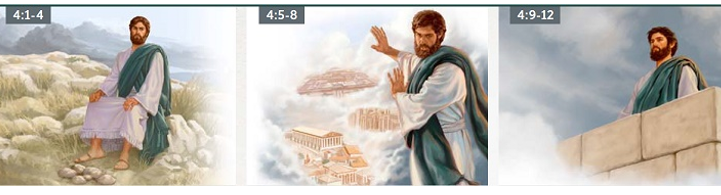
13 Jehovah is holy and therefore never tempts anyone to do evil. Rather, it is the Devil who is “the Tempter.” (Matt. 4:3) The Devil can create tempting situations. Yet, it is up to each individual whether he will allow himself to be brought into temptation or not. (Read James 1:13-15.) For his part, Jesus immediately rejected each temptation by the use of a relevant quotation from God’s Word. Thus, Jesus upheld God’s rightful sovereignty. But Satan did not give up. He waited “until another convenient time.” (Luke 4:13) Jesus continued to resist all of Satan’s efforts to break his integrity. Christ upheld the righteousness of Jehovah’s sovereignty and proved that a perfect human can be faithful despite the most extreme test. However, Satan attempts to ensnare Jesus’ followers, including you.
*** w15 12/15 p. 5 par. 7 Jehovah, the God of Communication ***
7 When God’s firstborn came to earth, he likely spoke and taught in what the Bible calls Hebrew. (John 19:20; 20:16; Acts 26:14) First-century Hebrew was evidently influenced by Aramaic, so Jesus may have used some Aramaic expressions. However, he also knew the ancient Hebrew of Moses and the prophets, which was read each week in the synagogues. (Luke 4:17-19; 24:44, 45; Acts 15:21) In addition, Greek and Latin were spoken in Israel. The Scriptures are silent about whether Jesus also spoke those languages.
*** w15 12/15 p. 21 par. 15 Use the Power of Your Tongue for Good ***
15 How we say something can be as important as what we say. When Jesus spoke in the synagogue of his hometown of Nazareth, the people were “amazed at the gracious words coming out of his mouth.” (Luke 4:22) Gracious speech appeals to the heart and in no way weakens the power of our tongue. In fact, graciousness can make our speech more persuasive. (Prov. 25:15) We can imitate Jesus’ gracious speech by being kind, courteous, and considerate of others’ feelings. Seeing the effort a crowd made to hear him speak, Jesus was moved with pity and “started to teach them many things.” (Mark 6:34) Even when he was being insulted, Jesus did not resort to harsh speech.—1 Pet. 2:23.
*** w18 May p. 23 par. 6 Know Your Enemy ***
6 By means of his spirit organization, Satan exerts authority over all human governments. That fact was made plain when Satan showed Jesus “all the kingdoms of the inhabited earth” and said: “I will give you all this authority and their glory, because it has been handed over to me, and I give it to whomever I wish.” (Luke 4:5, 6) Despite Satan’s evil influence, many governments do a measure of good for their citizens. And individual rulers may have noble intentions. But no human government or individual ruler is capable of bringing about the changes mankind needs most.—Ps. 146:3, 4; Rev. 12:12.
*** w18 May p. 31 par. 17 Young Ones—Stand Firm Against the Devil ***
17 How could Satan induce us to remove our helmet? Consider the way he dealt with Jesus. Satan surely knew that Jesus had the hope of eventually ruling mankind. But Jesus would have to wait until Jehovah’s appointed time. And before then, he would have to suffer and die. So Satan offered Jesus the chance to fulfill his hope sooner. Satan suggested that if Jesus would do one act of worship, he could have it all and have it right then. (Luke 4:5-7) Similarly, Satan knows that Jehovah offers us material benefits in the new system. But we have to wait, and we might have to suffer hardships in the meantime. So Satan offers us tempting opportunities to enjoy such a life now. He wants us to seek material benefits first—to have it all and have it now. Satan urges us to seek the Kingdom second.—Matt. 6:31-33.
*** wp17 No. 6 p. 8 What Did Jesus Really Look Like? ***
For the better part of 30 years, Jesus was a carpenter, working without the benefit of modern power tools. (Mark 6:3) He, therefore, must have had a sturdy build. Early in his ministry, he single-handedly “drove all those with the sheep and cattle out of the temple, and he poured out the coins of the money changers and overturned their tables.” (John 2:14-17) It takes a strong and powerful man to perform that feat. Jesus used the body that God had prepared for him to fulfill his God-given commission: “I must also declare the good news of the Kingdom of God to other cities, because for this I was sent.” (Luke 4:43) It took extraordinary stamina to travel throughout Palestine on foot and declare this message.
*** w17 January pp. 27-28 par. 3 “These Things Entrust to Faithful Men” ***
3 Many of us love the work we do and would like to continue doing it indefinitely. Sadly, though, from the days of Adam, each generation grows old and is replaced by another. (Eccl. 1:4) In recent times, this transition has presented unique challenges for true Christians. The work of Jehovah’s people has grown in scope and complexity. As we tackle new projects, new ways of doing things are adopted—often ways that involve the use of rapidly changing technology. Some older ones may find it hard to keep pace with these advances. (Luke 5:39) Even when that is not the case, younger ones may have greater strength and energy than older ones have. (Prov. 20:29) Thus, it is both loving and practical for older ones to prepare younger ones to take on greater responsibility.—Read Psalm 71:18.
*** w17 February p. 10 par. 8 The Ransom—A “Perfect Present” From the Father ***
8 While on earth, Jesus helped his disciples to see the importance of God’s Kingdom. Immediately after his baptism, Jesus proclaimed “the good news of the Kingdom of God” far and wide. (Luke 4:43) In his last words to his disciples before he returned to heaven, Jesus instructed them to be witnesses of him “to the most distant part of the earth.” (Acts 1:6-8) By means of the Kingdom-preaching work, people throughout the earth would have an opportunity to learn about the ransom and become subjects of God’s Kingdom. Today, we show our support for the Kingdom by assisting Christ’s brothers on earth in carrying out the commission to preach the good news of the Kingdom worldwide.—Matt. 24:14; 25:40.
*** w17 July p. 23 par. 5 “May He . . . Give Success to All Your Plans” ***
5 Jesus grew up to be a happy adult. What made him happy? He knew that, among other things, God wanted him “to declare good news to the poor . . . and a recovery of sight to the blind.” (Luke 4:18) Doing what God asked him to do made Jesus happy. Psalm 40:8 expresses his feelings: “To do your will, O my God, is my delight.” Jesus enjoyed teaching people about his heavenly Father. (Read Luke 10:21.) Once, after teaching a woman about true worship, Jesus said to his disciples: “My food is to do the will of him who sent me and to finish his work.” (John 4:31-34) Showing love for God and for others made Jesus happy. It can make you happy too.
*** wp16 No. 4 p. 4 The Bible Survived Decay ***
HOW THE BIBLE SURVIVED: Jewish law compelled every king to “write for himself in a book a copy of this Law,” the first five books of the Bible. (Deuteronomy 17:18) Moreover, professional copyists produced so many manuscripts that by the first century C.E., the Scriptures could be found in synagogues throughout Israel and even in distant Macedonia! (Luke 4:16, 17; Acts 17:11) How did some very old manuscripts survive until today?
“Jews were known to put scrolls containing Scripture in pitchers or jars in order to preserve them,” says New Testament scholar Philip W. Comfort. Christians evidently continued that tradition. Consequently, some early Bible manuscripts have been discovered in clay jars, as well as in dark closets and caves and in exceptionally dry regions.
THE RESULT: Thousands of portions of Bible manuscripts—some over 2,000 years old—survive to this day. No other ancient text has so many manuscripts from so long ago.
*** w16 March p. 23 Can You Help in Your Congregation? ***
Martin Goodman, professor at Oxford University, observes that the “sense of mission set Christians apart from other religious groups, including Jews, in the early Roman empire.” Jesus had traveled from place to place to carry out his ministry. Following his example, true Christians would have understood that spreading “the good news of the Kingdom of God” would involve finding people who desired to know Bible truth. (Luke 4:43) This is one of the reasons why the first-century Christian congregation had “apostles,” a term that literally refers to those sent forth, envoys. (Mark 3:14) Jesus commanded his followers: “Go, therefore, and make disciples of people of all the nations.”—Matt. 28:18-20.
*** w16 May p. 9 par. 4 “Go, . . . and Make Disciples of People of All the Nations” ***
4 Was Jesus referring only to the individual efforts of his followers, or was he alluding to an organized campaign to preach the good news? Since one individual would not be able to go to “all the nations,” this work would require the organized efforts of many. Jesus indicated as much when he invited his disciples to become “fishers of men.” (Read Matthew 4:18-22.) The type of fishing he referred to here was not that of a lone fisherman using a line and a lure, sitting idly while waiting for the fish to bite. Rather, it involved the use of fishing nets—a labor-intensive activity that at times required the coordinated efforts of many.—Luke 5:1-11.
*** w16 August p. 27 pars. 8-9 Do You See the Need to Train Others? ***
8 Converse with people. Jesus often spoke to individuals about the Kingdom. For instance, he carried on a lively and fruitful conversation with a woman at Jacob’s well near the city of Sychar. (John 4:5-30) He also spoke with Matthew Levi, a tax collector. The Gospels record very little of that conversation, but Matthew accepted Jesus’ invitation to be his follower. Matthew and others heard Jesus speak at some length during a feast held in Matthew’s home.—Matt. 9:9; Luke 5:27-39.
9 On another occasion, Jesus spoke in a friendly way to Nathanael, who had a negative view of people from Nazareth. However, Nathanael was moved to change his thinking. He decided to learn more about what Jesus, a man from Nazareth, was teaching. (John 1:46-51) So we have good reason to train new publishers to converse with people in a friendly, relaxed manner. Those whom we help in this way will likely be delighted to see how honesthearted people respond favorably to personal interest and kind words.
*** w16 August pp. 27-28 pars. 10-11 Do You See the Need to Train Others? ***
10 Cultivate interest. Jesus had limited time to carry out his ministry. Nevertheless, he took time to cultivate the interest people showed in the good news. For instance, Jesus taught a crowd, using a boat as a platform. On that occasion, he miraculously gave Peter a huge catch of fish and told him: “From now on you will be catching men alive.” What result did Jesus’ words and actions produce? Peter and his associates “brought the boats back to land and abandoned everything and followed [Jesus].”—Luke 5:1-11.
11 Nicodemus, a member of the Sanhedrin, became interested in Jesus’ teaching. He wanted to learn more but was afraid of what others would say if he spoke with Jesus in public. Jesus was flexible and generous with his time; he met with Nicodemus at night—away from the crowds. (John 3:1, 2) What lesson can we learn from these accounts? God’s Son set aside time to build up the faith of individuals. Should we not be diligent in making return visits and conducting Bible studies with interested ones?
*** w15 2/15 p. 13 par. 11 Imitate Jesus’ Courage and Discernment ***
11 Jesus showed discernment in all he said and did. In his speech. He used good judgment when he preached the good news, choosing “gracious words” that amazed his listeners. (Luke 4:22; Matt. 7:28) He often let God’s Word speak for him—reading, quoting, or referring to just the right scriptures to make his point. (Matt. 4:4, 7, 10; 12:1-5; Luke 4:16-21) Jesus also explained the Scriptures, doing so in ways that moved the hearts of his listeners. After his resurrection, when speaking to two disciples on their way to Emmaus, he “interpreted to them things pertaining to himself in all the Scriptures.” The disciples later said: “Were not our hearts burning within us . . . as he was fully opening up the Scriptures to us?”—Luke 24:27, 32.
*** w15 10/15 p. 21 par. 10 Serve Jehovah Without Distraction ***
10 Many things happened during Jesus’ ministry that could have distracted him, but he never succumbed to them. Early in his ministry, after he had taught the crowds and performed miracles in Capernaum, people begged him not to leave their city. But how did Jesus react to this flattering request? He said: “I must also declare the good news of the Kingdom of God to other cities, because for this I was sent.” (Luke 4:42-44) True to his word, Jesus walked the length and breadth of Palestine, preaching and teaching. Though perfect, he had normal human needs and sometimes felt very tired because of expending himself in God’s service.—Luke 8:23; John 4:6.





 MeekSpaceNG