Tag Archives: Our Christian Life and Ministry

Digging for Spiritual Gems – John 3-4 (Week of September 10-16, 2018)
Digging for Spiritual Gems – John 3-4 
Week of September 10-16, 2018

Joh 3:29:  How are we to understand this verse? (“the friend of the bridegroom” study note on Joh 3:29, nwtsty) John the Baptist likened himself to “the friend of the bridegroom.” In this case, Jesus was the bridegroom and the disciples as a class made up his symbolic bride. Preparing the way for the Messiah, John the Baptist introduced the first members of “the bride” to Jesus Christ. (Joh 1:29, 35; 2Co 11:2; Eph 5:22-27; Re 21:2, 9) “The friend of the bridegroom” accomplished his objective by making successful introductions; he was then no longer a principal figure. Likewise, John said of himself in relation to Jesus: “That one must keep on increasing, but I must keep on decreasing.”—Joh 3:30.
Joh 1:29  How might the Samaritan woman have understood Jesus’ expression “living water,” but what was Jesus referring to? (“living water” study note on Joh 4:10, nwtsty) This Greek expression is used in a literal sense to refer to flowing water, spring water, or freshwater from a well supplied by springs. This is in contrast with stagnant water from a cistern. At Le 14:5, the Hebrew expression for “running water” is literally “living water.” At Jer 2:13 and 17:13, Jehovah is described as “the source [or, “spring”] of living water,” that is, life-giving symbolic water. When speaking with the Samaritan woman, Jesus used the term “living water” figuratively, but it appears that she initially took his words literally.—Joh 4:11; see study note on Joh 4:14.
What does this week’s Bible reading teach me about Jehovah?


Joh 3:2:  Shows that Jehovah is the one who give the power, so a person can performs signs or miracles like he did with Jesus. Jehovah is the source of all power and should be shown honor and praise.  (Acts 10:38, Re 4:11, Isa 40:26)

Joh 3:5:  God announced that he had brought forth Jesus as a spiritual son at Mt 3:16-17 and having the prospect of entering into the heavenly Kingdom. Later Jehovah at Pentecost 33 C.E., holy spirit was poured out on other baptized ones, and they will thus be born again as spiritual sons of God. (Acts 2:1-4)

Joh 3:16-17:  Jehovah loves us so much he was willing to sacrifice his beloved Son Jesus to save us from sin and so we can gain everlasting life. This unique expression of divine love, God counterbalanced the death sentence that sheer justice would have required.

Joh 3:35:  Jehovah is a God of love and loves his only begotten Son Jesus. We can be sure that Jehovah loves all his faithful children. (1Jo 4:8)

Joh 3:36:  Jehovah does have a wrath or anger for those who do not exercises faith in him who he sent and those who do not do his will. (Eph 3:5-6’ 2Th 1:7-9)

Joh 4:10:   Jehovah is the greatest gift giver to all of his faithful servants and teaches us this in this verse and Jehovah will give it freely if we asked. Jas 1:17 “Every good gift and every perfect present is from above, coming down from the Father” (Lu 11:9-13 give HS)

Joh 4:23:  Jehovah wants to be worship with truth not made up ways.For our worship to be acceptable to God it must conform to the truth revealed in the pages of the Bible and it must be guided by his holy spirit.

Joh 4:24:  Jehovah is a Spirit person, A spirit has a form of life that differs greatly from that of humans, and it is invisible, it’s body, “a spiritual one,” that is far superior to “a physical body.” (1Co 15:44; Joh 1:18)   

Joh 4:46-53:  Jesus demonstrated that the power of God to heal through him is not bound by distance. As a result the man and “his whole household believed.” We to can have confident that Jehovah will keep his word at Isa 33:24 “no resident will say : ”I am sick.”” (De7:15; Re 21;3-4)  
   
What other spiritual gems have you discovered in this week’s Bible reading?

Joh 3:2:  Pharisee and a teacher Nic-o-de-mus recognized that Jesus was not God the Almighty but a teacher sent by God and signs that he performs was because of God. This shows that Jesus is not part of a trinity. (Act 2:22)

Joh 3:5:  The Greek word for “flesh” (sarx) is here used to refer to a living being with fleshly or human heritage, along with its limitations. Show those who are not chosen by Jehovah cannot enter the heavenly Kingdom of God. Flesh cannot go to heaven as shown at 1Co 15:50.

Joh 3:13:  Jesus used the expression “Son of man” to refer to himself, emphasizing that he was truly human, born from a woman, and that he was a fitting human counterpart to Adam, having the power to redeem humankind from sin and death. (Ro 5:12, 14-15)  

Joh 3:13:  The phrase “no man has ascended into heaven,” show that faithful one like David, Abraham and many other did not go to heaven but are waiting asleep for the resurrection and do not have a immoral soul. (Ec 9:5, 10 John 11:11-12; Mt 9:24, Ps 13:3)  

Joh 3:13, 31:  Show Jesus “descended from heaven” in that he had previously life in the spirit realm with his Father. (Ga 4:4; Heb 2:9, 14, 17)

Joh 3:15:  If a Christian allows anything or anyone to destroy his brotherly love, he is walking in spiritual darkness, not knowing where he is going.

Joh 3:16:  Another scripture that show Jesus is not part of a trinity. For we see it was God who gave the world something, not Jesus. So those who would exercise faith in Jehovah gift of Jesus could gain everlasting life if they remain to the end faithful. Mt 24:13. 

Joh 3:16, 18:  Jesus is rightly called “the only-begotten Son of God. The Greek word translated “only-begotten” has been defined as “single of its kind, only,” or “unique.” Jesus is unique in that he is the sole direct creation of his Father. He is the firstborn Son. In fact, he is “the firstborn of all creation.” (Col. 1:15) He is “the beginning of the creation by God.” (Rev. 3:14)

Joh 3:28-30:  John the Baptizer show that he was not jealous or envy because he was going to decrease and Jesus was going to increase. May we learn from John not to compare the works of what we do to others, for Jehovah loves us all for our whole soul work that we can do. 

Joh 3:35:  Another scripture that show Jesus is not part of a trinity. We see that Jehovah loves the Son; one is show affection for another. Also we see the Jehovah the Father is giving the Son authority. Again we see two individuals and no third person.    

Joh 4:1-2; 3:22:  Jesus “did baptizing,” while at John 4:2, the record states that “Jesus himself did no baptizing” is not a Contradictions. Jesus’ disciples who performed the actual baptisms in his name and under his direction, so Jesus could claim that he did baptizing.

Joh 4:7-9:   Jesus, set the example on treated woman with respect and consideration and was neither racially prejudiced nor gender prejudiced. May we do the same as Jesus did, for we are all of the same kind or family.  

Joh 4:14:   God’s Word uses water as a symbol of God’s provisions for restoring mankind to perfect life by Jesus’ ransom sacrifice. As we “come to know” Jehovah God and Jesus Christ and acting on that knowledge with faith, we can have the prospect of gaining everlasting life. (Joh 17:3)

Joh 4:17-18:   Jesus talk to a woman who was then living with a man who was not her husband a type of association that the Jew look down on.  It is heartwarming that Jehovah God and his Son will help those who have problems, may we do the same.

Joh 4:23-24:  For our worship to be acceptable to Jehovah it must conform to the truth revealed in the pages of the Bible and it must be guided by the Holy Spirit. Truth does not have tens of thousands of religious denominations worldwide as shown in World Christian Encyclopedia 2001.

Joh 4:25-26:  Jesus reveals to the Sa-mar’-i-tans woman that Jesus is the Messiah and not God. Messiah means “anointed” or “anointed one,” and being anointed by another. In this case Jesus was anointed by Jehovah at Matt. 3:13-17.

Joh 4:34:  Another scripture that show Jesus is not part of a trinity. We see Jesus has a purpose in life and that is to do God’s will and the work that been assign to him. One is greater because he assign the work to do. NO Trinity here but two separate individuals  

Joh 4:42:  This expression “savior of the world”, appearing here and at 1Jo 4:14, which indicates that Jesus would save from sin those from “the world” of mankind who demonstrate faith to the end.


John 3-4
Digging for Spiritual Gems: (8 min.)


Joh 3:29—How are we to understand this verse? (“the friend of the bridegroom” study note on Joh 3:29, nwtsty)
the friend of the bridegroom: In Bible times, a close acquaintance of the bridegroom acted as his legal representative and played a key role in making arrangements for the marriage. He was viewed as the one who brought the bride and bridegroom together. On the wedding day, the bridal procession would arrive at either the house of the bridegroom or that of his father, where the marriage feast would be held. During this feast, the friend of the bridegroom would be happy when he heard the voice of the bridegroom as he talked with his bride, since the friend would feel that he had successfully done his duty. John the Baptist likened himself to “the friend of the bridegroom.” In this case, Jesus was the bridegroom and the disciples as a class made up his symbolic bride. Preparing the way for the Messiah, John the Baptist introduced the first members of “the bride” to Jesus Christ. (Joh 1:29, 35; 2Co 11:2; Eph 5:22-27; Re 21:2, 9) “The friend of the bridegroom” accomplished his objective by making successful introductions; he was then no longer a principal figure. Likewise, John said of himself in relation to Jesus: “That one must keep on increasing, but I must keep on decreasing.”—Joh 3:30.

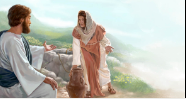
Joh 4:10—How might the Samaritan woman have understood Jesus’ expression “living water,” but what was Jesus referring to? (“living water” study note on Joh 4:10, nwtsty)
living water: This Greek expression is used in a literal sense to refer to flowing water, spring water, or freshwater from a well supplied by springs. This is in contrast with stagnant water from a cistern. At Le 14:5, the Hebrew expression for “running water” is literally “living water.” At Jer 2:13 and 17:13, Jehovah is described as “the source [or, “spring”] of living water,” that is, life-giving symbolic water. When speaking with the Samaritan woman, Jesus used the term “living water” figuratively, but it appears that she initially took his words literally.—Joh 4:11; see study note on Joh 4:14.


What has this week’s Bible reading taught you about Jehovah?

*** wp18 No. 2 p. 13 You Can Live Forever on Earth ***
The rebellion in Eden did not thwart God’s original purpose for mankind and the earth. God’s perfect love and sense of justice moved him to provide a way to free us from the bondage of inherited sin and death. The apostle Paul explained: “The wages sin pays is death, but the gift God gives is everlasting life by Christ Jesus our Lord.” (Romans 6:23) Lovingly, God “gave his only-begotten Son [Jesus Christ], so that everyone exercising faith in him might not be destroyed but have everlasting life.” (John 3:16) By offering himself willingly as a ransom sacrifice, Jesus redeemed all that was lost through Adam.

*** w18 September p. 14 pars. 8-9 Keep Displaying Love—It Builds Up ***
8 True Christians also have this reason to be drawn to God’s love: He “loved the world so much that he gave his only-begotten Son, so that everyone exercising faith in him might not be destroyed but have everlasting life.” (John 3:16) What love Jesus also showed in giving his life for us! And what a powerful motivation that love is for us! God’s Word promises that not even “tribulation or distress” can “separate us from the love of the Christ.”—Rom. 8:35, 38, 39.
9 When we grapple with trials that are physically, emotionally, or spiritually draining, the compelling force of Christ’s love can give us the strength to endure. (Read 2 Corinthians 5:14, 15.) Jesus’ love has the power to sustain us and to motivate us not to give up, even in the face of such trials as disasters, persecution, personal disappointments, or gnawing anxiety.

*** wp17 No. 2 p. 5 God’s Greatest Gift—Why So Precious? ***
Some gifts are precious because they represent a great sacrifice made by the giver. When a person is willing to part with something that is of great value to him and gives it to us, we especially treasure the gift because of the sacrifice.
God “gave his only-begotten Son.” (John 3:16) He could not have offered us anyone dearer to him. During the aeons that God was creating the universe, Jesus worked alongside him and became “the one he was especially fond of.” (Proverbs 8:30) Jesus is God’s “beloved Son” and “the image of the invisible God.” (Colossians 1:13-15) Never has a closer bond existed between two intelligent beings.
Yet, God “did not even spare his own Son.” (Romans 8:32) Jehovah gave his very best for us. No gift has cost him more.

*** w17 October pp. 7-8 par. 3 “Love . . . in Deed and Truth” ***
3 After Adam and Eve rebelled, Jehovah made his greatest expression of unselfish love. He arranged to ransom the future descendants of those two rebels, certain that some of them would respond favorably to His love. (Gen. 3:15; 1 John 4:10) In fact, from the moment that Jehovah promised a future Savior, He viewed this sacrifice as already made. Then, some 4,000 years later, Jehovah at great personal cost sacrificed his only-begotten Son for the world of mankind. (John 3:16) How grateful we are for Jehovah’s unselfish love!

*** wp16 No. 2 p. 7 Why Did Jesus Suffer and Die? ***
By Jesus’ sacrificial death, God opened the way to endless life in Paradise on earth. Note Jesus’ words as recorded at John 3:16: “God loved the world so much that he gave his only-begotten Son, so that everyone exercising faith in him might not be destroyed but have everlasting life.” Jesus’ death is thus an expression not only of God’s unfailing justice but, more specially, of his great love for humans.

*** w16 June pp. 4-5 Jehovah “Cares for You” ***
The reason is God’s incomparable love. He loves the world so much that he has given his Son, Jesus, to rescue humans from sin and the harm that it brings to mankind. (John 3:16) In fact, the ransom accomplishes more. By means of Christ’s sacrifice, God freely forgives those whom he loves. The apostle John wrote: “If we confess our sins, he is faithful and righteous so as to forgive us our sins.” (1 John 1:9) Because of Jehovah’s forgiveness, people can continue to enjoy his friendship, and knowing this touches us deeply.


What other spiritual gems have you discovered in this week’s Bible reading?

*** w18 September p. 4 pars. 3-4 “If You Know These Things, Happy You Are if You Do Them” ***
3 We receive much good counsel and training through the Bible, our Christian publications, our websites, JW Broadcasting, and our meetings and assemblies. But according to Jesus’ words found at John 4:34, spiritual food involves more than just taking in knowledge. What more is involved? Jesus said: “My food is to do the will of him who sent me and to finish his work.”
4 To Jesus, spiritual food included acting on God’s direction. In what sense is this like food? Just as our bodies are contented and nourished when we eat a good meal, our hearts are strengthened and our faith is nourished for everlasting life when we participate in doing God’s will. How many times have you gone to a meeting for field service not feeling your best—only to finish preaching that day refreshed and invigorated?

*** wp17 No. 2 p. 7 How Will You Respond to God’s Greatest Gift? ***
Exercise faith in the ransom. “The one who exercises faith in the Son has everlasting life.” (John 3:36) What does it mean to exercise faith? It means action; to show faith in the ransom requires action. (James 2:17) What kind of action? A gift becomes yours only when you reach out and accept it. So you must reach out and accept the ransom. How? Learn how God wants you to live, and then act accordingly. Pray to God for forgiveness and a clean conscience. Approach God in full confidence that the ransom guarantees an eternal future of peace, security, and prosperity for all who exercise faith in it!—Hebrews 11:1.

*** wp16 No. 2 pp. 9-10 Should Christians Worship at Shrines? ***
In his conversation with the Samaritan woman, Jesus also mentioned that “the hour” for this change in God’s worship was “coming.” When would that be? The hour came when Jesus, by his sacrificial death, ended the Jewish system of worship based on the Law of Moses. (Romans 10:4) Yet, Jesus also said: “The hour . . . is now.” Why? Because as the Messiah, he was already gathering disciples who would obey the command he stated next: “God is a Spirit, and those worshipping him must worship with spirit and truth.” (John 4:24) What, then, does it mean to worship with spirit and truth?
When Jesus mentioned worshipping with spirit, he was not speaking of a particularly spirited, animated, or enthusiastic form of worship. Rather, he was talking about being guided by God’s holy spirit, which among other things guides our understanding of the Scriptures. (1 Corinthians 2:9-12) And the truth Jesus referred to is an accurate knowledge of Bible teachings. Therefore, rather than being rendered at any special place, our worship will be acceptable to God if it conforms to what the Bible teaches and is guided by the holy spirit.

*** w16 February p. 19 Keep On Serving Jehovah With Joy ***
Jehovah has provided the ransom sacrifice, making it possible for us to have a joyful life. Indeed, “God loved the world so much that he gave his only-begotten Son, so that everyone exercising faith in him might not be destroyed but have everlasting life.” (John 3:16) Yes, our sins can be forgiven and we can have everlasting life on the basis of faith in God’s loving provision of Jesus’ ransom sacrifice. Is that not an excellent reason to be grateful? And should not our gratitude for the ransom motivate us to serve Jehovah joyfully?

*** w16 May p. 19 par. 7 Is the Bible Still Changing Your Life? ***
7 Love moved God to offer us a precious gift—the ransom sacrifice of his beloved Son. (John 3:16) If on the basis of this priceless provision we repentantly seek Jehovah’s forgiveness when we err, we can have the confidence that our friendship with him is still intact. (Rom. 7:24, 25; 1 John 2:1, 2) Should we hesitate to avail ourselves of the benefits of the ransom because we feel unclean or sinful? Of course not! That would be like refusing to use water to wash our hands when they are dirty. After all, the ransom is provided for repentant sinners. Thanks to the ransom, then, we can enjoy a friendship with Jehovah even though we are in an imperfect state.—Read 1 Timothy 1:15.

*** w16 July p. 28 par. 8 Spread the Good News of Undeserved Kindness ***
8 We have the responsibility to make known to our fellow humans that they can come into a friendly relationship with their Creator. Before humans exercise faith in Jesus’ sacrifice, God considers them to be his enemies. The apostle John wrote: “The one who exercises faith in the Son has everlasting life; the one who disobeys the Son will not see life, but the wrath of God remains upon him.” (John 3:36) Happily, Christ’s sacrifice makes reconciliation with God possible. Paul declared: “You who were once alienated and enemies because your minds were on the works that were wicked, he has now reconciled by means of that one’s fleshly body through his death.”—Col. 1:21, 22.

*** w16 August p. 27 pars. 8-9 Do You See the Need to Train Others? ***
8 Converse with people. Jesus often spoke to individuals about the Kingdom. For instance, he carried on a lively and fruitful conversation with a woman at Jacob’s well near the city of Sychar. (John 4:5-30) He also spoke with Matthew Levi, a tax collector. The Gospels record very little of that conversation, but Matthew accepted Jesus’ invitation to be his follower. Matthew and others heard Jesus speak at some length during a feast held in Matthew’s home.—Matt. 9:9; Luke 5:27-39.
9 On another occasion, Jesus spoke in a friendly way to Nathanael, who had a negative view of people from Nazareth. However, Nathanael was moved to change his thinking. He decided to learn more about what Jesus, a man from Nazareth, was teaching. (John 1:46-51) So we have good reason to train new publishers to converse with people in a friendly, relaxed manner. Those whom we help in this way will likely be delighted to see how honesthearted people respond favorably to personal interest and kind words.

*** w16 August pp. 27-28 pars. 11-12 Do You See the Need to Train Others? ***
11 Nicodemus, a member of the Sanhedrin, became interested in Jesus’ teaching. He wanted to learn more but was afraid of what others would say if he spoke with Jesus in public. Jesus was flexible and generous with his time; he met with Nicodemus at night—away from the crowds. (John 3:1, 2) What lesson can we learn from these accounts? God’s Son set aside time to build up the faith of individuals. Should we not be diligent in making return visits and conducting Bible studies with interested ones?

12 New publishers are very likely to improve their skills as teachers of Bible truth if we work with them in the field service. We can help them to keep in mind those who show even slight interest. We can invite new publishers to accompany us when we make return visits and conduct home Bible studies. With such training and encouragement, less experienced publishers will surely want to cultivate the interest of others and conduct Bible studies on their own. They will also learn not to give up quickly but to be patient and persevere in the ministry.—Gal. 5:22; see the box “Perseverance Is Essential.”


2018-10 | Initial Call—Jas 1:13

2018-10 | First Return Visit—1Jo 5:19

2018-10 | Second Return Visit—Isa 63:9

Digging for Spiritual Gems – John 1-2 (Week September 3-9

Digging for Spiritual Gems – John 1-2

Joh 1:1:  What reasons are there for saying that John did not mean that “the Word” was the same as Almighty God? (“the Word,” “with,” “the Word was a god” study notes on Joh 1:1, nwtsty) First, the preceding clause and the following clause both clearly state that “the Word” waswith God.”(In this context, the Greek preposition pros implies close proximity and fellowship. It also indicates separate persons, in this case, the Word and the only true God.) Also, the Greek word the·osʹoccurs three times in verses 1 and 2. In the first and third occurrences,the·osʹ is preceded by the definite article in Greek; in the second occurrence, there is no article. Many scholars agree that the absence of the definite article before the second the·osʹ is significant. When the article is used in this context, the·osʹ refers to God Almighty. On the other hand, the absence of the article in this grammatical construction makes the·osʹ qualitative in meaning and describes a characteristic of “the Word.” Therefore, a number of Bible translations in English, French, and German render the text in a way similar to the New World Translation, conveying the idea that “the Word” was “a goddivinea divine being; of divine kindgodlike.” Supporting this view, ancient translations of John’s Gospel into the Sahidic and the Bohairic dialects of the Coptic language, probably produced in the third and fourth centuries C.E., handle the first occurrence of the·osʹ at Joh 1:1 differently from the second occurrence. These renderings highlight aquality of “the Word,” that his nature was like that of God, but they do not equate him with his Father, the almighty God. In harmony with this verse, Col 2:9 describes Christ as having “all the fullness of the divine quality.” And according to 2Pe 1:4, even Christ’s joint heirs would “become sharers in divine nature.” Additionally, in the Septuaginttranslation, the Greek word the·osʹ is the usual equivalent of the Hebrew words rendered “God,” ʼel and ʼelo·himʹ, which are thought to convey the basic meaning “Mighty One; Strong One.” These Hebrew words are used with reference to the almighty God, other gods, and humans. (See study note on Joh 10:34.) Calling the Word “a god,” or “a mighty one,” would be in line with the prophecy at Isa 9:6, foretelling that the Messiah would be called “Mighty God” (not “Almighty God”) and that he would be the “Eternal Father” of all those privileged to live as his subjects. The zeal of his own Father, “Jehovah of armies,” would accomplish this.—Isa 9:7.
Joh 1:29  Why did John the Baptist call Jesus “the Lamb of God”? (“the Lamb of God” study note on Joh 1:29, nwtsty) This expression occurs only here and at Joh 1:36. (See App. A7.) Comparing Jesus to a lamb is fitting. Throughout the Bible, sheep were offered in recognition of sin and to gain approach to God. This foreshadowed the sacrifice that Jesus would make when he surrendered his perfect human life in behalf of mankind. The expression “the Lamb of God” could reflect a number of passages in the inspired Scriptures. In view of John the Baptist’s familiarity with the Hebrew Scriptures, his words may have alluded to one or more of the following: the male sheep that Abraham offered up instead of his own son Isaac (Ge 22:13), the Passover lamb that was slaughtered in Egypt for the deliverance of the enslaved Israelites (Ex 12:1-13), or the male lamb that was offered up on God’s altar in Jerusalem each morning and evening (Ex 29:38-42). John may also have had in mind Isaiah’s prophecy, where the one whom Jehovah calls “my servant” is said to be “brought like a sheep to the slaughter.” (Isa 52:13; 53:5, 7, 11) When the apostle Paul wrote his first letter to the Corinthians, he referred to Jesus as “our Passover lamb.” (1Co 5:7) The apostle Peter spoke of Christ’s “precious blood, like that of an unblemished and spotless lamb.” (1Pe 1:19) And more than 25 times in the book of Revelation, the glorified Jesus is spoken of figuratively as “the Lamb.”—Some examples are: Re 5:8; 6:1; 7:9; 12:11; 13:8; 14:1; 15:3; 17:14; 19:7; 21:9; 22:1.

What does this week’s Bible reading teach me about Jehovah?


Joh 1:3,10:  Jehovah is the creator and the true God. It was Jehovah who used his beloved Son to create all other things. For both verse show that Jehovah create THROUGH Jesus, not that Jesus did it on his own. 
Joh 1:14:  Jehovah shows his love for mankind by sending his only begotten Son to die for us. As John 3:16 it show this “For God loved the world so much that he gave his only-begotten Son,” May we shows our love in return for what Jehovah did for us. 

Joh 1:18:  No man has seen God because they would die if they see him according to  Exodus 33:20. This is because Jehovah is holy and so he used his angel to represent him. (Acts 7:38’; Gal 3:19)

Joh 1:23:  Jehovah is the fulfiller of prophecy about the one who would make the road straight at Isa 40:3.  Again showing Jehovah keeps his word and we can trust what Jehovah promises for the future.

Joh 1:33:  Jehovah gives Holy Spirit to ones that deserve it and in this case it was his beloved Son. Likewise Jehovah will give us Holy Spirit if we keep asking and if we are doing his will. (Luke 11:9-13)  

Joh 2:16:  It shows how Jehovah feels about those who try to contaminate the way he wants to be worship. He sees what we are doing because his name is involved. We are told at Jer 7:11 “this house that bears my name become a cave of robbers in your eyes? Here I have seen it for myself,” May we always worship Jehovah in truth.  
   
What other spiritual gems have you discovered in this week’s Bible reading?


Joh 1:1:  In The Interlinear Bible Hebrew & Greek English by Jay P. Green,Sr  C-1985   Preface show the Bible in the original languages does not “distinguished between upper and lower-case letters.” So how do we know the last God should not be capitalized, beside there being no definite articles. The Bible at John 20:17 shows Jesus has the same God and Father as we do so the Word cannot be God. 
  
Joh 1:3, 10:  Does not make Jesus the creator because we see the Jehovah created all things THROUGH Jesus as most Bibles shows. Also as Pr 8:30 show that Jesus was a master worker and without Jehovah power Jesus could not doing anything at all. (John 5:19, 30)

Joh 1:5:  Light stands for truth and righteousness, in contrast with darkness, which stands for error and unrighteousness. John shows that the darkness will not conquer the light. Proof of this is the light is now shining in 240 lands. This should encourage us to keep letting our light shin with the other millions.

Joh 1:6-7:  John the Baptist served as a prophet, a teacher (with disciples), and an evangelizer.—Lu 1:76, 77; 3:18; 11:1; Joh 1:35. John not only announced the approach of the Messiah and of God’s Kingdom, but also encouraged other to repent of their sins. May we imitate John example as servants doing Jehovah’s will.  

Joh 1:11:  When on earth Jesus was rejected by most of his own people, the Jews. They did not want their badness and hypocrisy exposed. They preferred darkness rather than light, much like most of the world today. Yet out of our love of neighbor, we must keep warning them so they maybe save.

Joh 1:14:  Jesus was flesh and human just like us, except without sin (1Pe 2:22; Heb 4:15) and not a Godman. Yet the scriptures help us see Jesus was like us “in all respects: as shown at Heb 2:17. (Php 2:7) 

Joh 1:14:  Jesus is “the only-begotten son,” which show Jesus is not part of a trinity. The Bible uses the term in describing the relation of sons and daughters to their parents. In this case this showing the relationship between Jehovah the Father and Jesus the Son.

Joh 1:18:  In this passage, John calls Jesus “the only-begotten god,” a term that emphasizes Jesus’ unique position in God’s arrangement. Jesus can rightly be called “a god” because of the way the term “god” is used in the Bible. This title conveys the basic idea of a mighty one,

Joh 1:18:  Jesus is spoken “at the Father’s side” or “in the bosom of the Father.” This expression refers to a position of special favor and close fellowship, not showing that Jesus is part of some Trinity of Gods.

Joh 1:23:  John would”make the way of Jehovah straight,” in the sense that he would be the forerunner of Jesus, who would represent his Father and come in his Father’s name. (John 5:43; 8:29)

Joh 1:29,36:  Here we see Jesus is the ”Lamb of God,” not God the Lamb. A sacrifice is  needed to be made to Jehovah, in order for sin to be taken away from mankind. So Jesus cannot be a Trinity God and the sacrifice to be offer up. 

Joh 1:51:  Son of man or “Son of a human.” This expression occurs about 80 times in the Gospels. Jesus used it to refer to himself, evidently emphasizing that he was truly human and not a God man or God the Son, (Da 7:13, 14)

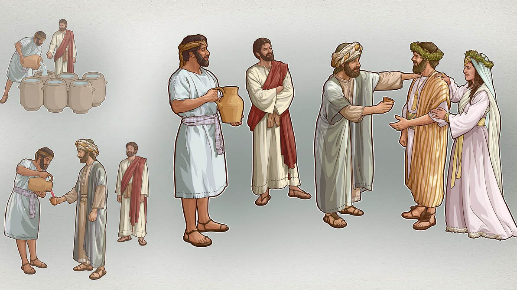
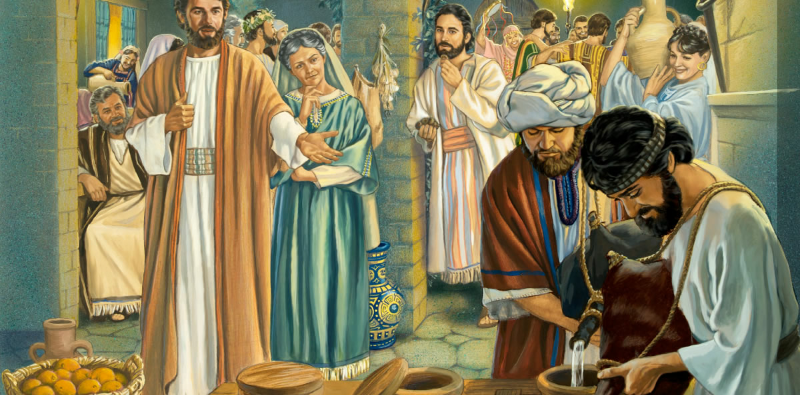
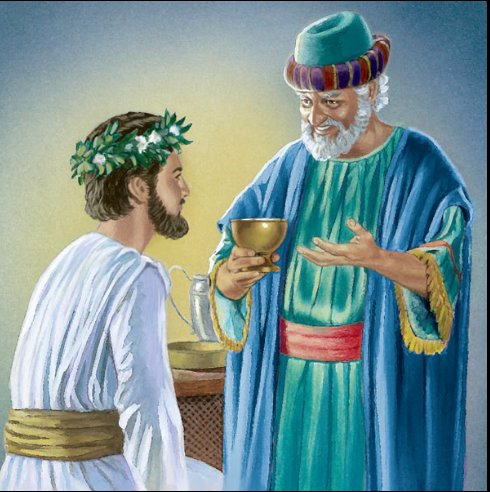
Joh 2:2-10:  Jesus performs his first miracle and demonstrates generosity.  Jesus was not obligated to perform this miracle, but he simply cared about people and was imitating his heavenly Father by being generous. Also the wine was real and not grape juice for the director said it was fine wine. 

Joh 2:14-16:  Jesus demonstrated that he and Jehovah will not tolerate contamination of pure worshiped to his Father. That is why few are worshipping Jehovah today compare to the world. Mt 7:13-14; Lu 13:24.

Joh 2:16:  Another scripture that show Jesus is not part of a trinity. Here we see Jesus call the Father “my Father,” which mean Jesus has a Father which was taught by his disciples at  Eph 1:3, 1Pe 1:3 and many other verses. 

Joh 2:17:  Jesus set the example for to make Jehovah house a place of pure worship and not place to carry on business. Even Jesus disciples recognized that Jesus was fulfilling prophecy at Ps 69:9.    

Joh 2:19-21:  Jesus was not saying he was going resurrected himself but was using figurative speech; he was comparing his anticipated death and resurrection to the demolition and reconstruction of the temple. The Bible clearly shows that it was God who resurrected him. (Ac 2:25-32; 3.15; 4.10; 5.30;10:40; Ro 8:11; Heb 13:20)

Starting Conversations—Video 1

Starting Conversations—Video 2

Starting Conversations—Video 3

Teaching Our Students to Prepare

Jesus Died for Your Brother Too

Jesus sacrificed his life for imperfect people. (Ro 5:8) No doubt we personally appreciate that Jesus showed his love for us by giving his life in our behalf. Nevertheless, at times we may need to remind ourselves that Christ died for our brother too. How can we show Christlike love to our brothers and sisters, who just like us are imperfect? Consider three ways. First, we can expand our circle of friends to include those whose background is different from ours. (Ro 15:7; 2Co 6:12, 13) Second, we can be careful to avoid saying or doing things that may offend others. (Ro 14:13-15) Finally, if someone sins against us, we can be quick to forgive. (Lu 17:3, 4; 23:34) If we work hard to imitate Jesus in these ways, Jehovah will continue to bless the congregation with peace and unity.

WATCH THE VIDEO BECOME MORE BEAUTIFUL! AND THEN ANSWER THE FOLLOWING QUESTIONS:

How did Miki initially feel about her congregation?

My name is Miki, and I moved here a year ago. They were all so cute, friendly, or so it seemed to me the beginning. And you took me for your baby-sitter, but you did not see that we were talking. Hey, we’re not at the playground here. And the elderly are always busy, I’m not sure that here, they really want me.
What caused her feelings to change?
Then Yoko, a pioneer of my old congregation, came to see me. He asked me how it was going, and I told her, how I felt in the congregation. She told me that she had a similar experience, and she told me about an article in the watchtower, which had been very useful. So I decided to examine it, during my personal study.
What do you see when you look at others? Do you have the tendency to express categorical judgments about what they say or do, considering them either right or wrong, or white or black, as if there were no other colors and nuances? Who sees things in this way, is like a photographer who ignores, the wide variety of bright colors, and shadows, in an autumn landscape. As if they existed, only black and white images. Perhaps, I was seeing the congregation in black and white.
How did Jesus’ example help Miki to adjust her viewpoint? (Mr 14:38)
 The article then made me reflect on the example of Jesus. Certainly the spirit is eager, but the flesh is weak. Why did Jesus manage to use such kind words with his disciples? Are we perspicacious? Can we put ourselves in the shoes of others? And what Jesus did, with his disciples. And that’s what I have to do.
How can Proverbs 19:11 help us to view fellow Christians in a positive way?
At home, he must always stay behind the children, at least in the hall, he would need to enjoy a little, the company of the brothers. I do not think he wanted to be rude, maybe he just wanted to join us, and have a nice chat. The elders do a lot of work to take care of the congregation. I know they do their best, and I want to do everything possible to make their work lighter.
Miki, you’re really a nice person. We are happy to have you in our congregation. The perspicacity of a man certainly slows his anger, and it is beauty of his own, to pass over the transgression.