Download Research Points for Acts 25-26
Digging for Spiritual Gems: (8 min.)
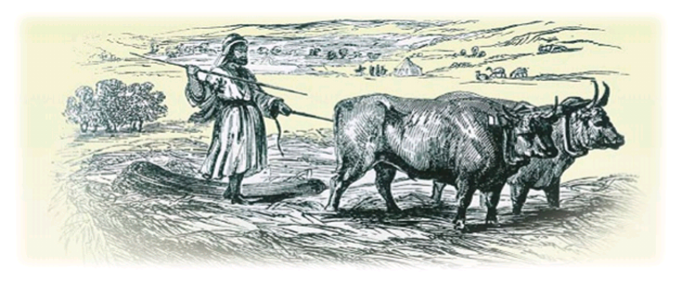
Ac 26:14—What is a goad? (“kicking against the goads” study note on Ac 26:14, nwtsty; “Goad,” nwtstg) kicking against the goads: A goad is a pointed rod used to urge on an animal. (Jg 3:31)
The expression “to kick against the goads” is a proverb found in Greek literature. It is based on the image of a stubborn bull that resists the prodding of the goad by kicking against it, resulting in injury to the animal. Saul behaved in a similar manner before becoming a Christian. By fighting against Jesus’ followers, who had the backing of Jehovah God, Paul risked causing serious injury to himself. (Compare Ac 5:38, 39; 1Ti 1:13, 14.) At Ec 12:11, “oxgoads” are mentioned in a figurative sense, referring to a wise person’s words that move a listener to follow counsel.
Goad
A long rod with a sharp metal point, used by farmers to prod an animal. The goad is compared to the words of a wise person that move the listener to heed wise counsel. “Kicking against the goads” is drawn from the action of a stubborn bull that resists the prodding of the goad by kicking against it, resulting in injury to itself.—Ac 26:14; Jg 3:31.
Ac 26:27—What dilemma did King Agrippa face when Paul asked him if he believed the prophets? (w03 11/15 16-17 ¶14)
14 Paul knew that Agrippa was nominally a Jew. Appealing to Agrippa’s knowledge of Judaism, Paul reasoned that his preaching really involved “saying nothing except things the Prophets as well as Moses stated were going to take place” regarding the Messiah’s death and resurrection. (Acts 26:22, 23) Addressing Agrippa directly, Paul asked: “Do you, King Agrippa, believe the Prophets?” Agrippa faced a dilemma. If he said that he rejected the prophets, his reputation as a Jewish believer would be ruined. But if he concurred with Paul’s reasoning, he would be taking a position of public agreement with the apostle and would risk being called a Christian. Paul wisely answered his own question, saying: “I know you believe.” How did Agrippa’s heart move him to answer? He responded: “In a short time you would persuade me to become a Christian.” (Acts 26:27, 28) Although Agrippa did not become a Christian, Paul evidently affected his heart to some extent with his message.—Hebrews 4:12.