What’s New on MeekSpaceNG


Bible Verses Explained

WHAT’S NEW

New Section—Bible Verses Explained

The jw.org website now features a section entitled “Bible Verses Explained.” Each month, many people search online for the meaning of Bible verses. To meet this need, the “Bible Verses Explained” section discusses the meaning and context of these verses. Browse the “Bible Verses Explained” section on our website under “Bible Teachings” and in the JW Library app under “Article Series.”

                                    DONATE BUTTON 

from Blogger http://meekspaceng.blogspot.com/2021/02/whats-new-on-meekspaceng.html

STUDY ARTICLE 49 The Resurrection​—A Sure Hope!

 See Also Related Articles:


                                               meetingBOX
                                          Treasures from God\’s Word 
                                          Living As Christians 
                                          Life and Ministry Meeting Workbook


STUDY ARTICLE 49

The Resurrection​—A Sure Hope!

“I have hope toward God . . . that there is going to be a resurrection.”​—ACTS 24:15.

SONG 151 He Will Call

PREVIEW*

1-2. True worshippers have what wonderful hope?

The hope to live forever and to see our loved ones who have died again.  Faithful man Job using logic reasons that if a tree grows back after being cut, how there is no hope for a human and reaches the correct conclusion that being dead says your God will call I will answer.

So it is an important hope because it is based on the Bible since it was never Jehovah\’s purpose for man to grow old and die.

And as the paragraph at the beginning mentions, it is very important to have illusions and hopes because they change our way of seeing life and strengthen us, the opposite of the non-Christian concept that makes it seem as if it were simple naivety or seeing is believing Not at all, as already mentioned, does this hope have a well-founded biblical basis. 

3. Why can we benefit from 1 Corinthians chapter 15?

Well, because this is a fundamental teaching, reviewing what first Corinthians says will be very encouraging and will strengthen our faith a lot. 

4. What is key to our hope for our dead loved ones?

 The key is the resurrection of Jesus Christ and that resurrection is the pillar that sustains our Christian hope.

It is interesting that Paul points out that if there were no resurrection then our faith would be useless, because if Jesus never rose again he never paid for the sins in the heavens of all mankind and although the main purpose of the Bible is the sanctification of the name of Jehovah the ransom and what Jesus did is highly linked to this, so without the resurrection of Christ our faith would be worthless. 

5-6. What do the words found at 1 Corinthians 15:3, 4 mean for us?

5-6  They do involve all our hope because thanks to his death it provides us with a solid basis to be freed from sin and death and then because his resurrection is a solid basis for us to believe in a resurrection.

And as Romans 5: 8 mentions, the fact that Christ died for us while we were still sinners was Jehovah\’s way of showing us his own love, so that Jehovah\’s willingness to do all that is necessary for us to heal from inherited sin, we may have a hope and That Jesus did it voluntarily certainly has great significance for my relationship with both of them. 

Jesus Christ, as mentioned in paragraph five, died, was buried and was resurrected, so why did Jesus do all this good to rescue us as the text mentions to take away the sins of many people, then we are very grateful to both Jehovah and Jesus Christ for having done all this to give his life for us so that we have hope. 

TESTIMONY FROM MANY WITNESSES

7-8. What helps Christians to be sure that Jesus was resurrected?

7-8 Well, according to the law, only two or three witnesses were needed in a legal trial, but five would be more than enough and 500 witnesses would be strong evidence.

The story about James the brother of Jesus Christ convinces me because he had witnessed how many powerful and miraculous acts, the teaching of Jesus Christ when he was alive, but even so these acts and this teaching never reached his heart, it did not become his follower, however the fact of seeing him once resurrected was enough and left over for him to become a Christian, so this is an indication of a very hard person the act of resurrection seeing Jesus Christ risen this could incline his heart and be convinced.  

9. As we read at Acts 9:3-5, how could Paul add testimony about Jesus’ resurrection?

The fact that Paul himself witnessed it in a vision appeared to him and even spoke to him about this, then it gave Paul more strength to believe in this promise.

In fact, Paul was so sure that when he made the defense against agrippa he was convinced that it was so because Jesus Christ himself had shown it to him, he did not know Jesus but that act, what happened at that moment, convinced him that the rest of his Life defended the resurrection of Jesus as never before.

Acts 26: 12-15 | In verse 13 he says that when they were walking, he enveloped me and those who were with me.

10. What did Paul’s conviction that Jesus was raised from the dead move him to do?

10 He was then convinced that Jesus Christ was resurrected and was confirming what he had learned and what he is teaching and as he had such firm faith he was willing to suffer beatings to suffer persecution and hatred of other people but he was very clear that Jesus Christ was risen.

If a person who was not so sure of what he believes might not endure all that the apostle Paul endured, that undoubtedly leaves us a lesson how sure we are then that that hope of the resurrection is real for us, if we had to clinging to situations that the apostle Paul clung to we would be like Paul in that regard.

Well, we are precisely studying a letter from the Apostle Paul but this letter that we are studying is compensated by facts and it has demonstrated in fact the record of faith and endurance that the Apostle Paul manifested.  

ADDRESSING WRONG VIEWS

11. Why may some in Corinth have had wrong views about the resurrection?

11 For example, in the neighboring city of Athens, there were philosophers who scoffed at the idea that Jesus had risen and perhaps that way of thinking had spread to some Christians in Corinth.

Yes perhaps also others thought that the resurrection was something symbolic that they had only in their hearts.

This was quite a weighty situation because if they denied the resurrection of Jesus Christ they automatically lost hope of the resurrection so they were basically throwing away the sacrifice of Jesus Christ by putting aside the hope of the resurrection.

And it contains a lesson for us because they were affected by what the people around them believed in the same way today there are many people who have beliefs contrary to what the Bible says we must take care of ourselves and that is why the importance of analyzing articles like this.  

12. In line with 1 Peter 3:18, 22, how did Jesus’ resurrection differ from earlier ones?

12 That the previous resurrections all died again in time while Jesus was resurrected as a spiritual being and was the first to go to heaven.

Yes Facts 26:23 also gives an important detail that says he gave birth to humanity, giving us to understand that he gave hope to enjoy a better life in the future.  

THOSE WHO “WILL BE MADE ALIVE”

13. Paul drew what contrast between Adam and Jesus?

13 Well Adam caused death death for himself and his descendants, instead Jesus Christ with his death caused us to live forever.

And why because of Adam today we continue to suffer the tragic consequences of his disobedience, unlike Jesus, who thanks to his death then we have great hope.

That is why it is interesting what is mentioned in the first Corinthians 15:21 and 22 that there Paul says that just as in Adam everyone is dying so also in Christ everyone will receive life, that includes us who can have eternal life but it also includes people who have died will come back to life.

And just as this hope strengthened the apostle Paul, it strengthens us in these times and also allows us to carry that message to other people, it allows us to bear any situation that we have to face today, even when facing our own death, and also we trust that if we die in this system then we also have the resurrection in the hands of Jehovah.

14. Will Adam be resurrected? Explain.

14 If we know that he will resurrect us because he is the culprit that all human beings have to die today, so he knowingly disobeyed that is why he will not resurrect as Jesus said that the son of man will be judged as goats to eternal destruction, so you will not get this benefit from Jesus\’ sacrifice. 

Jesus ascending to heaven. Some of the early Christians are depicted around him.

Jesus was the first of many to be raised from death to heavenly life (See paragraphs 15-16)*

15. Who are included in the “all” who “will be made alive”?

15 It includes all those who are in union with Christ, that is, the anointed ones.

ILLUSTRATION

And the image we can see some of them also for paragraph 15 this image tells us that there is Thomas who told Jesus if I do not see I do not believe now he is in heaven and now with a well strengthened faith and helping Jesus Christ, Santiago and John who asked him for a side in his kingdom will now be confirmed and very happy to be in the kingdom and faithful women like Lydia and Mary and the same apostle Paul that we are talking about today, how happy he is right now in heaven with Jesus Christ.

Jesus resurrects as a spiritual being and goes to heaven just as we see him there in the photograph and all these who died in union with the good in the same way resurrected as spiritual beings and went to heaven.

If we know that this is a total privilege for those Christians that is why they are trying so hard to do Jehovah\’s will today as well.  

16. What did Paul imply by calling Jesus “the firstfruits”?

16 Well, Jesus was the first who died as a human and resurrected as a spiritual being and received eternal life and always when we use the word first, one knows that something else follows, then it is implied that later there would also be other people who would be resurrected to live in heaven. 

17. When would those “in union with Christ” receive their heavenly reward?

17 The apostle Paul in first Corinthians 15:23 explains it very well that he is the first fruits, that is, he was resurrected first to spiritual life, but he also says the rest that they are anointed during his presence that is the parausia when he becomes present in the celestial kingdom.

Also, since Jehovah is a God of order, Paul himself mentioned that the resurrection would be in an order and there, first of Thessalonians 4:15 and 16 throws an interesting information because it shows that after Christ that the Firstfruits were the others who are in union with him were also resurrected in order, so that those who were alive were not going to precede those who had already died but those who were already dead because they were going to be resurrected first to heaven and then the others. 

YOU HAVE A SURE HOPE!

18. (a) Why can we conclude that another resurrection will follow the heavenly one?

18 By the expression that we find in Philippians and it says the earlier resurrection and that gives us the idea that then there is a later resurrection and it fits perfectly with what Job said.

18. (b) As indicated at 1 Corinthians 15:24-26, what developments will occur in heaven?

After having achieved the objectives here on earth, Jesus hands over his kingdom to Jehovah his father. 

And as verse 26 mentions, the last enemy, death will be destroyed, then well this gives us hope that all those who are resurrected will never die again.

The anointed will also be those who have heavenly hope and in their case, they will never die, they will enjoy immortality. 

19. What can those with an earthly hope expect?

19 If it is a logical approach that is found in Acts 24:15 it says I have hope that there will be a resurrection of both the just and the unjust, that cannot apply to the resurrection to heaven since no unjust person can enter heaven, then it has to apply to the future resurrection on earth. 

A widowed elderly brother leaving his home to go in field service. Pictures of his wife and their wedding day stand on a side table.

Putting trust in the resurrection allows us to look to the future with confidence (See paragraph 20)*

20. How has your hope been strengthened?

20 Well, without a doubt, it is a strengthening of faith since we know that our loved ones can come back to life, we know we are sure not only that this promise is going to be fulfilled but that Jehovah wants that to happen and that is what Jesus said when he was alive in the earth, also knowing that if I die before this millennium I have hope my future is assured, then all this strengthens because it helps to face trials, difficulties, diseases and death.

And the apostle Paul in Romans 5: 5 confirms that hope does not disappoint so that hope in what the word of God says under inspiration is not going to disappoint us, it is certain that Jehovah will fulfill his promise because he is a God of love and compassion.  

And with this article we understand why the Bible illustrates hope as an anchor and this is part of our hope and helps us face the fear of death for what may come in the future as well, then magnificent and thanks to this that is why we cry sometimes when we hear a resurrection song because it is real otherwise no tears would come from our cheeks.

ILLUSTRATION

The more difficult the system is and life costs, but hope in the resurrection is like an incentive as if Jehovah were telling us everything will be very calm and it is how we see it there in the photograph that brother is preparing to go out to the service and many of his loved ones are no longer living but he has the firm hope that he will see them again in the future and they will enjoy perfect peace and harmony.


HOW WOULD YOU ANSWER?


What evidence can you point to that Jesus was resurrected?

I am convinced by the example of the apostle Paul, his testimony why suffer for a cause that was based on a lie, because he was going to endure beatings he was going to endure these imprisonments they stoned him shipwrecks he starved cold step, if it were not for something that he really was convinced of that it was true and that he himself had seen, then this convinces me that it is real that Jesus Christ was resurrected and that soon our friends or loved ones who have died will have him again by our side. 

Why is the fact that Jesus was raised so important to us?

Because without that trust our life would have no purpose, neither the present nor the future would have meaning, if Jesus did not rise as we are freed from sin and we can have a relationship with Jehovah, how can we pray to him and be sure that he listens to us, that We would have the strength to endure the trials today, what hope would move us to look forward to the future, including how we could come to see our loved ones who have died and bear that loss in these times.

And it is important for us to see that it was a good response to the devil proving that he cannot do any permanent harm to Jehovah\’s servants. 

How does 1 Corinthians chapter 15 strengthen your faith in the resurrection?

If you personally convince me and also remembering the words of Romans 5: 5 it says that hope does not disappoint us, so during this chapter and during the study we could see strong evidence of the resurrection of Jesus and it is an obvious key that soon this promise It will be fulfilled by being able to see our loved ones, so it fills us with great confidence to see that wonderful future that awaits us.


SONG 147 Life Everlasting Is Promised

First Corinthians chapter 15 focuses on the resurrection. Why is that teaching important to us, and why can we have confidence that Jesus was resurrected? This article will address these and other important questions about the resurrection.

PICTURE DESCRIPTION: Jesus was the first to be taken to heaven. (Acts 1:9) Some of his disciples who would join him there included Thomas, James, Lydia, John, Mary, and Paul.

PICTURE DESCRIPTION: A brother has lost his beloved wife, with whom he had long served. He trusts that she will be resurrected, and he continues to serve Jehovah loyally.


                                    DONATE BUTTON 

How to Receive Jehovah’s Blessing


See Also Related Articles:

                                          meetingBOX
                                          Treasures from God’s Word 
                                          Living As Christians 
                                          Life and Ministry Meeting Workbook


TREASURES FROM GOD’S WORD

How to Receive Jehovah’s Blessing

Reject worthless gods (Le 26:1w08 4/15 4 ¶8)

How can “Riches” become like a god? Well, as an example, think of a stone lying in a field in ancient Israel. Such a stone could be useful for the construction of a house or a wall. On the other hand, if it was set up as “a sacred pillar” or as “a showpiece,” it became a stumbling block to Jehovah’s people. (Lev. 26:1) Similarly, money has its place. We need it just to survive, and we can use it well in Jehovah’s service. (Eccl. 7:12; Luke 16:9) But if we place the pursuit of money ahead of our Christian service, money becomes, in effect, a god to us. (Read 1 Timothy 6:9, 10.) In this world, where the pursuit of financial gain is so important to people, we have to make sure that we keep a balanced view in this matter.​—1 Tim. 6:17-19.
Worship Jehovah as he directs (Le 26:2it-1 223 ¶3)

Because of the manner in which Jehovah used Moses and dealt with him, Moses exercised great awesomeness (Heb., moh·raʼʹ) before the eyes of God’s people. (De 34:10, 12; Ex 19:9) Those with faith had a wholesome fear of Moses’ authority. They realized that God spoke by means of him. Regarding Jehovah’s sanctuary, too, the Israelites were to be in awe. (Le 19:30; 26:2) This meant that they were to manifest a reverent regard for the sanctuary, carrying out worship in the manner that Jehovah directed and conducting themselves in harmony with all of his commands.
Obey his commandments (Le 26:3, 12w91 3/1 17 ¶10)
10 Jehovah told the nation: “If you continue walking in my statutes and keeping my commandments and you do carry them out, I shall also certainly give your showers of rain at their proper time, and the land will indeed give its yield, and the tree of the field will give its fruit. And I will put peace in the land, and you will indeed lie down, with no one making you tremble; and I will make the injurious wild beast cease out of the land, and a sword will not pass through your land. And I shall indeed walk in the midst of you and prove myself your God, and you, on your part, will prove yourselves my people.” (Leviticus 26:3, 4, 6, 12) Israel could enjoy peace in that they had security from their enemies, material abundance, and a close relationship with Jehovah. But this would depend on their adhering to Jehovah’s Law.​—Psalm 119:165.

Israelites who faithfully tried to keep Jehovah’s laws enjoyed peace with him and many other blessings.

A couple happily engaging in public witnessing while passersby are shopping and driving expensive cars.

Which of the following do you now enjoy because of Jehovah’s blessing?

  • Accurate knowledge of the Bible

  • Peace of mind

  • Happy family life

  • Hope for the future


                                    DONATE BUTTON 

                      
             DONATE BUTTON 

</scri

from Blogger http://meekspaceng.blogspot.com/2021/02/how-to-receive-jehovahs-blessing.html

Choose to Serve Jehovah

A winding path depicting the road of serving Jehovah. Signs posted along the path represent the steps of Bible study, meeting attendance, preaching, and baptism.

Where are you on the road to baptism?

 LIVING AS CHRISTIANS

Choose to Serve Jehovah

If you are a Christian youth or a Bible student, do you have the goal of baptism? Why should you want to get baptized? Dedication and baptism result in a special relationship with Jehovah. (Ps 91:1) They ( lead to salvation. (1Pe 3:21) How can you progress to these steps?

Prove to yourself that this is the truth. When questions come to your mind, do personal research. (Ro 12:2) Identify any changes you need to make, and follow through out of a desire to please Jehovah. (Pr 27:11; Eph 4:23, 24) Always pray to him for help. Be assured that Jehovah will strengthen and support you with his powerful holy spirit. (1Pe 5:10, 11) The effort you put forth is well worth it. Serving Jehovah is the best way of life!​—Ps 16:11.

WATCH THE VIDEO THE ROAD TO BAPTISMAND THEN ANSWER THE FOLLOWING QUESTIONS:

  • What obstacles have some overcome in order to be baptized?

  • How can you develop the faith needed to dedicate yourself to Jehovah?

  • What has motivated some to take the steps needed for baptism?

  • What blessings come to those who choose to serve Jehovah?

  • What does dedication and baptism mean?


What obstacles have some overcome in order to be baptized?

Many people have to make drastic changes in their lives, they are aware that they do not lead healthy lives and that they have to change to improve their circumstances, but many times there are factors that prevent making those changes, such as the example of the video and the job that prevented them make these changes.

An important question that poses a great obstacle is thinking about what we want to do with our life. That question is asked by many people, do they want a life enslaved to this material system? Or do you want to look for something that goes much further? This question is asked by a brother in the video and his decision, and that of another sister, is to start studying the Bible or to resume a study that they had.

An obstacle many young people face is their family or their parents. And there is a particular case, which is when the family begins to study but the parents leave it for whatever reasons but the truth has penetrated the hearts of their children. They must continue with the study even when their parents have left it as we have seen in the video, this can be a great obstacle by not having the support and help of your parents.

How can you develop the faith needed to dedicate yourself to Jehovah?

A brother from the video to strengthen his faith what he does is pray and read the Bible every day, just like all his servants do. This habit, which continues to strengthen our faith, is very important especially for those people who are beginning to get closer to God and who are beginning their beautiful friendship with him, this will allow them to have the necessary faith to dedicate their lives to Jehovah.

Oyun feels the same as this brother, when he prays to Jehovah he feels that he is talking to his best friend. Prayer is very important and love of neighbor is also, and this is what has helped Mimi to strengthen her faith, ministry, preach the name of God to other people together with her brothers, it has made her see the Kingdom of God real and very close. This facet of ministry, which is a very important step for all Bible students, goes a long way toward strengthening faith and having the faith necessary to dedicate oneself to Jehovah.

What has motivated some to take the steps needed for baptism?

The day we are baptized is a day that we engrave in our minds and hearts because it is the most important day of our lives, it is the day where our life has meaning and purpose. All the brothers in the video feel it that way, they feel that joy and happiness.

The love we cultivate for Jehovah makes the student see the same love that God reflects for him and how his Word is the truth and this impels them to dedicate their lives to him and impels them to love other people and preach his name and the good news of her Kingdom as Sister Mimi says, this has prompted her for her baptism.

How does Jehovah bless those who choose to serve him?

For example, a brother thanks Jehovah every day because he has given him a future, he has given him hope, and what a wonderful future he has given us! A future that no one can give, only Jehovah.

As our Italian brother says, to show during all the days of our lives the same value that we demonstrate when we dedicate ourselves and baptize and keeping ourselves pure, we will not regret anything and the blessings that we will receive are many.

A great blessing is the teaching that Soten leaves us. Knowing that we have a heavenly Father who is always there with us and cares about us and our well-being is the best thing that can happen to us.

There are so many blessings that it makes our lives happier and with a greater degree of satisfaction as the brother says, and this lifestyle that he comments teaches us a lot, and it had the same effect in Lei Lei on love, God is love, This sister has already taught her a lot to love other people.

Jehovah, as one sister says, is a safe haven for us, even when our circumstances change, he will always be there with us.

What is dedication and what is baptism?

Without a doubt, as the last brother in the video says, it is the best decision he has made in his life. It is the best decision that all our students, our brothers and us have made. Dedicate our life to God, to his Kingdom, to what is really important. We dedicate our lives to God serving him and being obedient to his Word at all times and we materialize it through baptism where our new Christian personality will be reflected for the rest of our lives.

As Brother Rocky says, exercising faith in Jehovah means giving up our lives and we will never feel helpless, quite the contrary, with great hope that we all look forward to and many blessings that will make our lives happier.

                        DONATE BUTTON 

from Blogger http://meekspaceng.blogspot.com/2021/02/choose-to-serve-jehovah.html

How to Receive Jehovah’s Blessing

And Also Related Articles:

                                          meetingBOX
                                          Treasures from God\’s Word 
                                          Living As Christians 
                                          Life and Ministry Meeting Workbook

TREASURES FROM GOD’S WORD

How to Receive Jehovah’s Blessing

Reject worthless gods (Le 26:1w08 4/15 4 ¶8)

How can “Riches” become like a god? Well, as an example, think of a stone lying in a field in ancient Israel. Such a stone could be useful for the construction of a house or a wall. On the other hand, if it was set up as “a sacred pillar” or as “a showpiece,” it became a stumbling block to Jehovah’s people. (Lev. 26:1) Similarly, money has its place. We need it just to survive, and we can use it well in Jehovah’s service. (Eccl. 7:12; Luke 16:9) But if we place the pursuit of money ahead of our Christian service, money becomes, in effect, a god to us. (Read 1 Timothy 6:9, 10.) In this world, where the pursuit of financial gain is so important to people, we have to make sure that we keep a balanced view in this matter.​—1 Tim. 6:17-19.
Worship Jehovah as he directs (Le 26:2it-1 223 ¶3)

Because of the manner in which Jehovah used Moses and dealt with him, Moses exercised great awesomeness (Heb., moh·raʼʹ) before the eyes of God’s people. (De 34:10, 12; Ex 19:9) Those with faith had a wholesome fear of Moses’ authority. They realized that God spoke by means of him. Regarding Jehovah’s sanctuary, too, the Israelites were to be in awe. (Le 19:30; 26:2) This meant that they were to manifest a reverent regard for the sanctuary, carrying out worship in the manner that Jehovah directed and conducting themselves in harmony with all of his commands.
Obey his commandments (Le 26:3, 12w91 3/1 17 ¶10)
10 Jehovah told the nation: “If you continue walking in my statutes and keeping my commandments and you do carry them out, I shall also certainly give your showers of rain at their proper time, and the land will indeed give its yield, and the tree of the field will give its fruit. And I will put peace in the land, and you will indeed lie down, with no one making you tremble; and I will make the injurious wild beast cease out of the land, and a sword will not pass through your land. And I shall indeed walk in the midst of you and prove myself your God, and you, on your part, will prove yourselves my people.” (Leviticus 26:3, 4, 6, 12) Israel could enjoy peace in that they had security from their enemies, material abundance, and a close relationship with Jehovah. But this would depend on their adhering to Jehovah’s Law.​—Psalm 119:165.

Israelites who faithfully tried to keep Jehovah’s laws enjoyed peace with him and many other blessings.

A couple happily engaging in public witnessing while passersby are shopping and driving expensive cars.

Which of the following do you now enjoy because of Jehovah’s blessing?

  • Accurate knowledge of the Bible

  • Peace of mind

  • Happy family life

  • Hope for the future


                                   DONATE BUTTON 

The Resurrection​—A Sure Hope!

 See Also Related Articles:


                                               meetingBOX
                                          Treasures from God\’s Word 
                                          Living As Christians 
                                          Life and Ministry Meeting Workbook


STUDY ARTICLE 49

The Resurrection​—A Sure Hope!

“I have hope toward God . . . that there is going to be a resurrection.”​—ACTS 24:15.

SONG 151 He Will Call

PREVIEW*

1-2. True worshippers have what wonderful hope?

HOPE is very important. The hope of some people centers on having a successful marriage, raising healthy children, or recovering from a serious illness. We Christians may long for the same things. But the hope we cherish most goes further than that; it includes our everlasting future as well as the future of our loved ones who have died.

The apostle Paul stated: “I have hope toward God . . . that there is going to be a resurrection of both the righteous and the unrighteous.” (Acts 24:15) Paul was not the first to express the hope of a resurrection. The patriarch Job did too. He was confident that God would remember him and raise him to life again.​—Job 14:7-10, 12-15.

3. Why can we benefit from 1 Corinthians chapter 15?

“The resurrection of the dead” is part of the “foundation,” or “primary doctrine,” of all Christian teachings. (Heb. 6:1, 2) Paul’s discussion of the resurrection is recorded in 1 Corinthians chapter 15. What he wrote must have built up first-century Christians. And that chapter can build us up and strengthen a hope that we may have long held.

4. What is key to our hope for our dead loved ones?

The resurrection of Jesus Christ is key to our hope for our dead loved ones. It was part of “the good news” that Paul declared to the Corinthians. (1 Cor. 15:1, 2) In fact, he said that if a Christian lacked belief in that resurrection, his faith would be useless. (1 Cor. 15:17) Belief in the resurrection of Jesus is central to our Christian hope.

5-6. What do the words found at 1 Corinthians 15:3, 4 mean for us?

Early in Paul’s discussion of the resurrection, he brought up three realities. They are (1) “Christ died for our sins.” (2) He “was buried.” (3) He “was raised up on the third day according to the Scriptures.”​—Read 1 Corinthians 15:3, 4.

What do Jesus’ death, burial, and resurrection mean for us? The prophet Isaiah foretold that the Messiah would be “cut off from the land of the living” and be “given a burial place with the wicked.” More was involved, though. Isaiah added that the Messiah would carry “the sin of many people.” Jesus did this by providing the ransom. (Isa. 53:8, 9, 12; Matt. 20:28; Rom. 5:8) So the death, burial, and resurrection of Jesus provide a solid basis for our hope of being set free from sin and death and being reunited with our loved ones who have died.

TESTIMONY FROM MANY WITNESSES

7-8. What helps Christians to be sure that Jesus was resurrected?

Our hope in the resurrection is linked to the resurrection of Jesus, so we need to be convinced that Jesus was resurrected. Why can we be certain that Jehovah brought Jesus back to life?

There were many eyewitnesses who testified that Jesus had been raised. (1 Cor. 15:5-7) The first witness on Paul’s list was the apostle Peter (Cephas). A group of disciples confirmed that Peter saw the resurrected Jesus. (Luke 24:33, 34) In addition, “the Twelve,” the apostles, saw Jesus after he was raised. Then Christ “appeared to more than 500 brothers at one time,” perhaps at the joyous event in Galilee mentioned at Matthew 28:16-20. Jesus also “appeared to James,” likely Jesus’ half brother, who previously had not put faith in Jesus as the Messiah. (John 7:5) After seeing the resurrected Jesus, James was convinced. Significantly, about 55 C.E. when Paul wrote this letter, many eyewitnesses of the resurrection were alive, so any doubter could consult with living, credible witnesses.

9. As we read at Acts 9:3-5, how could Paul add testimony about Jesus’ resurrection?

Later, Jesus appeared to Paul himself. (1 Cor. 15:8) Paul (Saul) was on his way to Damascus when he heard the voice of the resurrected Jesus and saw a vision of him in heavenly glory. (Read Acts 9:3-5.) Paul’s experience added to the evidence that Jesus’ resurrection was not a myth.​—Acts 26:12-15.

10. What did Paul’s conviction that Jesus was raised from the dead move him to do?

10 Paul’s testimony would be especially noteworthy to some because he at one time persecuted Christians. Once he became convinced that Jesus had been raised up, Paul labored to convince others of this truth. He endured beatings, imprisonment, and shipwreck as he spread the truth that Jesus had died but was alive again. (1 Cor. 15:9-11; 2 Cor. 11:23-27) Paul was so sure that Jesus had been raised from the dead that he was willing to die defending his belief. Does this early testimony not convince you that Jesus was raised from the dead? And does it not strengthen your belief in the resurrection?

ADDRESSING WRONG VIEWS

11. Why may some in Corinth have had wrong views about the resurrection?

11 Some in the Greek city of Corinth had wrong views about the resurrection, even going so far as to say that “there is no resurrection of the dead.” Why? (1 Cor. 15:12) Philosophers in another Greek city, Athens, had mocked the idea that Jesus was resurrected. Such thinking may have affected some in Corinth. (Acts 17:18, 31, 32) Others may have thought of the resurrection in a figurative sense, meaning that a person was once “dead” in sin but had become “alive” as a Christian. Whatever their reason, denying the resurrection meant that their faith was in vain. If God did not resurrect Jesus, no ransom was paid and all remained in sin. So those who rejected the resurrection had no valid hope.​—1 Cor. 15:13-19; Heb. 9:12, 14.

12. In line with 1 Peter 3:18, 22, how did Jesus’ resurrection differ from earlier ones?

12 Paul had firsthand knowledge that “Christ [had] been raised from the dead.” That resurrection was superior to the resurrection of those who had earlier been brought back to life on earth​—only to die again. Paul said that Jesus was “the firstfruits of those who have fallen asleep in death.” In what sense was Jesus first? He was the first person to be raised to life as a spirit being and the first one from mankind to ascend to heaven.​—1 Cor. 15:20; Acts 26:23read 1 Peter 3:18, 22.

THOSE WHO “WILL BE MADE ALIVE”

13. Paul drew what contrast between Adam and Jesus?

13 How could the death of one man bring life to millions? Paul gives a logical answer to that question. He draws a contrast between what Adam brought on mankind and what is possible through Christ. With regard to Adam, Paul wrote: “Death came through a man.” When Adam sinned, he brought disaster on himself and his descendants. We still feel the tragic effects of his disobedience. How different is the outcome made possible because God raised his Son! “Resurrection of the dead also comes through a man,” Jesus. “For just as in Adam all are dying,” Paul reasoned, “so also in the Christ all will be made alive.”​—1 Cor. 15:21, 22.

14. Will Adam be resurrected? Explain.

14 What did Paul mean when he said that “in Adam all are dying”? Paul had in mind Adam’s descendants, who inherited sin and imperfection from Adam and thus are in a dying condition. (Rom. 5:12) Adam is not among those who “will be made alive.” Christ’s ransom does not cover him, for Adam was a perfect man who willfully disobeyed God. The outcome for Adam is the same as what is ahead for those whom “the Son of man” will judge as “goats,” namely, “everlasting cutting-off.”​—Matt. 25:31-33, 46; Heb. 5:9.

Jesus ascending to heaven. Some of the early Christians are depicted around him.

Jesus was the first of many to be raised from death to heavenly life (See paragraphs 15-16)*

15. Who are included in the “all” who “will be made alive”?

15 Note that Paul said that “in the Christ all will be made alive.” (1 Cor. 15:22) Paul’s letter was written to anointed Christians in Corinth, who would be resurrected to life in heaven. Those Christians were “sanctified in union with Christ Jesus, called to be holy ones.” And Paul mentioned “those who have fallen asleep in death in union with Christ.” (1 Cor. 1:2; 15:18; 2 Cor. 5:17) In another inspired letter, Paul wrote that those “united with [Jesus] in the likeness of his death” will “be united with him in the likeness of his resurrection.” (Rom. 6:3-5) Jesus was raised as a spirit and went to heaven. So that will be the outcome for all “in union with Christ,” that is, all spirit-anointed Christians.

16. What did Paul imply by calling Jesus “the firstfruits”?

16 Paul wrote that Christ was raised as “the firstfruits of those who have fallen asleep in death.” Bear in mind that others, such as Lazarus, had been brought back to life on earth, but Jesus was the first one ever to be raised from the dead as a spirit and to receive everlasting life. He could be likened to the firstfruits of the harvest that the Israelites offered to God. Furthermore, by calling Jesus “the firstfruits,” Paul implied that others thereafter would be raised from death to heavenly life. The apostles and others “in union with Christ” would follow Jesus. In due time, they would experience a resurrection similar to that of Jesus.

17. When would those “in union with Christ” receive their heavenly reward?

17 The heavenly resurrection for those “in union with Christ” had not yet begun to occur at the time Paul wrote to the Corinthians. Rather, Paul pointed to a future time: “Each one in his own proper order: Christ the firstfruits, afterward those who belong to the Christ during his presence.” (1 Cor. 15:23; 1 Thess. 4:15, 16) Today we are living during that foretold “presence” of Christ. Yes, the apostles and other spirit-anointed Christians who died had to await that presence to receive their heavenly reward and be “united with [Jesus] in the likeness of his resurrection.”

YOU HAVE A SURE HOPE!

18. (a) Why can we conclude that another resurrection will follow the heavenly one? (b) As indicated at 1 Corinthians 15:24-26, what developments will occur in heaven?

18 What, though, of all the loyal Christians who do not have the hope of living in heaven with Christ? They too have the hope of a resurrection. The Bible says that Paul and others who go to heaven share in “the earlier resurrection from the dead.” (Phil. 3:11) Does that not suggest that another resurrection would follow? That would be in harmony with what Job said about his future. (Job 14:15) “Those who belong to the Christ during his presence” will be in heaven with Jesus when he brings to nothing all governments and all authority and power. Even “the last enemy, death,” will be brought to nothing. Certainly, inherited death will no more afflict those raised to heaven. But what about others?​—Read 1 Corinthians 15:24-26.

19. What can those with an earthly hope expect?

19 What can those with an earthly hope expect? They can derive hope from Paul’s words: “I have hope . . . that there is going to be a resurrection of both the righteous and the unrighteous.” (Acts 24:15) Clearly, no unrighteous person can enter into heaven, so those words point to a future resurrection on earth.

A widowed elderly brother leaving his home to go in field service. Pictures of his wife and their wedding day stand on a side table.

Putting trust in the resurrection allows us to look to the future with confidence (See paragraph 20)*

20. How has your hope been strengthened?

20 Without a doubt, “there is going to be a resurrection”! Those who are brought back to life on earth will have the prospect of living here forever. You can put your trust in that promise. That hope can bring you comfort regarding your loved ones who have died. They can be raised from the dead during the time when Christ and others will “rule as kings . . . for the 1,000 years.” (Rev. 20:6) You too can maintain the sure hope that if you should happen to die before the Millennium begins, your future is secure. This “hope does not lead to disappointment.” (Rom. 5:5) It can sustain you now and add to your joy in serving God. But there is more that we can learn from 1 Corinthians chapter 15, as the following article will show.

SONG 147 Life Everlasting Is Promised

First Corinthians chapter 15 focuses on the resurrection. Why is that teaching important to us, and why can we have confidence that Jesus was resurrected? This article will address these and other important questions about the resurrection.

PICTURE DESCRIPTION: Jesus was the first to be taken to heaven. (Acts 1:9) Some of his disciples who would join him there included Thomas, James, Lydia, John, Mary, and Paul.

PICTURE DESCRIPTION: A brother has lost his beloved wife, with whom he had long served. He trusts that she will be resurrected, and he continues to serve Jehovah loyally.

                                   DONATE BUTTON 

“Look Straight Ahead” to the Future

See Also Related Articles:


                                               meetingBOX
                                          Treasures from God\’s Word 
                                          Living As Christians 
                                          Life and Ministry Meeting Workbook

 STUDY ARTICLE 48

“Look Straight Ahead” to the Future

“Your eyes should look straight ahead, yes, fix your gaze straight ahead of you.”​—PROV. 4:25.

SONG 77 Light in a Darkened World

PREVIEW*

1-2. How can we follow the advice found at Proverbs 4:25? Give an example.

IMAGINE the following scenarios. An elderly Christian sister reflects on good times from her past. Even though her life is more challenging now, she continues to do all she can for Jehovah. (1 Cor. 15:58) Every day she imagines herself and her loved ones living together in the promised new world. Another sister remembers that she was hurt by a fellow believer, but she chooses to let go of her resentment. (Col. 3:13) A brother is keenly aware of his past mistakes but focuses on staying faithful from now on.​—Ps. 51:10.

What do these three Christians have in common? All of them remember what happened in their past, but they are not living in it. Rather, they “look straight ahead” to the future.​—Read Proverbs 4:25.

3. Why do we need to “look straight ahead” to the future?

Why is it important to “look straight ahead” to the future? Just as a person cannot walk in a straight line if he is constantly looking back, we cannot move forward in our service to Jehovah if we are constantly looking back on our past.​—Luke 9:62.

4. What will we discuss in this article?

In this article, we will discuss three traps that could cause us to live in the past.* They are: (1) nostalgia, (2) resentment, and (3) excessive guilt. In each case, we will see how Bible principles can help us, not to dwell on “the things behind,” but to stretch forward to “the things ahead.”​—Phil. 3:13.

THE TRAP OF NOSTALGIA

What can hinder us from looking straight ahead to the future? (See paragraphs 5, 9, 13)*

5. What trap does Ecclesiastes 7:10 warn us against?

Read Ecclesiastes 7:10Notice that this verse does not say that it is wrong to ask: “Why were the former days good?” Good memories are a gift from Jehovah. Rather, the verse reads: “Do not say, ‘Why were the former days better than these?’” In other words, the trap lies in comparing our earlier circumstances with our present circumstances and concluding that everything is worse now. Another Bible translation renders this verse: “Never ask, ‘Oh, why were things so much better in the old days?’ It’s not an intelligent question.”

After leaving Egypt, what mistake did the Israelites make? (See paragraph 6)

6. Why is it unwise to keep thinking that our life was better in the past? Give an example.

Why is it unwise to keep thinking that our life was better in the past? Nostalgia can cause us to remember only good things from our past. Or it can cause us to minimize the hardships we used to face. Consider, for example, the ancient Israelites. After leaving Egypt, they quickly forgot how hard their life had been there. Instead, they focused on the good food they had enjoyed. They said: “How fondly we remember the fish that we used to eat without cost in Egypt, also the cucumbers, the watermelons, the leeks, the onions, and the garlic!” (Num. 11:5) But was it really “without cost” that they ate that food? No. The Israelites paid a heavy price; at the time, they were being severely oppressed as slaves in Egypt. (Ex. 1:13, 14; 3:6-9) Yet, they later forgot about those hardships and longed for the past. They chose to focus on “the good old days” instead of focusing on the positive things that Jehovah had just done for them. Jehovah was not pleased with their attitude.​—Num. 11:10.

7. What helped one sister to avoid the trap of nostalgia?

How can we avoid the trap of nostalgia? Consider the example of a sister who began serving at Brooklyn Bethel in 1945. Some years later, she married a fellow Bethelite, and they served there together for many years. However, in the mid-1970’s, her husband became ill. She said that when he realized that his death was near, he gave her some good advice to help her cope with widowhood. He said to her: “We’ve had a happy marriage. Many people never experience that.” But he also urged her: “Don’t live in the past​—although your memories will continue. Time will help you to heal. Don’t become bitter and feel sorry for yourself. Be glad you had these joys and blessings. . . . Memories are God’s gift to us.” Do you not agree that this was good advice?

8. How did our sister benefit from not living in the past?

Our sister took those words to heart. She served Jehovah faithfully until her death at the age of 92. Some years earlier, she said: “Looking back over 63 years in the full-time service of Jehovah, I can say that mine has truly been a satisfying life.” Why? She explained: “What really makes life satisfying is our wonderful brotherhood and the hope of living with our brothers and sisters on a paradise earth, serving our Grand Creator, the only true God, Jehovah, for all eternity.”* What an excellent example of someone who looked straight ahead to the future!

THE TRAP OF RESENTMENT

9. As referred to at Leviticus 19:18, when may we especially find it hard to let go of resentment?

Read Leviticus 19:18We often find it hard to let go of resentment if the person who treated us wrongly is a fellow believer, a close friend, or a relative. For example, a sister was wrongly accused by a fellow believer of stealing money from her. Later, the accusing sister apologized, but the sister who had been wrongly accused continued to focus on what had happened. Have you ever felt like that? Even if we have not faced that same situation, most of us have likely felt resentful and have believed that we could never let go of our resentment.

10. What can help us when we feel resentful?

10 What can help us when we feel resentful? For one thing, remember that Jehovah sees everything. He is aware of all that we go through, including any injustices we experience. (Heb. 4:13) He feels for us when we suffer. (Isa. 63:9) And he promises that he will eventually undo any harm that resulted from injustices we suffered.​—Rev. 21:3, 4.

11. How do we benefit ourselves when we let go of resentment?

11 We also want to remember that when we let go of resentment, we benefit ourselves. That is what the wrongly accused sister came to realize. In time, she was able to let go of her resentment. She recognized that when we forgive others, Jehovah forgives us. (Matt. 6:14) She did not minimize or excuse what her fellow believer had done, but she chose to let go of resentment. As a result, our sister was happier and was able to focus on her service to Jehovah.

THE TRAP OF EXCESSIVE GUILT

12. What does 1 John 3:19, 20 acknowledge?

12 Read 1 John 3:19, 20Feelings of guilt are not unusual. For example, some feel guilty because of things they did before they learned the truth. Others feel guilty because of mistakes they made after baptism. Such feelings are common. (Rom. 3:23) Of course, we want to do what is right. But “we all stumble many times.” (Jas. 3:2; Rom. 7:21-23) Although we do not enjoy feeling guilty, it can do us some good. Why? Because feelings of guilt can move us to correct our course and to be determined not to repeat our mistakes.​—Heb. 12:12, 13.

13. Why do we need to guard against excessive guilt?

13 On the other hand, it is possible to feel excessive guilt​—that is, to continue to feel guilty even after we have repented and Jehovah has shown that he has forgiven us. That type of guilt can be harmful. (Ps. 31:10; 38:3, 4) How so? Consider the example of one sister who struggled with guilt over her past sins. She said: “I felt that I might as well not exert myself in Jehovah’s service because it’s probably too late for me anyway.” Many of us can relate to this sister’s feelings. It is vital that we guard against the trap of excessive guilt. After all, just think how happy it would make Satan if we were to give up on ourselves​—even though Jehovah has not given up on us!​—Compare 2 Corinthians 2:5-7, 11.

14. How can we be sure that Jehovah has not given up on us?

14 Still, we may wonder, ‘How can I know for sure that Jehovah has not given up on me?’ In a sense, by asking that question, we also answer it. Decades ago, The Watchtower stated: “We [may] find ourselves stumbling and falling many times over some bad habit that has bitten more deeply into our former pattern of life than we had realized. . . . Do not despair. Do not conclude you have committed the unforgivable sin. That is just how Satan would like you to reason. The fact that you feel grieved and vexed with yourself is proof in itself that you have not gone too far. Never weary of turning humbly and earnestly to God, seeking his forgiveness and cleansing and help. Go to him as a child goes to his father when in trouble, no matter how often on the same weakness, and Jehovah will graciously give you the help because of his undeserved kindness.”*

15-16. How have some felt when they realized that Jehovah had not given up on them?

15 Many of Jehovah’s people have found comfort in realizing that Jehovah had not given up on them. For example, some years ago, one brother was moved by an experience published in the series “The Bible Changes Lives.” In the article, a sister acknowledged that because of her past experiences, it was difficult for her to believe that Jehovah could love her. She struggled with those feelings even years after she got baptized. However, as she meditated on the ransom, she began to see things differently.*

16 How did her experience affect the brother? He wrote: “When I was young, I fought an addiction to pornography. Recently, I suffered a relapse. I’ve sought the help of Christian elders, and I’ve made progress in overcoming my problem. The elders have assured me of God’s love and mercy. Yet, at times, I still feel worthless, as if Jehovah couldn’t possibly love me. Reading [this sister’s] experience really helped. I now realize that when I think God couldn’t possibly forgive me, in essence I’m saying that his Son’s sacrifice is not enough to cover my sins. I’ve clipped out this article so that I can read and meditate on it whenever feelings of worthlessness well up within me.”

17. How did the apostle Paul avoid the trap of excessive guilt?

17 Experiences like these remind us of the apostle Paul. Before becoming a Christian, he committed a number of serious sins. Paul remembered what he had done, but he did not dwell on it. (1 Tim. 1:12-15) He viewed the ransom as a personal gift to him. (Gal. 2:20) Paul thus avoided the trap of excessive guilt and focused on giving Jehovah his best from that point forward.

LIVE FOR THE FUTURE!

Let us be determined to live for the future (See paragraphs 18-19)*

18. What have we learned in this article?

18 What have we learned from examining the traps discussed in this article? (1) Good memories are a blessing from Jehovah; but no matter how good our life was in the past, our future in the new world will be better. (2) Others may hurt us, but when we choose to forgive, we are able to move forward. (3) Excessive guilt can prevent us from serving Jehovah with joy. So, like Paul, we need to believe that Jehovah has forgiven us.

19. How do we know that in the new world we will not be plagued with regrets about the past?

19 We have the prospect of living forever. And in God’s new world, we will not be plagued with regrets about the past. Regarding that time, the Bible says: “The former things will not be called to mind.” (Isa. 65:17) Just think: Some of us have grown old in Jehovah’s service, but in the new world, we will be young again. (Job 33:25) Let us, therefore, be determined not to live in the past. Rather, let us look to the future and live for what is ahead!

SONG 142 Holding Fast to Our Hope

It can be good to remember our past. But we do not want to become so focused on our past that we fail to make the most of the present or forget what will happen in the future. This article discusses three traps that could cause us to live in the past. We will consider Bible principles and modern-day examples that can help us to avoid all these traps.

EXPRESSION EXPLAINED: In this article, “to live in the past” means to keep thinking about our past​—talking about it constantly, reliving it, or thinking that our life was better then.

PICTURE DESCRIPTION: Feelings of nostalgia, resentment, and excessive guilt are like heavy burdens that we drag along and that hinder us from walking forward on the road to life.

PICTURE DESCRIPTION: After we let go of these burdensome feelings, we feel relieved and happy, and we have renewed strength. Then we will be able to look ahead.


Read Related Articles:

                                           Awake!

                                          Watchtower 

                                          Publications

                                          Magazines


                                   DONATE BUTTON 

The Jubilee Year and Future Liberty


 See Also Related Articles:

See Also Related Articles:

                                          meetingBOX
                                          Treasures from God\’s Word 
                                          Living As Christians 
                                          Life and Ministry Meeting Workbook

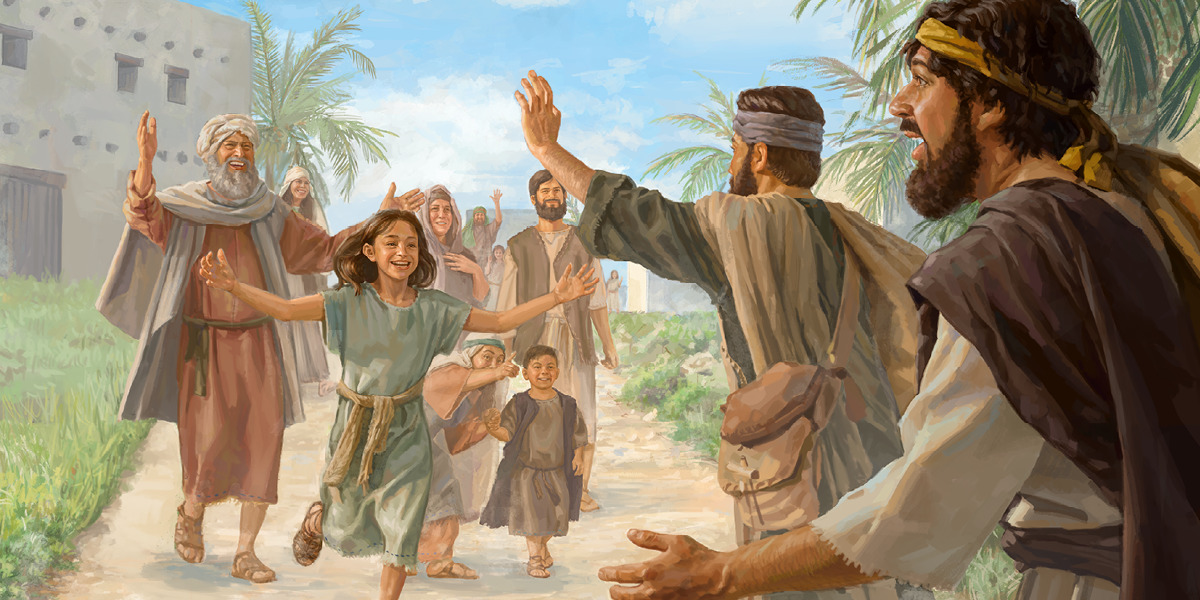
Israelite slaves joyfully greeting their families as they return home during the Jubilee.

Israelite slaves return to their family and land during the Jubilee

 TREASURES FROM GOD’S WORD

The Jubilee Year and Future Liberty

The Jubilee year helped to prevent endless debt and poverty in Israel (Le 25:10it-1 871; see cover picture)
The God of Freedom. Jehovah is the God of freedom. He freed the nation of Israel from bondage in Egypt. He told them that as long as they obeyed his commandments they would have freedom from want. (De 15:4, 5) David spoke of “freedom from care” within the dwelling towers of Jerusalem. (Ps 122:6, 7) However, the Law provided that in case a man became poor he could sell himself into slavery so as to provide the necessities for himself and his family. But freedom was granted by the Law to this Hebrew in the seventh year of his servitude. (Ex 21:2) In the Jubilee (occurring every 50th year), liberty was proclaimed in the land to all its inhabitants. Every Hebrew slave was freed, and each man was returned to his land inheritance.​—Le 25:10-19.
The sale of land was essentially a lease based on the value of crops the land would produce (Le 25:15it-1 1200 ¶2)
Hereditary lands. The inheritance of the sons of Israel was given to them by Jehovah, who outlined the boundaries of the land to Moses. (Nu 34:1-12; Jos 1:4) The sons of Gad, the sons of Reuben, and half of the tribe of Manasseh were granted their allotment of territory by Moses. (Nu 32:33; Jos 14:3) The rest of the tribes received their inheritance by lot at the direction of Joshua and Eleazar. (Jos 14:1, 2) In harmony with Jacob’s prophecy at Genesis 49:5, 7, Simeon and Levi were not given a separate section of territory as inheritance. Simeon’s territory consisted of land (along with enclave cities) inside the territory of Judah (Jos 19:1-9), while Levi was granted 48 cities throughout the entire territory of Israel. Since the Levites received the appointment to special service at the sanctuary, Jehovah was said to be their inheritance. They received the tithe as their portion or inheritance in return for their service. (Nu 18:20, 21; 35:6, 7) Families were given assignments within the territory of their tribe. As families would increase and sons would inherit, the land would be progressively divided up into smaller and smaller parcels.
Jehovah blessed his people when they obeyed the law of the Jubilee year (Le 25:18-22it-2 122-123)
The wonderful provision of the Jubilee year can better be appreciated when one considers not only the beneficial results to the individual Israelites but especially the effect on the nation as a whole. When the Jubilee arrangement was properly observed, the nation was restored in the Jubilee year to the full and proper theocratic state that God purposed and established at the beginning. Government was on a sound basis. The national economy would always be stable, and the nation would have no crushing debt. (De 15:6) The Jubilee brought about a stable standard of land values and also prevented a great internal debt and its resultant false prosperity that brings inflation, deflation, and business depression.
The Jubilee law, when obeyed, preserved the nation from gravitating to the sad state that we observe today in many lands, where there are virtually only two classes, the extremely rich and the extremely poor. The benefits to the individual strengthened the nation, for none would be underprivileged and crushed into unproductiveness by a bad economic situation, but all could contribute their talents and abilities to the national welfare. With Jehovah providing blessings of the yield of the ground and with the education that was provided, Israel, while obedient, would enjoy the perfect government and prosperity that only the true theocracy could provide.​—Isa 33:22.

In the near future, faithful humans will enjoy the full benefits of the symbolic Jubilee when they are completely liberated from sin and death.​—Ro 8:21.

Collage: People transforming the earth into a paradise. 1. Cleaning up debris. 2. Building houses and walkways. 3. Cultivating gardens.

What must each of us do to receive the freedom that Jehovah has promised?

                                   DONATE BUTTON 

Will You Continue to Be Readjusted?

See Also Related Articles:


                                               meetingBOX
                                          Treasures from God\’s Word 
                                          Living As Christians 
                                          Life and Ministry Meeting Workbook

 STUDY ARTICLE 47

Will You Continue to Be Readjusted?

“Finally, brothers, continue to rejoice, to be readjusted.”​—2 COR. 13:11.

SONG 54 “This Is the Way”

PREVIEW*

1. According to Matthew 7:13, 14, in what sense are we on a journey?

ALL of us are on a journey. Our destination, or goal, is to live in the new world under Jehovah’s loving rulership. Each day, we try to follow the path that leads to life. But as Jesus said, that road is cramped and at times difficult to follow. (Read Matthew 7:13, 14.) We are imperfect, and it is easy for us to stray from this path.​—Gal. 6:1.

2. What will we consider in this article? (See also the box “Humility Helps Us to Adjust Our Steps.”)

If we are to stay on the cramped road to life, we must be willing to adjust our thinking, attitude, and actions. The apostle Paul encouraged Christians living in Corinth to continue “to be readjusted.” (2 Cor. 13:11) That counsel also applies to us. In this article, we will discuss how the Bible can help us to adjust our steps and how mature friends can help us to stay on the path to life. We will also consider when it might be a challenge to follow direction given by Jehovah’s organization. We will see how humility can help us to change our course without losing our joy in serving Jehovah.

ALLOW GOD’S WORD TO CORRECT YOU

3. What can God’s Word do for you?

When we try to examine our own thoughts and feelings, we face a challenge. Our heart is treacherous, and that can make it difficult for us to know where it might be leading us. (Jer. 17:9) It is easy to deceive ourselves with “false reasoning.” (Jas. 1:22) So we must use God’s Word to examine ourselves. God’s Word reveals what we are on the inside, the innermost “thoughts and intentions” of our heart. (Heb. 4:12, 13) In a sense, God’s Word acts like an X-ray machine, enabling us to see what is inside. But we must be humble if we are to benefit from the counsel we receive from the Bible or from God’s representatives.

4. What indicates that King Saul became a proud man?

The example of King Saul shows what can happen when we lack humility. Saul became so proud that he would not admit, even to himself, that his thinking and actions needed to be adjusted. (Ps. 36:1, 2; Hab. 2:4) This became evident when Jehovah gave Saul specific direction on what he should do after he defeated the Amalekites. Saul, however, did not obey Jehovah. And when the prophet Samuel confronted him about the matter, Saul did not acknowledge his mistake. Instead, he tried to justify his actions by minimizing the consequences of his disobedience and shifting the blame to others. (1 Sam. 15:13-24) Earlier, Saul had displayed a similar attitude. (1 Sam. 13:10-14) Sadly, he allowed his heart to become haughty. He did not correct his thinking, so Jehovah reproved him and rejected him.

5. What can we learn from Saul’s example?

To learn from Saul’s example, we do well to ask ourselves these questions: ‘When I read counsel from God’s Word, do I tend to justify my thinking? Do I minimize the consequences of disobedience? Do I shift the blame for my actions to someone else?’ If our answer to any of those questions is yes, we must adjust our thinking and attitude. Otherwise, our heart can become so haughty that Jehovah will reject us as his friend.​—Jas. 4:6.

6. Describe the contrast between King Saul and King David.

Note the contrast between King Saul and his successor, King David, a man who loved “the law of Jehovah.” (Ps. 1:1-3) David knew that Jehovah saves those who are humble but opposes the haughty. (2 Sam. 22:28) So David allowed God’s law to adjust his thinking. He wrote: “I will praise Jehovah, who has given me advice. Even during the night, my innermost thoughts correct me.”​—Ps. 16:7.

GOD’S WORD

God’s Word warns us when we stray off the path. If we are humble, we allow God’s Word to correct our wrong thinking (See paragraph 7)

7. What will we do if we are humble?

If we are humble, we will allow God’s Word to correct our wrong thinking before we act on those thoughts. God’s Word will be like a voice that tells us: “This is the way. Walk in it.” It will warn us when we are straying from the path​—to the left or to the right. (Isa. 30:21) By listening to Jehovah, we will benefit ourselves in a number of ways. (Isa. 48:17) For instance, we will avoid the embarrassment of having to be corrected by someone else. And we will draw closer to Jehovah because we recognize that he is treating us like a beloved child.​—Heb. 12:7.

8. As mentioned at James 1:22-25, how can we use God’s Word as a mirror?

God’s Word can act as a mirror for us. (Read James 1:22-25.) Most of us look in a mirror each morning before we leave home. That way, we can see if we need to make an adjustment before others see us. Similarly, when we read the Bible each day, we will see ways that we can adjust our thinking and our attitude. Many find it helpful to read the daily text each morning before they leave home. They allow what they read to affect their thinking. Then throughout the day, they look for ways to apply the counsel from God’s Word. In addition, we must have a study routine that includes reading and thinking about God’s Word each day. This may sound simple, but it is one of the most important things we can do to help us stay on the cramped road to life.

LISTEN TO MATURE FRIENDS

MATURE FRIENDS

A mature fellow Christian may give us a kind warning. Are we grateful that our friend had the courage to speak up? (See paragraph 9)

9. When might a friend have to correct you?

Have you ever started to walk on a path that was leading you away from Jehovah? (Ps. 73:2, 3) If a mature friend had the courage to correct you, did you listen to him and apply his advice? If so, you did the right thing, and you are no doubt grateful that your friend warned you.​—Prov. 1:5.

10. How should you react if a friend corrects you?

10 God’s Word reminds us: “The wounds inflicted by a friend are faithful.” (Prov. 27:6) In what way is this statement true? Consider this illustration: Imagine that you are waiting to cross a busy street and you get distracted by your cell phone. You step onto the street without looking up. Just then, a friend grabs your arm and pulls you back onto the sidewalk. His grip is so firm that your arm is bruised, but his quick action saves you from being hit by a car. Even if the bruise he inflicted causes you pain for several days, would you be offended that your friend grabbed you? Certainly not! You would be grateful for his help. Similarly, if a friend warns you that your speech or actions are not in harmony with God’s righteous standards, you may feel hurt at first. But do not resent his counsel or become offended. That would be foolish. (Eccl. 7:9) Instead, be grateful that your friend had the courage to speak up.

11. What could cause someone to reject good counsel from a friend?

11 What could cause someone to reject good counsel from a loving friend? Pride. Proud people like “to have their ears tickled.” They “turn away from listening to the truth.” (2 Tim. 4:3, 4) They have an inflated view of their own opinion and worth. However, the apostle Paul wrote: “If anyone thinks he is something when he is nothing, he is deceiving himself.” (Gal. 6:3) King Solomon summed up the matter well. He wrote: “Better is a poor but wise child than an old but stupid king, who no longer has enough sense to heed a warning.”​—Eccl. 4:13.

12. What do we learn from the example set by the apostle Peter, as recorded at Galatians 2:11-14?

12 Note the example set by the apostle Peter when he was publicly corrected by the apostle Paul. (Read Galatians 2:11-14.) Peter could have resented what Paul said, focusing on the way he said it and where he chose to say it. But Peter was wise. He accepted the counsel and did not nurse a grudge against Paul. Instead, he later referred to Paul as a “beloved brother.”​—2 Pet. 3:15.

13. What points should we keep in mind when offering counsel?

13 If you ever feel that you need to give counsel to a friend, what points should you keep in mind? Before you approach your friend, ask yourself, ‘Am I being “overly righteous”?’ (Eccl. 7:16) An overly righteous person judges others, not by Jehovah’s standards, but by his own, and he is probably not very merciful. If after examining yourself you still see the need to speak to your friend, clearly identify the problem and use viewpoint questions to help your friend to recognize his mistake. Make sure that what you say is based on the Scriptures, remembering that your friend is accountable, not to you, but to Jehovah. (Rom. 14:10) Rely on the wisdom found in God’s Word, and when counseling someone, imitate Jesus’ compassion. (Prov. 3:5; Matt. 12:20) Why? Because Jehovah will deal with us in the same way that we deal with others.​—Jas. 2:13.

FOLLOW DIRECTION GIVEN BY GOD’S ORGANIZATION

GOD’S ORGANIZATION

God’s organization provides publications, videos, and meetings that help us to apply counsel from God’s Word. At times, the Governing Body makes adjustments in the way the work is organized (See paragraph 14)

14. What does God’s organization provide for us?

14 Jehovah guides us on the road to life by means of the earthly part of his organization, which provides videos, publications, and meetings that help all of us apply the counsel contained in God’s Word. This material is solidly based on the Scriptures. When deciding how the preaching work can best be accomplished, the Governing Body relies on holy spirit. Still, the Governing Body regularly reviews its own decisions about how the work is organized. Why? Because “the scene of this world is changing,” and God’s organization must adapt to new circumstances.​—1 Cor. 7:31.

15. What challenge have some publishers faced?

15 No doubt, we readily follow the Bible-based direction we receive regarding doctrinal or moral matters. But how do we react when God’s organization makes a change that affects other aspects of our life? For example, in recent years the cost of building and maintaining places of worship has increased dramatically. So the Governing Body has directed that Kingdom Halls be used to capacity. As a result of this adjustment, congregations have been merged and some Kingdom Halls have been sold. The funds are being used to help build halls in areas that need them the most. If you live in an area where halls are being sold and congregations are being merged, you may find it a challenge to adapt to the new circumstances. Some publishers now have to travel farther to attend meetings. Others who worked hard to build or maintain a Kingdom Hall may wonder why that hall is now being sold. They may feel that their time and effort were wasted. Still, they are cooperating with this new arrangement and should be commended.

16. How will applying the counsel found at Colossians 3:23, 24 help us to maintain our joy?

16 We will maintain our joy if we remember that we are working for Jehovah and that he is directing his organization. (Read Colossians 3:23, 24.) King David set a good example when donating funds to build the temple. He said: “Who am I and who are my people that we should be in a position to make voluntary offerings like this? For everything is from you, and we have given to you what comes from your own hand.” (1 Chron. 29:14) When we donate funds, we too are giving to Jehovah what has come from his own hand. Even so, Jehovah appreciates the time, energy, and resources that we donate to support the work he wants done.​—2 Cor. 9:7.

STAY ON THE CRAMPED ROAD

17. Why should you not feel discouraged if you have to adjust your steps?

17 To stay on the cramped road to life, all of us must follow Jesus’ steps closely. (1 Pet. 2:21) If it seems that you have to adjust your steps, do not be discouraged. That may actually be a good sign, showing that you are sensitive to Jehovah’s direction. Remember that Jehovah does not expect us​—as imperfect as we are at present—​to imitate Jesus’ example perfectly.

18. What must we do to reach our goal?

18 May all of us focus on the future and be willing to adjust our thinking, attitude, and actions. (Prov. 4:25; Luke 9:62) Let us remain humble, “continue to rejoice, to be readjusted.” (2 Cor. 13:11) If we do that, “the God of love and of peace will be with [us].” And we will not only reach our destination but also enjoy the journey.

SONG 34 Walking in Integrity

Some of us may find it difficult to make changes in our thinking, attitude, and actions. This article will explain why we all need to make adjustments and how we can keep our joy when making them.

PICTURE DESCRIPTION: As the younger brother relates what happened to him after he made a poor decision, the older brother (on the right) listens calmly to determine if he needs to give some counsel.

                                   DONATE BUTTON 

Annual Conventions—Opportunities to Show Love

 LIVING AS CHRISTIANS

Annual Conventions—Opportunities to Show Love

Delegates from different cultural backgrounds posing together for a picture at an international convention.

Why do we enjoy our annual conventions so much? As in ancient Israel, conventions in our day often give us the opportunity to worship Jehovah with hundreds, even thousands, of fellow believers. We enjoy the banquet of rich spiritual food. We also treasure the precious time we spend with friends and family. Our deep appreciation moves us to attend all three days of the convention.

When we have occasion to gather together, we should think not only about what we can gain personally but also about how we can show love to others. (Ga 6:10; Heb 10:24, 25) When we hold a door open for our brother or sister or save only the seats we will need, we show that we are looking out for the interests of others. (Php 2:3, 4) Conventions provide wonderful opportunities for us to make new friends. Before and after the program and during the lunch break, we can make it a point to get acquainted with someone we do not know. (2Co 6:13) The friendships we develop on these occasions can last a lifetime! Above all, when onlookers see true love in action, they may decide to join us in serving Jehovah.​—Joh 13:35.

WATCH THE VIDEO “LOVE NEVER FAILS”! INTERNATIONAL CONVENTIONSAND THEN ANSWER THE FOLLOWING QUESTIONS:

  • A scene from the video ‘‘Love Never Fails’! International Conventions.’ Delegates and local brothers and sisters hug and welcome one another at an international convention.

    How was love shown to visiting delegates at the 2019 international conventions?

  • A scene from the video ‘‘Love Never Fails’! International Conventions.’ Local brothers and sisters pose with visiting delegates for a group photo.

    Why is the unity and love among Jehovah’s people so remarkable?

  • A scene from the video ‘‘Love Never Fails’! International Conventions.’ A group of Korean brothers and sisters hold a welcome sign and wave to people arriving at the convention.

    What aspects of Christian love were highlighted by members of the Governing Body?

  • A scene from the video ‘‘Love Never Fails’! International Conventions.’ A happy girl holds up her copy of the ‘New World Translation’ that she just received.

    How can you contribute to the love displayed at our conventions?

    How has Christian love triumphed in Germany and South Korea?

  • What should be our determination?


How was love shown to visiting delegates at the 2019 international conventions?

The assembly “Love never fails” was not only talked about love in the title of the assembly or in the speeches, but love penetrated every corner of everything that surrounded the assembly, even at airports, where there were more of 200 brothers to give a warm and loving welcome.

One sister says that she breathes love everywhere she goes, in every detail that can be seen. It is as if I were already in paradise, and our assemblies are like a temporary paradise in this world. A place where we live with our spiritual family and these moments, it is as if we were in paradise with our brothers.

The brothers were welcomed with hugs, with so much affection and affection that no brother could imagine. It was a very joyful event and a great demonstration of the love that characterizes God’s people.

The international representatives carried out a preaching motivated not only by love towards our brothers but towards our neighbor, towards all those people who still do not have faith in God, and with the help of the local brothers, they carried out a great campaign of preaching that reflected the great love of these brothers towards Jehovah through loving effort to bring God’s name and his beautiful qualities to all people.

This preaching campaign of the international representatives with the support of the local brothers, allowed us to share and reflect our love with all our people not only in the assemblies but also in the ministry, which allowed us to share more time, get to know our more distant brothers better. and strengthen our relationships with them.

In addition to the spiritual activity, activities were planned with the delegates in an environment of healthy enjoyment where the brothers were able to get to know each other better and strengthen their friendship relationships. A great opportunity to meet many brothers who fight day by day in this battle with the same objective.

Why is the unity and love among Jehovah’s people so remarkable?

The example of Mexico is impressive and a great exemplary sample of the unity of the People of God regardless of the many cultures that exist in Mexico and their differences. The people of God is a single people, the brothers of Mexico demonstrated this with the love that all feel towards their brothers and that it is a worthy example to be imitated by the whole world.

The example of the study with this Brazilian person is impressive and this person noticed it. The great selfless effort that our brothers make for all people out of love for our neighbor and our relationship with our more distant brothers that we hardly know but love them as if we had known each other for a lifetime, this was for this person a great testimony of the qualities of God’s people, but not only for this person, but for the whole world.

The love of our brothers has also been reflected in the effort for so long and even years to translate our new bible into all possible languages ​​to reach our hearts in our mother tongue. An effort and work that magnifies the name of our heavenly Father and that shows how much we care about our brothers.

Another great gift that the assemblies give us are our new brothers, brothers who show the same love as all of us, and we feel so happy and happy that they are part of this loving people and help us strengthen the relationship we have.

Even the authorities saw this love reflected. There was no problem of any kind, quite the contrary … events of this magnitude imply for security reasons that certain security forces attend for anything that may happen. They did so, and more than having to do their work or be in the assembly just for work, they saw and enjoyed the love of our brothers and they realized why we differ from others.

Not only did our brothers focus their love on the brothers and people who visited the assemblies, they also showed their love and gratitude to the security forces and other emergency personnel who were doing their work. These people were participants in the love of God’s people until the phrase: “the world does not need more police, but more Jehovah’s Witnesses.”

What aspects of Christian love were highlighted by members of the Governing Body?

As members of the Governing Body emphasized in their speeches and through the Bible, we have to “clothe ourselves with love because it is a perfect bond of union.” Love identifies us, and loyal love is a very beautiful aspect of Jehovah’s personality that we should emulate.

By cultivating humility, we will foster this love both for our brothers and for our neighbor, and we will be imitating the qualities of Jehovah that the Bible says. And in this way we will be, as Jesus said, “looking for love.” Because Christian love has power, reaching the heart in a unique way where no word can reach or cause the same effect.

How has Christian love triumphed in Germany and South Korea?

In many countries, places were visited where brothers and Christians of the past suffered much and much persecution and how they stood firm out of faith and full love for Jehovah. This surely strengthened the love of these dear brothers and the efforts to keep us whole every day of our lives, as was the case in Berlin and the visit to the concentration camp.

As one brother says, even the guards and those who run the prison had to recognize that our brothers differed and were characterized as a separate people because of the love they professed towards them and towards other people, even living the difficult circumstances they were going through. , love was always there.

South Korea was another example like Germany’s, when they began jailing young brothers in 1953 for refusing military service. The delegates learned much from the unwavering faith of these young brothers and how they held firm to their beliefs and as a result, Jehovah’s power triumphed over these injustices with the release of the last Jehovah’s Witness in 2019 who was imprisoned.

What should be our determination?

Many brothers had to make great efforts, such as the delegates from Venezuela who suffer important consequences from the economic and social crisis that their country is experiencing and yet were determined to attend, because the love for Jehovah and for all our brothers, even the most distant, it is imposed far above any material crisis.

We have to be resolved like the brothers of Venezuela, even with the difficult circumstances that we may be going through personally and our country, to put what really matters first and put aside material or ephemeral things, because love overcomes all kinds of barriers. and it motivates us to praise the name of God as these brothers did.

Any sacrifice that we have to do as this brother from Venezuela said, will be worth it. Just to see the great love that characterized this assembly and that impacted the whole world, it is worth it, we have seen the great blessings that the loving people of God produce and why it is a separate people.




from Blogger http://meekspaceng.blogspot.com/2021/01/annual-conventionsopportunities-to-show.html

Design a site like this with WordPress.com
Get started