The Israelites camped according to three-tribe divisions (Nu 1:52, 53; w94 12/1 9 ¶4) 4 If you had had a bird’s-eye view of Israel encamped in the wilderness, what would you have seen? A vast, but orderly, array of tents housing possibly three million or more people, grouped according to three-tribe divisions to the north, south, east, and west. Peering closer, you would also have noticed another grouping nearer the middle of the camp. These four smaller clusters of tents housed the families of the tribe of Levi. At the very center of the camp, in an area cordoned off by a cloth wall, was a unique structure. This was the “tent of meeting,” or tabernacle, which “wise-hearted” Israelites had built according to Jehovah’s plan.—Numbers 1:52, 53; 2:3, 10, 17, 18, 25; Exodus 35:10.
The Israelite camp may have totaled 3,000,000 or more (Nu 2:32, 33; it-1 397 ¶4) Out and beyond the Levitical tents, the 12 tribes camped in a quadrilateral arrangement oriented by the four points of the compass. It appears that the people in general were removed a considerable distance from the tabernacle; some commentators suggest some 900 m (3,000 ft), because there was to be a distance of “about two thousand cubits” between the people and the ark of the covenant when the crossing of the Jordan began. (Jos 3:4) The 12 tribes were divided into four grand divisions, each called by the name of the central tribe of the division. So the three-tribe division to the E of the tabernacle was called Judah, with Issachar on the one side of Judah and Zebulun on the other side. (Nu 2:3-8) When this arrangement was set up in 1512 B.C.E., this three-tribe division of Judah numbered 186,400 able-bodied males 20 years old and up. (Nu 1:1-3; 2:9) Clockwise to the S was the three-tribe division of Reuben, with Simeon and Gad alongside Reuben, and numbering 151,450 men of war. (Nu 2:10-16) These two divisions on the E and S, together with the Levites, were Jacob’s descendants by Leah and her handmaid Zilpah. (Ge 35:23, 26) Incidentally, with both Reuben and the Kohathites camping S of the sanctuary, the physical association between the Reubenite rebels Dathan and Abiram and the Kohathite Korah is explained. (Nu 16:1) Around to the W was the three-tribe division of Ephraim, flanked by Manasseh and Benjamin, all descendants of Rachel, and numbering 108,100 army men. (Nu 2:18-24) Finally, on the N was the three-tribe division of Dan, associated with Asher and Naphtali, and totaling 157,600 fighting men. (Nu 2:25-31) Dan and Naphtali were descendants of Rachel’s handmaid Bilhah, but Asher was of Leah’s maidservant Zilpah.—Ge 35:25, 26.
Jehovah wants his people to worship him in an organized way. That was true for the nation of Israel, and it is true for us today.—1Co 14:33, 40.
ASK YOURSELF, ‘How can I show my complete support for Jehovah’s organization?’
1-2. Why should all Christians be interested in the heavenly resurrection?
MOST people now serving Jehovah hope to live forever on earth. A remnant of spirit-anointed Christians, however, hope to be raised to life in heaven. These anointed ones are keenly interested in what their future life will be like, but what about those with the earthly hope? As we will see, the heavenly resurrection will lead to blessings also for those who have the hope of living forever on earth. So regardless of whether our hope is heavenly or earthly, we should be interested in the heavenly resurrection.
2 God inspired some of Jesus’ disciples in the first century to write about the heavenly hope. The apostle John explained: “We are now children of God, but it has not yet been made manifest what we will be. We do know that when he is made manifest we will be like him.” (1 John 3:2) So anointed Christians do not know what they will be like when they are raised to heaven with spirit bodies. However, they will in a literal sense see Jehovah when they receive their reward. The Bible does not reveal every detail about the heavenly resurrection, but the apostle Paul did provide some information about it. The anointed will be with Christ when he brings “to nothing all government and all authority and power.” That includes “the last enemy, death.” Finally, Jesus—along with his corulers—will subject himself and all things to Jehovah. (1 Cor. 15:24-28) What a climax that will be!*
3. As indicated at 1 Corinthians 15:30-32, Paul’s belief in the resurrection helped him to do what?
3 Paul’s belief in the resurrection helped him to endure various trials. (Read 1 Corinthians 15:30-32.) He told the Corinthians: “Daily I face death.” Paul also wrote: “I have fought with wild beasts at Ephesus.” Perhaps he was alluding to his fighting real animals at an arena in Ephesus. (2 Cor. 1:8; 4:10; 11:23) Or he may have been referring to hostile Jews and others who were like “wild beasts.” (Acts 19:26-34; 1 Cor. 16:9) Whichever it was, Paul faced serious perils. Yet, he still had a positive outlook on the future.—2 Cor. 4:16-18.
A family who live where our Christian work is restricted persevere in their worship with full faith that God has good things in store for them (See paragraph 4)
4. How has the hope of the resurrection strengthened Christians today? (See cover picture.)
4 We are living in dangerous times. Some of our brothers have been victims of crime. Others live in war-torn areas where their safety is far from guaranteed. Still others serve Jehovah at the risk of their life or freedom in lands where the preaching work is restricted or even banned. Yet, all these brothers and sisters persevere in their worship of Jehovah, becoming examples for us. They are secure in the knowledge that even if they lose their life at the present time, Jehovah has something far better in mind for them in the future.
5. What dangerous viewpoint could weaken our faith in the resurrection?
5 Paul warned his brothers about a dangerous viewpoint that some had: “If the dead are not to be raised up, ‘let us eat and drink, for tomorrow we are to die.’” That viewpoint actually existed even before Paul’s day. He may have been quoting Isaiah 22:13, which refers to the attitude of the Israelites. Instead of drawing close to God, they pursued a life of pleasure. Basically, the attitude of those Israelites was “here today, gone tomorrow,” a view common even today. However, the bad outcome to the nation of Israel is a matter of record.—2 Chron. 36:15-20.
6. How should the resurrection hope affect our choice of associates?
6 Clearly, the fact that Jehovah can resurrect the dead should affect our choice of associates. The brothers in Corinth needed to guard against associating with those who denied the resurrection. There is a lesson for us today: No good can come from choosing as regular associates those who have a live-for-the-moment outlook. Being with such ones can ruin a true Christian’s viewpoint and habits. In fact, it might lead him to have a lifestyle that includes what God hates—sin. Thus, Paul strongly urged: “Come to your senses in a righteous way and do not practice sin.”—1 Cor. 15:33, 34.
WHAT SORT OF BODY?
7. What question about the resurrection might some have asked, as shown at 1 Corinthians 15:35-38?
7 Read 1 Corinthians 15:35-38. An inquirer who wanted to cast doubt on the resurrection might have asked: “How are the dead to be raised up?” We do well to consider Paul’s answer because many people today have personal views about life after death. But what does the Bible teach?
Using a seed and a plant, Paul illustrated that God can provide a suitable body for those who are resurrected (See paragraph 8)
8. What illustration can help us to understand the resurrection to heavenly life?
8 When someone dies, his body decomposes. But the One who created the universe from nothing can resurrect that person, giving him a suitable body. (Gen. 1:1; 2:7) Paul used an illustration to show that God would not need to bring back the same body. Think of “a bare grain,” or a plant “seed.” A seed of grain that is planted in the ground germinates and becomes a new plant. The resulting plant is quite different from the small seed. Paul used this comparison to show that our Creator can provide “a body just as it [pleases] him.”
9 Read 1 Corinthians 15:39-41. Paul noted that there is great diversity in creation. For example, there are different fleshly bodies, such as cattle, birds, and fish. He stated that in the sky, we see differences between the sun and the moon. And he noted that “one star differs from another star in glory.” Yes, even if we may not discern it with the naked eye, there are what scientists call red giant stars, white dwarfs, and yellow stars, such as our sun. Paul also stated that “there are heavenly bodies and earthly bodies.” How so? Well, on earth, we have bodies of flesh, but in heaven there are spirit bodies, like the ones the angels have.
10. How might differences in bodies relate to the resurrection?
10 Note what Paul said next: “So it is with the resurrection of the dead. It is sown in corruption; it is raised up in incorruption.” Of course, upon dying, the human body decays and returns to the dust. (Gen. 3:19) So how can it be that a body is “raised up in incorruption”? Paul was not speaking of a human who is resurrected to life on earth, such as those raised by Elijah, Elisha, and Jesus. Paul was referring to a person who is resurrected with a heavenly body, that is, “a spiritual one.”—1 Cor. 15:42-44.
11-12. What change did Jesus experience when he was resurrected, and how do the anointed experience something similar?
11 When Jesus walked the earth, he had a fleshly body. But when he was resurrected, he “became a life-giving spirit” and returned to heaven. Likewise, anointed Christians would be resurrected to spirit life. Paul explained: “Just as we have borne the image of the one made of dust, we will bear also the image of the heavenly one.”—1 Cor. 15:45-49.
12 Paul was reaching the climax of his discussion of the resurrection. It is important to note that Jesus was not resurrected with a human body. Paul pointedly said: “Flesh and blood cannot inherit God’s Kingdom” in heaven. (1 Cor. 15:50) The apostles and other anointed ones would not be resurrected to heaven with corruptible bodies of flesh and blood. When would they be resurrected? Paul stressed that this resurrection still lay ahead; it was not something they would experience right after they died. By the time Paul wrote 1 Corinthians, some disciples had already “fallen asleep in death,” for example, the apostle James. (Acts 12:1, 2) Other apostles and anointed ones would yet fall “asleep in death.”—1 Cor. 15:6.
VICTORY OVER DEATH
13. How would Jesus’ presence be marked?
13 Both Jesus and Paul pointed forward to a special time in history—Christ’s presence. That presence would be marked by wars, earthquakes, pestilences, and other global developments. We have seen this Bible prophecy being fulfilled since 1914. There would be another outstanding part of that sign. Jesus said that the good news of God’s established Kingdom would be preached “in all the inhabited earth for a witness to all the nations, and then the end [would] come.” (Matt. 24:3, 7-14) Paul pointed out that “the presence of the Lord” would also be a time of resurrection for anointed Christians who had “fallen asleep in death.”—1 Thess. 4:14-16; 1 Cor. 15:23.
14. What do anointed ones who pass away during Christ’s presence experience?
14 Anointed ones who today finish their earthly course are instantly raised to life in the heavens. This is confirmed by Paul’s words recorded at 1 Corinthians 15:51, 52: “We will not all fall asleep in death, but we will all be changed, in a moment, in the blink of an eye, during the last trumpet.” These words of Paul are now undergoing fulfillment! Upon their resurrection, these brothers of Christ will have complete joy; they will “always be with the Lord.”—1 Thess. 4:17.
Those who are changed “in the blink of an eye” will share with Jesus in smashing the nations (See paragraph 15)
15. What work awaits those who will be changed “in the blink of an eye”?
15 The Bible tells us what work those who are changed “in the blink of an eye” will do in heaven. Jesus says to them: “To the one who conquers and observes my deeds down to the end, I will give authority over the nations, and he will shepherd the people with an iron rod so that they will be broken to pieces like clay vessels, just as I have received from my Father.” (Rev. 2:26, 27) They will follow their Commander in the task at hand—shepherding the nations with a rod of iron.—Rev. 19:11-15.
16. How will many humans be victorious over death?
16 Clearly, the anointed will be victorious over death. (1 Cor. 15:54-57) Their resurrection will put them in position to share in the victory over earth-wide wickedness during the coming war of Armageddon. Millions of other Christian men and women will “come out of the great tribulation,” surviving into the new world. (Rev. 7:14) Those survivors on earth will be eyewitnesses to another victory over death—the resurrection of billions of people who died in the past. Just imagine the joy when that victorious event occurs! (Acts 24:15) And all those who prove completely loyal to Jehovah will be victorious even over inherited death. They will be able to live forever.
17 Every Christian now alive should be grateful for the reassuring words that Paul wrote to the Corinthians regarding the resurrection. We have every reason to show that we accept Paul’s urging to be fully occupied now “in the work of the Lord.” (Read 1 Corinthians 15:58.) If we loyally and actively share in that work, we will put ourselves in line to experience a future filled with joy. That future will be more wonderful than anything we can imagine. It certainly will confirm that our labor has not been in vain in connection with the Lord.
The second half of 1 Corinthians chapter 15 contains details about the resurrection, especially that of anointed Christians. However, what Paul wrote is also of interest to those of the other sheep. This article will show how the hope of the resurrection should affect our life now and give us reason to look forward to the future.
The jw.org website now features a section entitled “Bible Verses Explained.” Each month, many people search online for the meaning of Bibleverses. To meet this need, the “Bible Verses Explained” section discusses the meaning and context of these verses. Browse the “Bible Verses Explained” section on our website under “Bible Teachings” and in the JW Library app under “Article Series.”
The hope to live forever and to see our loved ones who have died again. Faithful man Job using logic reasons that if a tree grows back after being cut, how there is no hope for a human and reaches the correct conclusion that being dead says your God will call I will answer.
So it is an important hope because it is based on the Bible since it was never Jehovah\’s purpose for man to grow old and die.
And as the paragraph at the beginning mentions, it is very important to have illusions and hopes because they change our way of seeing life and strengthen us, the opposite of the non-Christian concept that makes it seem as if it were simple naivety or seeing is believing Not at all, as already mentioned, does this hope have a well-founded biblical basis.
3 Well, because this is a fundamental teaching, reviewing what first Corinthians says will be very encouraging and will strengthen our faith a lot.
4. What is key to our hope for our dead loved ones?
4 The key is the resurrection of Jesus Christ and that resurrection is the pillar that sustains our Christian hope.
It is interesting that Paul points out that if there were no resurrection then our faith would be useless, because if Jesus never rose again he never paid for the sins in the heavens of all mankind and although the main purpose of the Bible is the sanctification of the name of Jehovah the ransom and what Jesus did is highly linked to this, so without the resurrection of Christ our faith would be worthless.
5-6 They do involve all our hope because thanks to his death it provides us with a solid basis to be freed from sin and death and then because his resurrection is a solid basis for us to believe in a resurrection.
And as Romans 5: 8 mentions, the fact that Christ died for us while we were still sinners was Jehovah\’s way of showing us his own love, so that Jehovah\’s willingness to do all that is necessary for us to heal from inherited sin, we may have a hope and That Jesus did it voluntarily certainly has great significance for my relationship with both of them.
Jesus Christ, as mentioned in paragraph five, died, was buried and was resurrected, so why did Jesus do all this good to rescue us as the text mentions to take away the sins of many people, then we are very grateful to both Jehovah and Jesus Christ for having done all this to give his life for us so that we have hope.
TESTIMONY FROM MANY WITNESSES
7-8. What helps Christians to be sure that Jesus was resurrected?
7-8 Well, according to the law, only two or three witnesses were needed in a legal trial, but five would be more than enough and 500 witnesses would be strong evidence.
The story about James the brother of Jesus Christ convinces me because he had witnessed how many powerful and miraculous acts, the teaching of Jesus Christ when he was alive, but even so these acts and this teaching never reached his heart, it did not become his follower, however the fact of seeing him once resurrected was enough and left over for him to become a Christian, so this is an indication of a very hard person the act of resurrection seeing Jesus Christ risen this could incline his heart and be convinced.
9. As we read at Acts 9:3-5, how could Paul add testimony about Jesus’ resurrection?
9 The fact that Paul himself witnessed it in a vision appeared to him and even spoke to him about this, then it gave Paul more strength to believe in this promise.
In fact, Paul was so sure that when he made the defense against agrippa he was convinced that it was so because Jesus Christ himself had shown it to him, he did not know Jesus but that act, what happened at that moment, convinced him that the rest of his Life defended the resurrection of Jesus as never before.
Acts 26: 12-15 | In verse 13 he says that when they were walking, he enveloped me and those who were with me.
10. What did Paul’s conviction that Jesus was raised from the dead move him to do?
10 He was then convinced that Jesus Christ was resurrected and was confirming what he had learned and what he is teaching and as he had such firm faith he was willing to suffer beatings to suffer persecution and hatred of other people but he was very clear that Jesus Christ was risen.
If a person who was not so sure of what he believes might not endure all that the apostle Paul endured, that undoubtedly leaves us a lesson how sure we are then that that hope of the resurrection is real for us, if we had to clinging to situations that the apostle Paul clung to we would be like Paul in that regard.
Well, we are precisely studying a letter from the Apostle Paul but this letter that we are studying is compensated by facts and it has demonstrated in fact the record of faith and endurance that the Apostle Paul manifested.
ADDRESSING WRONG VIEWS
11. Why may some in Corinth have had wrong views about the resurrection?
11 For example, in the neighboring city of Athens, there were philosophers who scoffed at the idea that Jesus had risen and perhaps that way of thinking had spread to some Christians in Corinth.
Yes perhaps also others thought that the resurrection was something symbolic that they had only in their hearts.
This was quite a weighty situation because if they denied the resurrection of Jesus Christ they automatically lost hope of the resurrection so they were basically throwing away the sacrifice of Jesus Christ by putting aside the hope of the resurrection.
And it contains a lesson for us because they were affected by what the people around them believed in the same way today there are many people who have beliefs contrary to what the Bible says we must take care of ourselves and that is why the importance of analyzing articles like this.
12. In line with 1 Peter 3:18, 22, how did Jesus’ resurrection differ from earlier ones?
12 That the previous resurrections all died again in time while Jesus was resurrected as a spiritual being and was the first to go to heaven.
Yes Facts 26:23 also gives an important detail that says he gave birth to humanity, giving us to understand that he gave hope to enjoy a better life in the future.
THOSE WHO “WILL BE MADE ALIVE”
13. Paul drew what contrast between Adam and Jesus?
13 Well Adam caused death death for himself and his descendants, instead Jesus Christ with his death caused us to live forever.
And why because of Adam today we continue to suffer the tragic consequences of his disobedience, unlike Jesus, who thanks to his death then we have great hope.
That is why it is interesting what is mentioned in the first Corinthians 15:21 and 22 that there Paul says that just as in Adam everyone is dying so also in Christ everyone will receive life, that includes us who can have eternal life but it also includes people who have died will come back to life.
And just as this hope strengthened the apostle Paul, it strengthens us in these times and also allows us to carry that message to other people, it allows us to bear any situation that we have to face today, even when facing our own death, and also we trust that if we die in this system then we also have the resurrection in the hands of Jehovah.
14. Will Adam be resurrected? Explain.
14 If we know that he will resurrect us because he is the culprit that all human beings have to die today, so he knowingly disobeyed that is why he will not resurrect as Jesus said that the son of man will be judged as goats to eternal destruction, so you will not get this benefit from Jesus\’ sacrifice.
Jesus was the first of many to be raised from death to heavenly life (See paragraphs 15-16)*
15. Who are included in the “all” who “will be made alive”?
15 It includes all those who are in union with Christ, that is, the anointed ones.
ILLUSTRATION
And the image we can see some of them also for paragraph 15 this image tells us that there is Thomas who told Jesus if I do not see I do not believe now he is in heaven and now with a well strengthened faith and helping Jesus Christ, Santiago and John who asked him for a side in his kingdom will now be confirmed and very happy to be in the kingdom and faithful women like Lydia and Mary and the same apostle Paul that we are talking about today, how happy he is right now in heaven with Jesus Christ.
Jesus resurrects as a spiritual being and goes to heaven just as we see him there in the photograph and all these who died in union with the good in the same way resurrected as spiritual beings and went to heaven.
If we know that this is a total privilege for those Christians that is why they are trying so hard to do Jehovah\’s will today as well.
16. What did Paul imply by calling Jesus “the firstfruits”?
16 Well, Jesus was the first who died as a human and resurrected as a spiritual being and received eternal life and always when we use the word first, one knows that something else follows, then it is implied that later there would also be other people who would be resurrected to live in heaven.
17. When would those “in union with Christ” receive their heavenly reward?
17 The apostle Paul in first Corinthians 15:23 explains it very well that he is the first fruits, that is, he was resurrected first to spiritual life, but he also says the rest that they are anointed during his presence that is the parausia when he becomes present in the celestial kingdom.
Also, since Jehovah is a God of order, Paul himself mentioned that the resurrection would be in an order and there, first of Thessalonians 4:15 and 16 throws an interesting information because it shows that after Christ that the Firstfruits were the others who are in union with him were also resurrected in order, so that those who were alive were not going to precede those who had already died but those who were already dead because they were going to be resurrected first to heaven and then the others.
YOU HAVE A SURE HOPE!
18. (a) Why can we conclude that another resurrection will follow the heavenly one?
18 By the expression that we find in Philippians and it says the earlier resurrection and that gives us the idea that then there is a later resurrection and it fits perfectly with what Job said.
After having achieved the objectives here on earth, Jesus hands over his kingdom to Jehovah his father.
And as verse 26 mentions, the last enemy, death will be destroyed, then well this gives us hope that all those who are resurrected will never die again.
The anointed will also be those who have heavenly hope and in their case, they will never die, they will enjoy immortality.
19. What can those with an earthly hope expect?
19 If it is a logical approach that is found in Acts 24:15 it says I have hope that there will be a resurrection of both the just and the unjust, that cannot apply to the resurrection to heaven since no unjust person can enter heaven, then it has to apply to the future resurrection on earth.
Putting trust in the resurrection allows us to look to the future with confidence (See paragraph 20)*
20. How has your hope been strengthened?
20 Well, without a doubt, it is a strengthening of faith since we know that our loved ones can come back to life, we know we are sure not only that this promise is going to be fulfilled but that Jehovah wants that to happen and that is what Jesus said when he was alive in the earth, also knowing that if I die before this millennium I have hope my future is assured, then all this strengthens because it helps to face trials, difficulties, diseases and death.
And the apostle Paul in Romans 5: 5 confirms that hope does not disappoint so that hope in what the word of God says under inspiration is not going to disappoint us, it is certain that Jehovah will fulfill his promise because he is a God of love and compassion.
And with this article we understand why the Bible illustrates hope as an anchor and this is part of our hope and helps us face the fear of death for what may come in the future as well, then magnificent and thanks to this that is why we cry sometimes when we hear a resurrection song because it is real otherwise no tears would come from our cheeks.
ILLUSTRATION
The more difficult the system is and life costs, but hope in the resurrection is like an incentive as if Jehovah were telling us everything will be very calm and it is how we see it there in the photograph that brother is preparing to go out to the service and many of his loved ones are no longer living but he has the firm hope that he will see them again in the future and they will enjoy perfect peace and harmony.
HOW WOULD YOU ANSWER?
What evidence can you point to that Jesus was resurrected?
I am convinced by the example of the apostle Paul, his testimony why suffer for a cause that was based on a lie, because he was going to endure beatings he was going to endure these imprisonments they stoned him shipwrecks he starved cold step, if it were not for something that he really was convinced of that it was true and that he himself had seen, then this convinces me that it is real that Jesus Christ was resurrected and that soon our friends or loved ones who have died will have him again by our side.
Why is the fact that Jesus was raised so important to us?
Because without that trust our life would have no purpose, neither the present nor the future would have meaning, if Jesus did not rise as we are freed from sin and we can have a relationship with Jehovah, how can we pray to him and be sure that he listens to us, that We would have the strength to endure the trials today, what hope would move us to look forward to the future, including how we could come to see our loved ones who have died and bear that loss in these times.
And it is important for us to see that it was a good response to the devil proving that he cannot do any permanent harm to Jehovah\’s servants.
If you personally convince me and also remembering the words of Romans 5: 5 it says that hope does not disappoint us, so during this chapter and during the study we could see strong evidence of the resurrection of Jesus and it is an obvious key that soon this promise It will be fulfilled by being able to see our loved ones, so it fills us with great confidence to see that wonderful future that awaits us.
First Corinthians chapter 15 focuses on the resurrection. Why is that teaching important to us, and why can we have confidence that Jesus was resurrected? This article will address these and other important questions about the resurrection.
PICTURE DESCRIPTION: Jesus was the first to be taken to heaven. (Acts 1:9) Some of his disciples who would join him there included Thomas, James, Lydia, John, Mary, and Paul.
PICTURE DESCRIPTION: A brother has lost his beloved wife, with whom he had long served. He trusts that she will be resurrected, and he continues to serve Jehovah loyally.
8 How can “Riches” become like a god? Well, as an example, think of a stone lying in a field in ancient Israel. Such a stone could be useful for the construction of a house or a wall. On the other hand, if it was set up as “a sacred pillar” or as “a showpiece,” it became a stumbling block to Jehovah’s people. (Lev. 26:1) Similarly, money has its place. We need it just to survive, and we can use it well in Jehovah’s service. (Eccl. 7:12; Luke 16:9) But if we place the pursuit of money ahead of our Christian service, money becomes, in effect, a god to us. (Read 1 Timothy 6:9, 10.) In this world, where the pursuit of financial gain is so important to people, we have to make sure that we keep a balanced view in this matter.—1 Tim. 6:17-19.
Worship Jehovah as he directs (Le 26:2; it-1 223 ¶3)
Because of the manner in which Jehovah used Moses and dealt with him, Moses exercised great awesomeness (Heb., moh·raʼʹ) before the eyes of God’s people. (De 34:10, 12; Ex 19:9) Those with faith had a wholesome fear of Moses’ authority. They realized that God spoke by means of him. Regarding Jehovah’s sanctuary, too, the Israelites were to be in awe. (Le 19:30; 26:2) This meant that they were to manifest a reverent regard for the sanctuary, carrying out worship in the manner that Jehovah directed and conducting themselves in harmony with all of his commands.
Obey his commandments (Le 26:3, 12; w91 3/1 17 ¶10) 10 Jehovah told the nation: “If you continue walking in my statutes and keeping my commandments and you do carry them out, I shall also certainly give your showers of rain at their proper time, and the land will indeed give its yield, and the tree of the field will give its fruit. And I will put peace in the land, and you will indeed lie down, with no one making you tremble; and I will make the injurious wild beast cease out of the land, and a sword will not pass through your land. And I shall indeed walk in the midst of you and prove myself your God, and you, on your part, will prove yourselves my people.” (Leviticus 26:3, 4, 6, 12) Israel could enjoy peace in that they had security from their enemies, material abundance, and a close relationship with Jehovah. But this would depend on their adhering to Jehovah’s Law.—Psalm 119:165.
Israelites who faithfully tried to keep Jehovah’s laws enjoyed peace with him and many other blessings.
Which of the following do you now enjoy because of Jehovah’s blessing?
If you are a Christian youth or a Bible student, do you have the goal of baptism? Why should you want to get baptized? Dedication and baptism result in a special relationship with Jehovah. (Ps 91:1) They ( lead to salvation. (1Pe 3:21) How can you progress to these steps?
Prove to yourself that this is the truth. When questions come to your mind, do personal research. (Ro 12:2) Identify any changes you need to make, and follow through out of a desire to please Jehovah. (Pr 27:11; Eph 4:23, 24) Always pray to him for help. Be assured that Jehovah will strengthen and support you with his powerful holy spirit. (1Pe 5:10, 11) The effort you put forth is well worth it. Serving Jehovah is the best way of life!—Ps 16:11.
WATCH THE VIDEO THE ROAD TO BAPTISM, AND THEN ANSWER THE FOLLOWING QUESTIONS:
What obstacles have some overcome in order to be baptized?
How can you develop the faith needed to dedicate yourself to Jehovah?
What has motivated some to take the steps needed for baptism?
What blessings come to those who choose to serve Jehovah?
What does dedication and baptism mean?
What obstacles have some overcome in order to be baptized?
Many people have to make drastic changes in their lives, they are aware that they do not lead healthy lives and that they have to change to improve their circumstances, but many times there are factors that prevent making those changes, such as the example of the video and the job that prevented them make these changes.
An important question that poses a great obstacle is thinking about what we want to do with our life. That question is asked by many people, do they want a life enslaved to this material system? Or do you want to look for something that goes much further? This question is asked by a brother in the video and his decision, and that of another sister, is to start studying the Bible or to resume a study that they had.
An obstacle many young people face is their family or their parents. And there is a particular case, which is when the family begins to study but the parents leave it for whatever reasons but the truth has penetrated the hearts of their children. They must continue with the study even when their parents have left it as we have seen in the video, this can be a great obstacle by not having the support and help of your parents.
How can you develop the faith needed to dedicate yourself to Jehovah?
A brother from the video to strengthen his faith what he does is pray and read the Bible every day, just like all his servants do. This habit, which continues to strengthen our faith, is very important especially for those people who are beginning to get closer to God and who are beginning their beautiful friendship with him, this will allow them to have the necessary faith to dedicate their lives to Jehovah.
Oyun feels the same as this brother, when he prays to Jehovah he feels that he is talking to his best friend. Prayer is very important and love of neighbor is also, and this is what has helped Mimi to strengthen her faith, ministry, preach the name of God to other people together with her brothers, it has made her see the Kingdom of God real and very close. This facet of ministry, which is a very important step for all Bible students, goes a long way toward strengthening faith and having the faith necessary to dedicate oneself to Jehovah.
What has motivated some to take the steps needed for baptism?
The day we are baptized is a day that we engrave in our minds and hearts because it is the most important day of our lives, it is the day where our life has meaning and purpose. All the brothers in the video feel it that way, they feel that joy and happiness.
The love we cultivate for Jehovah makes the student see the same love that God reflects for him and how his Word is the truth and this impels them to dedicate their lives to him and impels them to love other people and preach his name and the good news of her Kingdom as Sister Mimi says, this has prompted her for her baptism.
How does Jehovah bless those who choose to serve him?
For example, a brother thanks Jehovah every day because he has given him a future, he has given him hope, and what a wonderful future he has given us! A future that no one can give, only Jehovah.
As our Italian brother says, to show during all the days of our lives the same value that we demonstrate when we dedicate ourselves and baptize and keeping ourselves pure, we will not regret anything and the blessings that we will receive are many.
A great blessing is the teaching that Soten leaves us. Knowing that we have a heavenly Father who is always there with us and cares about us and our well-being is the best thing that can happen to us.
There are so many blessings that it makes our lives happier and with a greater degree of satisfaction as the brother says, and this lifestyle that he comments teaches us a lot, and it had the same effect in Lei Lei on love, God is love, This sister has already taught her a lot to love other people.
Jehovah, as one sister says, is a safe haven for us, even when our circumstances change, he will always be there with us.
What is dedication and what is baptism?
Without a doubt, as the last brother in the video says, it is the best decision he has made in his life. It is the best decision that all our students, our brothers and us have made. Dedicate our life to God, to his Kingdom, to what is really important. We dedicate our lives to God serving him and being obedient to his Word at all times and we materialize it through baptism where our new Christian personality will be reflected for the rest of our lives.
As Brother Rocky says, exercising faith in Jehovah means giving up our lives and we will never feel helpless, quite the contrary, with great hope that we all look forward to and many blessings that will make our lives happier.
8 How can “Riches” become like a god? Well, as an example, think of a stone lying in a field in ancient Israel. Such a stone could be useful for the construction of a house or a wall. On the other hand, if it was set up as “a sacred pillar” or as “a showpiece,” it became a stumbling block to Jehovah’s people. (Lev. 26:1) Similarly, money has its place. We need it just to survive, and we can use it well in Jehovah’s service. (Eccl. 7:12; Luke 16:9) But if we place the pursuit of money ahead of our Christian service, money becomes, in effect, a god to us. (Read 1 Timothy 6:9, 10.) In this world, where the pursuit of financial gain is so important to people, we have to make sure that we keep a balanced view in this matter.—1 Tim. 6:17-19.
Worship Jehovah as he directs (Le 26:2; it-1 223 ¶3)
Because of the manner in which Jehovah used Moses and dealt with him, Moses exercised great awesomeness (Heb., moh·raʼʹ) before the eyes of God’s people. (De 34:10, 12; Ex 19:9) Those with faith had a wholesome fear of Moses’ authority. They realized that God spoke by means of him. Regarding Jehovah’s sanctuary, too, the Israelites were to be in awe. (Le 19:30; 26:2) This meant that they were to manifest a reverent regard for the sanctuary, carrying out worship in the manner that Jehovah directed and conducting themselves in harmony with all of his commands.
Obey his commandments (Le 26:3, 12; w91 3/1 17 ¶10) 10 Jehovah told the nation: “If you continue walking in my statutes and keeping my commandments and you do carry them out, I shall also certainly give your showers of rain at their proper time, and the land will indeed give its yield, and the tree of the field will give its fruit. And I will put peace in the land, and you will indeed lie down, with no one making you tremble; and I will make the injurious wild beast cease out of the land, and a sword will not pass through your land. And I shall indeed walk in the midst of you and prove myself your God, and you, on your part, will prove yourselves my people.” (Leviticus 26:3, 4, 6, 12) Israel could enjoy peace in that they had security from their enemies, material abundance, and a close relationship with Jehovah. But this would depend on their adhering to Jehovah’s Law.—Psalm 119:165.
Israelites who faithfully tried to keep Jehovah’s laws enjoyed peace with him and many other blessings.
Which of the following do you now enjoy because of Jehovah’s blessing?
HOPE is very important. The hope of some people centers on having a successful marriage, raising healthy children, or recovering from a serious illness. We Christians may long for the same things. But the hope we cherish most goes further than that; it includes our everlasting future as well as the future of our loved ones who have died.
2 The apostle Paul stated: “I have hope toward God . . . that there is going to be a resurrection of both the righteous and the unrighteous.” (Acts 24:15) Paul was not the first to express the hope of a resurrection. The patriarch Job did too. He was confident that God would remember him and raise him to life again.—Job 14:7-10, 12-15.
3 “The resurrection of the dead” is part of the “foundation,” or “primary doctrine,” of all Christian teachings. (Heb. 6:1, 2) Paul’s discussion of the resurrection is recorded in 1 Corinthians chapter 15. What he wrote must have built up first-century Christians. And that chapter can build us up and strengthen a hope that we may have long held.
4. What is key to our hope for our dead loved ones?
4 The resurrection of Jesus Christ is key to our hope for our dead loved ones. It was part of “the good news” that Paul declared to the Corinthians. (1 Cor. 15:1, 2) In fact, he said that if a Christian lacked belief in that resurrection, his faith would be useless. (1 Cor. 15:17) Belief in the resurrection of Jesus is central to our Christian hope.
5 Early in Paul’s discussion of the resurrection, he brought up three realities. They are (1) “Christ died for our sins.” (2) He “was buried.” (3) He “was raised up on the third day according to the Scriptures.”—Read 1 Corinthians 15:3, 4.
6 What do Jesus’ death, burial, and resurrection mean for us? The prophet Isaiah foretold that the Messiah would be “cut off from the land of the living” and be “given a burial place with the wicked.” More was involved, though. Isaiah added that the Messiah would carry “the sin of many people.” Jesus did this by providing the ransom. (Isa. 53:8, 9, 12; Matt. 20:28; Rom. 5:8) So the death, burial, and resurrection of Jesus provide a solid basis for our hope of being set free from sin and death and being reunited with our loved ones who have died.
TESTIMONY FROM MANY WITNESSES
7-8. What helps Christians to be sure that Jesus was resurrected?
7 Our hope in the resurrection is linked to the resurrection of Jesus, so we need to be convinced that Jesus was resurrected. Why can we be certain that Jehovah brought Jesus back to life?
8 There were many eyewitnesses who testified that Jesus had been raised. (1 Cor. 15:5-7) The first witness on Paul’s list was the apostle Peter (Cephas). A group of disciples confirmed that Peter saw the resurrected Jesus. (Luke 24:33, 34) In addition, “the Twelve,” the apostles, saw Jesus after he was raised. Then Christ “appeared to more than 500 brothers at one time,” perhaps at the joyous event in Galilee mentioned at Matthew 28:16-20. Jesus also “appeared to James,” likely Jesus’ half brother, who previously had not put faith in Jesus as the Messiah. (John 7:5) After seeing the resurrected Jesus, James was convinced. Significantly, about 55 C.E. when Paul wrote this letter, many eyewitnesses of the resurrection were alive, so any doubter could consult with living, credible witnesses.
9. As we read at Acts 9:3-5, how could Paul add testimony about Jesus’ resurrection?
9 Later, Jesus appeared to Paul himself. (1 Cor. 15:8) Paul (Saul) was on his way to Damascus when he heard the voice of the resurrected Jesus and saw a vision of him in heavenly glory. (Read Acts 9:3-5.) Paul’s experience added to the evidence that Jesus’ resurrection was not a myth.—Acts 26:12-15.
10. What did Paul’s conviction that Jesus was raised from the dead move him to do?
10 Paul’s testimony would be especially noteworthy to some because he at one time persecuted Christians. Once he became convinced that Jesus had been raised up, Paul labored to convince others of this truth. He endured beatings, imprisonment, and shipwreck as he spread the truth that Jesus had died but was alive again. (1 Cor. 15:9-11; 2 Cor. 11:23-27) Paul was so sure that Jesus had been raised from the dead that he was willing to die defending his belief. Does this early testimony not convince you that Jesus was raised from the dead? And does it not strengthen your belief in the resurrection?
ADDRESSING WRONG VIEWS
11. Why may some in Corinth have had wrong views about the resurrection?
11 Some in the Greek city of Corinth had wrong views about the resurrection, even going so far as to say that “there is no resurrection of the dead.” Why? (1 Cor. 15:12) Philosophers in another Greek city, Athens, had mocked the idea that Jesus was resurrected. Such thinking may have affected some in Corinth. (Acts 17:18, 31, 32) Others may have thought of the resurrection in a figurative sense, meaning that a person was once “dead” in sin but had become “alive” as a Christian. Whatever their reason, denying the resurrection meant that their faith was in vain. If God did not resurrect Jesus, no ransom was paid and all remained in sin. So those who rejected the resurrection had no valid hope.—1 Cor. 15:13-19; Heb. 9:12, 14.
12. In line with 1 Peter 3:18, 22, how did Jesus’ resurrection differ from earlier ones?
12 Paul had firsthand knowledge that “Christ [had] been raised from the dead.” That resurrection was superior to the resurrection of those who had earlier been brought back to life on earth—only to die again. Paul said that Jesus was “the firstfruits of those who have fallen asleep in death.” In what sense was Jesus first? He was the first person to be raised to life as a spirit being and the first one from mankind to ascend to heaven.—1 Cor. 15:20; Acts 26:23; read 1 Peter 3:18,22.
THOSE WHO “WILL BE MADE ALIVE”
13. Paul drew what contrast between Adam and Jesus?
13 How could the death of one man bring life to millions? Paul gives a logical answer to that question. He draws a contrast between what Adam brought on mankind and what is possible through Christ. With regard to Adam, Paul wrote: “Death came through a man.” When Adam sinned, he brought disaster on himself and his descendants. We still feel the tragic effects of his disobedience. How different is the outcome made possible because God raised his Son! “Resurrection of the dead also comes through a man,” Jesus. “For just as in Adam all are dying,” Paul reasoned, “so also in the Christ all will be made alive.”—1 Cor. 15:21, 22.
14. Will Adam be resurrected? Explain.
14 What did Paul mean when he said that “in Adam all are dying”? Paul had in mind Adam’s descendants, who inherited sin and imperfection from Adam and thus are in a dying condition. (Rom. 5:12) Adam is not among those who “will be made alive.” Christ’s ransom does not cover him, for Adam was a perfect man who willfully disobeyed God. The outcome for Adam is the same as what is ahead for those whom “the Son of man” will judge as “goats,” namely, “everlasting cutting-off.”—Matt. 25:31-33, 46; Heb. 5:9.
Jesus was the first of many to be raised from death to heavenly life (See paragraphs 15-16)*
15. Who are included in the “all” who “will be made alive”?
15 Note that Paul said that “in the Christ all will be made alive.” (1 Cor. 15:22) Paul’s letter was written to anointed Christians in Corinth, who would be resurrected to life in heaven. Those Christians were “sanctified in union with Christ Jesus, called to be holy ones.” And Paul mentioned “those who have fallen asleep in death in union with Christ.” (1 Cor. 1:2; 15:18; 2 Cor. 5:17) In another inspired letter, Paul wrote that those “united with [Jesus] in the likeness of his death” will “be united with him in the likeness of his resurrection.” (Rom. 6:3-5) Jesus was raised as a spirit and went to heaven. So that will be the outcome for all “in union with Christ,” that is, all spirit-anointed Christians.
16. What did Paul imply by calling Jesus “the firstfruits”?
16 Paul wrote that Christ was raised as “the firstfruits of those who have fallen asleep in death.” Bear in mind that others, such as Lazarus, had been brought back to life on earth, but Jesus was the first one ever to be raised from the dead as a spirit and to receive everlasting life. He could be likened to the firstfruits of the harvest that the Israelites offered to God. Furthermore, by calling Jesus “the firstfruits,” Paul implied that others thereafter would be raised from death to heavenly life. The apostles and others “in union with Christ” would follow Jesus. In due time, they would experience a resurrection similar to that of Jesus.
17. When would those “in union with Christ” receive their heavenly reward?
17 The heavenly resurrection for those “in union with Christ” had not yet begun to occur at the time Paul wrote to the Corinthians. Rather, Paul pointed to a future time: “Each one in his own proper order: Christ the firstfruits, afterward those who belong to the Christ during his presence.” (1 Cor. 15:23; 1 Thess. 4:15, 16) Today we are living during that foretold “presence” of Christ. Yes, the apostles and other spirit-anointed Christians who died had to await that presence to receive their heavenly reward and be “united with [Jesus] in the likeness of his resurrection.”
YOU HAVE A SURE HOPE!
18. (a) Why can we conclude that another resurrection will follow the heavenly one? (b) As indicated at 1 Corinthians 15:24-26, what developments will occur in heaven?
18 What, though, of all the loyal Christians who do not have the hope of living in heaven with Christ? They too have the hope of a resurrection. The Bible says that Paul and others who go to heaven share in “the earlier resurrection from the dead.” (Phil. 3:11) Does that not suggest that another resurrection would follow? That would be in harmony with what Job said about his future. (Job 14:15) “Those who belong to the Christ during his presence” will be in heaven with Jesus when he brings to nothing all governments and all authority and power. Even “the last enemy, death,” will be brought to nothing. Certainly, inherited death will no more afflict those raised to heaven. But what about others?—Read 1 Corinthians 15:24-26.
19. What can those with an earthly hope expect?
19 What can those with an earthly hope expect? They can derive hope from Paul’s words: “I have hope . . . that there is going to be a resurrection of both the righteous and the unrighteous.” (Acts 24:15) Clearly, no unrighteous person can enter into heaven, so those words point to a future resurrection on earth.
Putting trust in the resurrection allows us to look to the future with confidence (See paragraph 20)*
20. How has your hope been strengthened?
20 Without a doubt, “there is going to be a resurrection”! Those who are brought back to life on earth will have the prospect of living here forever. You can put your trust in that promise. That hope can bring you comfort regarding your loved ones who have died. They can be raised from the dead during the time when Christ and others will “rule as kings . . . for the 1,000 years.” (Rev. 20:6) You too can maintain the sure hope that if you should happen to die before the Millennium begins, your future is secure. This “hope does not lead to disappointment.” (Rom. 5:5) It can sustain you now and add to your joy in serving God. But there is more that we can learn from 1 Corinthians chapter 15, as the following article will show.
First Corinthians chapter 15 focuses on the resurrection. Why is that teaching important to us, and why can we have confidence that Jesus was resurrected? This article will address these and other important questions about the resurrection.
PICTURE DESCRIPTION: Jesus was the first to be taken to heaven. (Acts 1:9) Some of his disciples who would join him there included Thomas, James, Lydia, John, Mary, and Paul.
PICTURE DESCRIPTION: A brother has lost his beloved wife, with whom he had long served. He trusts that she will be resurrected, and he continues to serve Jehovah loyally.


 DONATE BUTTON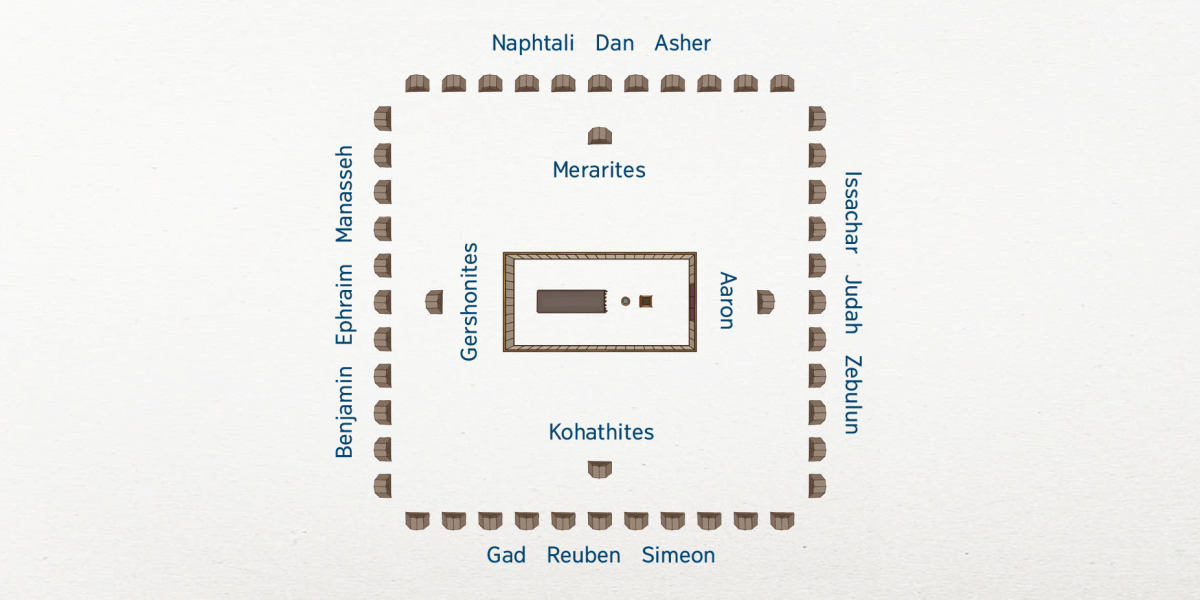



 MeekSpaceNG