Category Archives: Uncategorized

Heavy Rainfall in Nigeria


Flooding in India


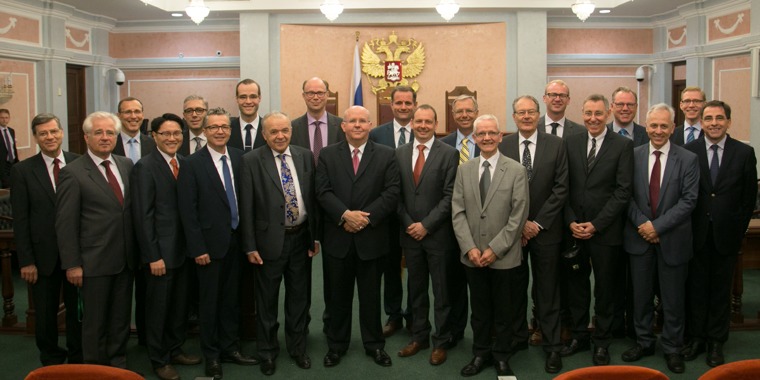
International Delegation of Brothers Shows Support for Russian Fellow Worshippers at Supreme Court Appeal Hearing


RUSSIA

International Delegation of Brothers Shows Support for Russian Fellow Worshippers at Supreme Court Appeal Hearing

The Governing Body arranged for a delegation of brothers from three continents to travel to Moscow.

Camels in the Andes?

Camels in the Andes?

 Camels in the Andes?

BY AWAKE! WRITER IN PERU

CAMELS in South America? The very idea may seem strange, since this desert animal is usually associated with Africa or Asia. Yet, the species of camels found in Africa and Asia are closely related to the lamoids found in South America. * Unlike their distant relatives, though, South American lamoids have no hump. Furthermore, they are only as tall as an average human and do not reach even the shoulder height of a dromedary or a Bactrian camel.

The best place to catch a glimpse of the South American lamoid is in the Andes Mountains, mainly in Bolivia and Peru. They are also found in other regions of South America, including Patagonia and Tierra del Fuego, in Argentina and Chile.

Particularly fascinating are the elegant gait and the speed of these creatures. Just as impressive is the ease with which South American lamoids can climb rocky slopes. Each step is cushioned by special pads, which are superior to state-of-the-art hiking footwear.

 The Andes have sparse grass and thin soil. Still, the hooves of the South American lamoid cause less damage to the ground than those of horses and mules. Additionally, the teeth and palate of these animals allows them to graze without damaging the roots of the grass.

Most animals do not fare well at high elevations. Yet, because of their abundance of red blood cells, South American lamoids can live comfortably even high in the Andes.

Where firewood cannot be found, the dried droppings of the South American lamoid serve as a substitute. And since wild lamoids establish dunghills at the borders of their roaming grounds, it is easy to collect this “firedung.” Unlike a tree, the dung does not have to be felled, and it dries fast in the dry Andean air.

At one time lamoids were used in religious rituals. For example, the Chiribaya in southern Peru would bury sacrificed llamas and alpacas beneath the floor of their houses. Historians claim that every lunar month a hundred specially bred white llamas were sacrificed at Huayaca Pata, the main square of Cuzco, and smaller numbers were sacrificed to the sun-god at the Inti Raymi celebration. Nowadays, lamoids are seldom used in rituals, but their meat​—which tastes like lamb—​is highly valued.

Long before refrigerators came on the scene, the Inca preserved lamoid meat by freeze-drying it, taking advantage of the cold temperature and low air pressure high in the Andes. They called this dry meat ch’arki. In English it is referred to as jerky.

Of course, we should appreciate these beautiful creatures not only because of the services they render but also because they are part of God’s wonderful creation, all of which gives praise to him!​—Psalm 148:10, 13.

[Footnote]

par. 3 Four types of lamoids reside in South America: alpacas, guanacos, llamas, and vicuñas. They can crossbreed and produce hybrid offspring.

 [Box/Pictures on page 16]

The Guanaco​—A Resilient and Tenacious Beauty

It might seem that such a beautiful creature of delicate features would need pampering. But guanacos are usually seen in the harshest of lands, from the high Andes to Patagonia and Tierra del Fuego, in southern Argentina and Chile. In such inhospitable territory, the guanaco eats stems and roots and drinks the water, even if it is of poor quality. The guanaco can swim well and can run at speeds of 40 miles [65 km] an hour. Thick eyelashes provide protection from wind, sun, and dust. Sadly, poachers have avidly hunted the guanaco for its meat, its pelt, and its wool, which is finer than that of the alpaca.

[Credit Line]

© Joe McDonald

[Box/Picture on page 16]

The Alpaca​—Bundled Up in Warm Clothing

In a land where cold temperatures prevail and can fluctuate 90 degrees Fahrenheit [50 degrees Celsius] in one day, the alpaca is endowed with a thick, shaggy full-length wool sweater. The soft wool of the alpaca is stronger than sheep’s wool. Although a pointed snout enables the alpaca to reach the blades of Andean grass that grow in narrow crevices between rocks, these cuddly animals prefer swampy areas, which provide tender shoots. However, like other lamoids, they can last many days without water.

 [Box/Picture on page 17]

The Vicuña​—Luxuriously Clothed

Although the vicuña lives in the high Andes where near-freezing temperatures prevail, it is comfortably dressed in a short, lightweight coat of what is considered to be the finest animal fiber on earth. Its outfit has a tuft of wool at the front of its chest, which serves as a scarf. An adult vicuña may yield less than two pounds [1 kg] of fleece every two years, so this luxurious fiber is scarce​—and expensive. One yard of fine vicuña fabric can cost more than $3,000.

Under the Inca Empire, laws were made to protect the vicuña. A shearing festival, known as chaccu, was established, and only the royalty had the privilege of wearing garments made with vicuña fiber. The chaccu festival has been reinstated in recent years, and once again laws have been enacted to protect this species from poachers.

As an important part of this festival, wild vicuñas are caught in large funnellike traps 1,000 feet [300 m] wide at the opening. After this the vicuñas are sheared and promptly released.

[Credit Line]

© Wilfredo Loayza/PromPerú

[Box/Pictures on page 17]

The Llama​—Workhorse of the Andes

It is neither as strong as an ass nor as fast as a horse. Still, the llama outshines them both as a valuable pack animal. Indeed, it can carry up to 130 pounds [60 kg] on its back. If it feels that its load is too heavy, the llama will simply sit and won’t budge until the load is lightened to its liking. If you try to coerce it, the llama may regurgitate food from the first of its three stomachs and spit it out with amazing precision and force.

Yet, llamas are generally docile, and a gentle handler can guide a long train of llamas through inhospitable high plateaus where other pack animals cannot endure the lack of oxygen. The llamas’ capability in mountainous terrain has led to their now being used as pack animals not only in the Andes but also in the Italian Alps. The llama’s rope, harness, and blanket may be made from its own wool.

[Credit Line]

© Anibal Solimano/PromPerú

[Picture on page 18]

A recently sheared alpaca

[Picture on page 18]

A baby llama tagged with a tassel

[Picture Credit Lines on page 15]

Map: Mountain High Maps® Copyright © 1997 Digital Wisdom, Inc.; llamas: © Alejandro Balaguer/PromPerú

MeekSpaceNG INDEX TO ALL PAGES

 Chat with your Administrators (your chat is public)


See Also Related Articles:


    Additional research comments for our various weekly Christian meetings. These comments are very practical, simple and effective.  We know that good comments are always simple and direct to points; comments that teach us practical lessons.  

    It is however important to remind of the need for meditation, diligent personal preparations and research work.  

    TREASURES FROM GOD’S WORD

    Here you will find suggested comments for Treasures from God’s from God’s Word and Digging for Spiritual Gems section of Our Christian Life and Ministry meetings.


    APPLY YOURSELF TO THE FIELD MINISTRY


    Here you find the Initial Visit, First Return Visit, Second Return Visit,  and Third Return Visit as well as the Bible Study as well as Apply Yourself to Reading and Teaching for the week.  In addition, you will find a brief analysis of the videos for teaching skills.  You can take the ideas if you have platform assignments or in the field ministry.


    LIVING AS CHRISTIANS


    The Christian Life section typically offers a video and video analysis with qeustions and answers.  It is good if you can make efforts to watch the video at home and with your family during Your Worship night.


    For many this section is their favourite.  Find answers to few assigned questions to paragraphs and also look for practical Lessons from the study.  Dont forget to read the entire paragraphs so you can better understand  the lessons learned.

    WATCHTOWER STUDY 

    Watchtower is the principal means of instruction to Jehovah’s witnesses. The study of the Watchtower is held at the weekend.  It is very important that you have personal Preparations but here you will have helping hands.  

    You can more information on the official site of Jehovah’s Witnesses.

    see also Comments for Our Christian Life and Ministry


    meetingBOX for midweek and weekend meetings      (free DOWNLOADS

     Apply Yourself  to  Reading  and  Teaching 

     Apply Yourself  to the Field Ministry 

     Bible Readings

     Congregation Bible Study 

     Digging for Spiritual Gems 

     Illustrations 

     Improving Our Skills in the Field Ministry 

     Jehovah’s Word Is Alive 

     Life and Ministry Workbook 

     Life and Ministry Workbook Video Links

     Links to Ministry Workbook Videos 

    Meeting Materials (References) 

     Our Christian Life and Ministry 

     Living As Christians 

     Sample Conversations 

     Song and Melodies (Manuscripts) 

     Study and Ministry Project

     Transcripts 

     Treasures from God’s Word 

     Watchtower (Study Materials) 

    Our Christian Life and Ministry—Meeting Workbook


    ASSEMBLY and CONVENTIONS 

    AUDIO and VIDEOS 
    BELIEVES and PRACTICES 
    LIBRARY
    EVENTS, MEETINGS and CALENDARS
    FEATURED 
    PICTURES and IMAGES
    MEDIA (Audio and Videos) 
    MEETINGBOX – MEETINGS and MINISTRY 
    PUBLICATIONS 
    SAMPLE CONVERSATIONS 
    THEOCRATIC Applications and Softwares 

    Bible Teachings
    ………………………………………………………………………………………………………………………………………

    Bible Questions Answered      Peace and Happiness       Faith In God

    Bible Study Tools                      Marriage and Family         Science and the Bible 
    Online Lessons                         Teenagers                            History and the Bible
                                                          Children


    from Blogger http://meekspaceng.blogspot.com/2020/11/meekspaceng-index-to-all-pages.html

    Brother Petrosov Released From Prison After Serving a One-Year Sentence in Turkmenistan


    meetingBOX | WEEK NOVEMBER 2, 2020 Meeting Workbook Downloads


    meetingBOX for midweek and weekend meetings (free downloads)


    November 02-08, 2020

     Meeting Materials (References) 


     Apply Yourself  to  Reading  and  Teaching 

     Apply Yourself  to the Field Ministry 

     Bible Readings

     Congregation Bible Study 

     Digging for Spiritual Gems 

     Illustrations 

     Improving Our Skills in the Field Ministry 

     Jehovah’s Word Is Alive 

     Life and Ministry Workbook 

     Life and Ministry Workbook Video Links

     Links to Ministry Workbook Videos 

     Our Christian Life and Ministry 

     Living As Christians 

     Sample Conversations 

     Song and Melodies (Manuscripts) 

     Study and Ministry Project

     Transcripts 

     Treasures from God’s Word 

     Watchtower (Study Materials) 


    Our Christian Life and Ministry—Meeting Workbook—2020

    from Blogger http://meekspaceng.blogspot.com/2020/11/meetingbox-week-november-2-2020-meeting.html

    meetingBOX | WEEK NOVEMBER 2, 2020 Meeting Workbook Downloads

    Moses Carefully Followed Instructions


                                              meetingBOX
                                              Treasures from God\’s Word 
                                              Living As Christians 
                                              Life and Ministry Meeting Workbook

    TREASURES FROM GOD’S WORD | EXODUS 39-40

    Moses Carefully Followed Instructions

    39:32, 43; 40:1, 2, 16

    Moses conscientiously followed Jehovah’s detailed instructions for the construction and setting up of the tabernacle. We should likewise listen to any instructions we receive from Jehovah’s organization and obey promptly and wholeheartedly. This is true even if it does not seem important to follow them or we do not understand the reason for the instructions.​—Lu 16:10.

    Why should we listen to and carefully follow instructions . . .

    • during meetings for field service?

    • regarding preparing for medical emergencies?

    • about disaster preparedness?

    Collage: Brothers and sisters following instructions they have received. 1. A group meets for field service outside on a porch. 2. A sister records her medical decisions on a legal document. 3. A family puts emergency supplies into a go bag.

    Respect the Place of Others in Jehovah’s Congregation

    See Also Related Articles:


                                                   meetingBOX
                                              Treasures from God\’s Word 
                                              Living As Christians 
                                              Life and Ministry Meeting Workbook

     STUDY ARTICLE 35

    Respect the Place of Others in Jehovah’s Congregation

    “The eye cannot say to the hand, ‘I do not need you,’ or again, the head cannot say to the feet, ‘I do not need you.’”​—1 COR. 12:21.

    SONG 124 Ever Loyal

    PREVIEW*

    1. What has Jehovah given to each of his faithful servants?

    JEHOVAH has lovingly given each of his faithful servants a place in his congregation. Although our roles are different, we are all valuable and we all need one another. The apostle Paul helps us to recognize this important lesson. How?

    2. According to Ephesians 4:16, why do we need to value one another and work together?

    As recorded in the theme text for this article, Paul emphasized that none of us can look at another servant of Jehovah and say “I do not need you.” (1 Cor. 12:21) If the congregation is to function peacefully, we must value one another and work together. (Read Ephesians 4:16.) When we work together in unity, the congregation thrives and is built up in love.

    3. What will we discuss in this article?

    What are some areas in which we can show respect for other Christians in the congregation? In this article, we will consider how elders can show respect for fellow elders. Next, we will discuss how all of us can show that we value our brothers and sisters who are not married. And finally, we will learn how we can show appreciation for those who may not speak our language fluently.

    SHOW RESPECT FOR FELLOW ELDERS

    4. What counsel of Paul recorded at Romans 12:10 should elders follow?

    All elders in the congregation are appointed by Jehovah’s holy spirit. Yet, each one has different gifts and abilities. (1 Cor. 12:17, 18) Some may be newly appointed and relatively inexperienced. Others may be limited because of age and health. Yet, no elder should look at any of his fellow elders and, in effect, say “I do not need you.” Instead, each elder should follow the counsel of Paul as recorded at Romans 12:10.​—Read.

    Elders show that they respect their fellow elders by carefully listening to them (See paragraphs 5-6)

    5. How do elders show that they respect their fellow elders, and why is it important that they do so?

    Elders show that they respect their fellow elders by carefully listening to them. This is especially important when the elders meet as a body to discuss serious matters. Why? Note what The Watchtower of October 1, 1988, stated: “Elders will recognize that Christ, by means of the holy spirit, can direct the mind of any elder on the body of elders to provide the Bible principle needed to cope with any situation or make any important decision. (Acts 15:6-15) No one elder has the monopoly of the spirit within the body.”

    6. How can elders work together in unity, and how does the congregation benefit when they do so?

    An elder who respects his fellow elders does not always try to speak first at elders’ meetings. He does not dominate the discussion, and he does not believe that his opinion is always right. Instead, he states his viewpoint humbly and modestly. He listens carefully to the comments of others. More important, he is eager to share Scriptural principles and to listen to direction from “the faithful and discreet slave.” (Matt. 24:45-47) As elders discuss matters in an atmosphere of love and respect, God’s holy spirit will be present, and it will guide them to reach decisions that strengthen the congregation.​—Jas. 3:17, 18.

    SHOW RESPECT FOR CHRISTIANS WHO ARE NOT MARRIED

    7. How did Jesus view singleness?

    The congregation today includes married couples and families. Yet, it also includes many brothers and sisters who are not married. How should we view those who are single? Consider how Jesus viewed singleness. During his earthly ministry, Jesus did not marry. He remained single and focused his time and attention on his assignment. Jesus never taught that it was a requirement to get married or to be single. However, he did say that some Christians would choose not to marry. (Matt. 19:11, 12; see study note on Matthew 19:12.) Jesus respected those who were not married. He did not view single people as inferior or lacking in some way.

    8. According to 1 Corinthians 7:7-9, what did Paul encourage Christians to consider?

    Like Jesus, the apostle Paul carried out his ministry as a single person. Paul never taught that it would be wrong for a Christian to marry. He recognized that this was a personal matter. Still, Paul did encourage Christians to consider whether they could serve Jehovah as single people. (Read 1 Corinthians 7:7-9.) Certainly Paul did not look down on single Christians. In fact, he chose young Timothy, a single brother, to care for weighty assignments.* (Phil. 2:19-22) Obviously, then, it would be wrong to think that a brother is more qualified or less qualified based solely on whether he is married or not.​—1 Cor. 7:32-35, 38.

    9. What can we say about marriage and singleness?

    Neither Jesus nor Paul taught that Christians must marry or that they must remain single. What, then, can we say about marriage and singleness? The Watchtower of October 1, 2012, stated it nicely when it said: “Really, both [marriage and singleness] can be described as gifts from God. . . . Jehovah does not view [singleness] as a cause for shame or grief.” With this in mind, we need to respect the place of single brothers and sisters in the congregation.

    Out of respect for the feelings of those who are single, what should we avoid? (See paragraph 10)

    10. How can we show respect for our single brothers and sisters?

    10 How can we show respect for the feelings and circumstances of our single brothers and sisters? We do well to keep in mind that some single Christians have made it a personal goal to remain unmarried. Other single Christians would like to marry, but they simply have not found the right person. Still others may have lost their mate in death. In any case, should those in the congregation feel the need to ask single Christians why they are not married or to offer to help them find a mate? Of course, some single Christians might ask for such assistance. But if help is not requested, how might such offers make our single brothers and sisters feel? (1 Thess. 4:11; 1 Tim. 5:13) Let us consider some comments from faithful single brothers and sisters.

    11-12. How might we discourage single ones?

    11 One single circuit overseer who is very effective in his assignment feels that there are many benefits to being single. Yet, he noted that it can be discouraging when well-meaning brothers and sisters ask him: “Why are you not married?” A single brother serving at a branch office observed: “Sometimes brothers and sisters make me feel that single ones are to be pitied. This can make it seem that singleness is a burden rather than a gift.”

    12 A single sister who serves at Bethel said: “Some publishers assume that all single people are seeking a mate or that all single people view every social setting as an opportunity to find a mate. Once when I traveled to another part of the country for an assignment, I arrived on a meeting night. The sister who was hosting me told me that there were two brothers in the congregation who were my age. She assured me that she was not trying to set me up. But as soon as we got inside the Kingdom Hall, she pulled me over to meet the two brothers. Needless to say, that was quite an awkward situation for the three of us.”

    13. What examples encouraged one single sister?

    13 Another single sister who serves at Bethel observed: “I know older single pioneers who are well-grounded, focused, self-sacrificing, and content in their service and who add so much to a congregation. They have a balanced view of their singleness, feeling neither superior because they have stayed single nor deprived because they do not have a mate and family.” That is the beauty of a congregation in which you feel respected and valued. You feel neither pitied nor envied, neither ignored nor put on a pedestal. You just know that you belong.

    14. How can we show that we respect single ones?

    14 Our single brothers and sisters will be grateful if we value them based on their fine qualities and not on their marital status. Instead of feeling sorry for them, we do well to appreciate their faithfulness. As a result, our single brothers and sisters will never feel that we are saying to them: “I do not need you.” (1 Cor. 12:21) Instead, they will know that we respect them and value their place in the congregation.

    SHOW RESPECT FOR THOSE WHO DO NOT SPEAK YOUR LANGUAGE FLUENTLY

    15. What adjustments have some made to expand their ministry?

    15 In recent years, many publishers have made it their goal to learn another language so that they can expand their ministry. Doing so means making adjustments. These brothers and sisters have left a congregation that uses their mother tongue in order to serve in a congregation where another language is spoken and where there is a greater need for Kingdom publishers. (Acts 16:9) This is a personal decision that these Christians make in order to advance Kingdom interests. Although it may take years for them to become fluent in the new language, they accomplish much good. Their fine qualities and experience strengthen and stabilize the congregation. We value these self-sacrificing brothers and sisters!

    16. On what basis do elders evaluate the qualifications of brothers to serve as elders and ministerial servants?

    16 A body of elders would not hold back from recommending a brother to serve as an elder or a ministerial servant simply because he is not yet fluent in the language of the congregation. The elders will evaluate a brother based on the Scriptural qualifications for elders and ministerial servants and not on how well he speaks the language of the local congregation.​—1 Tim. 3:1-10, 12, 13; Titus 1:5-9.

    17. What questions do some families face when moving to another country?

    17 Some Christian families have moved to another country to seek refuge or to find employment. In such cases, their children may now be educated in the main language of their new country. The parents may also need to learn the main language in order to find employment. What if there is a local congregation or group in their mother tongue? Which congregation should the family attend? Should it be a congregation in which the main language of the country is spoken or a congregation in which the family’s mother tongue is spoken?

    18. In harmony with Galatians 6:5, how can we show respect for the decision of the family head?

    18 The family head must decide which congregation his family will attend. Because this is a personal matter, he must consider what is in the best interests of his family. (Read Galatians 6:5.) We need to respect the decision of the family head. Whatever he decides, let us accept his decision and welcome the family as a valued part of our congregation.​—Rom. 15:7.

    19. What should family heads prayerfully consider?

    19 In other cases, families may be serving in a congregation that uses the mother tongue of the parents, but the children may not be fluent in that language. If that congregation is located in an area where the national language is spoken, it might be that the children struggle to understand the meetings and do not progress spiritually. Why? Because the children may attend a school that uses the national language and not their parents’ mother tongue. In such cases, family heads should prayerfully consider what they need to do to help their children to draw closer to Jehovah and his people. Either they will need to help their children to become fluent in their mother tongue or they will need to consider moving to a congregation that uses a language that their children clearly understand. Whatever the family head decides, the congregation in which he chooses to serve should make him and his family feel respected and valued.

    How can we show that we value those who are learning a new language? (See paragraph 20)

    20. How can we show that we respect our brothers and sisters who are learning a new language?

    20 For all the reasons we have discussed, in many congregations, there will be brothers and sisters who are struggling to learn a new language. It might be difficult for them to express their thoughts. Yet, if we look beyond their language skills, we will see their love for Jehovah and their desire to serve him. If we see these beautiful qualities, we will deeply value and respect these brothers and sisters. We will not say “I do not need you” simply because they do not speak our language fluently.

    WE ARE PRECIOUS TO JEHOVAH

    21-22. What wonderful privilege do we have?

    21 Jehovah has given us the wonderful privilege of having a place in his congregation. Whether we are male or female, single or married, young or old or we speak a certain language well or hardly at all, we are precious to Jehovah and to one another.​—Rom. 12:4, 5; Col. 3:10, 11.

    22 May we continue to apply the many wonderful lessons we have learned from Paul’s illustration of the human body. In that way, we will look for even more ways to treasure our place and the place of others in Jehovah’s congregation.

    SONG 90 Encourage One Another

    Jehovah’s people come from a variety of backgrounds and fill different roles in the congregation. This article will help us see why it is important that we respect each member of Jehovah’s family.

    We cannot say for certain that Timothy never married.

    Design a site like this with WordPress.com
    Get started