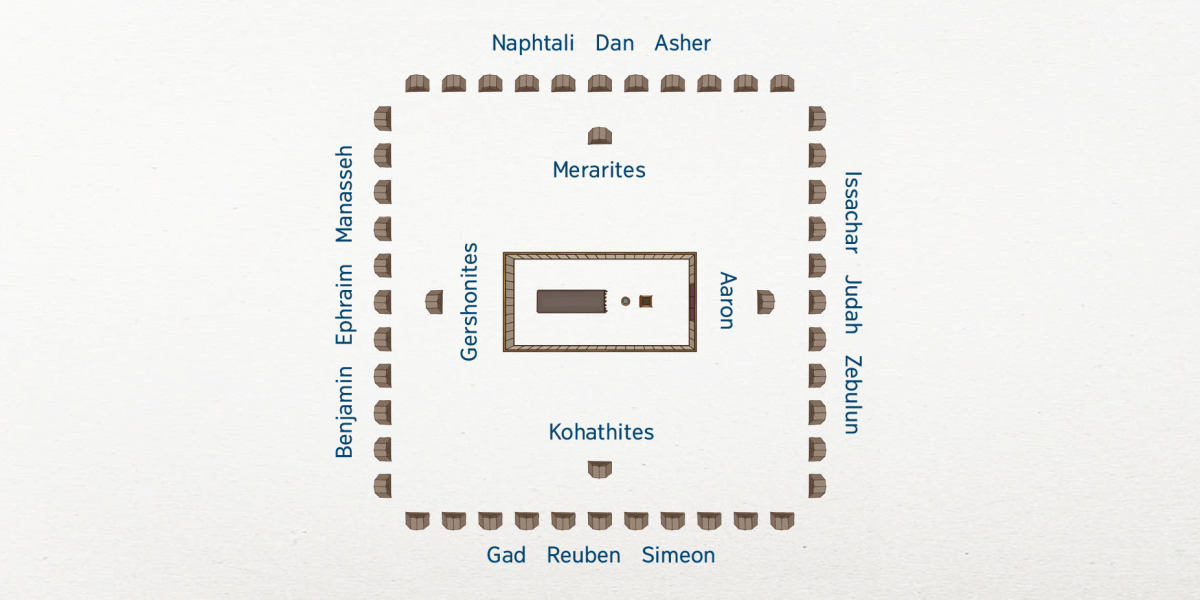
The Israelites camped according to three-tribe divisions (Nu 1:52, 53; w94 12/1 9 ¶4) 4 If you had had a bird’s-eye view of Israel encamped in the wilderness, what would you have seen? A vast, but orderly, array of tents housing possibly three million or more people, grouped according to three-tribe divisions to the north, south, east, and west. Peering closer, you would also have noticed another grouping nearer the middle of the camp. These four smaller clusters of tents housed the families of the tribe of Levi. At the very center of the camp, in an area cordoned off by a cloth wall, was a unique structure. This was the “tent of meeting,” or tabernacle, which “wise-hearted” Israelites had built according to Jehovah’s plan.—Numbers 1:52, 53; 2:3, 10, 17, 18, 25; Exodus 35:10.
The Israelite camp may have totaled 3,000,000 or more (Nu 2:32, 33; it-1 397 ¶4) Out and beyond the Levitical tents, the 12 tribes camped in a quadrilateral arrangement oriented by the four points of the compass. It appears that the people in general were removed a considerable distance from the tabernacle; some commentators suggest some 900 m (3,000 ft), because there was to be a distance of “about two thousand cubits” between the people and the ark of the covenant when the crossing of the Jordan began. (Jos 3:4) The 12 tribes were divided into four grand divisions, each called by the name of the central tribe of the division. So the three-tribe division to the E of the tabernacle was called Judah, with Issachar on the one side of Judah and Zebulun on the other side. (Nu 2:3-8) When this arrangement was set up in 1512 B.C.E., this three-tribe division of Judah numbered 186,400 able-bodied males 20 years old and up. (Nu 1:1-3; 2:9) Clockwise to the S was the three-tribe division of Reuben, with Simeon and Gad alongside Reuben, and numbering 151,450 men of war. (Nu 2:10-16) These two divisions on the E and S, together with the Levites, were Jacob’s descendants by Leah and her handmaid Zilpah. (Ge 35:23, 26) Incidentally, with both Reuben and the Kohathites camping S of the sanctuary, the physical association between the Reubenite rebels Dathan and Abiram and the Kohathite Korah is explained. (Nu 16:1) Around to the W was the three-tribe division of Ephraim, flanked by Manasseh and Benjamin, all descendants of Rachel, and numbering 108,100 army men. (Nu 2:18-24) Finally, on the N was the three-tribe division of Dan, associated with Asher and Naphtali, and totaling 157,600 fighting men. (Nu 2:25-31) Dan and Naphtali were descendants of Rachel’s handmaid Bilhah, but Asher was of Leah’s maidservant Zilpah.—Ge 35:25, 26.
Jehovah wants his people to worship him in an organized way. That was true for the nation of Israel, and it is true for us today.—1Co 14:33, 40.
ASK YOURSELF, ‘How can I show my complete support for Jehovah’s organization?’
1-2. Why should all Christians be interested in the heavenly resurrection?
MOST people now serving Jehovah hope to live forever on earth. A remnant of spirit-anointed Christians, however, hope to be raised to life in heaven. These anointed ones are keenly interested in what their future life will be like, but what about those with the earthly hope? As we will see, the heavenly resurrection will lead to blessings also for those who have the hope of living forever on earth. So regardless of whether our hope is heavenly or earthly, we should be interested in the heavenly resurrection.
2 God inspired some of Jesus’ disciples in the first century to write about the heavenly hope. The apostle John explained: “We are now children of God, but it has not yet been made manifest what we will be. We do know that when he is made manifest we will be like him.” (1 John 3:2) So anointed Christians do not know what they will be like when they are raised to heaven with spirit bodies. However, they will in a literal sense see Jehovah when they receive their reward. The Bible does not reveal every detail about the heavenly resurrection, but the apostle Paul did provide some information about it. The anointed will be with Christ when he brings “to nothing all government and all authority and power.” That includes “the last enemy, death.” Finally, Jesus—along with his corulers—will subject himself and all things to Jehovah. (1 Cor. 15:24-28) What a climax that will be!*
3. As indicated at 1 Corinthians 15:30-32, Paul’s belief in the resurrection helped him to do what?
3 Paul’s belief in the resurrection helped him to endure various trials. (Read 1 Corinthians 15:30-32.) He told the Corinthians: “Daily I face death.” Paul also wrote: “I have fought with wild beasts at Ephesus.” Perhaps he was alluding to his fighting real animals at an arena in Ephesus. (2 Cor. 1:8; 4:10; 11:23) Or he may have been referring to hostile Jews and others who were like “wild beasts.” (Acts 19:26-34; 1 Cor. 16:9) Whichever it was, Paul faced serious perils. Yet, he still had a positive outlook on the future.—2 Cor. 4:16-18.
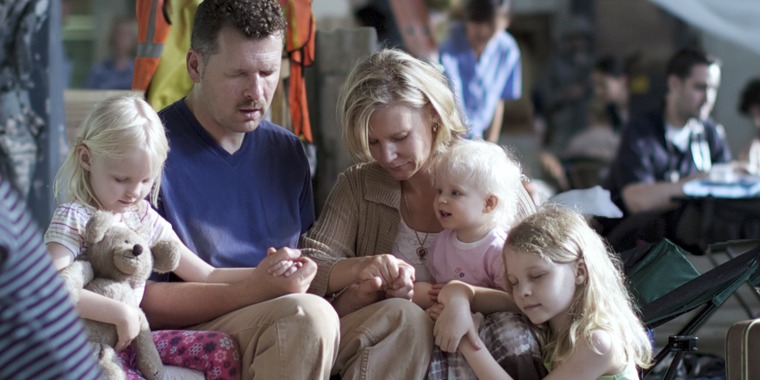
A family who live where our Christian work is restricted persevere in their worship with full faith that God has good things in store for them (See paragraph 4)
4. How has the hope of the resurrection strengthened Christians today? (See cover picture.)
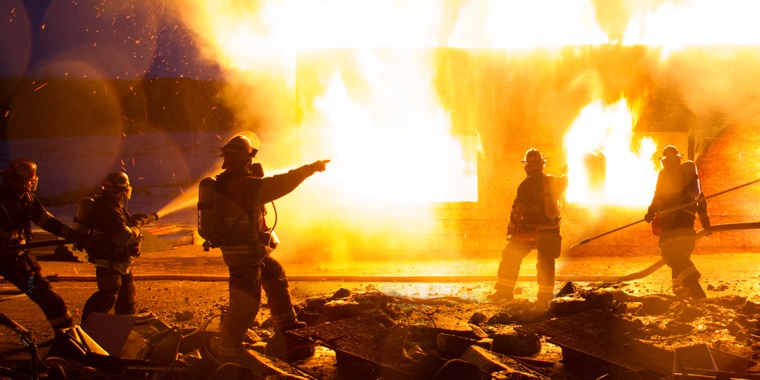
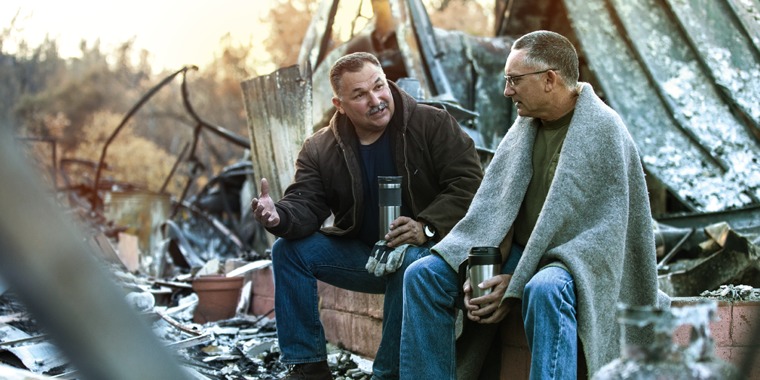
4 We are living in dangerous times. Some of our brothers have been victims of crime. Others live in war-torn areas where their safety is far from guaranteed. Still others serve Jehovah at the risk of their life or freedom in lands where the preaching work is restricted or even banned. Yet, all these brothers and sisters persevere in their worship of Jehovah, becoming examples for us. They are secure in the knowledge that even if they lose their life at the present time, Jehovah has something far better in mind for them in the future.
5. What dangerous viewpoint could weaken our faith in the resurrection?
5 Paul warned his brothers about a dangerous viewpoint that some had: “If the dead are not to be raised up, ‘let us eat and drink, for tomorrow we are to die.’” That viewpoint actually existed even before Paul’s day. He may have been quoting Isaiah 22:13, which refers to the attitude of the Israelites. Instead of drawing close to God, they pursued a life of pleasure. Basically, the attitude of those Israelites was “here today, gone tomorrow,” a view common even today. However, the bad outcome to the nation of Israel is a matter of record.—2 Chron. 36:15-20.
6. How should the resurrection hope affect our choice of associates?
6 Clearly, the fact that Jehovah can resurrect the dead should affect our choice of associates. The brothers in Corinth needed to guard against associating with those who denied the resurrection. There is a lesson for us today: No good can come from choosing as regular associates those who have a live-for-the-moment outlook. Being with such ones can ruin a true Christian’s viewpoint and habits. In fact, it might lead him to have a lifestyle that includes what God hates—sin. Thus, Paul strongly urged: “Come to your senses in a righteous way and do not practice sin.”—1 Cor. 15:33, 34.
WHAT SORT OF BODY?
7. What question about the resurrection might some have asked, as shown at 1 Corinthians 15:35-38?
7 Read 1 Corinthians 15:35-38. An inquirer who wanted to cast doubt on the resurrection might have asked: “How are the dead to be raised up?” We do well to consider Paul’s answer because many people today have personal views about life after death. But what does the Bible teach?
Using a seed and a plant, Paul illustrated that God can provide a suitable body for those who are resurrected (See paragraph 8)
8. What illustration can help us to understand the resurrection to heavenly life?
8 When someone dies, his body decomposes. But the One who created the universe from nothing can resurrect that person, giving him a suitable body. (Gen. 1:1; 2:7) Paul used an illustration to show that God would not need to bring back the same body. Think of “a bare grain,” or a plant “seed.” A seed of grain that is planted in the ground germinates and becomes a new plant. The resulting plant is quite different from the small seed. Paul used this comparison to show that our Creator can provide “a body just as it [pleases] him.”
9 Read 1 Corinthians 15:39-41. Paul noted that there is great diversity in creation. For example, there are different fleshly bodies, such as cattle, birds, and fish. He stated that in the sky, we see differences between the sun and the moon. And he noted that “one star differs from another star in glory.” Yes, even if we may not discern it with the naked eye, there are what scientists call red giant stars, white dwarfs, and yellow stars, such as our sun. Paul also stated that “there are heavenly bodies and earthly bodies.” How so? Well, on earth, we have bodies of flesh, but in heaven there are spirit bodies, like the ones the angels have.
10. How might differences in bodies relate to the resurrection?
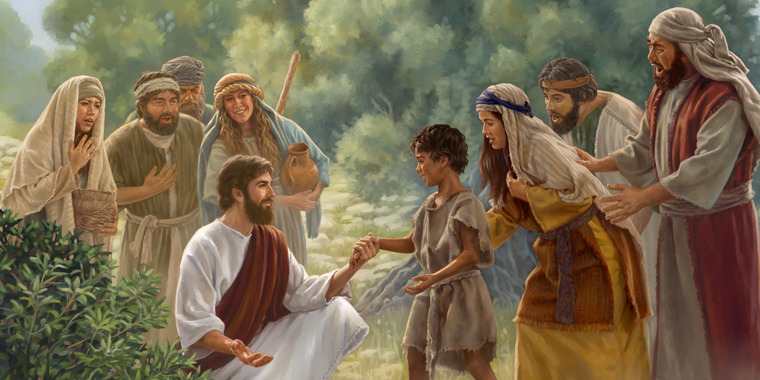
10 Note what Paul said next: “So it is with the resurrection of the dead. It is sown in corruption; it is raised up in incorruption.” Of course, upon dying, the human body decays and returns to the dust. (Gen. 3:19) So how can it be that a body is “raised up in incorruption”? Paul was not speaking of a human who is resurrected to life on earth, such as those raised by Elijah, Elisha, and Jesus. Paul was referring to a person who is resurrected with a heavenly body, that is, “a spiritual one.”—1 Cor. 15:42-44.
11-12. What change did Jesus experience when he was resurrected, and how do the anointed experience something similar?
11 When Jesus walked the earth, he had a fleshly body. But when he was resurrected, he “became a life-giving spirit” and returned to heaven. Likewise, anointed Christians would be resurrected to spirit life. Paul explained: “Just as we have borne the image of the one made of dust, we will bear also the image of the heavenly one.”—1 Cor. 15:45-49.
12 Paul was reaching the climax of his discussion of the resurrection. It is important to note that Jesus was not resurrected with a human body. Paul pointedly said: “Flesh and blood cannot inherit God’s Kingdom” in heaven. (1 Cor. 15:50) The apostles and other anointed ones would not be resurrected to heaven with corruptible bodies of flesh and blood. When would they be resurrected? Paul stressed that this resurrection still lay ahead; it was not something they would experience right after they died. By the time Paul wrote 1 Corinthians, some disciples had already “fallen asleep in death,” for example, the apostle James. (Acts 12:1, 2) Other apostles and anointed ones would yet fall “asleep in death.”—1 Cor. 15:6.
VICTORY OVER DEATH
13. How would Jesus’ presence be marked?
13 Both Jesus and Paul pointed forward to a special time in history—Christ’s presence. That presence would be marked by wars, earthquakes, pestilences, and other global developments. We have seen this Bible prophecy being fulfilled since 1914. There would be another outstanding part of that sign. Jesus said that the good news of God’s established Kingdom would be preached “in all the inhabited earth for a witness to all the nations, and then the end [would] come.” (Matt. 24:3, 7-14) Paul pointed out that “the presence of the Lord” would also be a time of resurrection for anointed Christians who had “fallen asleep in death.”—1 Thess. 4:14-16; 1 Cor. 15:23.
14. What do anointed ones who pass away during Christ’s presence experience?
14 Anointed ones who today finish their earthly course are instantly raised to life in the heavens. This is confirmed by Paul’s words recorded at 1 Corinthians 15:51, 52: “We will not all fall asleep in death, but we will all be changed, in a moment, in the blink of an eye, during the last trumpet.” These words of Paul are now undergoing fulfillment! Upon their resurrection, these brothers of Christ will have complete joy; they will “always be with the Lord.”—1 Thess. 4:17.
Those who are changed “in the blink of an eye” will share with Jesus in smashing the nations (See paragraph 15)
15. What work awaits those who will be changed “in the blink of an eye”?
15 The Bible tells us what work those who are changed “in the blink of an eye” will do in heaven. Jesus says to them: “To the one who conquers and observes my deeds down to the end, I will give authority over the nations, and he will shepherd the people with an iron rod so that they will be broken to pieces like clay vessels, just as I have received from my Father.” (Rev. 2:26, 27) They will follow their Commander in the task at hand—shepherding the nations with a rod of iron.—Rev. 19:11-15.
16. How will many humans be victorious over death?
16 Clearly, the anointed will be victorious over death. (1 Cor. 15:54-57) Their resurrection will put them in position to share in the victory over earth-wide wickedness during the coming war of Armageddon. Millions of other Christian men and women will “come out of the great tribulation,” surviving into the new world. (Rev. 7:14) Those survivors on earth will be eyewitnesses to another victory over death—the resurrection of billions of people who died in the past. Just imagine the joy when that victorious event occurs! (Acts 24:15) And all those who prove completely loyal to Jehovah will be victorious even over inherited death. They will be able to live forever.
17 Every Christian now alive should be grateful for the reassuring words that Paul wrote to the Corinthians regarding the resurrection. We have every reason to show that we accept Paul’s urging to be fully occupied now “in the work of the Lord.” (Read 1 Corinthians 15:58.) If we loyally and actively share in that work, we will put ourselves in line to experience a future filled with joy. That future will be more wonderful than anything we can imagine. It certainly will confirm that our labor has not been in vain in connection with the Lord.
The second half of 1 Corinthians chapter 15 contains details about the resurrection, especially that of anointed Christians. However, what Paul wrote is also of interest to those of the other sheep. This article will show how the hope of the resurrection should affect our life now and give us reason to look forward to the future.
The jw.org website now features a section entitled “Bible Verses Explained.” Each month, many people search online for the meaning of Bibleverses. To meet this need, the “Bible Verses Explained” section discusses the meaning and context of these verses. Browse the “Bible Verses Explained” section on our website under “Bible Teachings” and in the JW Library app under “Article Series.”
























 MeekSpaceNG