Monthly Archives: January 2021

Take Courage​—Jehovah Is Your Helper

See Also Related Articles:


                                               meetingBOX
                                          Treasures from God\’s Word 
                                          Living As Christians 
                                          Life and Ministry Meeting Workbook

STUDY ARTICLE 46

Take Courage​—Jehovah Is Your Helper

“I will never leave you, and I will never abandon you.”​—HEB. 13:5.

SONG 55 Fear Them Not!

PREVIEW*

1. What will comfort us when we feel alone or overwhelmed by our problems? (Psalm 118:5-7)

HAVE you ever felt that you were all alone, that you had no one to help you deal with a challenge you faced? Many have felt that way, including faithful servants of Jehovah. (1 Ki. 19:14) If that ever happens to you, remember Jehovah’s promise: “I will never leave you, and I will never abandon you.” So we can say with confidence: “Jehovah is my helper; I will not be afraid.” (Heb. 13:5, 6) The apostle Paul wrote those words to fellow believers in Judea about 61 C.E. His words remind us of the sentiments expressed at Psalm 118:5-7.​—Read.

2. What will we consider in this article, and why?

Like the psalmist, Paul knew from personal experience that Jehovah was his Helper. For instance, over two years before he wrote his letter to the Hebrews, Paul made a dangerous journey through a storm-tossed sea. (Acts 27:4, 15, 20) Throughout that journey and during the time leading up to it, Jehovah proved to be Paul’s Helper in various ways. We will consider three of them. Jehovah provided help by means of Jesus and the angels, individuals in authority, and fellow believers. Reviewing these events in Paul’s life will deepen our trust in God’s promise that He will also respond to our calls for help.

HELP FROM JESUS AND THE ANGELS

3. What may Paul have wondered, and why?

Paul needed help. About 56 C.E., a crowd dragged him outside the temple in Jerusalem and tried to kill him. The next day, when Paul was brought before the Sanhedrin, he was almost torn apart by his enemies. (Acts 21:30-32; 22:30; 23:6-10) At that point, Paul may have wondered, ‘How much longer can I endure this treatment?’

4. How did Jehovah help Paul by means of Jesus?

What help did Paul receive? The night after Paul was arrested, “the Lord,” Jesus, stood by him and said: “Take courage! For just as you have been giving a thorough witness about me in Jerusalem, so you must also bear witness in Rome.” (Acts 23:11) What timely encouragement! Jesus commended Paul for the witness he had given in Jerusalem. And he promised that Paul would safely reach Rome, where he would give a further witness. After receiving that assurance, Paul must have felt as secure as a child nestled in his father’s arms.

During a heavy storm at sea, an angel assures Paul that everyone aboard the ship will survive the perilous journey (See paragraph 5)

5. How did Jehovah help Paul by means of an angel? (See cover picture.)

What other challenges did Paul face? About two years after those events in Jerusalem, Paul was on a ship heading for Italy when the vessel encountered such a heavy storm that the crew and passengers thought they would die. Yet, Paul was not afraid. Why? He told those aboard: “This night an angel of the God to whom I belong and to whom I render sacred service stood by me and said: ‘Have no fear, Paul. You must stand before Caesar, and look! God has granted to you all those sailing with you.’” Jehovah had used an angel to repeat the assurance that He had given Paul earlier by means of Jesus. And, indeed, Paul reached Rome.​—Acts 27:20-25; 28:16.

6. What promise of Jesus can strengthen us, and why?

What help do we receive? Jesus will support us, as he did Paul. For example, Jesus promises all those who follow him: “I am with you all the days until the conclusion of the system of things.” (Matt. 28:20) Jesus’ words are a source of strength for us. Why? Because some days are difficult for us to endure. For instance, when a loved one dies, we must deal with that pain not just for a few days but likely for many years. Others must deal with the difficult days that come with old age. Still others face days on which they are overwhelmed by feelings of depression. Even so, we find the strength to go on because we know that Jesus is with us all the days,” including the darkest days, of our life.​—Matt. 11:28-30.

Angels give us support and guidance as we share in the preaching work (See paragraph 7)

7. According to Revelation 14:6, how does Jehovah help us today?

God’s Word assures us that Jehovah helps us by means of his angels. (Heb. 1:7, 14) For example, angels give us support and guidance as we preach the “good news of the Kingdom” to people of “every nation and tribe and tongue.”​—Matt. 24:13, 14read Revelation 14:6.

HELP FROM INDIVIDUALS IN AUTHORITY

8. How did Jehovah help Paul by means of a military commander?

What help did Paul receive? Back in 56 C.E., Jesus assured Paul that he would reach Rome. However, some Jews in Jerusalem planned to ambush Paul and kill him. When the Roman military commander Claudius Lysias learned about the plan, he came to Paul’s rescue. Quickly, Claudius sent Paul​—protected by many soldiers—​to Caesarea, along a route that was about 65 miles (105 km) from Jerusalem. In Caesarea, Governor Felix ordered that Paul “be kept under guard in Herod’s palace.” Paul was out of the reach of the would-be murderers.​—Acts 23:12-35.

9. How did Governor Festus help Paul?

Two years later, Paul was still in custody in Caesarea. Felix had been succeeded as governor by Festus. The Jews begged Festus to have Paul come to Jerusalem to stand trial, but Festus refused. Perhaps the governor was aware that the Jews had been “planning to ambush Paul and kill him along the road.”​—Acts 24:27–25:5.

10. How did Governor Festus respond to Paul’s appeal to be judged by Caesar?

10 Later, Paul’s trial was held in Caesarea. Since Festus wanted “to gain favor with the Jews,” he asked Paul: “Do you wish to go up to Jerusalem and be judged before me there?” Paul knew that he would probably be killed in Jerusalem, and he also knew what he could do to save his life, reach Rome, and carry out his ministry. He said: “I appeal to Caesar!” After consulting his counselors, Festus told Paul: “To Caesar you have appealed; to Caesar you will go.” Festus’ favorable decision rescued Paul from his enemies. In time, Paul would be in Rome​—far out of the reach of the Jews who were seeking to kill him.​—Acts 25:6-12.

11. Paul may have reflected on what reassuring words given by Isaiah?

11 While Paul was waiting to begin his voyage to Italy, he may well have reflected on a warning that the prophet Isaiah was inspired to give to those opposing Jehovah: “Devise a plan, but it will be thwarted! Say what you like, but it will not succeed, for God is with us!” (Isa. 8:10) Paul knew that God would help him, and this must have strengthened him as he faced the trials that were to come.

As he did in the past, Jehovah may move people in authority today to protect his servants (See paragraph 12)

12. How did Julius treat Paul, and what may Paul have discerned as a result?

12 In 58 C.E., Paul began his voyage to Italy. Being a prisoner, he was placed under the authority of a Roman army officer named Julius. From that moment on, Julius had the power to make Paul’s life miserable or to make it bearable. How would he use his authority? The next day when they landed ashore, “Julius treated Paul with kindness and permitted him to go to his friends.” Later on, Julius even saved Paul’s life. How? The soldiers wanted to kill all the prisoners who were on the ship, but Julius stopped them. Why? He “was determined to bring Paul safely through.” Likely, Paul discerned Jehovah’s guidance in the actions of that kindhearted officer.​—Acts 27:1-3, 42-44.

See paragraph 13

13. How may Jehovah use people in authority?

13 What help do we receive? When it is in harmony with his purpose, Jehovah may use his powerful holy spirit to cause people in authority to do what he desires. King Solomon wrote: “A king’s heart is like streams of water in Jehovah’s hand. He directs it wherever He pleases.” (Prov. 21:1) What does this proverb mean? Humans can dig a canal to divert the water of a stream in a direction that fits their plans. Similarly, Jehovah can use his spirit to divert the thoughts of rulers in a direction that is in harmony with his purpose. When that occurs, people in authority feel motivated to make decisions that benefit God’s people.​—Compare Ezra 7:21, 25, 26.

14. In line with Acts 12:5, concerning whom can we pray?

14 What can we do? We can pray “concerning kings and all those who are in positions of authority” when these individuals are called on to make decisions that affect our Christian life and ministry. (1 Tim. 2:1, 2, ftn.; Neh. 1:11) As the first-century Christians did, we too pray intensely to God for our brothers and sisters who are in prison. (Read Acts 12:5; Heb. 13:3) Further, we can pray concerning prison guards who are in charge of our brothers and sisters. We can beg Jehovah to influence the thoughts of such individuals so that they may be moved to act like Julius and treat our imprisoned fellow believers “with human kindness.”​—See study note on Acts 27:3.

HELP FROM FELLOW BELIEVERS

15-16. How did Jehovah help Paul by means of Aristarchus and Luke?

15 What help did Paul receive? During his journey to Rome, Paul time and again received help that Jehovah provided by means of his fellow believers. Let us consider some examples.

16 Two faithful companions of Paul, Aristarchus and Luke, decided to travel with him to Rome.* They willingly risked their lives to be with Paul, although it does not appear that either of them had received a personal assurance from Jesus that they would reach Rome. Only later, during the rough voyage, did they learn that their lives would be spared. Therefore, when Aristarchus and Luke boarded the ship in Caesarea, Paul must have offered a heartfelt prayer to Jehovah, thanking him for the help that he had provided by means of these two courageous fellow believers.​—Acts 27:1, 2, 20-25.

17. How did Jehovah help Paul by means of his fellow believers?

17 During his journey, Paul was several times helped by his fellow believers. For instance, in the port city of Sidon, Julius permitted Paul “to go to his friends and enjoy their care.” And later, in the city of Puteoli, Paul and his companions “found brothers and were urged to remain with them for seven days.” While the Christians in those places cared for the needs of Paul and his companions, Paul no doubt brought great joy to his hosts by sharing upbuilding experiences. (Compare Acts 15:2, 3.) After being refreshed, Paul and his companions continued the journey.​—Acts 27:3; 28:13, 14.

Like Paul, we receive Jehovah’s help by means of fellow believers (See paragraph 18)

18. What prompted Paul to thank God and take courage?

18 As Paul walked toward Rome, he must have thought about what he had written three years earlier to the congregation in that city: “For many years I have longed to come to you.” (Rom. 15:23) However, he had not anticipated that he would be arriving as a prisoner. How encouraged he must have been when he saw brothers from Rome waiting along the road to greet him! “On catching sight of them, Paul thanked God and took courage.” (Acts 28:15) Note that Paul thanked God for the presence of the brothers. Why? Because Paul again saw Jehovah helping him by means of fellow believers.

See paragraph 19

19. As stated at 1 Peter 4:10, how may Jehovah use us as a means to convey his help to those in need?

19 What can we do? Do you know of brothers or sisters in your congregation who are suffering distress because they are ill or are facing other challenging circumstances? Or maybe they have lost a loved one in death. If we become aware of an individual in need, we can ask Jehovah to help us to say or do something kind and loving. Our words and actions may be just the encouragement that our brother or sister needs. (Read 1 Peter 4:10.)* Those whom we help may regain full confidence that Jehovah’s promise, “I will never leave you, and I will never abandon you,” applies to them. Would that not make you feel joyful?

20. Why can we say with confidence: “Jehovah is my helper”?

20 As was the case with Paul and his companions, we in effect go through violent storms on our journey through life. At the same time, we know that we can take courage because Jehovah is with us. He gives us help by means of Jesus and the angels. Also, if it is in harmony with his purpose, Jehovah can help us by means of people in authority. And as many of us have personally experienced, Jehovah uses his holy spirit to stir the hearts of his servants to come to the aid of their Christian brothers and sisters. Therefore, like Paul, we have good reason to say with confidence: “Jehovah is my helper; I will not be afraid. What can man do to me?”​—Heb. 13:6.

SONG 38 He Will Make You Strong

This article considers three ways in which Jehovah helped the apostle Paul to deal with difficult challenges. Reviewing how Jehovah proved to be a Helper in the past will strengthen our confidence that Jehovah will help us today as we pass through the storms of life.

Aristarchus and Luke had previously been Paul’s traveling companions. These trusted men also remained with Paul during his imprisonment in Rome.​—Acts 16:10-12; 20:4; Col. 4:10, 14.
                                   DONATE BUTTON 

Are You a ‘Steward of God’s Undeserved Kindness’?

See Also Related Articles:


                                               meetingBOX
                                          Treasures from God\’s Word 
                                          Living As Christians 
                                          Life and Ministry Meeting Workbook

“Ministering to One Another”

5. (a) What should each Christian do? (b) What questions arise?

In speaking to all members of the Christian congregation, Peter says: “Above all things, have intense love for one another.” He then adds: “In proportion as each one has received a gift, use it in ministering to one another.” (1 Pet. 4:8, 10) Hence, each one in the congregation is to have a share in building fellow Christians up. We have been placed in charge of something valuable belonging to Jehovah, and we are responsible for distributing it to others. So, then, with what are we entrusted? Peter says that it is “a gift.” What is the gift? How do we “use it in ministering to one another”?

6. What are some of the gifts with which Christians are entrusted?

God’s Word states: “Every good gift and every perfect present is from above.” (Jas. 1:17) Indeed, all gifts with which Jehovah entrusts his people are expressions of his undeserved kindness. One outstanding gift Jehovah imparts to us is the holy spirit. That gift enables us to cultivate such godly qualities as love, goodness, and mildness. Such qualities move us, in turn, to show fellow believers heartfelt affection and give them willing support. True wisdom and knowledge are also among the good gifts that we acquire with the help of the holy spirit. (1 Cor. 2:10-16; Gal. 5:22, 23) In fact, all our energies, abilities, and talents may be viewed as gifts to be used to bring praise and honor to our heavenly Father. We have the God-given responsibility to use our abilities and qualities as a means of conveying expressions of God’s undeserved kindness to our fellow believers.

“Use It in Ministering”​—How?

7. (a) What is indicated by the term “in proportion”? (b) What questions should we ask ourselves, and why?

Regarding gifts we have received, Peter also states: “In proportion as each one has received a gift, use it.” The qualifying term “in proportion” indicates that qualities and abilities may vary not only in nature but also in extent. Even so, each one is urged to “use it [that is, any particular gift he has received] in ministering to one another.” Moreover, the expression “use it . . . as fine stewards” is a command. Hence, we should ask ourselves: ‘Do I, indeed, use the gifts with which I am entrusted to fortify my fellow believers?’ (Compare 1 Timothy 5:9, 10.) ‘Or do I use the abilities that I received from Jehovah mainly to benefit myself​—perhaps to acquire riches or to attain social status?’ (1 Cor. 4:7) If we use our gifts “in ministering to one another,” we will be pleasing Jehovah.​—Prov. 19:17read Hebrews 13:16.

8, 9. (a) What are some ways in which Christians worldwide serve in behalf of fellow believers? (b) How do the brothers and sisters in your congregation help one another?

God’s Word mentions various ways in which first-century Christians ministered to one another. (Read Romans 15:25, 26; 2 Timothy 1:16-18.) Similarly today, the command to use one’s gift in behalf of fellow believers is wholeheartedly carried out by true Christians. Consider some of the ways in which that is being done.

Many brothers spend hours each month preparing meeting parts. At the meetings, when they convey some of the spiritual gems they have found during their Bible study, their insightful words motivate all in the congregation to endure. (1 Tim. 5:17) Numerous brothers and sisters are known for their warmth and compassion toward fellow believers. (Rom. 12:15) Some regularly visit those who are depressed and pray with them. (1 Thess. 5:14) Others thoughtfully write some heartfelt words of encouragement to fellow Christians who are coping with a trial. Still others kindly help those with physical limitations to attend the congregation meetings. Thousands of Witnesses share in relief work, helping fellow believers rebuild homes that have been struck by disasters. The tender affection and practical assistance rendered by such caring brothers and sisters are all manifestations of “God’s undeserved kindness expressed in various ways.”​—Read 1 Peter 4:11.

                                   DONATE BUTTON 

How to Help Others to Observe Christ’s Commands

See Also Related Articles:


                                               meetingBOX
                                          Treasures from God\’s Word 
                                          Living As Christians 
                                          Life and Ministry Meeting Workbook

 STUDY ARTICLE 45

How to Help Others to Observe Christ’s Commands

“Go, therefore, and make disciples . . . , teaching them to observe all the things I have commanded you.”​—MATT. 28:19, 20.

SONG 89 Listen, Obey, and Be Blessed

PREVIEW*

1. According to Matthew 28:18-20, what command did Jesus give?

AFTER Jesus was raised from the dead, he appeared to his disciples who were gathered in Galilee. He had something important to tell them. What was it? His words are found at Matthew 28:18-20.​—Read.

2. What questions will we consider?

Jesus’ command to make disciples also applies to each one of God’s servants today. Therefore, let us consider three questions related to the assignment that Jesus has given us. First, in addition to teaching God’s requirements to new disciples, what should we do? Second, how can all publishers in the congregation contribute to the spiritual growth of Bible students? Third, how can we help inactive fellow believers to share once again in the work of making disciples?

TEACH THEM TO OBSERVE

3. What specific instructions did Jesus include in his command?

Jesus’ instructions are clear. We must teach people the things that he commanded. However, we should not overlook an important detail. Jesus did not say: ‘Teach them all the things I have commanded you.’ Instead, he said: Teach them “to observe all the things I have commanded you.” To apply that specific instruction when teaching a Bible student, we need to be not only teachers but also guides. (Acts 8:31) Why is that the case?

4. What does it mean to observe a command? Illustrate.

To “observe” a command means to obey it. To illustrate how we can teach someone to observe, or obey, the things that Christ commanded, think of this example. How does a driving instructor teach his students to observe the traffic laws? The instructor may first cover the rules of the road in a classroom setting. However, to teach his students how to obey those rules, he has to take another step. He has to accompany the students and guide them as they actually drive in traffic and try to put into practice what they have learned. What can we learn from that example?

5. (a) According to John 14:15 and 1 John 2:3, what do we need to teach our Bible students to do? (b) Give examples of how we can guide our students.

When we study the Bible with others, we teach them what God requires of us. But we must do more. We must teach our Bible students to apply in their daily life what they learn. (Read John 14:15; 1 John 2:3.) By example, we can show our students how they can apply basic Scriptural principles at school, at work, or during recreation. We can relate an instance from our life to show them how applying the Bible’s direction protected us from harm or how it helped us to make a wise decision. In the presence of our students, we can pray to Jehovah that the holy spirit guide them.​—John 16:13.

6. What is included in teaching others to observe Jesus’ commandments?

What is included in teaching others to observe Jesus’ commandments? We need to help our Bible students develop the desire to make disciples. For some students, the idea of sharing in the preaching work may be intimidating. So we need to be patient as we give them the sort of instruction that gradually deepens their understanding, touches their heart, and moves them to action. What approach could we take to help students to develop the desire to share the good news with others?

7. How can we help a student to develop the desire to share the good news with others?

We might ask our Bible student such questions as these: “How has accepting the Kingdom message changed your life for the better? Do you think that others need to hear this message? What can you do to help them?” (Prov. 3:27; Matt. 9:37, 38) Show the student the tracts that are part of our Teaching Toolbox and let him choose which ones he thinks would appeal to his relatives, friends, or coworkers.* Give the student a number of these tracts. Have a practice session to teach him how to offer a tract in a tactful way. Of course, after our student is approved as an unbaptized publisher, we will want to be at his side to guide him.​—Eccl. 4:9, 10; Luke 6:40.

HOW THE CONGREGATION HELPS BIBLE STUDENTS TO PROGRESS

8. Why is it important that our students develop strong love for God and for neighbor? (See also the box “How to Deepen Our Bible Students’ Love for God.”)

Keep in mind that Jesus instructed us to teach others “to observe all the things” he commanded. That certainly includes the two greatest commands​—to love God and to love neighbor—​both of which are closely connected to the preaching and disciple-making work. (Matt. 22:37-39) What is the connection? A principal motive for sharing in the preaching work is love​—our love for God and our love for neighbor. Understandably for some Bible students, the thought of sharing in the preaching work may cause fear. But we can assure such students that with Jehovah’s help they will gradually be able to overcome the fear of man. (Ps. 18:1-3; Prov. 29:25) The box that accompanies this article describes what steps we can take to help our student to grow in his love for God. In addition, what can the congregation do to help new disciples to grow in showing love?

9. In the illustration of the student driver, in what ways is the student learning valuable lessons?

Think again of the illustration of the student driver. As he moves through traffic with the instructor at his side, in what ways is the student learning? By listening to his instructor and by observing other careful drivers. For instance, the instructor may point out a driver who kindly allows another to merge in front of him into traffic. Or he may call attention to a driver who courteously dims his car’s bright headlights so as not to blind other drivers. Such examples teach the student valuable lessons that he can apply when he is driving.

10. What will help a Bible student to make spiritual progress?

10 Similarly, a Bible student who begins to travel on the road to life learns not only from his teacher but also from the fine examples of other servants of Jehovah. Therefore, what will greatly help Bible students to make spiritual progress? Attending our Christian meetings. Why so? The Scriptural instruction given at the meetings will deepen their knowledge, strengthen their faith, and help them to grow in their love for God. (Acts 15:30-32) Furthermore, at the meetings the Bible teacher can introduce the student to brothers and sisters with whom he may have much in common. What examples of Christian love in action may the student see in the congregation? Consider the following scenarios.

11. What examples may a student notice in the congregation, and what effect may they have on a student?

11 A Bible student who is a single parent observes a Christian sister who is in a similar situation. It touches the student’s heart to see how much effort the sister makes to come to the Kingdom Hall with her small children. A student who struggles to quit smoking gets acquainted with a publisher who had a similar struggle but was able to overcome it. The publisher tells the student how his own growing love for Jehovah moved him to obey God’s commandments. (2 Cor. 7:1; Phil. 4:13) After listening to the publisher’s personal story, the student feels more confident when the brother assures him, “You can quit too.” A young woman who is a Bible student notices a young sister who clearly enjoys her life as a Witness. What the Bible student notices about the young sister’s joyful disposition makes her want to learn more about why the sister always seems to be happy.

12. Why can we say that each one in the congregation has a role in helping Bible students?

12 When Bible students get to know a variety of faithful publishers, the students learn from their examples what it means to observe Christ’s command to love God and neighbor. (John 13:35; 1 Tim. 4:12) Moreover, as previously noted, a Bible student can learn from publishers who deal with challenges that are similar to the ones the student faces. The student learns from such examples that the changes he needs to make to become a disciple of Christ are within reach. (Deut. 30:11) Each one in the congregation can contribute in various ways to the spiritual progress of Bible students. (Matt. 5:16) What efforts do you personally make to encourage Bible students who come to the meetings?

HELP INACTIVE ONES TO SHARE ONCE AGAIN

13-14. How did Jesus treat his downhearted apostles?

13 We want to help our inactive brothers and sisters to share once again in fulfilling Christ’s commission to make disciples. The way Jesus treated his downhearted apostles shows what we may do today.

14 At the end of Jesus’ ministry on earth when his death was imminent, the apostles “all abandoned him and fled.” (Mark 14:50; John 16:32) How did Jesus treat his apostles when they were temporarily in a weakened condition? Shortly after his resurrection, Jesus told some of his followers: “Have no fear! Go, report to my brothers [that I was raised].” (Matt. 28:10a) Jesus did not give up on his apostles. Even though they had abandoned him, he still called them “my brothers.” Like Jehovah, Jesus was merciful and forgiving.​—2 Ki. 13:23.

15. How do we feel about those who have stopped sharing in the ministry?

15 Likewise, we have deep concern for those who have stopped sharing in the ministry. They are our brothers and sisters, and we love them! We still remember the labors of love that those fellow believers performed in the past​—some perhaps for decades. (Heb. 6:10) We truly miss them! (Luke 15:4-7) In imitation of Jesus, in what ways may we express our concern for them?

16. How can we express our concern for our inactive brothers and sisters?

16 Give a warm invitation. One way that Jesus encouraged his downhearted apostles was by inviting them to a meeting. (Matt. 28:10b; 1 Cor. 15:6) Similarly today, we can encourage inactive ones to attend the congregation meetings if they are not already doing so. We realize that we may need to invite them several times before they respond. Jesus no doubt was delighted that his disciples responded to his invitation.​—Compare Matthew 28:16 and Luke 15:6.

17. How should we react when an inactive one attends a meeting?

17 Give a heartfelt welcome. Jesus made his disciples feel welcome when they met with him; he took the initiative to speak to them. (Matt. 28:18) How will we react when an inactive one arrives at the Kingdom Hall? We should take the initiative by warmly welcoming him. At first, we may worry that we will not know what to say. But without making him feel uncomfortable, we can simply tell him how happy we are to see him.

18. How can we reassure inactive publishers?

18 Give sincere reassurance. Jesus’ disciples probably felt overwhelmed by the commission to preach in all the world. Jesus reassured his followers by saying: “I am with you all the days.” (Matt. 28:20) Was his approach effective? Yes. Before long, they were busy “teaching and declaring the good news.” (Acts 5:42) Inactive publishers also need reassurance. They may feel overwhelmed by the thought of preaching again. We can reassure them that they will not have to preach alone. When they are ready, we can accompany them in the ministry. They will no doubt appreciate our support as they begin preaching the good news once again. When we view and treat inactive ones as our brothers and sisters, we may see heartwarming results in our congregation.

WE WANT TO FINISH THE WORK ENTRUSTED TO US

19. What is our heartfelt desire, and why?

19 Until when should we continue with disciple making? Throughout the conclusion of this system of things. (Matt. 28:20; see Glossary, “Conclusion of the system of things.”) Will we be able to fulfill this aspect of Jesus’ commission? We are determined to do so! We gladly give of our time, energy, and resources to find those who are “rightly disposed for everlasting life.” (Acts 13:48) When we do this, we follow Jesus’ example. He stated: “My food is to do the will of him who sent me and to finish his work.” (John 4:34; 17:4) That is also our heartfelt desire. We want to finish the work that has been entrusted to us. (John 20:21) And we want others, including inactive ones, to endure in this work with us.​—Matt. 24:13.

20. According to Philippians 4:13, why can we accomplish the work that Jesus commanded us to do?

20 Granted, fulfilling Jesus’ great commission is a challenge. However, we are not facing this task alone. Jesus promised that he would be with us. We carry out the assignment to make disciples as “God’s fellow workers” and “in company with Christ.” (1 Cor. 3:9; 2 Cor. 2:17) Therefore, we can accomplish it. What a privilege and pleasure it is to carry out this assignment and help others to do so as well!​—Read Philippians 4:13.

SONG 79 Teach Them to Stand Firm

Jesus instructed his followers to make disciples and to teach them to observe all the things he had commanded them. This article considers how we can follow Jesus’ instructions. The information is based in part on an article that was published in The Watchtower of July 1, 2004, pages 14-19.

For simplicity we here refer to the student in the masculine gender.

PICTURE DESCRIPTION: The sister conducting the Bible study explains what steps the student needs to take to deepen her love for God. Later, the student applies the three suggestions that she received from her Bible teacher.

Disease—How to Reduce the Risk

 
Related Topics:

COVER SUBJECT

Disease—How to Reduce the Risk

Play
Current time 0:00
Loaded: 0%
Progress: 0%
Duration 0:00
Mute

Every day your body wages war against enemies that are silent and unseen but potentially deadly. Foreign invaders, such as bacteria, viruses, and parasites, threaten your health. * You are not likely to be aware of those battles because your immune system repels or destroys most of the invaders before the onset of symptoms. Sometimes, however, the harmful germs gain the upper hand. If so, you may need to bolster your defenses with medicine and other treatments.

Various causes of disease, including travel, microscopic organisms, poverty, and improperly prepared food

For thousands of years, people knew virtually nothing about the dangers of microscopic or other small harmful organisms. However, when 19th-century scientists confirmed the link between germs and disease, we became better equipped to defend ourselves. Medical researchers have since eliminated or greatly reduced the threat of some infectious diseases, including smallpox and polio. Recently, however, others, such as yellow fever and dengue, have made a comeback. Why? Consider these factors:

  • Every year, millions of people travel around the globe, often transporting disease-causing agents. According to an article in the journal Clinical Infectious Diseases, “virtually all of the contagious virulent infections” can be spread by international travelers.

  • Some bacteria have developed resistance to antibiotics. “The world is heading towards a post-antibiotic era, in which common infections . . . can once again kill,” states the World Health Organization.

  • Civil unrest and poverty often hinder government efforts to control the spread of disease.

  • Many people lack practical knowledge of how to prevent disease.

Despite these disturbing trends, there is much you can do to protect yourself and your family. The following will show that, even if you live in a developing land, simple and effective strategies may be within your reach.

                                    DONATE BUTTON

from Blogger http://meekspaceng.blogspot.com/2021/01/diseasehow-to-reduce-risk.html

Protect Yourself From Disease

Related Topics:

COVER SUBJECT | DISEASE—HOW TO REDUCE THE RISK

Protect Yourself From Disease

Play
Current time 0:00
Loaded: 0%
Progress: 0%
Duration 0:00
Mute

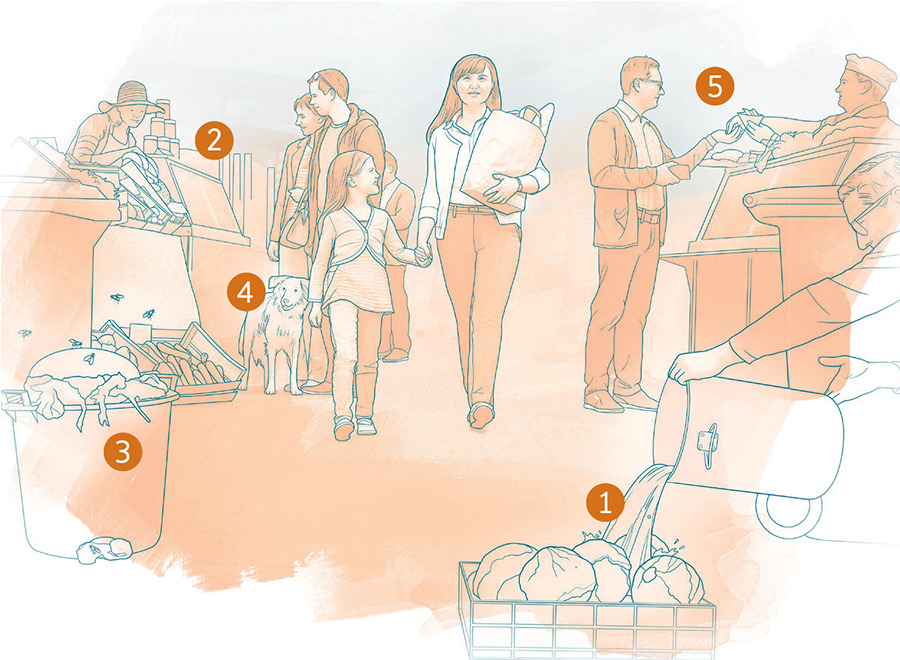
MANY ancient cities were protected by massive walls. If an enemy breached just a small section of a wall, the safety of the entire city was at risk. Your body is like a walled city. How you care for your defenses has much to do with how healthy you are. Consider five elements that can expose you to disease and how you can put up the best possible defenses.

A woman and her daughter walk through a market

1 WATER

THE THREAT: Harmful organisms can “march” straight into your body by way of contaminated water.

YOUR DEFENSE: The best defense is to protect your water supply from contamination. If you know that your water supply is contaminated or suspect that it is, you can treat the water at home to make it safe. * Store potable water in a closed vessel, and dispense it hygienically with a clean ladle or through a tap. Never put your hands into a clean water supply. If possible, you should try to live in a community that properly disposes of human waste so that it does not contaminate local water sources.

2 FOOD

THE THREAT: Harmful organisms can be present in or on your food.

YOUR DEFENSE: Contaminated food may look fresh and nutritious. So get into the habit of thoroughly washing all fruits and vegetables. Ensure that food utensils, kitchen surfaces, and your hands are clean when preparing or serving food. Some foods require cooking at a certain temperature in order to destroy dangerous microbes. Beware of food that is discolored or has an unpleasant odor or taste—signs that an army of microorganisms could be waiting for you. Refrigerate unused food as soon as possible. Avoid preparing food for others when you are sick. *

 3 INSECTS

THE THREAT: Some insects can infect you with the harmful microorganisms that live inside them.

YOUR DEFENSE: Limit contact with disease-carrying insects by staying indoors when they are active or by wearing protective clothing, such as long sleeves and long trousers. Sleep under treated insect nets, and use personal insect repellent. Eliminate containers of stagnant water where mosquitoes could breed. *

4 ANIMALS

THE THREAT: Microbes that live harmlessly inside an animal can threaten your health. If you are bitten or scratched by a pet or another animal or exposed to its feces, you could be at risk.

YOUR DEFENSE: Some people choose to keep their animals outside the house to minimize contact with them. Wash your hands after touching a domestic animal, and avoid all contact with wild animals. If you are bitten or scratched, wash the wound thoroughly and seek a doctor’s advice. *

5 PEOPLE

THE THREAT: Some germs can invade your body by riding on tiny droplets in someone’s cough or sneeze. They can also spread through skin contact, such as hugging or shaking hands. Microorganisms from other people may lurk on such items as doorknobs, handrails, telephones, remote controls, or computer screens and keyboards.

YOUR DEFENSE: Do not share personal items, such as razors, toothbrushes, or towels. Avoid contact with body fluids from animals or from other people, including blood and products derived from blood. And do not underestimate the benefits of washing your hands thoroughly and frequently. It is perhaps the most effective way you can stop the spread of infection.

If possible, stay home when you are sick. The U.S. Centers for Disease Control and Prevention recommends that you cough or sneeze into a tissue or your sleeve, but not into your hands.

An ancient proverb states: “The shrewd one sees the danger and conceals himself.” (Proverbs 22:3) How true are those words today in a world plagued with potentially dangerous diseases! So inform yourself by consulting local health services, and conceal yourself from danger by practicing good hygiene. Bolster your defenses, and reduce the risk of disease!

                                    DONATE BUTTON

from Blogger http://meekspaceng.blogspot.com/2021/01/protect-yourself-from-disease.html

Ways to Improve Your Health

Related Topics:

COVER SUBJECT | IMPROVE YOUR HEALTH​—5 THINGS YOU CAN DO TODAY

Ways to Improve Your Health

WHO wants to be sick? At the very least, an illness is an inconvenience and an expense. You not only feel bad, but when you are sick, you may not be able to go to work or school, earn any money, or look after your family. You may even need someone to look after you, and you may have to pay for expensive medicines and treatment.

Well has it been said that “Prevention is better than cure.” Some illnesses cannot be avoided. Still, there is much you can do to slow down or even prevent the onset of illness. Consider five things that you can do today to get on the road to better health.

1 PRACTICE GOOD HYGIENE

Items used for good physical and dental hygiene

According to the Mayo Clinic, “one of the best ways to avoid getting sick and spreading illness” is to wash your hands. One of the easiest ways to catch a cold or influenza is to rub your nose or your eyes when your hands have been contaminated by germs. Your best defense against such contamination is to wash your hands regularly. Good hygiene can also prevent the spread of more serious conditions, such as pneumonia and diarrheal diseases, which every year cause the death of over two million children under the age of five. Even the spread of deadly Ebola can be minimized by the simple habit of washing hands.

There are certain times when hand washing is particularly important to protect your own health and that of others. You should wash your hands:

  • After using the toilet.

  • After changing diapers or helping a child to use the toilet.

  • Before and after treating a wound or a cut.

  • Before and after being with someone who is sick.

  • Before preparing, serving, or eating food.

  • After sneezing, coughing, or blowing your nose.

  • After touching an animal or animal waste.

  • After handling garbage.

And do not take it for granted that you are cleaning your hands properly. Studies have shown that a large percentage of those who use public toilets do not wash their hands afterward or do not wash them correctly. How should you wash your hands?

  • Wet your hands in clean running water and apply soap.

  • Rub your hands together to make a lather, not forgetting to clean your nails, your thumbs, the backs of your hands, and between your fingers.

  • Keep rubbing for at least 20 seconds.

  • Rinse in clean running water.

  • Dry with a clean cloth or a paper towel.

Such measures are simple but can avert illness and save lives.

2 USE A SAFE WATER SUPPLY

A glass of clean water and pieces of lemon

Obtaining sufficient clean water for one’s family is a regular chore in some countries. Yet, access to clean water can become a concern in any part of the world when a main supply that is usually good to drink becomes contaminated as a result of a flood, a storm, a pipe break, or some other issue. If water does not come from a safe source or is not stored correctly, it can cause parasite infestation, as well as cholera, life-threatening diarrhea, typhoid, hepatitis, and other infections. Unsafe drinking water is one of the causes of an estimated 1.7 billion cases of diarrheal disease every year.

There is much you can do to slow down or prevent the onset of illness

Cholera is most often contracted when a person drinks water or eats food that is contaminated with fecal matter from infected people. What steps can you take to protect yourself, even in the immediate aftermath of a disaster, from this and other types of water contamination?

  • Ensure that all your drinking water​—including the water used for brushing teeth, making ice, washing food and dishes, or cooking—​comes from a safe source, such as an adequately treated public supply or sealed bottles from a reputable firm.

  • If there is any possibility that your piped supply has been contaminated, boil your water before use or treat it with an appropriate chemical product.

  • When using chemicals, such as chlorine or water-purifying tablets, follow the maker’s directions carefully.

  • Use quality water filters, if available and affordable.

  • If no water-treatment products are available, add household bleach, eight drops per gallon of water (two drops per liter), mix well, and then let the water stand for 30 minutes before using it.

  • Always store treated water in clean, covered containers to protect it from possible recontamination.

  • Ensure that any vessel used to take water from your stored supply, such as a ladle, is clean.

  • Handle water containers with clean hands, and do not dip your hands or fingers into water used for drinking.

3 WATCH WHAT YOU EAT

A variety of wholesome foods from different food groups

Good health is impossible without good nutrition, and for good nutrition you need a healthy, balanced diet. You may need to consider your intake of salt, fats, and sugar, and you should watch your portion sizes. Include fruits and vegetables in your diet, and vary what you eat. Reading the packaging will help you to select whole-grain foods when buying bread, cereals, pasta, or rice. These are richer in nutrients and fiber than the alternatives made from refined grain. As for proteins, eat small and lean portions of meat and poultry and try to eat fish a couple of times a week, if possible. In some lands it is also possible to find protein-rich foods from vegetable sources.

If you eat too many sugars and solid fats, you risk becoming overweight. To minimize this risk, drink water instead of sweet beverages. Eat more fruit instead of sugary desserts. Limit your intake of solid fats from such items as sausages, meat, butter, cakes, cheese, and cookies. And instead of using solid fats for cooking, you may want to use healthier oils.

Too much salt, or sodium, in the diet can raise your blood pressure to an unhealthy level. If this is your problem, use the information on food packaging to keep your sodium intake low. Instead of salt, use herbs and spices to flavor your meals.

How much you eat can be as important as what you eat. So, while enjoying your food, do not keep eating after you are no longer hungry.

An issue tied to nutrition is the risk of food poisoning. Any food can poison you if it is not prepared and stored properly. Every year, 1 out of every 6 Americans falls sick from food poisoning. Most recover without lasting ill effects, but some die from it. What can you do to minimize the risk?

  • Vegetables grow in soil that may have been treated with manure, so wash these items carefully before preparing them.

  • Wash your hands, cutting board, utensils, dishes, and countertops with hot, soapy water before preparing each item.

  • To avoid cross-contamination, never put food on a surface or plate that was previously in contact with raw eggs, poultry, meat, or fish, without first washing that surface.

  • Cook until the food reaches the right temperature, and promptly refrigerate any perishable items that are not going to be eaten immediately.

  • Discard perishable items left at room temperature for more than two hours or one hour if air temperature exceeds 90 degrees Fahrenheit (32°C).

4 STAY PHYSICALLY ACTIVE

A soccer ball and a pair of soccer shoes

Regardless of your age, you need regular physical activity to stay in good shape. Many people today do not exercise enough. Why is exercise important? Staying physically active can help you to:

  • Sleep well.

  • Stay mobile.

  • Maintain strong bones and muscles.

  • Maintain or achieve a healthy weight.

  • Lower your risk of suffering from depression.

  • Lower your risk of premature death.

If you do not stay physically active, you are more likely to:

  • Suffer from heart disease.

  • Suffer from type 2 diabetes.

  • Develop high blood pressure.

  • Develop high cholesterol.

  • Suffer a stroke.

The kind of physical activity that is right for you depends on your age and your health, so it would be wise to consult your doctor before beginning any new exercise program. According to various recommendations, children and adolescents should get at least 60 minutes of moderate-to-vigorous activity every day. Adults should get 150 minutes of moderate activity or 75 minutes of vigorous activity every week.

Choose an activity that is fun. You might consider basketball, tennis, soccer, brisk walking, cycling, gardening, chopping wood, swimming, canoeing, jogging, or other aerobic exercise. How can you tell whether an activity is moderate or vigorous? A general guide would be that moderate activity makes you sweat, but more vigorous exercise makes it hard for you to hold a conversation while doing it.

5 GET ENOUGH SLEEP

A quiet and relaxing bedroom

The amount of sleep needed varies from person to person. Most newborns sleep for 16 to 18 hours a day, toddlers about 14 hours, and preschoolers about 11 or 12. School-age children generally need at least 10 hours of sleep, adolescents perhaps 9 or 10, and adults from 7 to 8.

Getting the right amount of rest should not be considered optional. According to experts, sufficient sleep is important for:

  • Growth and development in children and teenagers.

  • Learning and retention of new information.

  • Maintaining the right balance of hormones that impact metabolism and weight.

  • Cardiovascular health.

  • Disease prevention.

Insufficient sleep has been linked to obesity, depression, heart disease, diabetes, and tragic accidents. Surely these give us good reason to want to get enough rest.

So, what can you do if you realize that you have a problem getting enough sleep?

  • Try to go to bed and get up at the same time every day.

  • Make your bedroom quiet, dark, relaxing, and neither too warm nor too cold.

  • Do not watch TV or use gadgets while in bed.

  • Make your bed as comfortable as possible.

  • Avoid heavy meals, caffeine, and alcohol before bedtime.

  • If after applying these suggestions you still suffer from insomnia or other sleep disorders​—such as excessive daytime sleepiness or gasping for breath while sleeping—​you may want to consult a qualified health-care professional.

                                    DONATE BUTTON

from Blogger http://meekspaceng.blogspot.com/2021/01/ways-to-improve-your-health.html

Wash and Dry Your Hands!

Related Topics:

Wash and Dry Your Hands!

HOW do we catch colds and other infections? According to the U.S. Association for Professionals in Infection Control and Epidemiology, at least 80 percent of such ailments are transmitted by our hands, not through the air. In fact, hand washing is generally considered to be the single most important way to prevent the spread of illness. Yet, many do not always wash after using the toilet or blowing their nose or before handling food. Of course, many others always wash their hands at such times. But the potential for infection does not disappear after a quick, perfunctory job of hand washing.

Drying hands properly can be equally important. Researchers at the University of Westminster in England found that many people do not dry their hands thoroughly after washing, especially when using hot-air dryers. Many complete drying by wiping their hands on their clothes. This can spread any dangerous microorganisms left on the hands. According to the researchers, it is best to dry hands completely, preferably using disposable paper towels or a clean, unused cloth towel.

The U.S. Centers for Disease Control and Prevention offers the following hand-washing advice:

• Always use warm running water and mild soap. If forced to use a basin instead of running water, clean and disinfect it each time it is used. Premoistened towelettes do not effectively clean hands.

• Rub hands together vigorously until a soapy lather appears, and continue rubbing for at least 15 seconds. Scrub the tops and palms of the hands as well as between fingers and under fingernails.

• Rinse hands under warm running water.

• Dry with a clean disposable, or single-use, towel, and avoid touching the faucet or towel holder with clean hands.

• Turn the faucet off using the towel as a barrier to keep from touching the handle.

• Children should wash standing at a height where their hands can hang freely under the running water. Assist the child to perform all the above steps, and then wash your own hands.

                                    DONATE BUTTON 

from Blogger http://meekspaceng.blogspot.com/2021/01/wash-and-dry-your-hands.html

Protecting Your Family From the Flu

Protecting Your Family From the Flu

In Jesus’ prophecy concerning the end of the present system of things, he foretold “outbreaks of disease in many places.” (Luke 21:11, The New Testament in Plain English) The flu, or influenza, has proved to be one such disease.

THE flu is caused by a virus, which is a microscopic agent that infiltrates living cells and commandeers their machinery to reproduce more viruses. The flu virus, which attacks the respiratory system, is passed from one person to another primarily in droplets of bodily fluids expelled when the infected person sneezes, coughs, or even talks. A pandemic occurs when an outbreak affects many people over a wide area.

Viruses affect not only humans but also animals and birds. Flu viruses are categorized as types A, B, or C. Type A is the most common cause of influenza. Virus strains are classified mainly according to two proteins found on the surface of the virus: hemagglutinin (H) and neuraminidase (N).

The biggest concerns regarding flu viruses are that they may reproduce very rapidly with constantly changing variations and that different strains can combine and produce a new strain. If a strain is sufficiently unique, the human immune system may have no defenses against it.

The flu is usually more common during the colder months. Recent research indicates that at cool temperatures the outer membrane of a virus becomes a protective gel that prolongs the survival of the virus in the air but then melts in the higher temperatures of the human respiratory tract, causing infection. Cold air does not cause viral infections, but it can create the setting that helps them to spread.

Measures of Protection

Recognizing the need to be prepared, many governments have action plans already  in place. But what can you do? Let’s review three basic protective steps:

Strengthen the body: Make sure that your family gets sufficient sleep and eats foods that will help the body strengthen its defenses. Your diet should emphasize fresh fruits and vegetables, whole grains, and lean proteins, which supply the amino acids needed to build up the immune system.

Create an environment unfriendly to germs: To the extent possible, keep your counters and tables thoroughly clean daily. Wash cooking and eating utensils after every use, and regularly wash bedclothes. Disinfect things that people touch: doorknobs, telephones, remote controls. Maintain good ventilation, if possible.

Practice good habits of personal cleanliness: Wash your hands diligently with soap and water or with an alcohol-based hand cleaner. (If practical, carry a small bottle of hand sanitizer with you.) Try not to share towels  with anyone for drying hands or face, not even with other family members.

Do not touch your eyes, nose, or mouth with unwashed hands. If possible, use disposable tissues to cover your mouth and nose when coughing or sneezing and throw them away immediately. Avoid sharing devices that can readily spread germs, such as telephones. Children need to be thoroughly trained in these practices. Such habits are good all the time but especially so during the flu season.

Show Consideration for Others

It is possible to start infecting others a day before you show any symptoms and up to five days after getting sick. Symptoms are similar to the common cold but much more intense. They include fever (usually high), headache, extreme tiredness, dry cough, and muscle aches. Runny nose and stomach symptoms​—such as nausea, vomiting, and diarrhea—​are more common in children than in adults. If you have symptoms, stay home if possible and avoid infecting others.

Get plenty of rest and drink lots of fluids. Antiviral drugs can be helpful but only if taken soon after the onset of symptoms. Aspirin (acetylsalicylic acid) should not be given to children who have the flu. Seek emergency medical care if you show pneumonialike symptoms, such as trouble breathing, chest pain, or severe persisting headache.

Having the flu can be an unnerving event. Being prepared may help you get through it better. But more than that, you can look forward to the time when, as the Bible promises, “no resident will say: ‘I am sick.’”​—Isaiah 33:24.

[Box on page 27]

A SEVERE FORM OF FLU

The flu that was first identified in Mexico in 2009 is of the H1N1 variety, similar to the Spanish flu of 1918, which killed tens of millions. However, it also contains elements found in the viruses that affect pigs and birds.

[Box/​Pictures on page 28, 29]

6 WAYS TO PROTECT YOURSELF AND OTHERS

1. Cover that cough

2. Wash hands

3. Ventilate your home

4. Keep it clean

5. If sick, try to stay home

6. Avoid personal contact

[Box/​Picture on page 29]

WHEN A HEALTH EMERGENCY OCCURS

First, follow instructions of health officials. Do not panic or overreact. Reinforce the good habits discussed here. If possible, avoid crowds of people. If you are sick, an appropriate face mask may be helpful. Clean your hands frequently. Have about two weeks’ worth of nonperishable food items on hand as well as health and hygiene products in case you cannot get to the store.

When at work, places of worship, or any place where you are around a lot of people, follow the suggestions provided. Also, try to keep your surroundings well ventilated.

                      
             DONATE BUTTON 

//s7.addthis.com/js/300/addthis_widget.js#pubid=ra-5c029944bb775969

from Blogger http://meekspaceng.blogspot.com/2021/01/protecting-your-family-from-flu.html

Sample Conversations – January/February 2021


APPLY YOURSELF TO THE FIELD MINISTRY

Sample Conversations

Initial Call

Question: Does God listen to prayers?

Scripture: Ps 65:2

Link: What can we pray about?

FIND THIS SCRIPTURE IN THE TEACHING TOOLBOX:

Return Visit

Question: What can we pray about?

Scripture: 1Jo 5:14

Link: How does God answer our prayers?

FIND THIS SCRIPTURE IN THE TEACHING TOOLBOX:

Memorial Invitation Campaign (February 27–March 27)

“We’re here [or calling or writing] to invite you to a special event that will be attended by millions of people. It’s the anniversary of Jesus’ death.” Hand [or text or mail] the person an invitation. “This invitation shows the time and location of the event in our area [or how you can attend online]. We also invite you to a special talk the weekend before.”

Link When Interest Is Shown: Why did Jesus die?

Initial Call Video


Initial Call Video: (5 min.) Discussion. Play the video Initial Call: Prayer​—Ps 65:2Stop the video at each pause, and ask the questions that appear in the video.


How would you respond if the person said that no one listens to our prayers?

It could be asked if he has always thought like this, that gives the person the opportunity to expose if not because he does not believe that.

What publication of the teaching kit did you offer the person?

Well, I would use the good news brochure that in lesson 12 the question of how we can approach God is solved, it contains answers to many questions about prayer that a householder may have.

                                   DONATE BUTTON 

Design a site like this with WordPress.com
Get started