
See Also Related Articles:
|
|
|
And Also Related Articles:
TREASURES FROM GOD’S WORD
Seasonal Festivals With Meaning for Us
The Passover and the Festival of Unleavened Bread (Festival of Unfermented Cakes) (Le 23:5, 6; it-1 826-827)
The first day of the Festival of Unfermented Cakes was a solemn assembly, also a sabbath. On the second day, Nisan 16, a sheaf of the firstfruits of the barley harvest, the first crop to ripen in Palestine, was brought to the priest. Prior to this festival no new grain, bread, or roasted grain from the new harvest could be eaten. The priest offered such firstfruits to Jehovah symbolically by waving a sheaf of the grain to and fro, while a sound ram in its first year was offered as a burnt offering along with a grain offering moistened with oil and a drink offering. (Le 23:6-14) There was no command to burn any of the grain or its flour on the altar, as was practiced later by the priests. Not only was there a public or national firstfruit offering but provision was also made for each family and every individual who had a possession in Israel to offer thanksgiving sacrifices during this festive occasion.—Ex 23:19; De 26:1, 2; see FIRSTFRUITS.
The first day of the Festival of Unfermented Cakes was a solemn assembly, also a sabbath. On the second day, Nisan 16, a sheaf of the firstfruits of the barley harvest, the first crop to ripen in Palestine, was brought to the priest. Prior to this festival no new grain, bread, or roasted grain from the new harvest could be eaten. The priest offered such firstfruits to Jehovah symbolically by waving a sheaf of the grain to and fro, while a sound ram in its first year was offered as a burnt offering along with a grain offering moistened with oil and a drink offering. (Le 23:6-14) There was no command to burn any of the grain or its flour on the altar, as was practiced later by the priests. Not only was there a public or national firstfruit offering but provision was also made for each family and every individual who had a possession in Israel to offer thanksgiving sacrifices during this festive occasion.—Ex 23:19; De 26:1, 2; see FIRSTFRUITS.
The Festival of Weeks (Pentecost) (Le 23:15, 16; it-2 598 ¶2)
The Israelites were not allowed to begin the harvest until the firstfruits of the barley had been presented to Jehovah on Nisan 16. Therefore, in Deuteronomy 16:9, 10 the instructions are: “From when the sickle is first put to the standing grain you will start to count seven weeks. Then you must celebrate the festival of weeks to Jehovah your God.” Every male was required to attend, and it is also stated in connection with this festival: “You must rejoice before Jehovah your God, you and your son and your daughter and your man slave and your slave girl and the Levite who is inside your gates and the alien resident and the fatherless boy and the widow, who are in your midst, in the place that Jehovah your God will choose to have his name reside there.” (De 16:11) The Passover was a close family observance. The Festival of Harvest, or Pentecost, called for a more open and hospitable liberality, in this sense resembling the Festival of Booths.
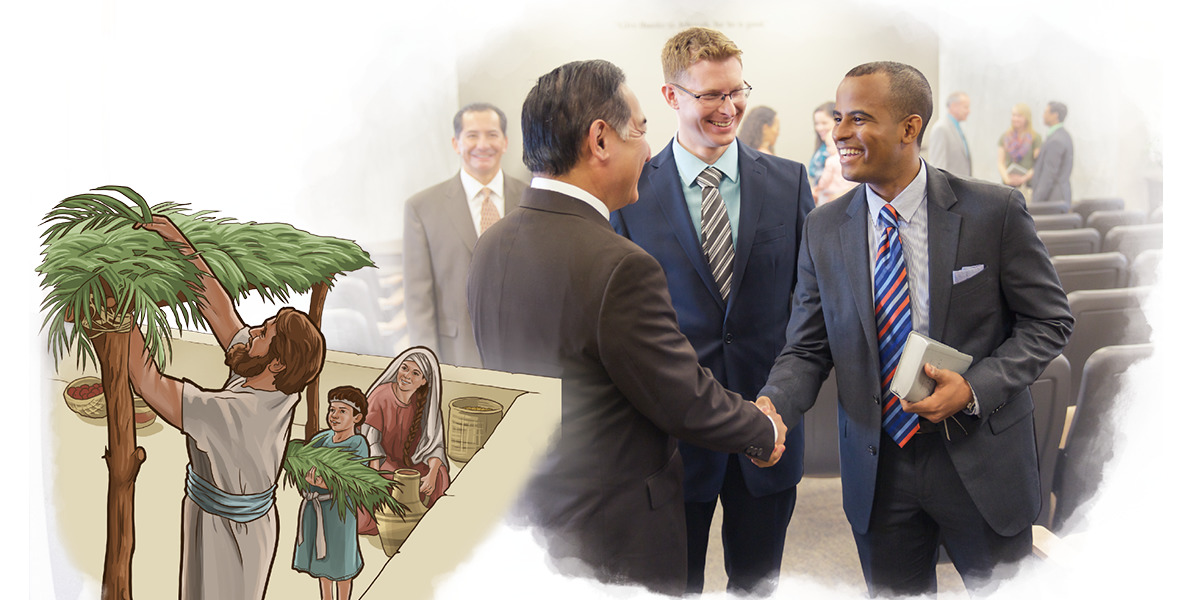
The Festival of Booths (Le 23:34; w14 5/15 29 ¶11)
11 Jehovah’s organization is acting in our best interests when it urges us to heed the apostle Paul’s counsel: “Let us consider one another so as to incite to love and fine works, not forsaking our meeting together, as some have the custom, but encouraging one another, and all the more so as you see the day drawing near.” (Heb. 10:24, 25) Annual festivals and other gatherings for worship built the Israelites up spiritually. Moreover, such events as the special Festival of Booths in Nehemiah’s day were joyful occasions. (Ex. 23:15, 16; Neh. 8:9-18) We derive similar benefits from our meetings, assemblies, and conventions. Let us take full advantage of these provisions for our spiritual health and happiness.—Titus 2:2.
We can be “nothing but joyful” as we meditate on the meaning of ancient Jewish festivals and how Jehovah’s promises will be fulfilled.—De 16:15.


 MeekSpaceNG