Digging for Spiritual Gems – John 3-4
Week of September 10-16, 2018
Joh 3:29: How are we to understand this verse? (“the friend of the bridegroom” study note on Joh 3:29, nwtsty) John the Baptist likened himself to “the friend of the bridegroom.” In this case, Jesus was the bridegroom and the disciples as a class made up his symbolic bride. Preparing the way for the Messiah, John the Baptist introduced the first members of “the bride” to Jesus Christ. (Joh 1:29, 35; 2Co 11:2; Eph 5:22-27; Re 21:2, 9) “The friend of the bridegroom” accomplished his objective by making successful introductions; he was then no longer a principal figure. Likewise, John said of himself in relation to Jesus: “That one must keep on increasing, but I must keep on decreasing.”—Joh 3:30.
Joh 1:29 How might the Samaritan woman have understood Jesus’ expression “living water,” but what was Jesus referring to? (“living water” study note on Joh 4:10, nwtsty) This Greek expression is used in a literal sense to refer to flowing water, spring water, or freshwater from a well supplied by springs. This is in contrast with stagnant water from a cistern. At Le 14:5, the Hebrew expression for “running water” is literally “living water.” At Jer 2:13 and 17:13, Jehovah is described as “the source [or, “spring”] of living water,” that is, life-giving symbolic water. When speaking with the Samaritan woman, Jesus used the term “living water” figuratively, but it appears that she initially took his words literally.—Joh 4:11; see study note on Joh 4:14.
What does this week’s Bible reading teach me about Jehovah?
Joh 3:2: Shows that Jehovah is the one who give the power, so a person can performs signs or miracles like he did with Jesus. Jehovah is the source of all power and should be shown honor and praise. (Acts 10:38, Re 4:11, Isa 40:26)
Joh 3:5: God announced that he had brought forth Jesus as a spiritual son at Mt 3:16-17 and having the prospect of entering into the heavenly Kingdom. Later Jehovah at Pentecost 33 C.E., holy spirit was poured out on other baptized ones, and they will thus be born again as spiritual sons of God. (Acts 2:1-4)
Joh 3:16-17: Jehovah loves us so much he was willing to sacrifice his beloved Son Jesus to save us from sin and so we can gain everlasting life. This unique expression of divine love, God counterbalanced the death sentence that sheer justice would have required.
Joh 3:35: Jehovah is a God of love and loves his only begotten Son Jesus. We can be sure that Jehovah loves all his faithful children. (1Jo 4:8)
Joh 3:36: Jehovah does have a wrath or anger for those who do not exercises faith in him who he sent and those who do not do his will. (Eph 3:5-6’ 2Th 1:7-9)
Joh 4:10: Jehovah is the greatest gift giver to all of his faithful servants and teaches us this in this verse and Jehovah will give it freely if we asked. Jas 1:17 “Every good gift and every perfect present is from above, coming down from the Father” (Lu 11:9-13 give HS)
Joh 4:23: Jehovah wants to be worship with truth not made up ways.For our worship to be acceptable to God it must conform to the truth revealed in the pages of the Bible and it must be guided by his holy spirit.
Joh 4:24: Jehovah is a Spirit person, A spirit has a form of life that differs greatly from that of humans, and it is invisible, it’s body, “a spiritual one,” that is far superior to “a physical body.” (1Co 15:44; Joh 1:18)
Joh 4:46-53: Jesus demonstrated that the power of God to heal through him is not bound by distance. As a result the man and “his whole household believed.” We to can have confident that Jehovah will keep his word at Isa 33:24 “no resident will say : ”I am sick.”” (De7:15; Re 21;3-4)
What other spiritual gems have you discovered in this week’s Bible reading?
Joh 3:2: A Pharisee and a teacher Nic-o-de-mus recognized that Jesus was not God the Almighty but a teacher sent by God and signs that he performs was because of God. This shows that Jesus is not part of a trinity. (Act 2:22)
Joh 3:5: The Greek word for “flesh” (sarx) is here used to refer to a living being with fleshly or human heritage, along with its limitations. Show those who are not chosen by Jehovah cannot enter the heavenly Kingdom of God. Flesh cannot go to heaven as shown at 1Co 15:50.
Joh 3:13: Jesus used the expression “Son of man” to refer to himself, emphasizing that he was truly human, born from a woman, and that he was a fitting human counterpart to Adam, having the power to redeem humankind from sin and death. (Ro 5:12, 14-15)
Joh 3:13: The phrase “no man has ascended into heaven,” show that faithful one like David, Abraham and many other did not go to heaven but are waiting asleep for the resurrection and do not have a immoral soul. (Ec 9:5, 10 John 11:11-12; Mt 9:24, Ps 13:3)
Joh 3:13, 31: Show Jesus “descended from heaven” in that he had previously life in the spirit realm with his Father. (Ga 4:4; Heb 2:9, 14, 17)
Joh 3:15: If a Christian allows anything or anyone to destroy his brotherly love, he is walking in spiritual darkness, not knowing where he is going.
Joh 3:16: Another scripture that show Jesus is not part of a trinity. For we see it was God who gave the world something, not Jesus. So those who would exercise faith in Jehovah gift of Jesus could gain everlasting life if they remain to the end faithful. Mt 24:13.
Joh 3:16, 18: Jesus is rightly called “the only-begotten Son of God. The Greek word translated “only-begotten” has been defined as “single of its kind, only,” or “unique.” Jesus is unique in that he is the sole direct creation of his Father. He is the firstborn Son. In fact, he is “the firstborn of all creation.” (Col. 1:15) He is “the beginning of the creation by God.” (Rev. 3:14)
Joh 3:28-30: John the Baptizer show that he was not jealous or envy because he was going to decrease and Jesus was going to increase. May we learn from John not to compare the works of what we do to others, for Jehovah loves us all for our whole soul work that we can do.
Joh 3:35: Another scripture that show Jesus is not part of a trinity. We see that Jehovah loves the Son; one is show affection for another. Also we see the Jehovah the Father is giving the Son authority. Again we see two individuals and no third person.
Joh 4:1-2; 3:22: Jesus “did baptizing,” while at John 4:2, the record states that “Jesus himself did no baptizing” is not a Contradictions. Jesus’ disciples who performed the actual baptisms in his name and under his direction, so Jesus could claim that he did baptizing.
Joh 4:7-9: Jesus, set the example on treated woman with respect and consideration and was neither racially prejudiced nor gender prejudiced. May we do the same as Jesus did, for we are all of the same kind or family.
Joh 4:14: God’s Word uses water as a symbol of God’s provisions for restoring mankind to perfect life by Jesus’ ransom sacrifice. As we “come to know” Jehovah God and Jesus Christ and acting on that knowledge with faith, we can have the prospect of gaining everlasting life. (Joh 17:3)
Joh 4:17-18: Jesus talk to a woman who was then living with a man who was not her husband a type of association that the Jew look down on. It is heartwarming that Jehovah God and his Son will help those who have problems, may we do the same.
Joh 4:23-24: For our worship to be acceptable to Jehovah it must conform to the truth revealed in the pages of the Bible and it must be guided by the Holy Spirit. Truth does not have tens of thousands of religious denominations worldwide as shown in World Christian Encyclopedia 2001.
Joh 4:25-26: Jesus reveals to the Sa-mar’-i-tans woman that Jesus is the Messiah and not God. Messiah means “anointed” or “anointed one,” and being anointed by another. In this case Jesus was anointed by Jehovah at Matt. 3:13-17.
Joh 4:34: Another scripture that show Jesus is not part of a trinity. We see Jesus has a purpose in life and that is to do God’s will and the work that been assign to him. One is greater because he assign the work to do. NO Trinity here but two separate individuals.
Joh 4:42: This expression “savior of the world”, appearing here and at 1Jo 4:14, which indicates that Jesus would save from sin those from “the world” of mankind who demonstrate faith to the end.
John 3-4
Digging for Spiritual Gems: (8 min.)
Joh 3:29—How are we to understand this verse? (“the friend of the bridegroom” study note on Joh 3:29, nwtsty)
the friend of the bridegroom: In Bible times, a close acquaintance of the bridegroom acted as his legal representative and played a key role in making arrangements for the marriage. He was viewed as the one who brought the bride and bridegroom together. On the wedding day, the bridal procession would arrive at either the house of the bridegroom or that of his father, where the marriage feast would be held. During this feast, the friend of the bridegroom would be happy when he heard the voice of the bridegroom as he talked with his bride, since the friend would feel that he had successfully done his duty. John the Baptist likened himself to “the friend of the bridegroom.” In this case, Jesus was the bridegroom and the disciples as a class made up his symbolic bride. Preparing the way for the Messiah, John the Baptist introduced the first members of “the bride” to Jesus Christ. (Joh 1:29, 35; 2Co 11:2; Eph 5:22-27; Re 21:2, 9) “The friend of the bridegroom” accomplished his objective by making successful introductions; he was then no longer a principal figure. Likewise, John said of himself in relation to Jesus: “That one must keep on increasing, but I must keep on decreasing.”—Joh 3:30.
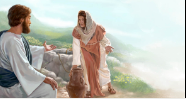
Joh 4:10—How might the Samaritan woman have understood Jesus’ expression “living water,” but what was Jesus referring to? (“living water” study note on Joh 4:10, nwtsty)
living water: This Greek expression is used in a literal sense to refer to flowing water, spring water, or freshwater from a well supplied by springs. This is in contrast with stagnant water from a cistern. At Le 14:5, the Hebrew expression for “running water” is literally “living water.” At Jer 2:13 and 17:13, Jehovah is described as “the source [or, “spring”] of living water,” that is, life-giving symbolic water. When speaking with the Samaritan woman, Jesus used the term “living water” figuratively, but it appears that she initially took his words literally.—Joh 4:11; see study note on Joh 4:14.
What has this week’s Bible reading taught you about Jehovah?
*** wp18 No. 2 p. 13 You Can Live Forever on Earth ***
The rebellion in Eden did not thwart God’s original purpose for mankind and the earth. God’s perfect love and sense of justice moved him to provide a way to free us from the bondage of inherited sin and death. The apostle Paul explained: “The wages sin pays is death, but the gift God gives is everlasting life by Christ Jesus our Lord.” (Romans 6:23) Lovingly, God “gave his only-begotten Son [Jesus Christ], so that everyone exercising faith in him might not be destroyed but have everlasting life.” (John 3:16) By offering himself willingly as a ransom sacrifice, Jesus redeemed all that was lost through Adam.
*** w18 September p. 14 pars. 8-9 Keep Displaying Love—It Builds Up ***
8 True Christians also have this reason to be drawn to God’s love: He “loved the world so much that he gave his only-begotten Son, so that everyone exercising faith in him might not be destroyed but have everlasting life.” (John 3:16) What love Jesus also showed in giving his life for us! And what a powerful motivation that love is for us! God’s Word promises that not even “tribulation or distress” can “separate us from the love of the Christ.”—Rom. 8:35, 38, 39.
9 When we grapple with trials that are physically, emotionally, or spiritually draining, the compelling force of Christ’s love can give us the strength to endure. (Read 2 Corinthians 5:14, 15.) Jesus’ love has the power to sustain us and to motivate us not to give up, even in the face of such trials as disasters, persecution, personal disappointments, or gnawing anxiety.
*** wp17 No. 2 p. 5 God’s Greatest Gift—Why So Precious? ***
Some gifts are precious because they represent a great sacrifice made by the giver. When a person is willing to part with something that is of great value to him and gives it to us, we especially treasure the gift because of the sacrifice.
God “gave his only-begotten Son.” (John 3:16) He could not have offered us anyone dearer to him. During the aeons that God was creating the universe, Jesus worked alongside him and became “the one he was especially fond of.” (Proverbs 8:30) Jesus is God’s “beloved Son” and “the image of the invisible God.” (Colossians 1:13-15) Never has a closer bond existed between two intelligent beings.
Yet, God “did not even spare his own Son.” (Romans 8:32) Jehovah gave his very best for us. No gift has cost him more.
*** w17 October pp. 7-8 par. 3 “Love . . . in Deed and Truth” ***
3 After Adam and Eve rebelled, Jehovah made his greatest expression of unselfish love. He arranged to ransom the future descendants of those two rebels, certain that some of them would respond favorably to His love. (Gen. 3:15; 1 John 4:10) In fact, from the moment that Jehovah promised a future Savior, He viewed this sacrifice as already made. Then, some 4,000 years later, Jehovah at great personal cost sacrificed his only-begotten Son for the world of mankind. (John 3:16) How grateful we are for Jehovah’s unselfish love!
*** wp16 No. 2 p. 7 Why Did Jesus Suffer and Die? ***
By Jesus’ sacrificial death, God opened the way to endless life in Paradise on earth. Note Jesus’ words as recorded at John 3:16: “God loved the world so much that he gave his only-begotten Son, so that everyone exercising faith in him might not be destroyed but have everlasting life.” Jesus’ death is thus an expression not only of God’s unfailing justice but, more specially, of his great love for humans.
*** w16 June pp. 4-5 Jehovah “Cares for You” ***
The reason is God’s incomparable love. He loves the world so much that he has given his Son, Jesus, to rescue humans from sin and the harm that it brings to mankind. (John 3:16) In fact, the ransom accomplishes more. By means of Christ’s sacrifice, God freely forgives those whom he loves. The apostle John wrote: “If we confess our sins, he is faithful and righteous so as to forgive us our sins.” (1 John 1:9) Because of Jehovah’s forgiveness, people can continue to enjoy his friendship, and knowing this touches us deeply.
What other spiritual gems have you discovered in this week’s Bible reading?
*** w18 September p. 4 pars. 3-4 “If You Know These Things, Happy You Are if You Do Them” ***
3 We receive much good counsel and training through the Bible, our Christian publications, our websites, JW Broadcasting, and our meetings and assemblies. But according to Jesus’ words found at John 4:34, spiritual food involves more than just taking in knowledge. What more is involved? Jesus said: “My food is to do the will of him who sent me and to finish his work.”
4 To Jesus, spiritual food included acting on God’s direction. In what sense is this like food? Just as our bodies are contented and nourished when we eat a good meal, our hearts are strengthened and our faith is nourished for everlasting life when we participate in doing God’s will. How many times have you gone to a meeting for field service not feeling your best—only to finish preaching that day refreshed and invigorated?
*** wp17 No. 2 p. 7 How Will You Respond to God’s Greatest Gift? ***
Exercise faith in the ransom. “The one who exercises faith in the Son has everlasting life.” (John 3:36) What does it mean to exercise faith? It means action; to show faith in the ransom requires action. (James 2:17) What kind of action? A gift becomes yours only when you reach out and accept it. So you must reach out and accept the ransom. How? Learn how God wants you to live, and then act accordingly. Pray to God for forgiveness and a clean conscience. Approach God in full confidence that the ransom guarantees an eternal future of peace, security, and prosperity for all who exercise faith in it!—Hebrews 11:1.
*** wp16 No. 2 pp. 9-10 Should Christians Worship at Shrines? ***
In his conversation with the Samaritan woman, Jesus also mentioned that “the hour” for this change in God’s worship was “coming.” When would that be? The hour came when Jesus, by his sacrificial death, ended the Jewish system of worship based on the Law of Moses. (Romans 10:4) Yet, Jesus also said: “The hour . . . is now.” Why? Because as the Messiah, he was already gathering disciples who would obey the command he stated next: “God is a Spirit, and those worshipping him must worship with spirit and truth.” (John 4:24) What, then, does it mean to worship with spirit and truth?
When Jesus mentioned worshipping with spirit, he was not speaking of a particularly spirited, animated, or enthusiastic form of worship. Rather, he was talking about being guided by God’s holy spirit, which among other things guides our understanding of the Scriptures. (1 Corinthians 2:9-12) And the truth Jesus referred to is an accurate knowledge of Bible teachings. Therefore, rather than being rendered at any special place, our worship will be acceptable to God if it conforms to what the Bible teaches and is guided by the holy spirit.
*** w16 February p. 19 Keep On Serving Jehovah With Joy ***
Jehovah has provided the ransom sacrifice, making it possible for us to have a joyful life. Indeed, “God loved the world so much that he gave his only-begotten Son, so that everyone exercising faith in him might not be destroyed but have everlasting life.” (John 3:16) Yes, our sins can be forgiven and we can have everlasting life on the basis of faith in God’s loving provision of Jesus’ ransom sacrifice. Is that not an excellent reason to be grateful? And should not our gratitude for the ransom motivate us to serve Jehovah joyfully?
*** w16 May p. 19 par. 7 Is the Bible Still Changing Your Life? ***
7 Love moved God to offer us a precious gift—the ransom sacrifice of his beloved Son. (John 3:16) If on the basis of this priceless provision we repentantly seek Jehovah’s forgiveness when we err, we can have the confidence that our friendship with him is still intact. (Rom. 7:24, 25; 1 John 2:1, 2) Should we hesitate to avail ourselves of the benefits of the ransom because we feel unclean or sinful? Of course not! That would be like refusing to use water to wash our hands when they are dirty. After all, the ransom is provided for repentant sinners. Thanks to the ransom, then, we can enjoy a friendship with Jehovah even though we are in an imperfect state.—Read 1 Timothy 1:15.
*** w16 July p. 28 par. 8 Spread the Good News of Undeserved Kindness ***
8 We have the responsibility to make known to our fellow humans that they can come into a friendly relationship with their Creator. Before humans exercise faith in Jesus’ sacrifice, God considers them to be his enemies. The apostle John wrote: “The one who exercises faith in the Son has everlasting life; the one who disobeys the Son will not see life, but the wrath of God remains upon him.” (John 3:36) Happily, Christ’s sacrifice makes reconciliation with God possible. Paul declared: “You who were once alienated and enemies because your minds were on the works that were wicked, he has now reconciled by means of that one’s fleshly body through his death.”—Col. 1:21, 22.
*** w16 August p. 27 pars. 8-9 Do You See the Need to Train Others? ***
8 Converse with people. Jesus often spoke to individuals about the Kingdom. For instance, he carried on a lively and fruitful conversation with a woman at Jacob’s well near the city of Sychar. (John 4:5-30) He also spoke with Matthew Levi, a tax collector. The Gospels record very little of that conversation, but Matthew accepted Jesus’ invitation to be his follower. Matthew and others heard Jesus speak at some length during a feast held in Matthew’s home.—Matt. 9:9; Luke 5:27-39.
9 On another occasion, Jesus spoke in a friendly way to Nathanael, who had a negative view of people from Nazareth. However, Nathanael was moved to change his thinking. He decided to learn more about what Jesus, a man from Nazareth, was teaching. (John 1:46-51) So we have good reason to train new publishers to converse with people in a friendly, relaxed manner. Those whom we help in this way will likely be delighted to see how honesthearted people respond favorably to personal interest and kind words.
*** w16 August pp. 27-28 pars. 11-12 Do You See the Need to Train Others? ***
11 Nicodemus, a member of the Sanhedrin, became interested in Jesus’ teaching. He wanted to learn more but was afraid of what others would say if he spoke with Jesus in public. Jesus was flexible and generous with his time; he met with Nicodemus at night—away from the crowds. (John 3:1, 2) What lesson can we learn from these accounts? God’s Son set aside time to build up the faith of individuals. Should we not be diligent in making return visits and conducting Bible studies with interested ones?
12 New publishers are very likely to improve their skills as teachers of Bible truth if we work with them in the field service. We can help them to keep in mind those who show even slight interest. We can invite new publishers to accompany us when we make return visits and conduct home Bible studies. With such training and encouragement, less experienced publishers will surely want to cultivate the interest of others and conduct Bible studies on their own. They will also learn not to give up quickly but to be patient and persevere in the ministry.—Gal. 5:22; see the box “Perseverance Is Essential.”













 MeekSpaceNG