
Mark 11-12
Mr 11:17—Why did Jesus call the temple “a house of prayer for all the nations”? (“a house of prayer for all the nations” study note on Mr 11:17, nwtsty)
a house of prayer for all the nations: Of the three Gospel writers who quote Isa 56:7, only Mark includes the phrase “for all the nations [peoples].” (Mt 21:13; Lu 19:46) The temple in Jerusalem was meant to be a place where both Israelites and God-fearing foreigners could worship and pray to Jehovah. (1Ki 8:41-43) Jesus rightly condemned the Jews who used the temple for commerce, making it a cave of robbers. Their actions discouraged people of all nations from approaching Jehovah in his house of prayer, depriving them of the opportunity to come to know him.
Mr 11:27, 28—To what “things” are Jesus’ opposers referring? (jy 244 ¶7)
Shortly, Jesus and his disciples enter Jerusalem. As is his custom, Jesus goes to the temple and begins teaching. The chief priests and elders of the people, likely having in mind what Jesus did the day before to the money changers, challenge him: “By what authority do you do these things? Or who gave you this authority to do these things?”—Mark 11:28.
What has this week’s Bible reading taught you about Jehovah?
*** w18 May p. 18 par. 5 Why We “Keep Bearing Much Fruit” *** 5 Read John 15:9, 10. Our heartfelt love for Jehovah and for Jesus is an important reason why we preach the Kingdom message. (Mark 12:30; John 14:15) Jesus told his disciples not only to be in his love but to “remain in [his] love.” Why? Because living as a true disciple of Christ year after year calls for endurance. Jesus stressed the need for endurance by using forms of the word “remain” over and over in the brief passage recorded at John 15:4-10.
*** w17 December p. 22 par. 17 Parents—Help Your Children Become “Wise for Salvation” *** 17 Of course, a youth who is baptized has made a solemn dedication to Jehovah. That dedication is a promise to love God and to put his will above everything else. (Read Mark 12:30.) Jehovah does not take that promise lightly, and it should not be taken lightly by anyone who has made it. (Eccl. 5:4, 5) At an appropriate time and in a kind manner, remind your child of those facts. Before doing that, however, make good use of material that Jehovah’s organization has provided for parents. Your doing so may lay the groundwork for stressing both the seriousness and the blessings of being dedicated to Jehovah and of being a baptized Christian.
*** w16 May p. 4 pars. 6-7 Settle Differences in a Spirit of Love *** 6 Our efforts to serve God—through prayers, meeting attendance, field service, and other aspects of our worship—are in vain if we refuse to make peace with others. (Mark 11:25) We cannot be friends of God unless we are willing to forgive the shortcomings of others.—Read Luke 11:4; Ephesians 4:32.
7 Every Christian needs to think carefully and honestly about being forgiving and having peaceful relations with others. Do you forgive fellow believers freely? Are you happy to fellowship with them? Jehovah expects his servants to be forgiving. If your conscience tells you that you have improvements to make in this regard, prayerfully seek Jehovah’s help in order to make them! Our heavenly Father will hear such humble prayers and answer them.—1 John 5:14, 15.
*** w16 June p. 20 par. 9 “Jehovah Our God Is One Jehovah” *** 9 Because Jehovah is unchanging and constant regarding his will and purpose, it is clear that his fundamental requirements for true worshippers remain the same today. For our worship to be acceptable to him, we too must give him exclusive devotion and love him with our complete heart, mind, and strength. In fact, that is exactly what Jesus Christ told an inquirer. (Read Mark 12:28-31.) Let us, therefore, see how we can show by our actions that we truly understand that “Jehovah our God is one Jehovah.”
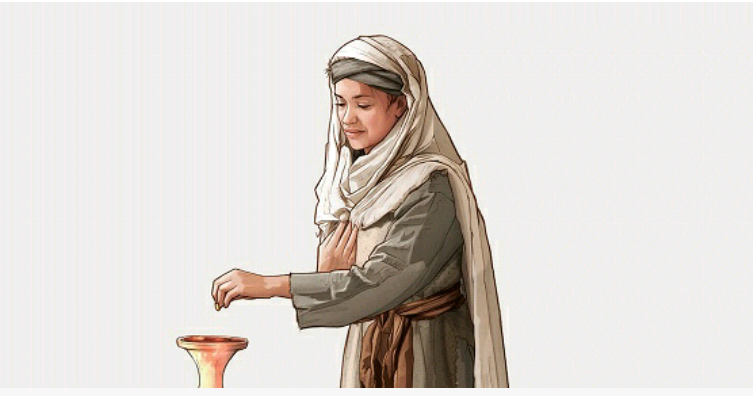
*** w16 December p. 28 par. 16 Jehovah Rewards Those Who Earnestly Seek Him *** 16 At times, we may feel that we are accomplishing little, or we might wonder whether Jehovah is pleased with our efforts. We may even doubt that we qualify to receive any kind of reward. Let us never forget, though, that “God is greater than our hearts and knows all things.” (Read 1 John 3:19, 20.) He rewards every expression of sacred service that springs from a heart motivated by faith and love, no matter how insignificant it might seem to the giver of the sacrifice.—Mark 12:41-44.
*** w15 2/15 p. 28 par. 17 Jehovah Guides Our Global Teaching Work *** 17 Clearly, we have strong evidence of God’s blessing. Of course, Jehovah does not rely on our help to accomplish his purposes. Yet, our loving heavenly Father allows us to be his “fellow workers,” thus enabling us to show our love for him and for our neighbor. (1 Cor. 3:9; Mark 12:28-31) May we take advantage of our opportunities to proclaim the Kingdom message, the most important work on earth. By all means, let us show how thankful we are that Jehovah has guided and blessed our global teaching work!
*** w15 9/15 pp. 23-24 pars. 3-4 How Can We Show That We Love Jehovah? *** 3 Love is Jehovah’s dominant attribute, so we can understand why Jesus told one inquirer that the first commandment from God is: “You must love Jehovah your God with your whole heart and with your whole soul and with your whole mind and with your whole strength.” (Mark 12:30) From Jesus’ words, we learn that love for God involves, first of all, our heart. Being halfhearted is displeasing to Jehovah. However, we note that love for God also involves our whole soul, mind, and strength. This means that genuine love for God is much more than just an emotional feeling of the heart. In addition to being heartfelt, our love for God must involve all our spiritual and physical faculties. According to the prophet Micah, that is what Jehovah wants from us.—Read Micah 6:8.
4 How can we show that we truly love our heavenly Father? We should love him unreservedly. As Jesus indicated, all our physical, emotional, and spiritual faculties need to be involved. In the preceding article, we considered four ways in which Jehovah has demonstrated his great love for his children. Let us now consider how we can demonstrate and deepen our love for Jehovah in ways that are acceptable and agreeable to him.
*** w13 6/15 p. 16 par. 19 Appreciate Jehovah’s Generosity and Reasonableness *** 19 Congregation elders strive to imitate Jehovah’s reasonableness by taking into account the circumstances of their fellow believers. Recall that Jehovah valued even the sacrifices offered by poorer Israelites. Likewise, some brothers and sisters are very limited in what they can do in the ministry, perhaps because of health problems or advanced age. What if these dear ones feel disheartened because of their limitations? The elders can kindly reassure them that Jehovah loves them for giving their best.—Mark 12:41-44.
What other spiritual gems have you discovered in this week’s Bible reading?
*** w18 January p. 23 par. 4 What Kind of Love Brings True Happiness? *** 4 “Men will be lovers of themselves,” wrote the inspired apostle. Is it wrong for us to love ourselves? No, it is normal, even necessary, to have a healthy love of self. Jehovah designed us that way. Jesus said: “You must love your neighbor as yourself.” (Mark 12:31) If we do not love ourselves, we cannot love our neighbor. We also read in the Scriptures: “Husbands should love their wives as their own bodies. A man who loves his wife loves himself, for no man ever hated his own body, but he feeds and cherishes it.” (Eph. 5:28, 29) So a proper love of self is desirable.
*** wp17 No. 6 p. 9 What Did Jesus Really Look Like? *** Religious leaders of Jesus’ day contrived ways to draw attention to themselves and underscore their authority. (Numbers 15:38-40; Matthew 23:5-7) Unlike them, Jesus instructed his apostles not to “lord it over” others. (Luke 22:25, 26) In fact, Jesus warned: “Beware of the scribes who want to walk around in robes and want greetings in the marketplaces.”—Mark 12:38.
*** w17 December p. 8 par. 2 “I Have Hope Toward God” *** 2 We have good reasons to include the resurrection as a key teaching even if we personally hope to survive the great tribulation and live on earth forever. The apostle Paul showed why the resurrection is central to our faith: “If, indeed, there is no resurrection of the dead, then Christ has not been raised up.” Had Christ not been resurrected, he would not be our ruling King, and our teaching about Christ’s rule would be in vain. (Read 1 Corinthians 15:12-19.) However, we know that Jesus was resurrected. In holding that conviction, we differ from the Jewish Sadducees, who strongly denied that the dead are raised. Even in the face of mockery, we hold firm to our belief in the resurrection.—Mark 12:18; Acts 4:2, 3; 17:32; 23:6-8.
*** w15 4/15 p. 10 par. 3 How Elders Train Others to Become Qualified *** 3 To determine to what extent a learner’s thoughts and actions are influenced by Kingdom truth, you might ask him, ‘How has your dedication to Jehovah changed the way you use your life?’ That question can lead to a meaningful conversation about what makes our sacred service whole-souled. (Read Mark 12:29, 30.) Perhaps at the end of such a conversation, you might say a prayer, asking Jehovah to give the learner the holy spirit he needs to complete his training. How upbuilding it will be for the brother to hear your heartfelt prayer in his behalf!
*** w15 9/15 p. 17 par. 20 “Stand Firm in the Faith” *** 20 Help others strengthen their faith. By both word and deed, Jesus built up the faith of his disciples. (Mark 11:20-24) We should follow his example because helping others build up their faith also strengthens our own. (Prov. 11:25) In your preaching and teaching, highlight the proof that God exists, that he cares about us, and that the Bible is his inspired Word. Help your brothers and sisters bolster their faith as well. If any show signs of doubt, perhaps by starting to grumble against appointed brothers, do not quickly shun them. Instead, tactfully come to their aid, helping them take steps to restore their faith. (Jude 22, 23) If you are in school and the theory of evolution is discussed, boldly defend your faith in creation—you might be surprised at the effect your words have on others.
*** w15 10/1 p. 15 Forgive Freely *** When we harbor anger and resentment—and withhold forgiveness—we hurt ourselves. Such negative emotions can rob us of happiness, restrict our life, and make us miserable. They can also pose a serious health risk. A report in the Journal of the American College of Cardiology, by Dr. Yoichi Chida and Professor of Psychology Andrew Steptoe, concluded: “The current findings suggest a harmful association between anger and hostility and CHD [coronary heart disease].”
On the positive side, consider the benefits of forgiveness. When we freely forgive others, we preserve unity and peace, thereby safeguarding relationships. More important, we prove ourselves imitators of God, who freely forgives repentant sinners and who expects us to do the same.—Mark 11:25; Ephesians 4:32; 5:1.
*** w13 7/1 p. 5 Can You Trust Religion Regarding War? *** Jesus said that one of the greatest commandments of God is to “love your neighbor as yourself.” (Mark 12:31) Did Jesus place a limit on loving our neighbor based on where that neighbor lives or on what nationality he is? No. He told his disciples: “By this all will know that you are my disciples, if you have love among yourselves.” (John 13:34, 35) Their love for one another would be so extraordinary that it would be an identifying mark. They would rather give their life for one another than to take life from others.
The early Christians lived in harmony with Jesus’ words. The Encyclopedia of Religion notes: “The early church fathers, including Tertullian and Origen, affirmed that Christians were constrained from taking human life, a principle that prevented them from participating in the Roman army.”
*** w12 5/1 pp. 5-6 How Did Jesus View Politics? *** Mark recorded Jesus’ response: “‘Why do you put me to the test? Bring me a denarius to look at.’ They brought one. And he said to them: ‘Whose image and inscription is this?’ They said to him: ‘Caesar’s.’ Jesus then said: ‘Pay back Caesar’s things to Caesar, but God’s things to God.’” (Mark 12:13-17) Commenting on the reason for Jesus’ response, the book Church and State—The Story of Two Kingdoms concludes: “He refused to act the part of a political messiah and carefully established both the boundary of Caesar and that of God.”
Problems such as poverty, corruption, and injustice did not leave Christ unmoved. In fact, the Bible shows that he was deeply touched by the pitiful state of the people around him. (Mark 6:33, 34) Still, Jesus did not start a campaign to rid the world of injustices, although some tried hard to get him embroiled in the controversial issues of the day.
Clearly, as these examples show, Jesus refused to get involved in political affairs. But what about Christians today? What should they do?
*** w12 6/1 p. 28 “Impossible!”—What Does It Mean? *** The Bible tells us that a person who has faith in the Almighty and prays for His holy spirit while doing everything possible to please Him can receive help to overcome seemingly insurmountable obstacles. Note Jesus’ reassuring words: “Truly I say to you that whoever tells this mountain, ‘Be lifted up and thrown into the sea,’ and does not doubt in his heart but has faith that what he says is going to occur, he will have it so.” (Mark 11:23) There is no situation that is impossible to bear or cope with if we allow the power of God’s Word and his spirit to influence our life.
*** w12 8/1 p. 15 Does It Really Matter to God Whether I Use Tobacco? *** God expects us to love him and to love our neighbor. Jesus Christ stated that his followers should obey the two greatest commandments. They must love God with their whole heart, soul, mind, and strength and love their neighbor as themselves. (Mark 12:28-31) Since life is a gift from God, a person who uses tobacco shows a gross lack of respect for that gift and thus a lack of love for God. (Acts 17:26-28) That person’s habit can cause serious harm to others, so he belies any claim he makes to love his neighbor.






 MeekSpaceNG